
Vincent van Gogh's The Starry Night is more than just a striking visual; it is an emotional landscape that captures the artist's inner turmoil. Painted during his time at the Saint-Paul-de-Mausole asylum in 1889, this masterpiece invites viewers to explore its swirling skies and vibrant colors, reflecting the complexities of Van Gogh's psyche.
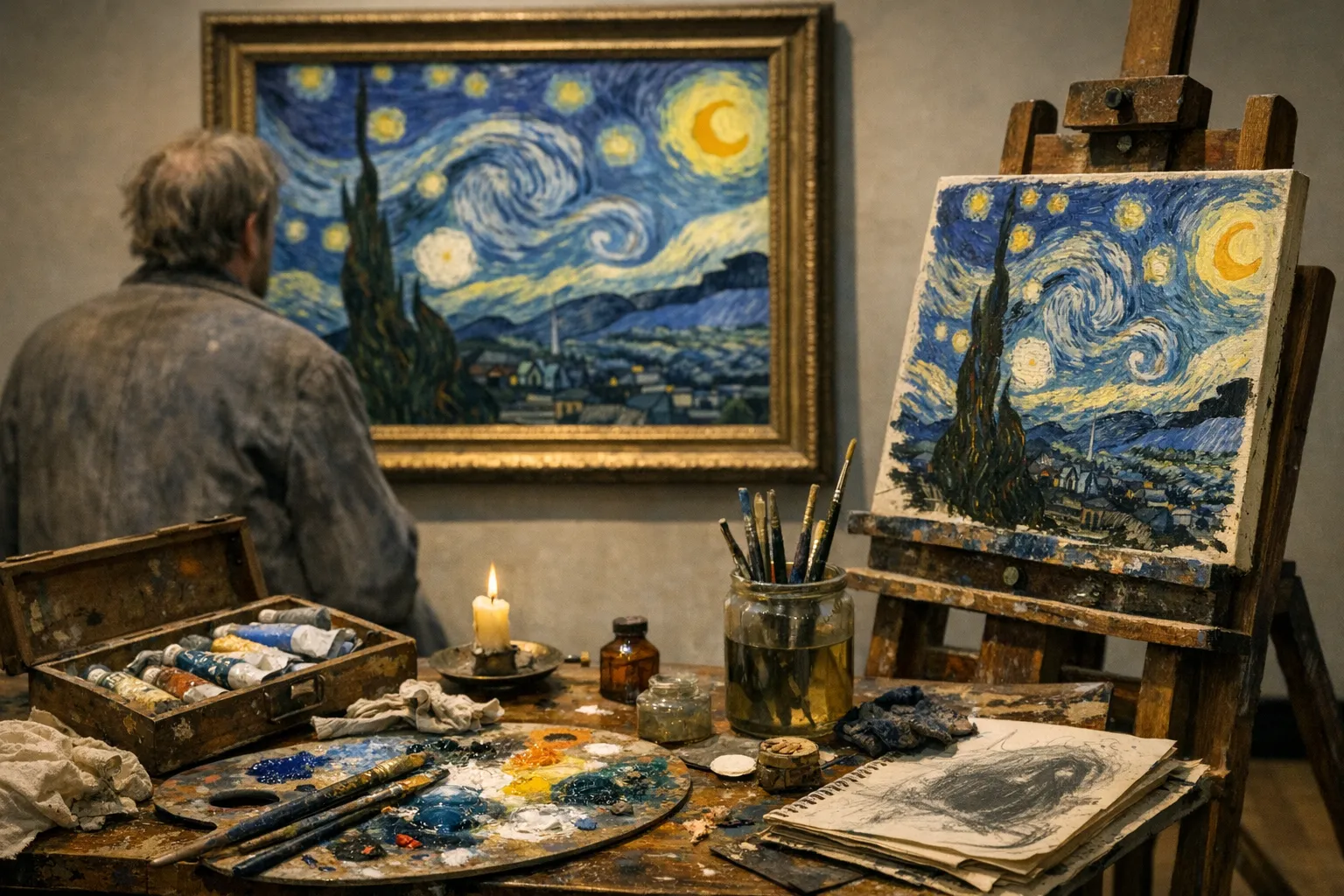
In this blog post, we'll delve into the emotional depth and artistic techniques that make The Starry Night a pivotal work in the Post-Impressionist movement. From the bold brushstrokes and contrasting colors to the symbolic elements like the cypress tree, we'll uncover how Van Gogh’s mental state influenced his approach, creating a painting that resonates with both beauty and emotional intensity.
Introduction to The Starry Night
Vincent van Gogh's The Starry Night, painted in June 1889, stands as a pivotal work in the Post-Impressionism movement. Created during his time at the Saint-Paul-de-Mausole asylum in Saint-Rémy-de-Provence, France, this painting encapsulates the artist's emotional depth and psychological struggles.
Van Gogh's life was marked by tumultuous experiences, including battles with mental illness and a relentless pursuit of artistic expression. The year 1889 was particularly significant, as he sought solace in painting while grappling with his inner turmoil. The Starry Night reflects this complexity, with its swirling night sky and vibrant colors representing both chaos and beauty.
This masterpiece is characterized by:
- Emotional Intensity: The bold, swirling brushstrokes evoke a sense of movement and passion, symbolizing Van Gogh's psychological state.
- Contrasting Colors: Deep blues juxtaposed with vibrant yellows create a visual tension that mirrors the struggle between melancholy and hope.
- Symbolism: The prominent cypress tree serves as a bridge between life and death, connecting the earthly with the celestial.
As art historian Robert Hughes remarked, “The Starry Night is a window into the soul of an artist, capturing a moment where the external world and his inner life collide.” This painting not only showcases Van Gogh's innovative techniques, such as the impasto method, but also solidifies his legacy as a master of emotional expression in art. The imaginary village, crafted from memory rather than observation, further underscores the depth of his creative vision.
In essence, The Starry Night is more than just a painting; it is a profound reflection of Van Gogh's life, emotions, and the broader Post-Impressionism movement.
The Emotional Landscape of The Starry Night
The swirling night sky in The Starry Night transcends mere aesthetics; it embodies Van Gogh's emotional landscape. The dynamic brushstrokes create a sense of movement, reminiscent of turbulent fluid dynamics, mirroring his inner turmoil. The sky is alive, filled with luminous stars and a crescent moon, suggesting both chaos and wonder.
Color plays a crucial role in conveying emotion. The deep blues evoke feelings of melancholy, while the vibrant yellows punctuate the scene with bursts of optimism. This contrast symbolizes the tension between despair and hope—a reflection of Van Gogh's psychological state during his time at the Saint-Paul-de-Mausole asylum. As he once remarked, "Painting is a way of keeping a diary," and this canvas serves as a poignant entry.
- Swirling Patterns: The energetic swirls capture Van Gogh's emotional upheaval.
- Color Contrast: Deep blues signify sadness, while yellows suggest light and hope.
- Cypress Tree: This prominent figure serves as a bridge between life and death, adding depth to the emotional narrative.
The imaginary village below, a product of memory and imagination, contrasts with the turbulent sky, grounding the painting in a serene yet unsettling reality. Van Gogh's application of the impasto technique—the thick layering of paint—intensifies these emotions, allowing the viewer to feel the weight of his experiences. Ultimately, The Starry Night is not merely a representation of a night scene but a profound exploration of the artist's psyche.
Artistic Techniques: Impasto and Brushwork
Vincent van Gogh's The Starry Night showcases his mastery of the impasto technique, where thick layers of paint are applied to the canvas. This method not only creates a textured surface but also enhances the emotional intensity of the scene. The texture in the swirling night sky and vibrant stars adds a tactile quality, allowing viewers to feel the turbulence of Van Gogh's emotions.
- Impasto Effect: The thick application of paint makes the stars and moon appear to pulsate with energy, drawing the eye and evoking a sense of movement.
- Emotional Resonance: This technique amplifies the painting's emotional impact, making the viewer acutely aware of the artist's inner turmoil.
Van Gogh's bold brushstrokes further contribute to the painting's emotional depth. His sweeping, curvilinear motions create a sense of dynamism and chaos, embodying his psychological state during its creation. The contrasting colors of deep blues and vibrant yellows symbolize the tension between melancholy and optimism.
- Bold Brushwork: The expressive, swirling strokes mimic the fluid dynamics of turbulent skies, reflecting Van Gogh's emotional upheaval.
- Emotional Impact: Each brushstroke conveys a sense of urgency, as if the artist was pouring his emotions directly onto the canvas.
In comparison to other artists of the era, such as Claude Monet and Paul Cézanne, Van Gogh’s techniques are distinctly more expressive. Monet often employed softer brushstrokes to capture light and atmosphere, while Cézanne focused on structure and form. Van Gogh’s approach, however, was more visceral.
"Van Gogh painted with the fervor of a storm, each brushstroke a thunderclap of emotion."
By employing impasto and bold brushwork, Van Gogh crafted not just a painting, but a visceral experience that resonates with the viewer on multiple levels, reflecting his complex mental state during a pivotal moment in his life.
Symbolism in The Starry Night
Vincent van Gogh's The Starry Night is rich in symbolism, each element contributing to the painting's emotional depth and narrative.
-
Cypress Tree: Dominating the foreground, the cypress tree serves as a powerful symbol that bridges the realms of life and death. Its dark, elongated form reaches upward, suggesting a connection to the heavens while simultaneously evoking themes of mourning and loss. This duality encapsulates Van Gogh's own struggles, reflecting his contemplation of mortality during his time at the asylum.
-
Imaginary Village: The village in The Starry Night is not a direct observation but rather a product of Van Gogh's memory and imagination. This fictional setting allows for a serene contrast against the tumultuous sky. The presence of the village suggests a longing for peace and normalcy, contrasting sharply with Van Gogh's internal chaos. The houses, with their calm outlines, represent a yearning for stability amidst the artist's emotional turmoil.
-
Stars and Moon: The luminous stars and crescent moon symbolize both hope and despair. The vibrant yellows against the deep blues create a visual tension, mirroring the emotional conflict that Van Gogh experienced. While the stars shine brightly, they are set against a swirling night sky that conveys unrest, reflecting the dual nature of hope—an aspiration that often exists alongside despair.
In essence, The Starry Night transforms personal anguish into universal symbols, inviting viewers to engage with the complexities of human emotion. Each component—the cypress tree, the village, and the celestial bodies—enhances the painting's narrative, making it a profound exploration of Van Gogh's psyche during a pivotal moment in his life.
Van Gogh's Mental State: A Reflection in Art
Vincent van Gogh's mental health profoundly influenced his work, particularly during the summer of 1889 when he painted The Starry Night. At that time, he was residing at the Saint-Paul-de-Mausole asylum in Saint-Rémy-de-Provence, grappling with severe psychological distress. This backdrop of turmoil is critical to understanding the emotional depth of the painting.
The connection between Van Gogh's emotional struggles and his artistic expression is evident. The swirling patterns of the night sky and the vivid colors—deep blues juxtaposed with vibrant yellows—symbolize a tension between melancholy and optimism. This interplay is not merely aesthetic; it reflects Van Gogh's inner chaos and longing for peace.
Other artists have similarly used their work to express mental health themes. For instance:
- Edvard Munch's The Scream: This iconic piece captures existential dread, conveying Munch's own struggles with anxiety.
- Frida Kahlo's self-portraits: Often depicting her physical and emotional pain, Kahlo's work serves as an intimate exploration of her mental state.
In The Starry Night, the cypress tree serves as a poignant symbol, connecting life and death, the earthly and the celestial. This choice reflects Van Gogh’s contemplation of mortality during his turbulent periods. Overall, the painting stands not just as a masterpiece of Post-Impressionism but as a revealing portrait of Van Gogh's psyche, showcasing how art can encapsulate the complexities of mental health.
The Influence of The Starry Night on Modern Art
Vincent van Gogh's The Starry Night has left an indelible mark on contemporary art and culture, inspiring generations of artists and creators. Its swirling skies and vibrant colors have become iconic, and the painting continues to resonate in various forms of media.
Inspiration for Modern Artists
Many modern artists draw from Van Gogh's distinctive techniques and emotional depth. For instance:
- Expressionists: Artists like Edvard Munch have echoed the emotional intensity found in The Starry Night, using bold colors and dramatic brushwork to convey their own feelings.
- Abstract Artists: The swirling patterns in the sky have influenced abstract painters who explore movement and emotion through dynamic forms.
Role in Popular Culture
The Starry Night transcends the art world, appearing in numerous facets of popular culture:
- Film and Television: The painting has been referenced in films, such as Loving Vincent, which explores Van Gogh's life and works.
- Merchandising: Its imagery is ubiquitous in everything from clothing to home decor, making it a staple of visual culture.
Presence in Art Education
In art education, The Starry Night serves as a crucial study piece:
- Techniques: Students learn about Van Gogh’s impasto technique and color theory, analyzing how the contrasting blues and yellows convey deep emotional narratives.
- Psychological Context: Discussions around the painting often include Van Gogh's mental state, helping students understand the connection between art and personal experience.
Through its profound influence, The Starry Night remains a cornerstone of modern artistic expression, bridging historical significance with contemporary relevance.
Myths vs. Reality: Common Misconceptions about The Starry Night
Vincent van Gogh's The Starry Night has become emblematic of artistic genius intertwined with mental illness, yet many misconceptions surround both the painting and its creator. Here are some clarifications to separate myth from reality:
-
Van Gogh’s Life and Work: A prevalent myth is that van Gogh painted The Starry Night during a complete breakdown. In reality, he created this masterpiece in June 1889 during his stay at the Saint-Paul-de-Mausole asylum in Saint-Rémy-de-Provence, where he sought treatment for his mental health. His stay allowed him time for introspection, leading to profound artistic expression.
-
Symbolism and Interpretation: Many viewers interpret the swirling patterns in the night sky as a direct representation of van Gogh's madness. However, these dynamic forms can symbolize emotional turmoil rather than insanity. The contrasting colors, deep blues against vibrant yellows, reflect tension between melancholy and optimism, showcasing a more complex emotional landscape.
-
The Cypress Tree: This prominent feature is often associated with death and the afterlife, bridging the earthly and celestial realms. While it’s easy to label van Gogh's work as purely reflective of his struggles, the cypress also represents a connection to nature and the continuity of life.
-
Imaginary Elements: The village depicted in the painting is not a direct observation but rather a product of van Gogh's memory and imagination. This creative liberty adds to the emotional depth of the piece, demonstrating his ability to infuse personal experiences into his art.
-
The Madness Myth: While van Gogh did experience periods of psychological distress, equating his artistic brilliance solely with madness undermines the skill and technique he employed. His use of impasto, for instance, creates a textured surface that enhances the emotional intensity of the scene, reflecting a deliberate artistic choice rather than a chaotic mental state.
In understanding The Starry Night, it’s vital to appreciate the nuances of van Gogh’s life and the layers of meaning within his artwork, moving beyond simplistic narratives of genius and madness.
FAQs about The Starry Night
What inspired Van Gogh to create The Starry Night?
Vincent van Gogh painted The Starry Night in June 1889 while at the Saint-Paul-de-Mausole asylum in Saint-Rémy-de-Provence, France. His inspiration stemmed from his turbulent mental state and a desire to capture the emotional intensity of the night sky. The swirling patterns and vibrant colors represent both his inner turmoil and an idealized landscape, blending memory with imagination.
Is The Starry Night a true depiction of the night sky?
No, The Starry Night is not a literal representation of the night sky. The village depicted is imaginary, constructed from Van Gogh's memory and artistic vision rather than direct observation. This creative license allows Van Gogh to convey a deeper emotional narrative, emphasizing the contrast between the tranquil village and the chaotic sky.
How has The Starry Night been received over the years?
Initially, The Starry Night was not widely appreciated, with critics questioning its unconventional style. However, over the years, it has transformed into one of the most celebrated works of art. Today, it symbolizes the Post-Impressionism movement and is frequently analyzed for its emotional depth, technique, and Van Gogh's psychological struggles. Its enduring popularity reflects society's growing appreciation for the complex relationship between art and mental health.
Conclusion: The Lasting Legacy of The Starry Night
Vincent van Gogh's The Starry Night continues to captivate audiences over a century after its creation in June 1889. The painting's emotional depth and innovative techniques resonate with viewers, making it a timeless piece in art history. The swirling night sky, punctuated by luminous stars and a crescent moon, evokes feelings of both wonder and melancholy, reflecting the artist's own struggles with mental health.
In today's art world, The Starry Night remains relevant as a symbol of emotional expression and creativity. Contemporary artists often draw inspiration from Van Gogh's bold use of color and texture, particularly his impasto technique, which adds a tactile quality to the visual experience. The painting's contrasting blues and yellows symbolize the tension between despair and hope, a theme that resonates with many in our modern context.
Van Gogh's legacy is not just in his paintings but also in his ability to convey profound emotions. The Starry Night serves as a reminder of the complexities of the human experience—how beauty can emerge from turmoil. As we continue to explore and appreciate art, Van Gogh’s masterpiece stands as a beacon of emotional honesty and artistic innovation, ensuring its place in the hearts of art lovers for generations to come.
Visual Analysis: A Closer Look at The Starry Night
Engaging with Vincent van Gogh's The Starry Night requires more than just a casual glance. This visual analysis will guide you through the painting's elements, encouraging personal reflection and deeper understanding.
Step-by-Step Guide to Analysis
-
Observe the Composition: Start by noting the swirling night sky, filled with luminous stars and a crescent moon. Notice how it dominates the canvas, creating a sense of movement and emotion.
-
Examine the Colors: Pay attention to the contrasting colors—deep blues and vibrant yellows. This interplay symbolizes the tension between melancholy and optimism, reflecting Van Gogh's emotional state.
-
Focus on the Details: Look closely at the bold, swirling brushstrokes. This impasto technique gives the painting texture and enhances its emotional intensity, allowing you to feel the turbulence of Van Gogh's mind.
-
Interpret the Symbols: Consider the prominent cypress tree in the foreground. Often seen as a bridge between life and death, it adds a layer of meaning, connecting the earthly with the celestial.
-
Reflect on the Imaginary Village: The quiet village depicted is a product of Van Gogh's memory and imagination, not direct observation. What does this say about his state of mind during his time at the asylum?
Personal Interpretation
Take a moment to reflect on what The Starry Night evokes in you. Does it resonate with feelings of tranquility or turmoil? Engaging with the painting on a personal level can deepen your appreciation for Van Gogh's artistry.
Suggestions for Further Reading
- Explore Vincent van Gogh's Life and Works for a deeper context of his experiences.
- Delve into the Post-Impressionism Movement to understand the broader artistic framework that influenced Van Gogh.
By examining these elements, you'll uncover the emotional depth and artistic significance of The Starry Night, enhancing your viewing experience.