
Imagine a world where communicating over long distances involved writing letters and waiting days, or even weeks, for a response. The invention of the telephone changed that forever, ushering in an era of instant communication. This technological breakthrough not only transformed personal relationships but also revolutionized business operations.
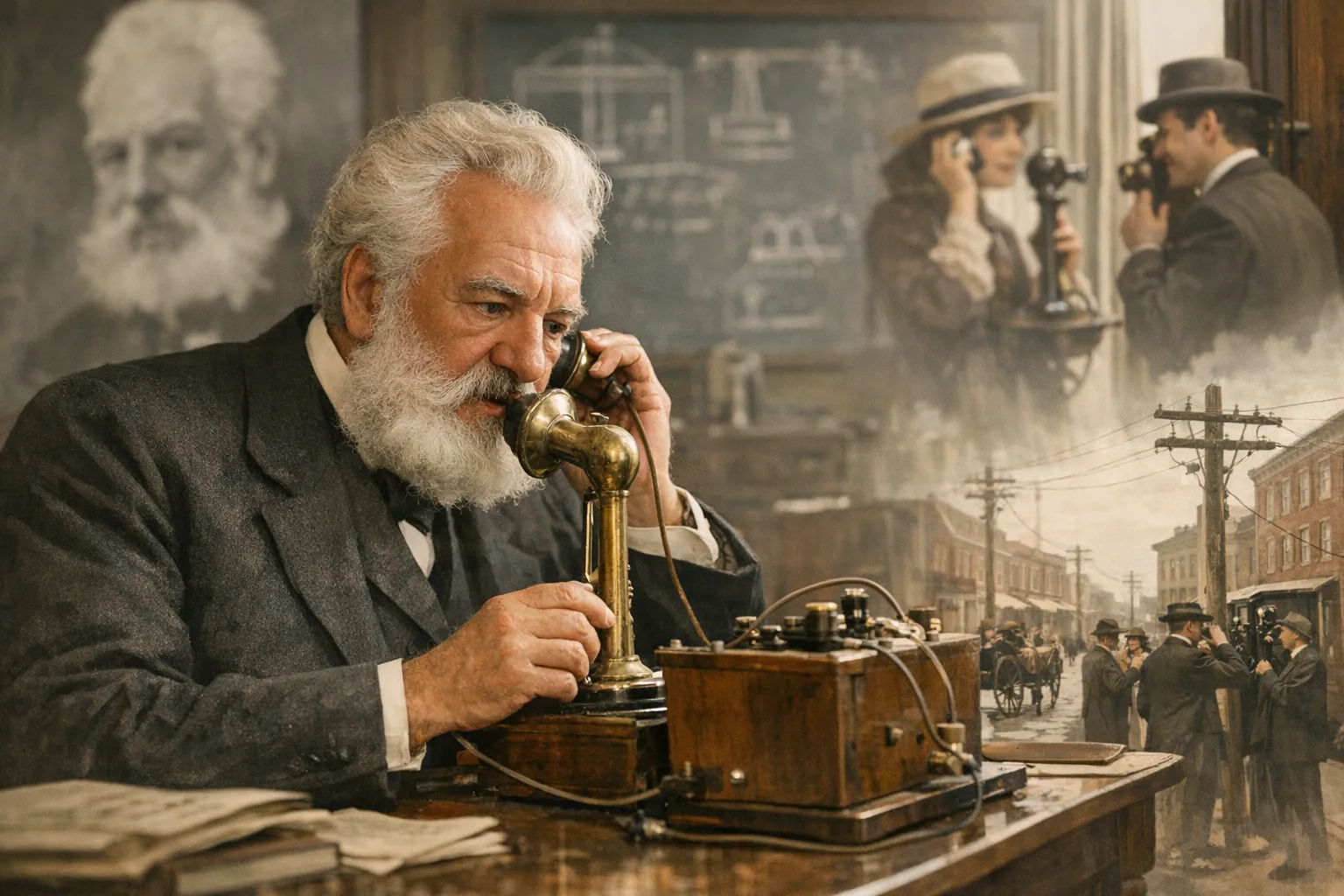
In this article, we will explore how Alexander Graham Bell's invention of the telephone, patented on March 7, 1876, paved the way for a new age of connectivity. We’ll delve into the rapid adoption of the technology, the establishment of the Bell Telephone Company, and the lasting impact the telephone has had on both society and communication technologies. From the first two-way call made between Boston and Cambridgeport to the establishment of modern communication systems, the telephone's legacy is nothing short of remarkable.
The Historical Context of the Telephone's Invention
Before the invention of the telephone, communication relied heavily on slower, less efficient methods. People used written letters, which could take days or weeks to deliver, and telegraphs, which transmitted messages in Morse code but required both sender and recipient to be familiar with the system.
Key inventors and inventions that laid the groundwork for Bell's work included:
- Samuel Morse and the telegraph: Revolutionized long-distance communication in the 1830s.
- Elisha Gray: Developed early voice transmission devices that influenced Bell's designs.
The 19th century was marked by rapid industrialization and urbanization, creating a demand for faster communication. Economic conditions were conducive to innovation; businesses needed efficient ways to coordinate operations, while social changes were driving people into cities, where immediate communication became essential.
"The invention of the telephone was like the opening of a new door in the house of communication, allowing conversations to flow freely where before they were locked behind written messages."
By the time Bell was granted the first U.S. patent for the telephone on March 7, 1876, the landscape was ripe for transformation. The first successful two-way call took place on October 9, 1876, connecting Boston and Cambridgeport, Massachusetts, marking a pivotal moment in communication history. By 1880, nearly 50,000 telephones were in use, showcasing the rapid adoption of this groundbreaking technology. This innovation also led to the establishment of the Bell Telephone Company in 1877, which would eventually evolve into AT&T, further shaping the telecommunications industry.
Alexander Graham Bell: The Man Behind the Invention
Alexander Graham Bell's journey to inventing the telephone was deeply influenced by his early life and education. Born in Edinburgh, Scotland, in 1847, Bell was immersed in a family of educators. His mother was deaf, which sparked his interest in sound and communication from a young age. This unique upbringing led him to study elocution and speech, laying the groundwork for his later innovations.
Bell's work with the deaf played a pivotal role in shaping his inventions. He taught at schools for the deaf, including one in Boston, where he developed methods to help students communicate more effectively. This experience not only honed his understanding of sound but also kindled a desire to create a device that could bridge the gap in communication for those unable to hear.
The moment of inspiration for the telephone came during a fateful experiment in 1876. Bell famously exclaimed, “Mr. Watson, come here, I want to see you,” during the first successful two-way telephone call made between Boston and Cambridgeport, Massachusetts, on October 9, 1876. This breakthrough marked a significant milestone in communication history.
His invention led to the establishment of the Bell Telephone Company in 1877, which later evolved into AT&T. By 1880, nearly 50,000 telephones were already in use, demonstrating the rapid adoption of this groundbreaking technology. Bell's legacy is not merely the telephone itself but also the entire telecommunications industry, which has since evolved to include modern innovations like transistors and fiber-optic cables. The invention of the telephone revolutionized communication, transforming personal relationships and business operations alike.
The Patent and First Successful Call
On March 7, 1876, Alexander Graham Bell was granted the first U.S. patent for the telephone. This pivotal moment not only recognized Bell's innovation but also set the stage for a communication revolution. His patent detailed the method of transmitting vocal sounds through electrical signals, a concept that was groundbreaking at the time.
Just months later, on October 9, 1876, Bell made the first successful two-way telephone call, connecting Boston and Cambridgeport, Massachusetts. During this historic moment, Bell famously called out to his assistant, Thomas Watson, saying, "Mr. Watson, come here, I want to see you." This simple phrase marked the dawn of instantaneous voice communication over distances, forever changing how people interacted.
The immediate reactions to this invention were mixed, ranging from awe to skepticism. Many were amazed by the clarity and speed of the communication, while others doubted its practical applications. However, by 1880, nearly 50,000 telephones were already in use across the United States, illustrating the rapid adoption of this new technology.
Bell's invention not only led to the establishment of the Bell Telephone Company in 1877—which would eventually evolve into AT&T—but it also laid the groundwork for future advancements in telecommunications. The telephone’s impact was profound, leading to the creation of telephone exchanges and switchboards, which significantly extended its reach. This innovation spurred the development of more sophisticated communication technologies, including transistors, fiber-optic cables, and satellites, marking the beginning of modern telecommunications.
Rapid Adoption and Growth of Telephone Usage
The invention of the telephone by Alexander Graham Bell, who was granted the first U.S. patent on March 7, 1876, marked the dawn of a new era in communication. By 1880, nearly 50,000 telephones were in use across the United States, showcasing the swift acceptance of this groundbreaking technology.
Several factors contributed to this rapid adoption:
- Instant Communication: The ability to transmit voice over long distances transformed how people interacted. This was especially crucial for businesses needing quick decision-making.
- Infrastructure Development: The establishment of the Bell Telephone Company in 1877 facilitated the creation of telephone exchanges and switchboards, which dramatically increased the technology's accessibility.
- Public Awareness: Early demonstrations, such as the first two-way call made on October 9, 1876, between Boston and Cambridgeport, captured public imagination and interest.
The impact on personal and business communication was profound. Families could maintain relationships over distances, while businesses enjoyed enhanced coordination and efficiency. The telephone also paved the way for future innovations, leading to the development of other telecommunications technologies like transistors, fiber-optic cables, and satellites.
In summary, the telephone not only revolutionized how people connected but also laid the groundwork for the modern communication landscape we navigate today.
The Birth of the Telephone Industry
The invention of the telephone by Alexander Graham Bell not only revolutionized communication but also laid the groundwork for an entire industry. In 1877, the Bell Telephone Company was established, marking the formal beginning of the telephone industry. This company later evolved into what we now know as AT&T.
One of the key developments in this nascent industry was the creation of telephone exchanges and switchboards. These innovations allowed multiple users to connect through a centralized system, facilitating more efficient communication. By 1880, nearly 50,000 telephones were already in use, indicating a rapid adoption that would only grow as infrastructure expanded.
Here are some notable aspects of the early telephone industry:
- Formation of the Bell Telephone Company (1877): This was a pivotal moment, as it provided the organizational structure necessary for the industry to flourish.
- Development of Telephone Exchanges: These systems enabled operators to connect calls, making it possible for users to communicate over longer distances than ever before.
- Evolution into AT&T: The Bell Telephone Company’s growth eventually transformed it into AT&T, a giant in telecommunications that continues to shape the industry today.
As the telephone gained popularity, it spurred significant technological advancements. The foundation laid by Bell's invention led to the development of modern communication technologies, including transistors, fiber-optic cables, and satellites. This ongoing evolution underscores the profound impact of the telephone on society, fundamentally changing personal relationships and business operations.
For a deeper dive into Alexander Graham Bell's life and contributions, learn more here. Additionally, you can explore the broader history of telecommunications here.
Transforming Communication: Personal and Business Impacts
The invention of the telephone revolutionized communication by enabling instant voice transmission over long distances. This significant advancement altered the fabric of personal relationships and business operations alike.
Personal Relationships and Social Interactions
- Immediate Communication: Families and friends could connect instantly, transcending geographical barriers. This fostered stronger bonds and maintained relationships that would have otherwise waned due to distance.
- Social Dynamics: The telephone changed how people interacted, introducing a new layer of immediacy. Conversations could occur spontaneously, altering social norms around correspondence and creating a culture of immediacy.
Business Practices and Customer Service
- Efficiency in Operations: Businesses leveraged the telephone for faster decision-making and coordination. Tasks that once took days via postal services could now be completed in minutes, enhancing overall productivity.
- Customer Engagement: The telephone allowed companies to communicate directly with customers, offering real-time assistance and support. This shift laid the groundwork for modern customer service practices.
- Expansion of Markets: The establishment of telephone exchanges and switchboards facilitated broader communication networks, enabling businesses to reach new customers and markets.
By 1880, nearly 50,000 telephones were in use, signaling rapid adoption of this transformative technology. The founding of the Bell Telephone Company in 1877, which later evolved into AT&T, further underscored the telephone's pivotal role in shaping modern telecommunications. Overall, the telephone's impact on personal and business communication set the stage for future innovations, including transistors, fiber-optic cables, and satellites.
Technological Advancements Spurred by the Telephone
The invention of the telephone by Alexander Graham Bell in 1876 set the stage for a cascade of technological advancements that transformed communication. This remarkable innovation not only enabled instant voice transmission but also became the foundation for modern telecommunications.
-
Development of Transistors: Following the telephone's introduction, transistors emerged as a pivotal technology in communication devices. These small electronic components revolutionized the way signals are processed, enabling smaller, more efficient devices. Transistors allowed for the miniaturization of circuits, paving the way for innovations like mobile phones and computers.
-
Introduction of Fiber-Optic Cables: The next major leap came with fiber-optic technology, which utilizes light to transmit data. Fiber-optic cables significantly increased the speed and bandwidth of communication networks. This advancement allowed for high-speed internet, streaming services, and global connectivity, all of which are integral to today’s digital age.
-
Role of Satellites: Satellites further expanded the reach of telecommunications. Launched in the mid-20th century, they facilitate long-distance communication, broadcasting, and global positioning systems. Satellites have become crucial for connecting remote areas and enabling real-time communication across vast distances, illustrating the enduring legacy of Bell's original invention.
In summary, the creation of the telephone marked the beginning of a technological revolution, leading to the development of transistors, fiber-optic cables, and satellites. Each advancement has built upon Bell's foundational work, showcasing how one invention can inspire a multitude of innovations that reshape society.
Cultural and Social Implications of the Telephone
The invention of the telephone by Alexander Graham Bell in 1876 ushered in a new era for communication, profoundly shaping modern society. Its ability to transmit voice over long distances transformed how people interacted, both personally and professionally.
Changes in Social Norms and Expectations
Before the telephone, communication relied heavily on written letters and face-to-face interactions, which often led to delays. The telephone introduced immediate conversations, altering expectations around responsiveness. Social norms shifted as people began to value quick communication, making it common to reach out with just a phone call rather than waiting for a letter.
The Telephone as a Tool for Social Change
The telephone also served as a catalyst for social change. By facilitating communication between diverse groups, it played a key role in movements for civil rights and social reforms. Organizations could coordinate efforts more efficiently, and individuals could share information rapidly, amplifying their messages.
Impact on Business and Daily Life
The telephone revolutionized business operations. Companies could make real-time decisions, leading to increased efficiency and growth. By 1880, nearly 50,000 telephones were in use in the United States, highlighting its rapid adoption and the subsequent development of telephone exchanges and switchboards, which extended its reach even further.
Lasting Legacy
The foundation laid by the telephone paved the way for future advancements in telecommunications, including transistors, fiber-optic cables, and satellites. This ongoing evolution continues to shape our interconnected world today, illustrating the lasting impact of Bell's invention on communication and society as a whole.
For more about Alexander Graham Bell, check out this link and explore the history of telecommunications.
Myths vs. Reality: Common Misconceptions About the Telephone
The invention of the telephone is often shrouded in myths that overshadow its true historical significance. Here are some common misconceptions:
-
Bell's Competition with Other Inventors: Many believe that Alexander Graham Bell was in a fierce race with other inventors like Elisha Gray. While there were multiple inventors working on similar technologies, Bell's patent application on March 7, 1876, secured his place in history rather than a dramatic competition.
-
Initial Limitations of the Telephone: Contrary to the belief that the telephone was immediately transformative, its early capabilities were quite limited. The first two-way call, made on October 9, 1876, was a groundbreaking moment, but the technology required significant improvements before it could be widely adopted and effective for everyday use.
-
Speed of Adoption: It's a common myth that the telephone was instantly embraced by society. By 1880, approximately 50,000 telephones were in use in the United States, indicating a gradual adoption rather than an overnight revolution. It took time for the necessary infrastructure, like telephone exchanges and switchboards, to be developed.
These realities highlight the complexities of the telephone's journey from invention to widespread use, illustrating that its impact was not merely a result of its invention, but also of the societal and technological advancements that followed.
Legacy of the Telephone: Looking to the Future
The invention of the telephone by Alexander Graham Bell on March 7, 1876, marked a significant turning point in communication, and its legacy continues to shape our lives today. As we move further into the digital age, the telephone’s foundational role is more relevant than ever.
-
Digital Age Impact: The telephone paved the way for mobile communication and the internet. Today, smartphones serve as powerful tools that integrate calling, texting, and online connectivity, illustrating how the basic concept of voice transmission has evolved.
-
Continuing Evolution: Communication technologies are in constant flux. From analog to digital systems, the advent of VoIP, and now video conferencing, each iteration builds upon the principles established by Bell. Despite dramatic changes, the core need for instant communication remains unchanged.
-
Future Innovations: Looking ahead, we can expect innovations inspired by the telephone to continue transforming how we connect. This might include advancements in augmented reality (AR) communication, where conversations can happen in virtual environments, or even developments in AI-driven communication tools that enhance interpersonal interactions.
The telephone’s legacy is not just historical; it lays the groundwork for future technologies that will further redefine our interactions. The establishment of the Bell Telephone Company in 1877, which eventually evolved into AT&T, exemplifies this ongoing journey. As we explore the future, the seeds planted by Bell's invention will likely continue to flourish, leading to new ways of thinking about communication and connection.