
On November 9, 1989, a momentous event unfolded that would change the course of history: the Berlin Wall fell. This pivotal moment was not just a political milestone; it was a culmination of personal struggles, dreams, and a collective yearning for freedom among East Germans. As the wall crumbled, so did the barriers of oppression, allowing voices once silenced to finally be heard.
In this exploration, we’ll delve into the intersection of personal narratives and the broader historical implications surrounding the fall of the Berlin Wall. Through firsthand accounts, we’ll uncover the challenges faced by individuals living under the watchful eye of the Stasi, East Germany's secret police, and examine how their stories reflect the larger dynamics of the Cold War. Additionally, we’ll assess how this monumental event not only marked the beginning of Germany's reunification but also signaled a shift in geopolitical landscapes across Europe.
The Historical Context of the Berlin Wall
The Berlin Wall, erected on August 13, 1961, was a concrete symbol of the deep-seated geopolitical tensions that characterized the Cold War. Its construction was a direct response to the mass emigration of East Germans to the West, which threatened the stability of the East German regime. This barrier not only divided a city but also represented the ideological split between the capitalist West and the communist East.
During the Cold War, the division of Germany became emblematic of the broader struggle between the United States and the Soviet Union. The Wall was more than a physical structure; it was a manifestation of the fear and distrust that defined the era. As historian John Lewis Gaddis noted, "The Berlin Wall was not just a wall; it was a prison that kept people in, not just a barrier that kept people out."
The implications of this division were profound. Families were torn apart, and the daily lives of East Germans were heavily monitored by the Stasi, the secret police. The Wall not only restricted freedom of movement but also stifled personal expression and connection. The stark contrast between life in East and West Germany showcased the failures of the communist regime, ultimately fueling the desire for change.
As the 1980s progressed, discontent grew among East Germans, culminating in the Peaceful Revolution. This movement led to the Wall's dramatic fall on November 9, 1989, serving as a pivotal moment that marked the beginning of the end for communist control in Eastern Europe. The reunification of Germany on October 3, 1990, was a direct outcome of this monumental event, reshaping the political landscape of Europe.
Personal Narratives: Life Behind the Wall
The experiences of East Germans living behind the Berlin Wall reveal a complex tapestry of struggles and resilience. Life under the Wall was marked by significant challenges, particularly concerning limited freedoms. East Germans faced restrictions that dictated their daily lives, from where they could go to whom they could associate with.
Surveillance was a constant shadow, with the Stasi, East Germany's secret police, monitoring citizens closely. This pervasive oversight created an atmosphere of fear and mistrust, where even casual conversations could lead to severe repercussions. As one former resident put it, "Living under the Stasi was like walking on eggshells; you never knew when you might crack."
Personal accounts of escape attempts further illustrate the desperation felt by many. Some risked everything to flee, using makeshift tools or elaborate plans. The consequences of failed attempts were dire; individuals faced imprisonment, retribution, or worse. Stories of these endeavors often highlight not only the risks taken but also the bonds formed among those who dared to dream of freedom.
In summary, the narratives of those who lived behind the Berlin Wall underscore the harsh realities of life in a divided Germany, offering poignant reflections on the human spirit's quest for liberty.
The Events Leading Up to November 9, 1989
The fall of the Berlin Wall was not a spontaneous event; it was the culmination of a series of significant movements and public sentiments that had been brewing for years. Central to this transformation was the Peaceful Revolution, a series of protests in East Germany that called for greater freedoms and democratic reforms. Fueled by dissatisfaction with the oppressive regime, these protests saw thousands of East Germans taking to the streets, voicing their demands for change.
One pivotal moment came on November 9, 1989, when East German official Günter Schabowski held a press conference that would change the course of history. During the conference, he mistakenly announced that East Germans could cross the border "immediately." This announcement ignited a sense of urgency and excitement, leading to masses gathering at the Berlin Wall, demanding their right to freedom.
As crowds swelled, they chanted for open borders, symbolizing their desire for liberation from decades of division. According to one observer, the situation was akin to "a dam bursting," as the overwhelming public pressure finally forced the regime’s hand.
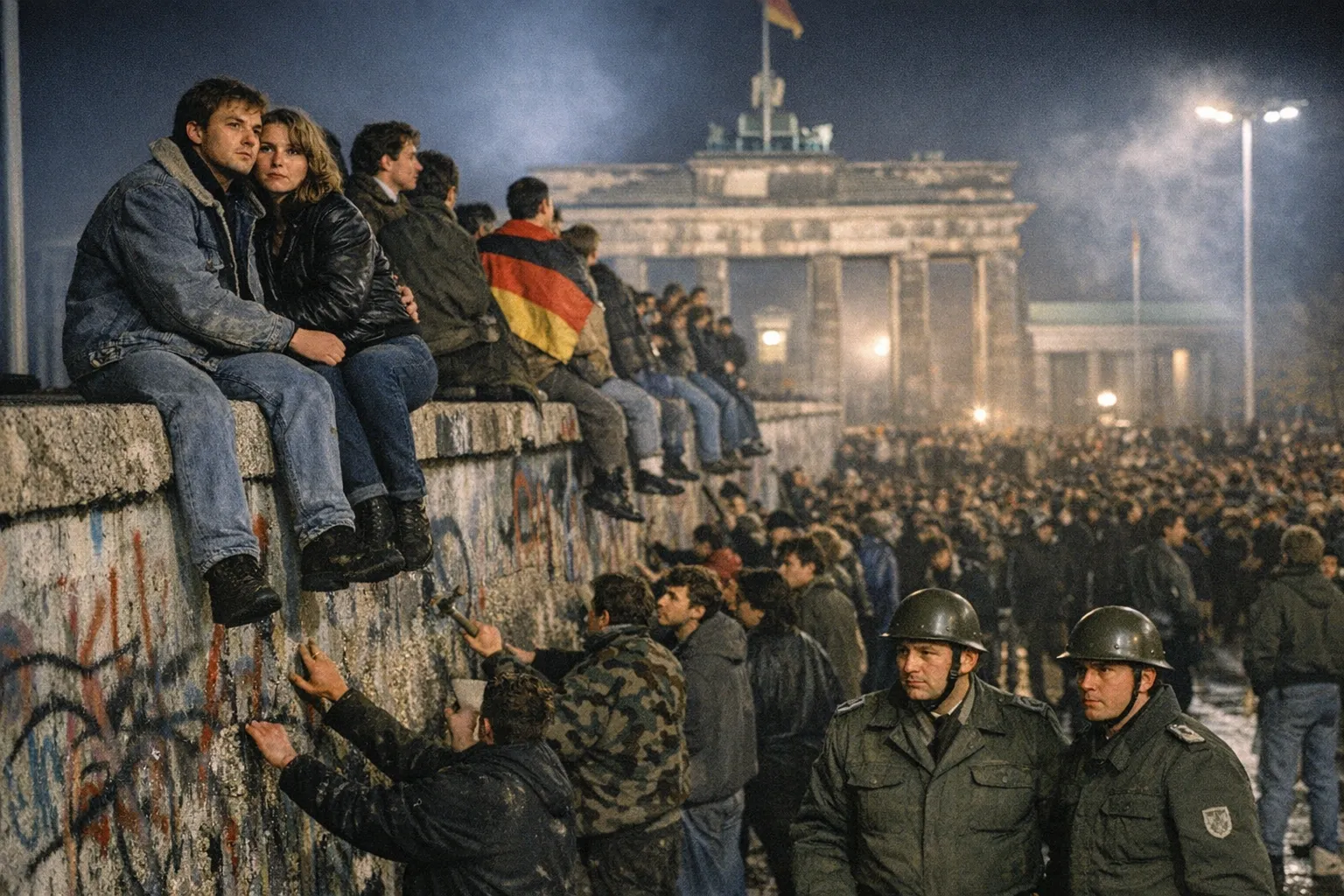
In the hours that followed Schabowski’s announcement, people began to dismantle the Wall, using whatever tools they could find to chip away at the concrete that had stood as a barrier for nearly three decades. This grassroots movement not only marked the beginning of the Wall’s physical destruction but also symbolized the triumph of the people over an oppressive regime.
The events of that night were pivotal, setting in motion the reunification of Germany and signaling the beginning of the end of the Cold War. The path toward a unified Germany was paved by the courage of those who dared to demand change, illustrating how personal narratives intertwined with broader historical movements. For a deeper understanding of individual stories from this era, check out Personal Stories from the Berlin Wall Era.
The Night the Wall Fell: A First-Hand Account
As the clock struck 7 PM on November 9, 1989, the atmosphere around the Berlin Wall was electric with anticipation. East German official Günter Schabowski had just announced that the borders were open, and East Germans surged toward the Wall, their hearts racing with a mix of disbelief and hope.
The moment the gates opened, it felt as if a dam had burst. Thousands flooded through, faces alight with joy and relief. For many, it was not just a physical crossing but an emotional journey toward freedom after decades of oppression. One witness described it as “like a bird finally escaping a cage,” capturing the essence of liberation felt by those who had lived under the watchful eye of the Stasi.
The night quickly transformed into a celebration. People wept, laughed, and embraced strangers. The sheer joy in the air was palpable; it was a turning point not only for individuals but also for a nation. East Germans climbed atop the Wall, waving flags and chanting slogans of unity. The atmosphere was a blend of euphoria and disbelief, as many struggled to grasp the reality that their years of longing were finally coming to fruition.
As the night progressed, spontaneous acts of dismantling began. Crowds gathered tools, using whatever they could find to chip away at the Wall, eager to take home a piece of history. The sound of hammers and cheers echoed through the streets, marking the official dismantling of a symbol of division. It was a vivid illustration of how the people, united in their quest for freedom, began to reclaim their city and their lives.
Global Reactions to the Fall of the Wall
The fall of the Berlin Wall on November 9, 1989, elicited a wave of reactions worldwide, from media coverage to political shifts in Eastern Europe. Internationally, the event was met with jubilation. News outlets broadcast live coverage, showcasing East Germans streaming through the newly opened borders, a moment described as “the world’s greatest spontaneous party” by one journalist. This coverage not only informed but emotionally engaged audiences globally, as people celebrated a monumental shift in history.
Politically, the fall of the Wall had profound implications for Eastern Europe. It signaled the weakening grip of communist regimes, spurring movements for democracy across the region. Countries like Poland and Czechoslovakia began to experience their own revolutions shortly after, with citizens emboldened by the events in Berlin. The Wall became a symbol of hope, representing the possibility of change and unification.
Moreover, the Wall's dismantling was a clear indication that the Cold War was drawing to a close. As one observer noted, “The Berlin Wall was not just a physical barrier; it was a psychological one that crumbled under the weight of a collective desire for freedom.” This shift marked a pivotal moment in European history, leading to the reunification of Germany in October 1990 and redefining geopolitical dynamics across the continent.
In summary, the fall of the Berlin Wall was not just a local event; it reverberated globally, inspiring movements, altering political landscapes, and symbolizing a future filled with hope and potential for change.
The Reunification of Germany: A New Era
The formal reunification of Germany on October 3, 1990, was a landmark moment that reshaped not only the nation but also the European landscape. This event marked the culmination of a series of dramatic changes initiated by the fall of the Berlin Wall on November 9, 1989. However, the road to reunification was fraught with significant economic and social challenges.
In the aftermath of reunification, Germany faced a myriad of issues, particularly in integrating the economically weaker East with the more prosperous West. Key challenges included:
- Economic Disparity: The East struggled with outdated infrastructure and a lack of investment, leading to high unemployment rates and economic stagnation.
- Social Integration: There were significant cultural differences between East and West, with many East Germans feeling a sense of alienation in the new Germany.
- Political Transition: The shift from a socialist to a capitalist democracy required extensive reforms and adaptation.
The reunification also had profound implications for European geopolitics. It symbolized the end of the Cold War era, as unified Germany emerged as a central player in European affairs. The shift contributed to the expansion of the European Union and NATO, reshaping alliances and fostering a more integrated Europe.
As historian Mary Elise Sarotte aptly noted, "The fall of the Berlin Wall was like a key turning in a lock, opening the door to a new chapter in history." This analogy underscores the monumental shift that occurred, not just for Germany, but for the entire continent.
In summary, while the reunification of Germany heralded a new era of hope and opportunity, it also laid bare the complexities of merging two distinct societies, setting the stage for ongoing challenges in the years to come.
The Fall of the Wall and the End of the Cold War
The fall of the Berlin Wall on November 9, 1989, was not just a momentous occasion for Germany; it served as a powerful symbol of the Cold War's demise. This event marked a significant turning point, igniting a chain reaction that led to the collapse of communist regimes across Eastern Europe. Citizens in countries like Poland, Czechoslovakia, and Hungary began to demand their rights, inspired by the East Germans who breached the Wall.
The Wall itself had long represented the ideological divide between East and West, a physical manifestation of geopolitical tensions. Its destruction signified that the barriers holding back the people's aspirations for freedom were crumbling. As the historian John Lewis Gaddis aptly put it, "The Berlin Wall was not just a barrier; it was a prison wall that confined the dreams of millions."
In the long term, the fall of the Berlin Wall reshaped global politics. It not only led to the reunification of Germany by October 3, 1990, but it also precipitated the end of the Soviet Union and the broader Cold War era. The shift allowed for the expansion of democratic ideals and the integration of Eastern European nations into the European Union and NATO, fundamentally altering the landscape of international relations. The echoes of that night resonate even today, reminding us of the power of collective action and the unyielding human desire for freedom.
Lessons Learned from the Fall of the Berlin Wall
The fall of the Berlin Wall offers profound lessons that resonate beyond its historical context. One key takeaway is the power of citizen activism. The events leading up to November 9, 1989, were fueled by ordinary people who gathered at the Wall, demanding change. Their collective voice was a catalyst for action, emphasizing that grassroots movements can dismantle oppressive regimes.
Additionally, the role of media in shaping public perception cannot be understated. Coverage of the protests and the eventual opening of the Wall played a crucial role in galvanizing support both within and outside of East Germany. As journalist Jonathon Alter noted, “Media acts as a mirror reflecting the will of the people, but it can also be a hammer, shaping the reality it reflects.”
The ongoing struggle for freedom in various contexts is another vital lesson. While the fall of the Berlin Wall symbolized a significant victory for democracy, it also highlights that the fight for human rights continues globally. From the Arab Spring to current movements advocating for democracy and freedom, the spirit of resistance remains alive.
In summary, the fall of the Berlin Wall not only marked a pivotal moment in history but also serves as a reminder of the enduring power of activism, the influence of media, and the ongoing quest for freedom worldwide.
Myths vs. Reality: Debunking Common Misconceptions
The Berlin Wall stands as a powerful symbol of division, but several misconceptions cloud its historical significance. Addressing these myths helps clarify the reality surrounding its purpose and eventual fall.
Misconceptions about the Wall's Purpose
Many believe the Berlin Wall was solely built to keep people in East Germany. While this was a key aspect, the Wall also served as a geopolitical barrier, designed to maintain the integrity of the communist regime against the influence of the West. Its construction in 1961 was a response to the mass exodus of East Germans seeking freedom, reflecting a broader struggle between two ideologies.
The Narrative of a Unified Uprising
A popular narrative suggests that the fall of the Wall was a spontaneous uprising by the people of East Germany. While significant popular protests occurred, the reality is more complex. The fall was precipitated by a series of political changes and reforms across Eastern Europe, including the weakening grip of the Soviet Union. As historian Mary Elise Sarotte noted, "the Wall's fall was less a thunderclap than a symphony of discordant notes."
The Role of Western Powers in the Wall's Fall
Lastly, there's a misconception that Western powers played a minimal role in the Wall's demise. In truth, Western policies and diplomatic pressures contributed significantly to the environment that allowed East Germans to assert their right to freedom. The shift in U.S. and European attitudes toward communism during the late 1980s created a backdrop for change, making it clear that the old order could not withstand the push for democracy.
By debunking these myths, we gain a clearer understanding of the Berlin Wall's fall—not merely as a historical event, but as a complex interplay of personal narratives and global implications. For more personal stories of the era, check out Personal Stories from the Berlin Wall Era.
Conclusion: The Legacy of the Berlin Wall
The fall of the Berlin Wall on November 9, 1989, remains a defining moment in history, not just for Germany but for the world. Its significance continues to resonate today, serving as a powerful reminder of the human spirit's resilience against oppression. The Wall, once a symbol of division, now represents unity and the triumph of democracy over authoritarianism.
The lessons learned from this event are still relevant. In a world where borders and barriers persist, the fall of the Berlin Wall encourages ongoing conversations about freedom, personal liberty, and the importance of standing up against injustice. As historian Timothy Garton Ash noted, “The Berlin Wall was a physical manifestation of a deeper ideological divide, and its fall symbolizes both an end and a beginning.”
Personal narratives from individuals who lived through the era enrich our understanding of this historical event. Stories of East Germans facing surveillance by the Stasi and their longing for freedom provide a human dimension to the political upheaval. These accounts help contextualize the fall of the Wall within the broader narrative of the Cold War, illustrating how personal experiences intertwine with significant historical milestones.
As we reflect on the legacy of the Berlin Wall, it becomes clear that its impact transcends time. The Wall has taught us that the struggle for freedom is universal, and the stories of those who fought for change are vital for understanding our past and shaping our future.