
The fall of the Berlin Wall on November 9, 1989, was not just a pivotal moment in German history; it was a seismic shift that echoed across the globe. This monumental event marked the beginning of the end of the Cold War, symbolizing the collapse of an ideological divide that had defined international relations for decades.
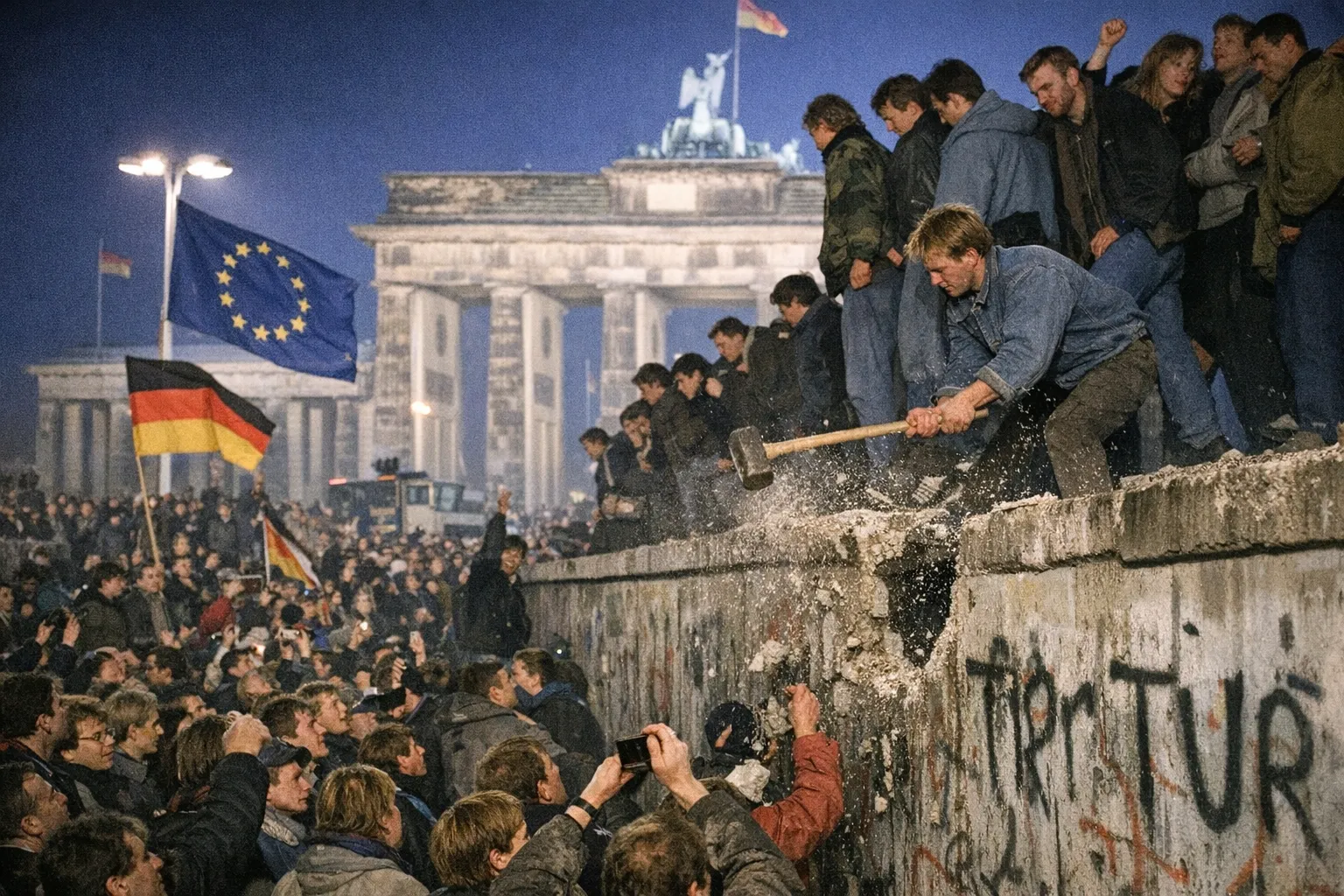
In this analysis, we will explore the historical significance of the Berlin Wall's fall, its role in the reunification of Germany, and the broader implications for European unity. By examining the events leading up to that fateful day and its aftermath, we’ll gain insights into how this singular moment reshaped not only Germany but also the political landscape of Europe and the world.
Introduction: The Berlin Wall as a Symbol of Division
Erected in 1961, the Berlin Wall became a formidable barrier that divided East and West Berlin. This concrete structure not only separated families and friends but also symbolized the broader ideological rift of the Cold War, encapsulating the struggle between the communist Eastern Bloc and the capitalist Western Bloc.
For nearly three decades, the Wall served its primary function: preventing East Germans from fleeing to the West in search of freedom and opportunity. It stood as a stark reminder of the oppressive regimes in Eastern Europe, where the desire for liberty was met with harsh consequences. As such, the Berlin Wall was more than just a physical barrier; it was a symbol of despair and division.
As the political climate began to shift, mass protests erupted across Eastern Europe, culminating in the Wall's dramatic fall on November 9, 1989. This moment was akin to "a dam bursting," as people rushed to the Wall, eager to reunite with loved ones and reclaim their freedom.
The aftermath of the Wall's fall was significant. It paved the way for the reunification of Germany on October 3, 1990, and marked the beginning of the end of the Cold War. The collapse of the Wall not only signified a triumph for capitalism and democracy but also set in motion a series of events that would reshape Europe, leading to the expansion of the European Union and NATO.
In essence, the Berlin Wall is remembered not just as a physical barrier, but as a powerful symbol of human resilience and the enduring quest for freedom.
The Events Leading Up to the Fall
The fall of the Berlin Wall on November 9, 1989, did not occur in isolation; it was the culmination of a series of significant events and shifts in the political landscape of Eastern Europe.
In 1989, mass protests erupted across East Germany, fueled by rising discontent with the oppressive regime. Citizens demanded greater freedoms and reform, inspired by similar movements in neighboring countries, notably Poland and Hungary. These demonstrations highlighted a growing desire for change, serving as a catalyst for the events that would unfold later that year.
Political changes swept through Eastern Europe, with many countries experiencing a wave of democratization. The Solidarity movement in Poland successfully negotiated for free elections, while Hungary opened its borders to the West, creating a ripple effect that inspired East Germans to push for their rights.
A pivotal moment occurred during a press conference held by East German official Günter Schabowski on November 9. When asked about travel regulations, he mistakenly announced that borders would be opened “immediately.” This statement, though not fully accurate, ignited a surge of excitement. People flocked to the Berlin Wall, eager to cross into West Berlin, leading to the wall’s eventual dismantling. As one observer noted, “It was as if a dam had burst, releasing the pent-up desire for freedom.”
The fall of the Berlin Wall marked not just the end of a physical barrier but also symbolized the collapse of communist regimes across Eastern Europe. This seismic shift paved the way for German reunification on October 3, 1990, and ultimately contributed to the dissolution of the Soviet Union in 1991.
The Day the Wall Fell: November 9, 1989
On November 9, 1989, a pivotal moment in history unfolded when East German official Günter Schabowski mistakenly announced during a press conference that the borders were open. This unexpected declaration ignited a wave of excitement and confusion, prompting thousands to gather at the Berlin Wall, eager to seize the moment.
The masses were not just spectators; they were participants in a collective surge of hope. As East Germans rushed to cross the border, many experienced a profound emotional release, akin to "breaking free from a long-held breath." This moment represented the culmination of years of oppression and longing for freedom.
- Immediate Reaction: People from East Berlin flocked to the Wall, many clutching their identification documents, prepared to embrace the reality of a united city.
- Symbol of Change: The Wall, erected in 1961 to prevent East Germans from fleeing to the West, now stood as a testament to the resilience of the human spirit.
In the aftermath, the fall of the Berlin Wall not only paved the way for German reunification on October 3, 1990, but also symbolized the collapse of communist regimes across Eastern Europe. It marked the beginning of the end of the Cold War, a significant turning point that would eventually lead to the dissolution of the Soviet Union in 1991. The emotional significance of this day resonates even today, as it represents a moment of triumph for democracy and the ideals of freedom.
The Immediate Impact on Germany
The fall of the Berlin Wall on November 9, 1989, had profound immediate effects on Germany, serving as a catalyst for significant political and social changes.
First and foremost, it paved the way for German reunification, which was officially realized on October 3, 1990. This monumental event symbolized not just the merging of two countries, but the healing of a nation deeply divided by ideology and governance for nearly three decades.
In the wake of reunification, East and West Germany faced the daunting task of reconciliation. Families that had been separated were reunited, but the process revealed deep-seated differences in mentality and culture. The West brought capitalist values, while the East had endured a socialist regime, leading to a complex interplay of social adjustments.
However, the challenges were significant. The economic disparities between the two regions became glaringly evident. East Germany struggled with high unemployment rates and outdated infrastructure, requiring substantial investment and support from the West.
As one observer noted, "Reunification was like trying to merge two different worlds into one." This analogy captures the immense difficulties faced as both regions worked to integrate their systems, economies, and cultures.
In summary, the fall of the Berlin Wall not only marked a pivotal moment in history but also initiated a challenging journey toward unity for Germany, highlighting both the triumphs and tribulations of reconciliation.
The Fall of the Wall and the End of the Cold War
The fall of the Berlin Wall on November 9, 1989, was a pivotal moment that signified the decline of Cold War tensions and the collapse of communist regimes throughout Eastern Europe. This event did not merely mark the physical dismantling of a barrier; it symbolized the ideological victory of capitalism and democracy over communism.
Key points include:
-
Collapse of Communist Regimes: The fall of the Berlin Wall was a catalyst for the dismantling of other communist governments in Eastern Europe, demonstrating that the grip of Soviet power was weakening. Countries like Poland and Hungary soon followed suit with their own movements toward democracy.
-
Dissolution of the Soviet Union: The momentum created by the Wall's fall contributed directly to the dissolution of the Soviet Union in 1991. The ideology that had once seemed monolithic was now crumbling, paving the way for the independence of various Soviet republics.
-
A Celebration of Freedom: The event was celebrated worldwide as a triumph for freedom. It was akin to “a giant door being flung open,” allowing people to escape the confines of oppression and embrace democratic ideals.
The fall also set the stage for German reunification, officially realized on October 3, 1990. The reunification process was not only a national healing but also a step toward broader European reconciliation, leading to the expansion of entities like the European Union and NATO.
In essence, the fall of the Berlin Wall marked a definitive turning point in Cold War dynamics, ushering in a new era of political and social transformation across Europe.
Long-term Effects on European Unity
The fall of the Berlin Wall on November 9, 1989, acted as a catalyst for profound changes in European unity, reshaping the continent's political landscape. This event not only marked the end of the Cold War but also facilitated the expansion of the European Union (EU), which has grown to include many former Eastern Bloc countries.
-
EU Expansion: The dismantling of the Berlin Wall opened doors for nations like Poland, Hungary, and the Czech Republic to pursue EU membership, which they achieved by the early 2000s. This integration fostered economic cooperation and political stability across the region.
-
Strengthened NATO: The collapse of communist regimes allowed NATO to extend its reach into Eastern Europe, enhancing collective security and military cooperation. Countries such as Estonia, Latvia, and Lithuania joined NATO, further solidifying Western alliances.
-
Reconciliation and Cooperation: The fall of the Berlin Wall also promoted reconciliation among European nations. Countries that were once adversaries began to cooperate on various fronts, from economic partnerships to cultural exchanges.
As historian Timothy Garton Ash noted, “The fall of the Berlin Wall was like the cracking of an egg—once it happened, everything began to change.” This analogy encapsulates how a single event can lead to a cascade of transformations, fostering a new era of unity in Europe.
In summary, the fall of the Berlin Wall catalyzed a series of developments that not only reunited Germany but also laid the groundwork for a more integrated and cooperative Europe. This legacy continues to influence European politics and identity today.
Myths vs. Reality: Understanding the Fall of the Wall
The fall of the Berlin Wall is often shrouded in myths that simplify the complex dynamics of its collapse. One common myth is that the Wall fell overnight without warning, as if it were a sudden event. In reality, this pivotal moment was the culmination of years of political change and public pressure. The late 1980s saw a wave of protests and reform movements across Eastern Europe, signaling widespread discontent with oppressive regimes.
Another prevalent myth is that the fall of the Wall was solely a Western victory, a narrative that overlooks the significant agency of Eastern European countries. The actions of citizens in East Germany and other Eastern Bloc nations played an essential role in the Wall's demise. As historian Timothy Garton Ash put it, “The fall of the Berlin Wall was not just a hammer blow from the West; it was a chorus of voices from the East.”
Key Points to Consider:
-
Myth: The Wall fell overnight without warning.
- Reality: Years of protests and reforms led to its collapse.
-
Myth: The fall was solely a Western victory.
- Reality: Eastern Europeans were pivotal in driving change.
This nuanced understanding of the Berlin Wall’s fall not only sheds light on the event itself but also highlights the broader context of the Cold War and the eventual reunification of Germany on October 3, 1990. The dismantling of the Wall marked a significant turning point in European history, laying the groundwork for the expansion of the European Union and NATO.
Lessons Learned from the Fall of the Berlin Wall
The fall of the Berlin Wall in 1989 serves as a powerful reminder of several lessons that remain relevant today, especially in the context of political dissent, media influence, and the quest for unity.
-
Importance of Public Dissent: The Wall’s collapse was fueled by widespread public protests against the oppressive East German regime. Citizens demonstrated that collective dissent can challenge and ultimately dismantle authoritarian structures. This teaches us that active citizen engagement is vital for promoting change. As one observer put it, “A single spark can ignite a revolution.”
-
Role of Media: The media played a crucial role in shaping the political narrative leading up to the Wall's fall. Coverage of protests and the regime’s failures created a sense of urgency and solidarity among citizens. This highlights how media can amplify voices and influence public opinion, underscoring its importance in democratic societies.
-
Need for Unity: The Berlin Wall symbolized division, not just in Germany, but across Europe. Its fall paved the way for German reunification and broader reconciliation efforts. This event illustrates that unity in the face of division can lead to significant political and social transformations, fostering a more integrated society.
In summary, the lessons learned from the Berlin Wall's fall continue to resonate today, reminding us of the power of dissent, the media's role in shaping narratives, and the importance of unity in overcoming division.
Conclusion: The Legacy of the Berlin Wall
The fall of the Berlin Wall on November 9, 1989, stands as a pivotal moment in 20th-century history. It not only signified the collapse of the barrier that divided East and West Berlin but also marked the beginning of the end of the Cold War. This monumental event catalyzed the reunification of Germany on October 3, 1990, and symbolized the broader collapse of communist regimes across Eastern Europe.
Today, the legacy of the Berlin Wall continues to influence contemporary politics in Europe. The events leading up to its fall were fueled by mass protests and a desire for democratic reform, serving as a reminder of the ongoing struggle for freedom. In many ways, the wall was a physical manifestation of ideological divides, akin to a dam holding back the waters of change. Its dismantling unleashed a wave of unity that has shaped modern European identity.
As nations grapple with issues of division and integration, the Berlin Wall serves as a powerful reminder of the importance of unity. The expansion of entities like the European Union and NATO in the aftermath illustrates the impact of this historical moment on geopolitical dynamics. The fall of the Berlin Wall was not just a victory for capitalism and democracy; it was a profound affirmation of human rights and the quest for a unified future in Europe.
FAQs about the Berlin Wall and Its Fall
What was the Berlin Wall?
The Berlin Wall was a concrete barrier erected in 1961 that divided East and West Berlin. It served as a physical manifestation of the ideological divide between the communist Eastern Bloc and the capitalist Western Bloc. The Wall became a powerful symbol of the Cold War, representing the struggles and tensions that defined the era.
Why was it built?
The primary purpose of the Berlin Wall was to prevent East Germans from fleeing to the West, where opportunities and freedoms were perceived to be greater. It was a response to mass emigration and political instability in East Germany, aiming to maintain control over the population and suppress dissent.
How did its fall affect Europe?
The fall of the Berlin Wall on November 9, 1989, was a watershed moment that marked the beginning of the end of the Cold War. It not only led to the reunification of Germany on October 3, 1990, but also catalyzed the collapse of communist regimes across Eastern Europe. As a result, the European Union expanded, and NATO began to include former Eastern Bloc nations, promoting greater stability and cooperation.
"The fall of the Berlin Wall was like a dam bursting; once it started, the flood of change swept across an entire continent."
What were the immediate consequences for Germany?
The immediate aftermath saw a rush of East Germans crossing into the West, leading to emotional reunions and celebrations. Economically, Germany faced the challenge of integrating two very different systems. The process of reunification involved significant investments in infrastructure and social services in the East, as well as addressing the political and cultural differences that had developed over decades.