
In 1541, the Amazon River emerged from the shadows of myth and speculation, thanks to Francisco de Orellana's daring expedition. This journey not only unveiled the river’s vastness but also reshaped European perceptions of the New World and its indigenous inhabitants.
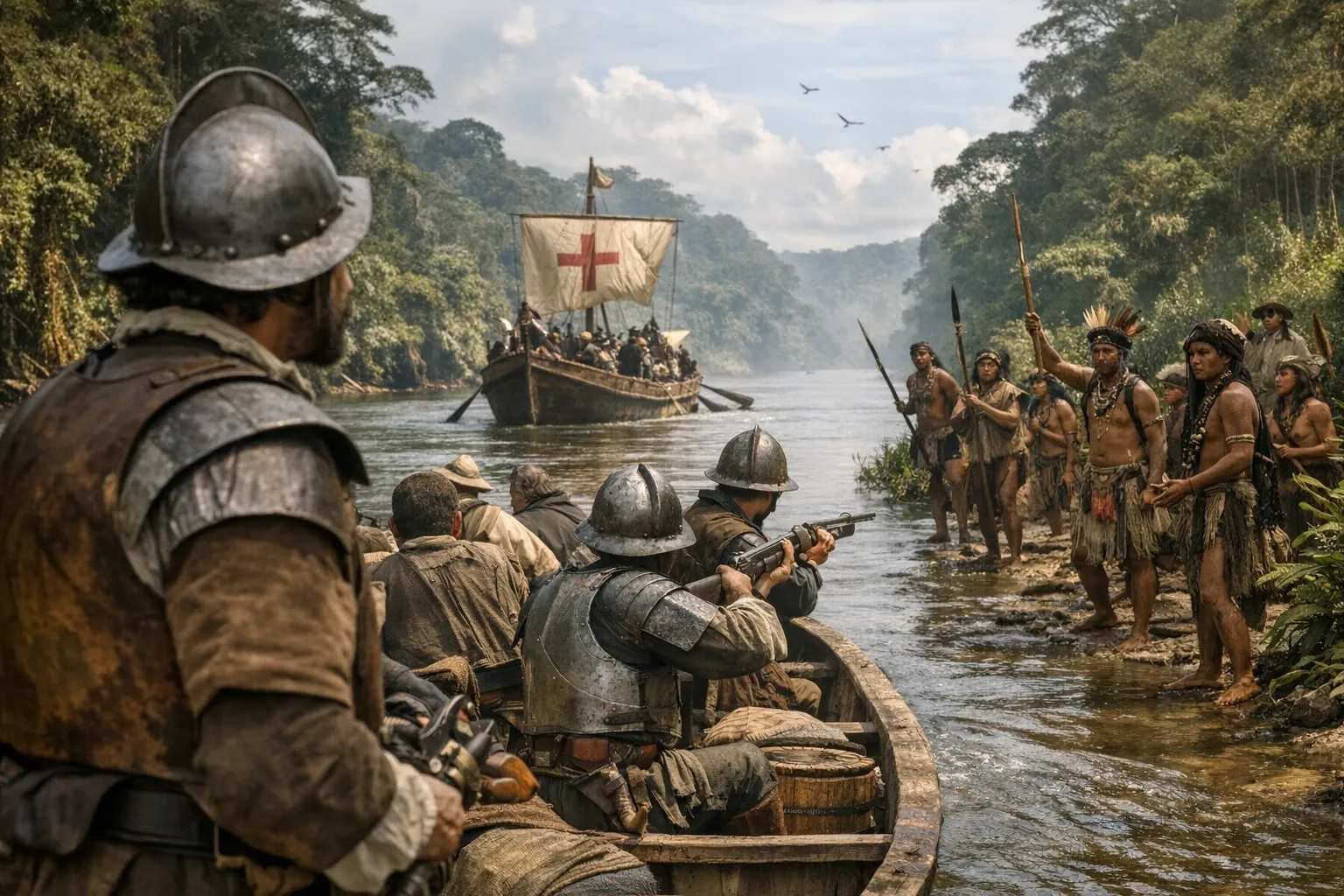
In this analysis, we’ll explore how Orellana's navigation of the Amazon River challenged existing assumptions about the region and its people. We’ll delve into the cultural implications of his discoveries, the realities faced during the expedition, and how these events set the stage for future European exploration and the profound impacts on indigenous cultures. Through this examination, we aim to provide a nuanced understanding of Orellana's legacy and the complexities of early encounters in the Amazon.
Introduction to Francisco de Orellana and His Expedition
Francisco de Orellana’s journey into the Amazon River in 1541 was not just a quest for treasure but also a reflection of the broader ambitions of Spain during the Age of Discovery. Born around 1511, Orellana was driven by tales of wealth and glory, fueled by the era's insatiable appetite for exploration. His early life was steeped in military service, which provided him with the skills necessary for navigating the perils of uncharted territories.
At the time, Spain was embroiled in fierce competition with other European powers for dominance in the New World. The political climate fostered a spirit of adventure, as explorers sought riches and new lands. Orellana, serving under Gonzalo Pizarro, aimed to uncover the fabled El Dorado and the elusive 'Land of Cinnamon,' two treasures that had captured the imagination of many.
Orellana's expedition, embarked upon with approximately 50 men, faced numerous hardships. The team constructed a brigantine to traverse the Napo River, a major tributary of the Amazon, after running low on supplies. As they ventured downstream, they encountered large indigenous populations, challenging the notion that the Amazon was sparsely inhabited.
"Exploring the Amazon was like trying to read a book written in a language you don't understand—full of surprises and hidden meanings."
Orellana's reports of warrior women among the tribes led to the river's naming as the 'Amazon,' drawing inspiration from the fierce female warriors of Greek mythology. His journey would ultimately pave the way for further European exploration, with far-reaching implications for indigenous cultures and ecosystems in the region.
The Journey Begins: Navigating the Amazon
The expedition of Francisco de Orellana in 1541 began with a challenging route from Quito, Ecuador, toward the Napo River. This initial leg was fraught with difficulties, as Orellana and his men sought the mythical 'Land of Cinnamon' while also contending with the harsh realities of the Andean landscape.
As they reached the Napo River, Orellana faced a critical issue: dwindling supplies. With food running low and tensions rising among the local indigenous populations, he made a pivotal decision to construct a brigantine. This vessel was essential for navigating the expansive waterways of the Amazon, enabling Orellana and his men to traverse the river more effectively.
- Initial Route: Departed from Quito, facing rugged terrain and scarcity of resources.
- Construction of Brigantine: A strategic move to enhance mobility on the Napo River and beyond.
- Dwindling Supplies: The urgent need for food forced a shift downstream, marking the start of Orellana's historic navigation.
On December 26, 1541, Orellana and around 50 men set off downstream, ultimately becoming the first Europeans to navigate the entire length of the Amazon River. Their journey would conclude in August 1542, chronicled by Gaspar de Carvajal, who documented invaluable insights into both the expedition and the indigenous cultures they encountered.
However, the expedition was not without conflict. Hostile encounters with various indigenous groups often escalated into violence, contributing to a broader narrative of European exploration that led to devastating impacts on native populations. This journey not only charted new waters but also paved the way for future European exploitation and colonization, reshaping the Amazon Basin forever.
Encounters with Indigenous Populations
Francisco de Orellana's expedition along the Amazon River in 1541 revealed a stark contrast to the prevailing European assumptions about indigenous sparsity in the region. Contrary to the belief that the Amazon was largely uninhabited, Orellana encountered substantial and diverse cultures. His reports documented numerous tribes, showcasing a complexity and richness that challenged existing narratives.
-
Diverse Cultures: Orellana's journey introduced European audiences to various indigenous groups with distinct social structures, languages, and customs. The accounts highlighted not only the numbers of inhabitants but also their sophisticated ways of life, including agricultural practices and community organization.
-
Conflicts and Hostilities: The expedition was marked by notable conflicts with local tribes. As Orellana and his men sought resources and navigational routes, encounters often escalated into hostilities. These clashes were not merely skirmishes; they represented a broader struggle for survival amidst the expedition's dwindling supplies. The violence that erupted contributed to the spread of diseases among indigenous populations, further complicating their fate.
Orellana's reports also introduced European audiences to the notion of "warrior women" among some tribes, leading to the river's eventual naming as the 'Amazon,' drawing inspiration from Greek mythology. The expedition's hardships and the resultant cultural exchanges laid the groundwork for future European exploration, often resulting in profound and lasting impacts on the indigenous communities of the Amazon.
The Myth of the Amazon Warriors
Francisco de Orellana’s expedition in 1541 not only marked the first European navigation of the Amazon River but also birthed a powerful myth that would shape perceptions of the region for centuries. Orellana reported encounters with indigenous tribes that included formidable women warriors, echoing the fierce Amazons of Greek mythology. This connection fundamentally influenced the naming of the river, embedding it in the cultural consciousness of Europe.
-
Influence of Warrior Women: Orellana's accounts described encounters with tribes that included skilled female fighters. This portrayal resonated with European audiences, who often viewed native cultures through a mythical lens. The term "Amazon" was thus appropriated to symbolize these warrior women, framing the river and its inhabitants in a narrative steeped in both fascination and fear.
-
Greek Mythology Comparison: The Amazons of Greek lore were depicted as strong, independent women warriors, often in conflict with male heroes. By likening the indigenous women to these mythological figures, European explorers reinforced a narrative that both romanticized and distorted the realities of indigenous societies. This myth-making contributed to the perception of the Americas as a land of adventure and danger.
-
Shaping Future Exploration: Orellana's accounts encouraged further exploration by painting the Amazon as a frontier filled with untold wonders and formidable challenges. The allure of potential interactions with these "Amazons" led to increased expeditions into the region, often with devastating consequences for the indigenous populations. The romanticized view of the Amazon would pave the way for future colonization, altering both the land and its cultures.
Orellana's journey thus not only mapped a river but also created a cultural myth that would echo through European literature and exploration, impacting how the Americas were perceived and interacted with in the centuries to follow.
The Hardships of Exploration
Francisco de Orellana's expedition in 1541 faced numerous hardships that tested the limits of endurance and resolve. One of the most pressing issues was food shortages. As Orellana and his crew traveled downstream in search of sustenance, their dwindling supplies severely impacted morale. The constant worry about hunger created an atmosphere of desperation that compounded the challenges they already faced.
Navigating the intricate ecosystem of the Amazon was another formidable obstacle. The river's vast waterways, coupled with dense jungles and unpredictable weather, made travel arduous. Orellana's men had to construct a brigantine to navigate the Napo River, demonstrating their adaptability in a foreign and often hostile environment.
The psychological toll of constant conflict and uncertainty cannot be understated. Encounters with indigenous populations were frequently hostile, leading to skirmishes that added to the crew's stress. These conflicts not only jeopardized their safety but also contributed to the spread of diseases that would later devastate native communities. The pressure of survival amidst such volatility weighed heavily on the minds of Orellana and his men.
In summary, the hardships of Orellana's journey were profound, encompassing physical challenges, psychological strain, and the harsh realities of indigenous relations. These difficulties not only shaped the expedition's immediate outcomes but also had lasting implications for future European exploration in the region.
Cultural and Environmental Changes Post-Discovery
The journey of Francisco de Orellana in 1541 marked a pivotal moment in the history of European exploration and had profound implications for indigenous cultures. His reports back to Europe sparked a wave of subsequent expeditions aimed at exploring the Amazon Basin further.
Influence on Expeditions
Orellana's vivid descriptions of the Amazon River and its rich resources captivated European explorers. His accounts of encountering large indigenous populations challenged previous notions of a sparsely inhabited wilderness, prompting others to venture into the region. The tales of warrior women, which led to the river's naming after the Amazons of Greek mythology, added a layer of intrigue that fueled further exploration.
Establishment of Settlements
The newfound interest in the Amazon led to the establishment of several European settlements. These outposts aimed at resource extraction—such as rubber, gold, and timber—often disregarded the rights and territories of indigenous communities. Settlers viewed the land as a canvas for European expansion, leading to a significant reshaping of the local environment.
Impact on Indigenous Cultures
The arrival of Europeans had catastrophic effects on indigenous populations. The introduction of new diseases, for which native peoples had no immunity, resulted in dramatic population declines. Conflicts between indigenous groups and European settlers over land and resources further exacerbated these challenges. Orellana's expedition, which faced numerous hostilities, foreshadowed the violent encounters that would characterize future interactions.
In summary, Orellana's exploration of the Amazon River did not merely chart new territories; it initiated a series of cultural and environmental transformations that would alter the landscape and the lives of indigenous communities for generations to come.
The Legacy of Orellana's Expedition
Francisco de Orellana's journey in 1541 marked a pivotal moment in the history of exploration. His expedition not only laid the groundwork for future European ventures into the Amazon but also altered the perception of the region and its peoples.
-
Catalyst for Exploration: Orellana's successful navigation from the Andes to the Atlantic demonstrated the Amazon's navigability. This discovery spurred further expeditions, as European powers sought to exploit the region's resources and establish settlements. The subsequent influx of explorers often led to significant cultural and environmental upheaval for indigenous communities.
-
Shaping Understanding: The chronicles penned by Gaspar de Carvajal provided vital insights into the Amazon and its inhabitants. Orellana's accounts of thriving indigenous populations challenged the prevailing notion of a sparsely populated wilderness. His description of warrior women among native tribes led to the river being named the 'Amazon,' drawing a parallel with the fierce female warriors of Greek mythology.
-
Ethical Reflections: The expedition also raised ethical questions about colonization and its impact on indigenous cultures. The hostile encounters Orellana faced, often resulting in conflict, highlighted the complex dynamics between explorers and native populations. Furthermore, the introduction of European diseases had devastating effects, decimating communities and altering their way of life.
In summary, Orellana's expedition reshaped European understanding of the Amazon, igniting a wave of exploration that would have profound implications for both the continent and its indigenous peoples. The legacies of exploration, the chronicles that documented these encounters, and the ethical considerations they invoke continue to resonate today.
Myths vs. Reality: The Narrative of the Amazon
The narrative surrounding Francisco de Orellana's journey along the Amazon River is often colored by myths that distort the reality of his experiences. To understand the true implications of his expedition, we must separate fact from fiction.
-
Fact vs. Fiction: Orellana's accounts of encountering large indigenous populations challenge the long-held belief that the Amazon was sparsely populated. His reports highlighted vibrant communities, contradicting earlier European impressions of a "virgin" wilderness waiting to be discovered.
-
Romanticized Exploration: Orellana's journey is frequently romanticized as a grand adventure of discovery. However, the realities were much harsher. The expedition faced severe food shortages, conflicts with indigenous groups, and the treacherous conditions of the Amazon's ecosystem. These hardships starkly contrast the glorified tales often told in textbooks.
-
Influence on Modern Perceptions: The myths surrounding Orellana's expedition have contributed to a skewed understanding of the Amazon. By focusing on legendary aspects, such as the supposed warrior women that inspired the river's name, modern narratives often overlook the complex social structures of the indigenous cultures he encountered and the devastating consequences of European colonization.
In summary, while Orellana's journey paved the way for future exploration, it also marks the beginning of significant cultural and environmental changes for the indigenous communities in the Amazon Basin. Understanding the myths and realities of this expedition is crucial for a fuller appreciation of its historical impact.
Frequently Asked Questions about Orellana and the Amazon
What motivated Orellana to explore the Amazon?
Francisco de Orellana was driven by a quest for wealth and adventure, initially searching for the mythical 'Land of Cinnamon' and the fabled El Dorado. His expedition, which began in 1541 under Gonzalo Pizarro, aimed to uncover new resources that could enrich Spain. However, upon facing dwindling supplies, Orellana's mission evolved into the exploration of the Amazon River itself, leading to unprecedented navigation of this vast waterway.
How did indigenous populations react to European explorers?
Indigenous populations along the Amazon River had varied responses to Orellana and his men. While some groups displayed hostility, often viewing the Europeans as threats, others engaged in trade. The encounters frequently turned violent, contributing to conflicts that arose from misunderstandings and the Europeans' aggressive tactics. Tragically, these interactions also facilitated the spread of diseases, which devastated many native communities.
What were the long-term effects of Orellana's journey on the Amazon Basin?
Orellana's expedition had profound implications for the Amazon Basin. His reports of encountering large, organized indigenous populations challenged earlier beliefs about the area being sparsely populated. The journey opened the Amazon to further European exploration and colonization, leading to significant environmental and cultural changes. Settlements were established, and resources were extracted, often at the expense of indigenous cultures, fundamentally altering the landscape and demographics of the region.
Conclusion: Reflecting on Orellana's Impact
Francisco de Orellana's journey in 1541 marked a pivotal moment in European exploration, as he became the first known European to navigate the Amazon River from the Andes to the Atlantic Ocean. This expedition not only expanded European geographic knowledge but also challenged prevailing notions about the Amazon, showcasing its vastness and the richness of its indigenous cultures. Orellana's detailed accounts, particularly those recorded by Gaspar de Carvajal, revealed the complex societies that thrived along the river, countering earlier assumptions of sparsity among native inhabitants.
The implications of Orellana's discovery extended far beyond exploration. His expedition opened the Amazon basin to future European colonization, leading to significant cultural and environmental changes for indigenous communities. The encounters with these groups were often fraught with conflict, resulting in the spread of diseases that devastated local populations. As European powers sought to exploit the region's resources, indigenous rights and cultures faced increasing threats.
In reflecting on Orellana's legacy, it becomes crucial to advocate for responsible exploration practices that honor indigenous rights and cultures. Acknowledging the historical consequences of such expeditions can guide contemporary explorers and researchers to approach the Amazon with respect and care. As we continue to uncover the Amazon's mysteries, it is essential to prioritize the voices and traditions of its original inhabitants, ensuring their stories and rights are not overshadowed by the allure of discovery.