
In the world of professional cycling, strategy can be as decisive as raw power. Tadej Pogačar's performance in the 2026 Tour de France not only secured him his fifth title but also positioned him among legends like Jacques Anquetil and Eddy Merckx. This article will explore the strategic nuances of Pogačar's racing style and how it compares to the tactics employed by Anquetil and Merckx during their illustrious careers.
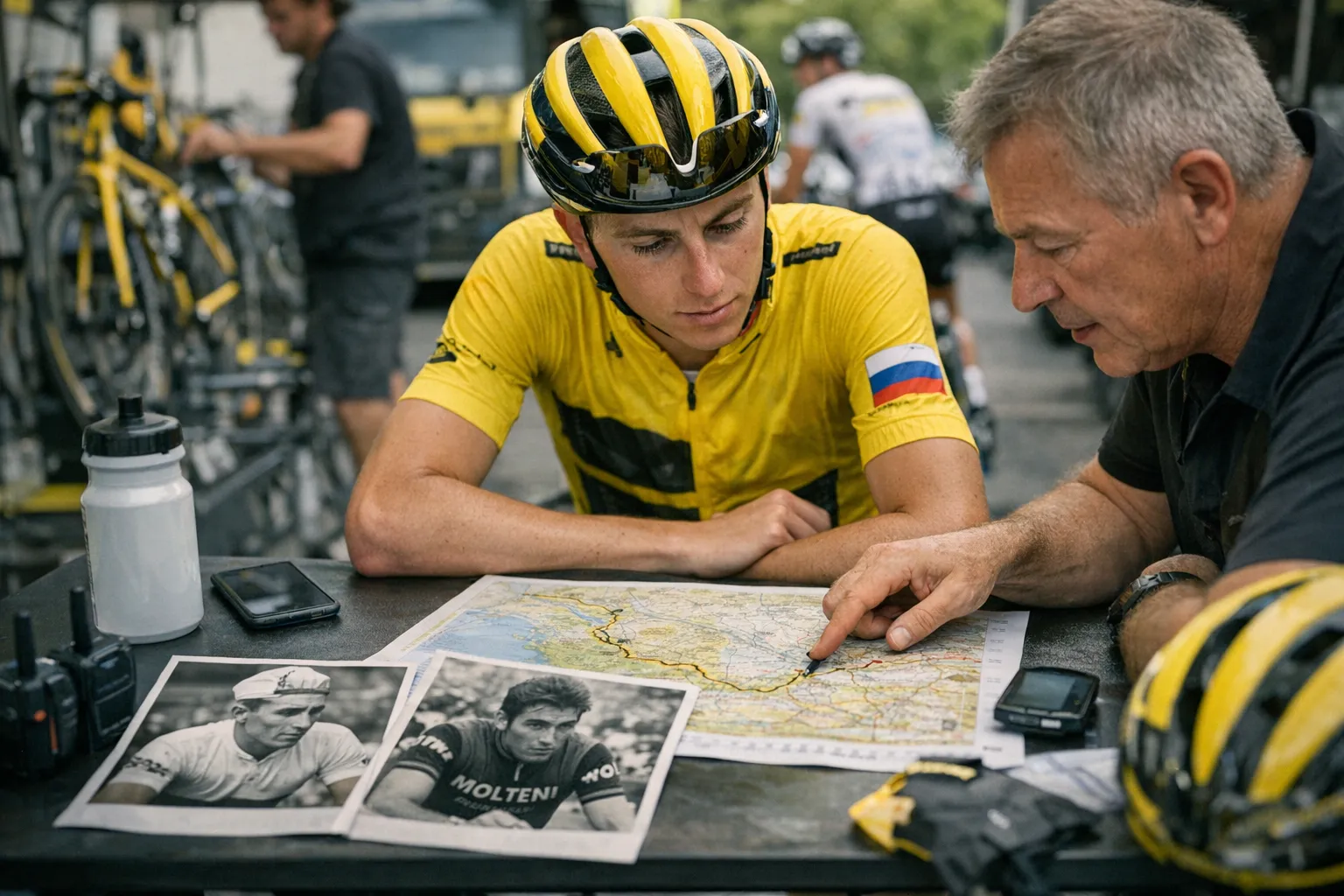
Through a detailed analysis, we will uncover the innovative approaches Pogačar adopted, including his aggressive mountain attacks and cutting-edge technology, and how these elements have redefined competitive cycling. By examining key stages and strategies, readers will gain insights into what makes Pogačar a standout cyclist in the modern era and how his strategies resonate with the legendary methods of cycling's past icons.
Introduction: The Legacy of Tour de France Champions
The Tour de France is not just a race; it's a pinnacle of cycling history, representing the ultimate test of endurance, strategy, and skill. For over a century, it has showcased the greatest talents in cycling, creating legends and inspiring generations. Winning this grueling three-week event is a hallmark of greatness, and few have achieved such a feat repeatedly.
In the 2026 edition, Tadej Pogačar further cemented his status among cycling's elite by securing his fifth Tour de France title. This victory not only tied him with legends like Jacques Anquetil and Eddy Merckx but also underscored his tactical brilliance and relentless drive. Pogačar’s average speed of 43.227 km/h set a new record for the fastest edition, highlighting his exceptional performance and preparation.
Both Anquetil and Merckx left indelible marks on the Tour's legacy. Anquetil was known for his calculated racing style and time trial dominance, while Merckx was a powerhouse, winning multiple stages and the overall title in dramatic fashion. Their contributions set high standards and established benchmarks for future champions.
"Winning the Tour is like climbing a mountain; each champion leaves footprints that others strive to follow."
As we delve deeper into Pogačar's strategies in the 2026 Tour, it becomes essential to compare his approach with those of Anquetil and Merckx, revealing how cycling tactics have evolved while still honoring the legacies of these icons.
Pogačar's Tactical Mastery: An Overview
Tadej Pogačar’s strategic brilliance was on full display during the 2026 Tour de France, characterized by aggressive mountain attacks that set him apart from legendary cyclists like Jacques Anquetil and Eddy Merckx. His tactics in the mountains were not just bold; they were effective, allowing him to reclaim and maintain the yellow jersey throughout the race.
One of the defining moments of Pogačar's campaign was his long-range solo attack on the Col du Tourmalet during Stage 6. This audacious move showcased his ability to read the race and capitalize on his competitors’ weaknesses. By launching his attack early in the stage, he created a significant gap, ultimately sealing his victory and reasserting his dominance in the overall standings.
When comparing Pogačar’s tactics to Anquetil and Merckx, several key differences emerge:
-
Aggression vs. Strategy:
- Pogačar: Frequently initiates attacks, often catching rivals off-guard.
- Anquetil: Known for his calculated approach, often waiting for the right moment to strike.
- Merckx: A relentless force who would overpower opponents with sheer strength, often dominating races through consistent performances rather than flashy attacks.
-
Solo Efforts vs. Team Dynamics:
- Pogačar: Utilizes his team effectively while also relying on solo efforts to secure victories.
- Anquetil: Often counted on his team’s support, focusing on pacing rather than solo breakaways.
- Merckx: Frequently rode alone but had the backing of a strong team to bolster his attacks.
Pogačar's embrace of cutting-edge technology, such as his Colnago Y1Rs aero road bike, also reflects a modern approach to racing. This focus on performance optimization aligns with his tactical mastery, allowing him to maintain an average speed of approximately 43.227 km/h, setting a record for the fastest Tour ever.
In conclusion, while Anquetil and Merckx laid the groundwork for cycling strategy, Pogačar has redefined it, blending aggression with technology and a keen understanding of race dynamics. His fifth title not only ties him with the legends but also marks a new era in competitive cycling.
The Role of Technology in Pogačar's Success
In the 2026 Tour de France, Tadej Pogačar's strategic prowess was significantly enhanced by cutting-edge technology. His choice of equipment played a crucial role in his performance, allowing him to achieve remarkable feats on the road.
-
Colnago Y1Rs Aero Road Bike and TT2 Time Trial Machine: Pogačar's reliance on these advanced bikes underscores his focus on aerodynamics and efficiency. The Colnago Y1Rs, designed for optimal speed, paired with the TT2 time trial machine, provided him with a competitive edge during key stages, including the time trials.
-
3D-Printed Saddle and AI-Designed Helmet: Pogačar's use of a custom 3D-printed saddle ensured maximum comfort and support, tailored specifically to his body. The AI-designed helmet not only enhanced safety but was also optimized for aerodynamics, contributing to his impressive average speed of 43.227 km/h—setting a record for the fastest Tour edition.
-
AI in Training and Recovery: Pogačar's performance coach highlighted the transformative impact of AI on his training regimen. By utilizing AI algorithms, they were able to monitor his performance data in real-time, allowing for precise adjustments in his training and recovery strategies. This included a unique approach where complete rest was prioritized, contrasting with the more common intensive training regimens followed by many athletes.
The integration of these technologies not only showcases Pogačar's forward-thinking approach but also marks a shift in how professional cyclists prepare and compete at the highest levels. This combination of advanced equipment and innovative training methods played a pivotal role in his successful campaign, solidifying his legacy alongside legends like Anquetil and Merckx.
Anquetil and Merckx: The Pioneers of Strategy
Jacques Anquetil and Eddy Merckx revolutionized cycling strategy, each leaving an indelible mark on the sport that continues to influence modern racers like Tadej Pogačar.
Anquetil's Tactical Patience
Anquetil was renowned for his strategic patience, often biding his time until the right moment to strike. His mastery of the time trial was unparalleled; he would accumulate significant gains on flat stages, allowing him to defend his lead during mountainous climbs. This approach highlighted:
- Time Trial Prowess: Anquetil won five Tour de France titles, often relying on his exceptional time trial performances to secure victories.
- Calculated Attacks: He would wait for key moments, often launching decisive attacks when rivals were least prepared, showcasing the importance of timing in cycling.
Merckx's All-Rounder Aggression
In contrast, Eddy Merckx embodied an aggressive style, attacking relentlessly across all terrains. His versatility made him a formidable competitor, allowing him to dominate both climbs and sprints. Key elements of his strategy included:
- Versatile Skillset: Merckx won an impressive 11 Grand Tours, demonstrating his ability to excel in time trials, mountain stages, and flat finishes.
- Aggressive Racing: He often initiated attacks from afar, forcing competitors to respond and creating opportunities for himself.
Shaping Modern Cycling
The legacies of Anquetil and Merckx have shaped the strategies of contemporary cyclists. Their approaches teach valuable lessons on timing, versatility, and aggression, evident in Pogačar's own racing style during the 2026 Tour de France. Pogačar’s long-range attacks, particularly on stages like the Col du Tourmalet, echo Merckx’s aggressive tactics, while his calculated pacing in time trials reflects Anquetil's influence. This blend of strategies has redefined what it means to be a successful cyclist today.
Comparative Analysis: Pogačar vs. Anquetil and Merckx
Tadej Pogačar's aggressive racing style during the 2026 Tour de France has drawn parallels with the legendary approaches of Jacques Anquetil and Eddy Merckx. All three cyclists share a relentless pursuit of victory, often characterized by bold attacks in critical stages.
Similarities in Aggressive Racing Styles
- Long-Range Attacks: Pogačar's decisive solo effort on the Col du Tourmalet mirrors Anquetil's tactical assaults and Merckx's penchant for seizing opportunities in mountain stages.
- Stage Wins: Pogačar's five stage victories in 2026 highlight a similar dominance that both Anquetil and Merckx exhibited during their careers.
Differences in Technology and Training Methods
- Equipment: Pogačar utilized cutting-edge technology, such as the Colnago Y1Rs aero road bike and a 3D-printed saddle, showcasing how far cycling technology has advanced compared to the equipment available in Anquetil and Merckx's eras.
- Training Regimens: Modern advancements, including AI-driven performance monitoring, have transformed training methods. Pogačar's coach emphasizes the importance of technology, contrasting with the more rudimentary training strategies of the past.
Impact of Team Dynamics on Performances
- Team Support: Pogačar benefitted from a strong team, notably Isaac del Toro, who finished third overall. This collaborative dynamic is essential in today's racing context, whereas Anquetil and Merckx often relied on individual prowess.
- Strategic Planning: The structured approach of Pogačar's team contrasts with the more solo-focused strategies of Anquetil and Merckx, who navigated their races with less emphasis on coordinated team efforts.
In summary, while Pogačar, Anquetil, and Merckx share a fierce competitive spirit, their strategies reflect the evolution of cycling, marked by advancements in technology, training, and the role of team dynamics.
The Importance of Recovery in Modern Cycling
In the realm of professional cycling, the concept of recovery has evolved significantly, especially as athletes like Tadej Pogačar redefine the standards of performance. Pogačar’s approach to recovery emphasizes complete rest, contrasting sharply with the relentless training demands seen in today's competitive landscape.
Pogačar's Recovery Strategy
- Complete Rest: Pogačar believes that sometimes the best recovery is simply to "stay on the sofa and do nothing." This philosophy highlights a crucial aspect of his success in the 2026 Tour de France, where he secured his fifth title.
- Focus on Sleep and Nutrition: Alongside rest, adequate sleep and nutrition play pivotal roles in his recovery regimen, allowing him to maximize performance on race days.
Comparisons with Anquetil and Merckx
- Jacques Anquetil: Known for his strategic racing and calculated pacing, Anquetil often used lighter training loads to ensure he was fresh for critical stages. His recovery methods revolved around ensuring he was fit and mentally sharp rather than strictly adhering to a rigorous training schedule.
- Eddy Merckx: Merckx, famed for his aggressive racing style, relied heavily on a demanding training regimen, often pushing the limits of his body. His recovery was less about rest and more about maintaining a constant state of readiness, showcasing a stark contrast to Pogačar’s more relaxed approach.
Evolution of Recovery Strategies
The evolution of recovery strategies reflects the changing nature of the sport:
- Data-Driven Approaches: Today, athletes utilize advanced metrics and technologies to monitor recovery, enabling tailored training plans. Pogačar’s performance coach emphasizes the role of AI in tracking training and recovery metrics.
- Holistic Recovery Methods: Modern cyclists incorporate various recovery techniques, including physiotherapy, massage, and mental conditioning, ensuring a well-rounded approach to performance.
In summary, Pogačar’s innovative recovery strategies not only highlight his unique approach but also signify a broader trend in cycling where recovery is increasingly recognized as vital to achieving peak performance.
Stage Wins and Overall Performance: A Statistical Overview
Tadej Pogačar's performance in the 2026 Tour de France was nothing short of extraordinary. Securing five stage wins, he brought his career total to 26, positioning him fourth on the all-time list of stage victories. This achievement places him alongside cycling legends like Jacques Anquetil and Eddy Merckx, who are renowned for their dominance in the sport.
In comparison, Anquetil and Merckx also have impressive records. Anquetil won a total of 8 stages in his best Tour, while Merckx holds the record for the most stage wins overall, with 34. Their strategies often relied on a combination of endurance and tactical racing, which Pogačar mirrored with his own aggressive style.
Key Comparisons
-
Stage Wins:
- Pogačar: 5 stage wins in 2026, 26 career wins.
- Anquetil: 8 stage wins in a single Tour.
- Merckx: 34 career stage wins.
-
Winning Times:
- Pogačar finished the 2026 Tour with a winning time of 73 hours, 56 minutes, and 26 seconds, which was 6 minutes and 26 seconds faster than his closest competitor, Remco Evenepoel.
-
Average Speeds:
- Pogačar's average speed of 43.227 km/h set a new record for the fastest-ever edition of the Tour. This contrasts with Anquetil and Merckx's times, which, while impressive for their eras, do not match the blistering pace set in 2026.
Pogačar's strategy combined aggressive mountain attacks with a composed racing demeanor, allowing him to capitalize on his competitors' weaknesses. His focus on technology, such as his Colnago Y1Rs aero bike, reflects a modern approach that contrasts with the more traditional methods utilized by Anquetil and Merckx.
Overall, Pogačar’s blend of tactical aggression and cutting-edge performance places him in a unique position in cycling history, making his 2026 Tour de France an event that will be studied for years to come.
Lessons from the 2026 Tour: What Future Cyclists Can Learn
Tadej Pogačar’s remarkable performance in the 2026 Tour de France offers a wealth of insights for aspiring cyclists. His strategic brilliance, technological embrace, and recovery management serve as essential lessons.
Importance of Aggressive Racing and Tactical Planning
Pogačar's approach was characterized by aggressive racing, particularly evident during his long-range solo attack on the Col du Tourmalet in Stage 6. This move not only showcased his strength but also exemplified a key tactical principle: taking calculated risks can yield substantial rewards. Future cyclists should focus on:
- Attacking at strategic moments to catch rivals off-guard.
- Studying terrain to identify optimal points for launching attacks.
Embracing Technology in Training and Equipment
Pogačar's use of cutting-edge technology, including a 3D-printed saddle and an AI-designed helmet, highlights the significance of innovation. These advancements enhance performance by optimizing aerodynamics. Cyclists can learn to:
- Invest in modern equipment that suits their unique physiology.
- Incorporate AI tools to analyze performance data and refine training regimens.
The Balance Between Training and Recovery
Pogačar’s recovery strategy emphasizes complete rest, a stark contrast to the often relentless training schedules seen today. His performance coach notes that effective recovery is crucial for sustained success. Key takeaways include:
- Prioritizing rest to allow the body to recover fully.
- Listening to one’s body to determine when to train hard and when to take a step back.
By internalizing these lessons, future cyclists can enhance their strategies, improve performance, and potentially follow in Pogačar’s illustrious footsteps.
FAQs: Understanding Pogačar's Brilliance
Tadej Pogačar's approach in the 2026 Tour de France raised many questions about his unique racing style and strategies. Here's a breakdown of common inquiries regarding his brilliance.
What makes Pogačar's racing style unique?
Pogačar's racing style is distinguished by his aggressive tactics and adaptability. For instance, his long-range solo attack on the Col du Tourmalet during Stage 6 not only showcased his power but also demonstrated his strategic foresight, allowing him to regain the yellow jersey. His ability to switch from a defensive to an offensive strategy keeps competitors guessing, a trait reminiscent of legends like Anquetil and Merckx.
How does technology influence modern cycling?
Technology plays a pivotal role in modern cycling, as seen with Pogačar's choice of equipment. His Colnago Y1Rs aero road bike and TT2 time trial machine highlight the importance of aerodynamics in optimizing performance. Additionally, Pogačar utilizes cutting-edge tools like a 3D-printed saddle and an AI-designed helmet, indicating a shift towards personalized and data-driven cycling enhancements. These advancements allow for improvements in both speed and comfort, essential for tackling the grueling stages of the Tour.
What can young cyclists learn from Pogačar's success?
Young cyclists can glean several lessons from Pogačar's remarkable journey:
- Embrace technology: Utilizing the latest gear can provide a competitive edge.
- Strategic thinking: Learning to adapt racing strategies based on terrain and competition can lead to success.
- Recovery matters: Pogačar emphasizes the importance of proper recovery strategies, including complete rest, which contrasts with the often intense training regimens of today.
By adopting a holistic approach to training, strategy, and recovery, aspiring cyclists can pave their own paths to success.
Conclusion: Pogačar's Place in Cycling History
Tadej Pogačar's fifth Tour de France title in 2026 cements his status among cycling's elite, placing him alongside legends like Jacques Anquetil and Eddy Merckx. This achievement not only highlights his endurance and skill but also marks him as a formidable force in the sport's history.
Reflecting on Pogačar's legacy, his aggressive racing style has redefined modern cycling strategies. His long-range attack on the Col du Tourmalet and ability to secure five stage wins in this edition illustrate his tactical acumen and physical prowess. His average speed of 43.227 km/h set a new record, emphasizing the evolution of competitive cycling in the modern era.
Looking to the future, Pogačar's innovative approach—utilizing advanced technology such as a 3D-printed saddle and AI-designed helmet—suggests a new era of cycling that prioritizes performance optimization. His training and recovery strategies, which include complete rest, contrast sharply with traditional demands, signaling a shift in how athletes prepare for their peak performances.
In summary, Pogačar's remarkable achievements not only place him as a peer to Anquetil and Merckx but also push the boundaries of what is possible in cycling, inspiring future generations of cyclists.