
The Mona Lisa isn’t just a painting; it’s an icon that has captivated audiences for centuries. Created by Leonardo da Vinci, this masterpiece combines artistic brilliance with a rich historical narrative and a complex evolution of public perception.
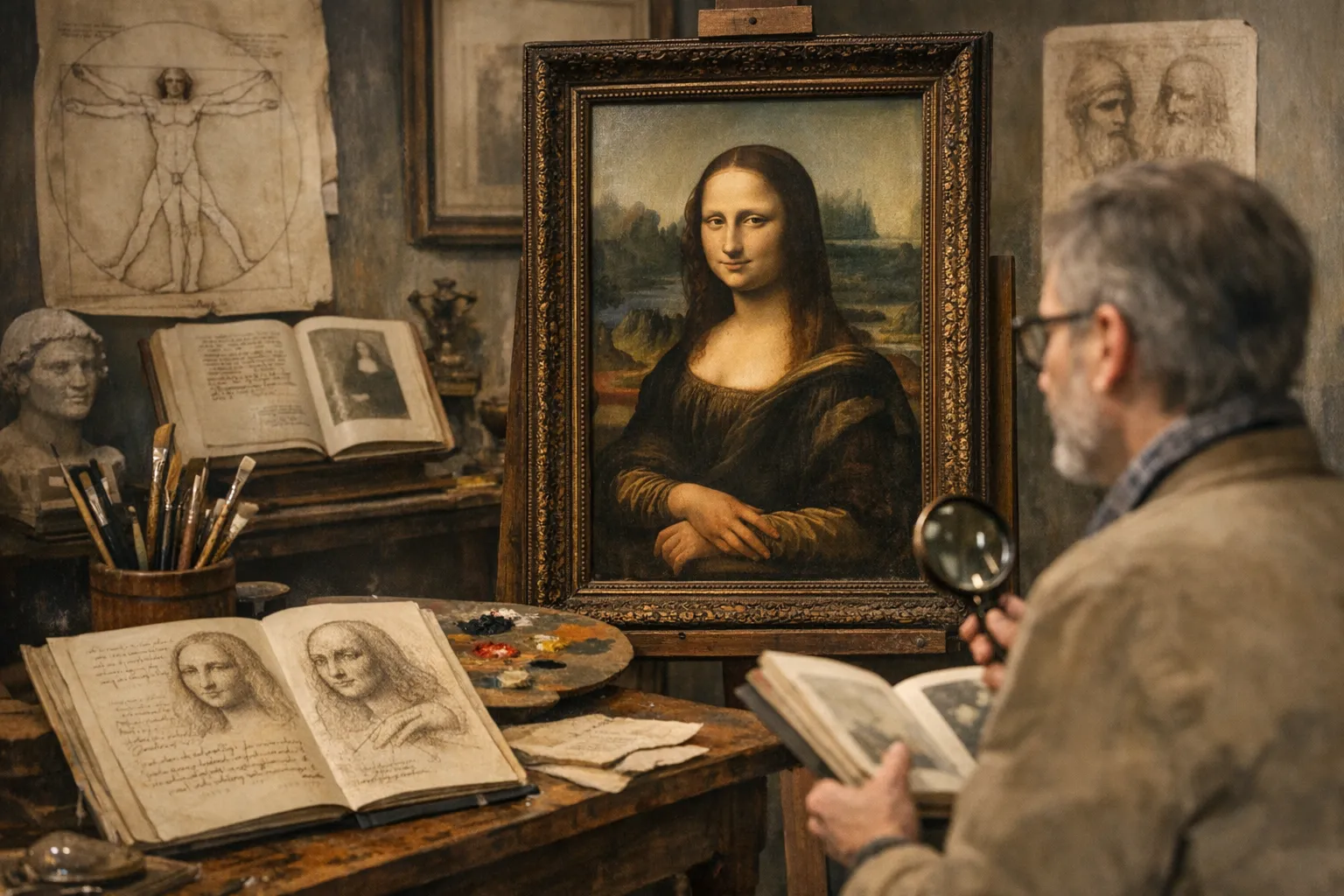
In this exploration, we'll delve into the Mona Lisa's artistic techniques, particularly the innovative use of sfumato that defines its enigmatic expression. We'll also examine the historical context surrounding its creation, including its intriguing backstory and the events that led to its rise in fame, such as its notorious theft in 1911. Finally, we'll reflect on how public perception of the Mona Lisa has transformed over time, influenced by cultural reinterpretations and artistic tributes. Whether you’re an art enthusiast or a history buff, this analysis will deepen your appreciation for one of the world’s most celebrated works of art.
The Artistic Techniques Behind the Mona Lisa
Leonardo da Vinci's Mona Lisa is a benchmark of artistic mastery, showcasing techniques that revolutionized portrait painting during the Renaissance. Central to its allure is the technique known as sfumato, which allows for the seamless blending of colors and tones. This method creates a soft, atmospheric effect, contributing significantly to the painting's enigmatic expression. As one art critic aptly put it, “Sfumato is like the whisper of a breeze, barely felt but profoundly impactful.”
Key Techniques
-
Sfumato: This technique eliminates hard edges, allowing forms to emerge gradually. Leonardo's delicate application of sfumato around the eyes and mouth adds to the painting's mysterious quality.
-
Color Blending: The subtle gradation of colors enhances the three-dimensionality of the figure. Da Vinci skillfully used muted tones to evoke a sense of depth, making the Mona Lisa appear lifelike.
-
Atmospheric Effects: The distant landscape serves not just as a backdrop but also as an extension of the subject's emotional state. The hazy horizon and soft colors evoke a sense of tranquility, drawing viewers into the scene.
Composition
The composition of the Mona Lisa is equally crucial to its impact. With her three-quarter profile, Da Vinci creates an inviting yet elusive presence. This arrangement, influenced by Flemish portraiture and late 15th-century Italian art, encourages viewers to engage with the subject, fostering a personal connection.
The combination of these artistic techniques results in a work that is not just visually stunning but also deeply engaging, inviting interpretations that have evolved over centuries. The Mona Lisa remains a quintessential example of how innovative techniques can elevate art to an enduring masterpiece.
Historical Context: The Renaissance and Its Influence
The Renaissance was a transformative period that spanned roughly from the 14th to the 17th century, characterized by a revival of interest in classical antiquity and a flourishing of arts and sciences. This artistic movement emphasized humanism, perspective, and individual expression, setting the stage for groundbreaking works like Leonardo da Vinci's Mona Lisa.
Leonardo da Vinci emerged as a pivotal figure during the Renaissance, blending art and science in ways that had never been seen before. His mastery of techniques such as sfumato—where colors and tones blend seamlessly without distinct outlines—allowed him to create lifelike representations that conveyed depth and emotion. The Mona Lisa, painted between 1503 and 1517, exemplifies this technique, contributing to its enigmatic allure.
Cultural and societal influences played a crucial role in shaping the Mona Lisa. The painting reflects not only the aesthetics of late 15th-century Italian art but also the burgeoning interest in individual identity, as seen in the portrayal of Lisa del Giocondo, the likely subject. The composition, featuring a three-quarter profile against a distant landscape, is inspired by Flemish portraiture, showcasing the cross-pollination of artistic ideas.
As historian Kenneth Clark noted, "The Renaissance was like a vast river, flowing with creativity and innovation, shaping the very essence of art." This river of change not only birthed the Mona Lisa but also set the course for how art would evolve in the centuries to follow.
In summary, the Renaissance's cultural revival and Leonardo's brilliance collectively gave rise to the Mona Lisa, a work that continues to captivate audiences and influence artists around the world.
The Identity of the Subject: Who is the Mona Lisa?
The identity of the woman depicted in the Mona Lisa has long intrigued art historians and enthusiasts alike. Traditionally, she is believed to be Lisa del Giocondo, the wife of Florentine merchant Francesco del Giocondo. However, various theories have emerged over the years, each offering a different perspective on her identity and significance.
-
Theories Surrounding Lisa del Giocondo's Identity:
- Some scholars propose alternative identities, such as Isabella d'Este or even a composite of multiple women.
- The ambiguity surrounding her identity adds to the painting's allure, leading to endless speculation and interest.
-
Cultural Significance of the Subject:
- The Mona Lisa represents more than just a portrait; she embodies the ideals of the Renaissance, merging beauty with complexity.
- Her expression, often described as enigmatic, invites viewers to engage with her on a deeper emotional level, making her a timeless symbol of feminine mystique.
-
Impact of the Subject's Identity on the Painting's Legacy:
- The identification of the subject as Lisa del Giocondo has solidified the painting's status as a cultural icon.
- The intrigue surrounding her identity has contributed to the Mona Lisa's global fame, particularly after its theft in 1911, which turned it into a household name.
As one art critic noted, “The Mona Lisa is like a riddle; the more you look, the more questions you have.” This enduring mystery continues to captivate audiences, ensuring that the Mona Lisa remains a focal point in discussions about art and identity.
In exploring the identity of the Mona Lisa, we not only delve into the historical context of the painting but also uncover the layers of meaning that have evolved over centuries.
The Theft of the Mona Lisa: A Turning Point in Fame
The theft of the Mona Lisa in 1911 by Vincenzo Peruggia marked a pivotal moment in the painting's history and public perception. Peruggia, an Italian handyman, believed that the painting rightfully belonged in Italy, having been taken by Napoleon. He hid the artwork in his apartment for over two years, which created a sensational narrative around the masterpiece.
The media coverage following the theft was unprecedented. Newspapers worldwide reported on the incident, igniting public interest. Headlines screamed of the "greatest art heist" of the time, and within days, the painting became a symbol of national pride and artistic heritage. Public reactions ranged from shock to outrage, with many feeling a profound connection to the stolen artwork.
As the painting was recovered in 1914, it returned to the Louvre not just as a celebrated piece of art but as a global icon. This event transformed the Mona Lisa from a revered painting into a subject of fascination, much like how "a whisper in a library can echo like a shout in a stadium."
The theft catalyzed the Mona Lisa's evolution in popular culture, inspiring countless replicas and reinterpretations, including Duchamp's parody and Dalí's surrealist take. The incident amplified its mystique, ensuring that the Mona Lisa would forever hold a unique place in the annals of art history.
For those interested in the broader impact of this event, the painting's history can be further explored through its artistic techniques and the Renaissance context.
Public Perception Over Time: From Obscurity to Icon
The journey of the Mona Lisa from an overlooked portrait to a globally recognized masterpiece is a fascinating tale of changing perceptions.
Initially, in the 16th century, the painting garnered limited attention. While Leonardo da Vinci was celebrated for his innovative techniques, the Mona Lisa itself did not attract significant acclaim until after Leonardo’s death. It was King Francis I of France who acquired the painting, effectively securing its place in history but not its immediate fame.
The 19th century marked a turning point. As art movements like Romanticism and Impressionism emerged, the Mona Lisa began to capture the imagination of artists and the public alike. Its theft in 1911 by Vincenzo Peruggia served as a catalyst for its rise to iconic status. The incident generated immense media coverage, transforming the painting into a symbol of artistic and cultural significance. As one observer noted, “The Mona Lisa became the rock star of the art world, drawing crowds like a concert in full swing.”
In the 20th and 21st centuries, the Mona Lisa solidified its status as a cultural icon. It has inspired countless replicas and reinterpretations, from Marcel Duchamp’s playful parody to Salvador Dalí’s surreal take. Today, it is not just a painting but a phenomenon, attracting millions of visitors to the Louvre each year and resonating within popular culture.
This evolution illustrates how art can transcend its initial context, becoming a touchstone of human creativity and expression across centuries.
The Role of Replicas and Reinterpretations
The legacy of the Mona Lisa has been significantly shaped by countless replicas and reinterpretations, each contributing to its enduring fame. One of the most notable reinterpretations is Marcel Duchamp's 1919 work, 'L.H.O.O.Q.', where he humorously added a mustache and goatee to a postcard of the painting. This act not only challenged traditional ideas of art but also solidified the Mona Lisa as a subject of cultural dialogue.
Modern art movements have further influenced the perception of the original. Artists like Salvador Dalí, who created 'Self Portrait as Mona Lisa' in 1954, infused new interpretations that sparked conversations about identity and representation. Such works reflect the painting's adaptability and timeless relevance, showcasing how contemporary perspectives can breathe new life into a classic masterpiece.
Replicas also play a vital role in the painting's fame. From mass-produced art prints to high-quality reproductions, these copies have made the Mona Lisa accessible to a broader audience. As art critic Robert Hughes once said, “The Mona Lisa is the most famous painting in the world, and yet it’s a picture that has been endlessly replicated, like the ultimate celebrity."
In essence, the Mona Lisa's allure is magnified by its reinterpretations and replicas, which continuously engage new generations and ensure that the painting remains a pivotal part of artistic discourse.
The Mona Lisa in Popular Culture
The Mona Lisa has transcended its origins as a Renaissance masterpiece, embedding itself deeply in popular culture. Its presence can be felt across various media, from films and literature to advertising campaigns, making it a cultural icon.
References in Media
- Films: The painting has made appearances in various movies, including The Da Vinci Code, where it plays a pivotal role in the plot, showcasing its mystique.
- Literature: Numerous books reference the Mona Lisa, often using it as a symbol of beauty and enigma, such as in Dan Brown's works.
- Advertising: Brands often incorporate the painting into their marketing, leveraging its recognizability to evoke sophistication and intrigue.
Role in Art Education
The Mona Lisa is a staple in art curricula around the world. It serves as an exemplary case study for:
- The sfumato technique, which allows students to explore the blending of colors and tones.
- The composition and historical context of Renaissance art, making it an essential part of art history discussions.
Cultural Critiques
The painting also invites a spectrum of critiques and discussions:
- Interpretative Analyses: Scholars often dissect its enigmatic expression, likening it to “a riddle wrapped in a mystery inside an enigma.”
- Reinterpretations: The Mona Lisa has inspired numerous reinterpretations, including Marcel Duchamp's playful parody, L.H.O.O.Q., proving that its influence stretches beyond traditional boundaries.
In summary, the Mona Lisa is not just a painting; it is a cultural phenomenon that continues to inspire, provoke, and captivate audiences around the globe.
Myths vs. Reality: Common Misconceptions about the Mona Lisa
The Mona Lisa is shrouded in myths that often overshadow the painting's true history and significance. One common misconception is about its creation timeline. Many believe it was completed in just a few years, but Leonardo da Vinci likely worked on it from 1503 to 1517, refining its details over time.
Another myth revolves around Leonardo's artistic techniques. The Mona Lisa is often celebrated for its enigmatic expression, achieved through the sfumato technique. This method blends colors and tones seamlessly, creating depth without harsh outlines. Contrary to popular belief, this technique is not merely about creating softness; it reflects Leonardo's mastery in depicting lifelike qualities.
The painting's significance is frequently underestimated. Often dismissed as just a portrait, the Mona Lisa is an archetypal masterpiece of the Italian Renaissance. Its composition, featuring a three-quarter profile and a distant landscape, showcases elements from both Flemish portraiture and late 15th-century Italian art.
As art historian William Leith stated, “The Mona Lisa is not just a painting; it’s a portal to understanding the Renaissance.” This analogy captures the painting's ability to connect viewers with a pivotal moment in art history.
Lastly, the theft of the Mona Lisa in 1911 by Vincenzo Peruggia significantly boosted its fame, transforming it into a cultural icon rather than merely an artwork housed in the Louvre. These myths and realities highlight the complexities behind the Mona Lisa and its enduring legacy.
The Mona Lisa's Influence on Future Artists
The Mona Lisa has left an indelible mark on the world of art, influencing countless artists and shaping the evolution of portraiture. Its innovative techniques and enigmatic expression continue to inspire creativity across generations.
Influence on Portraiture and Artistic Techniques
Leonardo da Vinci's masterful use of the sfumato technique in the Mona Lisa set a new standard for portrait painting. The soft blending of colors, without harsh outlines, creates a lifelike quality that has become a hallmark of Renaissance art. This approach not only highlights the subject’s features but also contributes to the painting's overall atmospheric effect.
Artists Inspired by the Mona Lisa
Many renowned artists have drawn inspiration from the Mona Lisa, leading to a myriad of reinterpretations and tributes. Notable examples include:
- Marcel Duchamp: His 1919 parody, L.H.O.O.Q., humorously altered the iconic image, showcasing the Mona Lisa's cultural significance.
- Salvador Dalí: In 1954, Dalí created Self Portrait as Mona Lisa, merging his surreal style with the classical portrait.
- Andy Warhol: The pop artist's silkscreen prints in the 1960s revived interest in the Mona Lisa, blending high art with popular culture.
Role in Shaping Modern Art
The Mona Lisa has transcended its original context to become a symbol of artistic genius. It serves as a reference point for discussions on creativity, identity, and the nature of art. As one art historian aptly put it, "The Mona Lisa is to artists what gravity is to physicists—an essential force shaping their understanding of the craft."
In summary, the Mona Lisa not only revolutionized portraiture but also paved the way for modern artistic expression. Its influence remains potent, reminding us that great art continues to inspire and provoke thought long after its creation.
Conclusion: The Enduring Legacy of the Mona Lisa
The Mona Lisa stands as a pinnacle of artistic achievement and historical significance. Created by Leonardo da Vinci between 1503 and 1517, this iconic portrait not only showcases the innovative sfumato technique but also reflects the sophisticated interplay of light and shadow that imbues it with a lifelike quality. As a half-length portrait, traditionally believed to depict Lisa del Giocondo, it exemplifies the ideals of the Italian Renaissance and has become synonymous with artistic mastery.
In contemporary society, the Mona Lisa transcends its role as a mere painting. It has evolved into a cultural touchstone, referenced in countless forms of media, and inspiring artists from Marcel Duchamp to Salvador Dalí. Its enigmatic smile continues to provoke discussion and interpretation, demonstrating how art can evoke a myriad of emotions and thoughts across different eras.
Looking to the future, the legacy of the Mona Lisa appears secure. As art continues to intersect with technology and popular culture, it is likely that new interpretations and adaptations will emerge, keeping the painting relevant. As one observer aptly noted, "The Mona Lisa is like a mirror; it reflects the viewer's own thoughts and feelings, making it timeless."
In essence, the Mona Lisa is not just a painting; it's a lasting dialogue between the past and present, constantly inviting us to explore its depths.