
Marie Curie's legacy is a powerful testament to the transformative role of women in science and the profound impact of her discoveries in radioactivity. As the first woman to win a Nobel Prize and the only individual to receive Nobel honors in two different scientific fields, her achievements resonate far beyond her time.
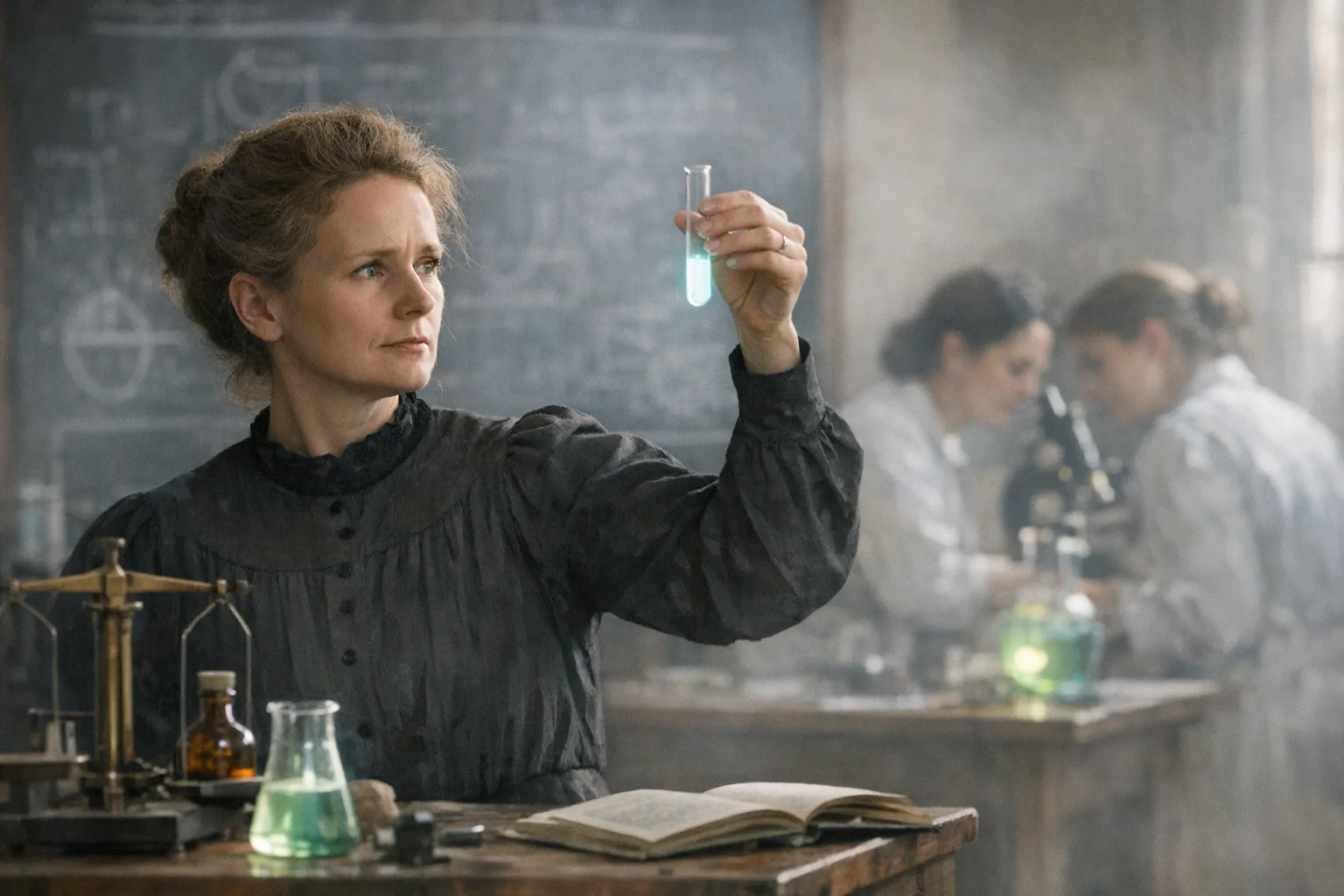
In this article, we will explore Curie's groundbreaking contributions to the field of radioactivity, including her discovery of polonium and radium, and how these elements revolutionized our understanding of atomic science. Additionally, we will delve into her role as a trailblazer for women in academia, showcasing how her journey paved the way for future generations of female scientists. Through her work, Curie not only advanced scientific knowledge but also challenged societal norms, making her a dual icon in both the realms of science and women's representation.
Introduction: The Legacy of Marie Curie
Marie Curie's impact on science transcends her groundbreaking discoveries; she also carved a path for women in a male-dominated field. Her achievements are monumental: she was the first woman to win a Nobel Prize and remains the only person to receive Nobel Prizes in two different scientific disciplines—Physics in 1903 and Chemistry in 1911.
Curie's discoveries of polonium and radium in 1898 significantly advanced our understanding of radioactivity. These elements not only transformed physics but also laid the groundwork for modern medical treatments, particularly in cancer therapy. Her work established the principles of radiation that are still in use today, showcasing the profound implications of her research.
As a pioneer for women in science, Curie faced considerable gender bias yet broke barriers by becoming the first female professor at the University of Paris. She inspired countless women to pursue careers in science, mentoring many who would follow in her footsteps. As one observer noted, "Marie Curie was like a lighthouse, guiding many women through the fog of societal expectations into the shores of scientific discovery."
Additionally, during World War I, Curie's development of mobile X-ray units—affectionately known as "Little Curies"—demonstrated her commitment to using science for humanitarian purposes, further solidifying her legacy. By creating a supportive network for women scientists, she not only advanced her field but also fostered a culture of inclusivity that continues to inspire future generations.
The Discovery of Polonium and Radium
In 1898, Marie Curie made groundbreaking discoveries with the identification of two highly radioactive elements: polonium and radium. These discoveries were pivotal, not only expanding the scientific community's understanding of radioactivity but also challenging existing paradigms about atomic structure and energy.
- Polonium was named after her native Poland and was the first element she discovered. Its radioactive properties laid the groundwork for future research in nuclear physics.
- Shortly thereafter, radium was isolated, which would later play a crucial role in both medical and scientific applications.
Curie's work had a monumental impact. She provided the first concrete evidence of radioactivity, a term she coined herself, fundamentally altering how scientists approached atomic research. This new understanding led to subsequent advancements in fields such as chemistry, physics, and medicine, particularly in the development of radiation therapy for cancer treatment.
“Curie's discoveries were like opening a door that led to an entirely new realm of scientific inquiry,” highlights one expert, emphasizing the transformative nature of her work.
Additionally, Curie's contributions were not limited to her discoveries. As the first woman to win a Nobel Prize, she shattered gender barriers, becoming the first female professor at the University of Paris. Her legacy continues to inspire women in STEM today, as she mentored many female scientists, fostering a network of support that has persisted through generations.
Curie's dual legacy as a pioneer in radioactivity and a champion for women in science remains an enduring testament to her remarkable contributions.
Breaking Gender Barriers in Academia
Marie Curie's legacy extends beyond her groundbreaking discoveries in radioactivity; she fundamentally transformed the role of women in science and education. As the first woman to win a Nobel Prize, Curie shattered prevailing gender norms, earning the Nobel Prize in Physics in 1903 and another in Chemistry in 1911, a feat that remains unmatched.
Her appointment as the first female professor at the University of Paris marked a significant milestone in academia. This achievement not only demonstrated her exceptional intellect but also paved the way for future generations of women scientists. Curie's influence has echoed through time, inspiring women to pursue careers in STEM fields, often in environments that were not welcoming.
Curie was more than just a scientist; she was a mentor. She nurtured numerous women scientists, creating a supportive network that encouraged them to overcome societal barriers. This legacy is vividly illustrated by her daughter, Irène Joliot-Curie, who followed in her footsteps and won the Nobel Prize in Chemistry in 1935.
"Marie Curie didn’t just open doors; she built a whole new wing for women in science."
Her commitment to applying science for humanitarian purposes during World War I, when she developed mobile X-ray units known as 'Little Curies,' further exemplifies her dedication to using her knowledge for the greater good. Curie's pioneering work laid the foundation for medical advancements in cancer treatment, showcasing that her impact transcended her time.
In summary, Marie Curie's achievements in breaking gender barriers in academia not only changed her own life but also created a ripple effect that continues to empower women in science today.
Curie's Humanitarian Contributions During World War I
During World War I, Marie Curie exemplified how scientific innovation could directly benefit humanity. She developed mobile X-ray units, affectionately known as "Little Curies," which played a crucial role in battlefield medicine. These portable machines allowed surgeons to locate shrapnel and bullets in wounded soldiers, drastically improving surgical outcomes.
-
Impact on Battlefield Medicine: The introduction of these mobile units meant that injured soldiers could receive more accurate diagnoses on the front lines. This innovation not only saved lives but also showcased the practical applications of scientific research in urgent humanitarian contexts.
-
Legacy of Humanitarian Work: Curie's commitment to using her expertise for the greater good helped to change perceptions about women in science. By stepping into a role that combined technical skill with compassion, she paved the way for future generations of female scientists who aspire to make a difference in the world.
Curie's humanitarian efforts during the war were not just an extension of her scientific prowess but also a testament to her character. Her ability to blend innovation with care continues to inspire women in STEM today. For more on her groundbreaking contributions, you can explore Curie's Humanitarian Work.
The Medical Legacy of Marie Curie
Marie Curie's groundbreaking discoveries in radioactivity have profoundly impacted modern medical practices, particularly in the fields of cancer treatment and diagnostic imaging. Her pioneering work laid the groundwork for the therapeutic use of radiation, forever changing the landscape of oncology.
-
Advancements in Cancer Treatment: Curie's discovery of polonium and radium in 1898 not only advanced scientific understanding but also set the stage for radiation therapy. This technique became a cornerstone of cancer treatment, allowing for targeted attacks on malignant cells while minimizing damage to surrounding healthy tissue.
-
Role of Radiation Therapy in Medicine: Today, radiation therapy is a standard treatment for various cancers, with continuous advancements stemming from Curie's initial work. Her legacy persists in modern techniques, such as brachytherapy, which utilizes radioactive sources placed close to or within tumors to maximize treatment effectiveness.
-
Curie's Influence on Diagnostic Imaging: Beyond treatment, Curie’s innovations also enhanced diagnostic capabilities. The mobile X-ray units she developed during World War I, known as 'Little Curies,' exemplify her dedication to applying scientific advancements for humanitarian purposes. These units were instrumental in locating shrapnel and bullets in wounded soldiers, paving the way for modern imaging technologies.
Marie Curie's dual legacy in radioactivity and women's representation in science continues to inspire. Her achievements not only revolutionized medical practices but also encouraged future generations of women scientists to pursue careers in STEM fields. For more on her contributions to science and society, see Marie Curie's Nobel Prizes and Curie's Humanitarian Work.
Mentorship and Empowerment of Women Scientists
Marie Curie's legacy extends far beyond her groundbreaking discoveries in radioactivity; she also played a pivotal role in mentoring and empowering women in science. Her commitment to fostering female talent in a male-dominated field has had a long-lasting impact on women in STEM.
-
Supportive Network: Curie created a nurturing environment for aspiring female scientists. By mentoring women, she established a network that encouraged collaboration and knowledge-sharing. This initiative was crucial at a time when women faced significant barriers to entry in scientific research.
-
Influence on Irène Joliot-Curie: Curie's influence is perhaps most vividly illustrated in her daughter, Irène Joliot-Curie, who followed in her mother's footsteps. Irène won the Nobel Prize in Chemistry in 1935 for her work on artificial radioactivity, showcasing the direct impact of Curie's mentorship on the next generation of scientists.
-
Long-Term Impact: The ripple effect of Curie's efforts is evident today. Women in STEM continue to build on the foundations she laid, breaking barriers and achieving recognition in various scientific fields. Her role as the first female professor at the University of Paris inspired countless women to pursue careers in science, contributing to a gradual shift in gender representation.
Marie Curie's commitment to mentoring not only paved the way for her contemporaries but also established a legacy of empowerment that resonates in the scientific community to this day. For more on her influence, check out Marie Curie's Nobel Prizes and Women in STEM Today.
Challenges and Gender Bias Faced by Curie
Marie Curie navigated a landscape rife with societal attitudes that often dismissed women’s contributions to science. During her time, prevailing beliefs suggested that women were unsuited for rigorous academic pursuits. This bias was not merely a backdrop; it actively impeded her career progression.
Despite these challenges, Curie's resilience was remarkable. She not only excelled in her research, discovering polonium and radium in 1898, but also became the first woman to teach at the University of Paris. This achievement was groundbreaking, as it shattered significant gender barriers in academia and paved the way for future female scientists.
However, the impact of gender bias was palpable throughout her career. Curie faced skepticism from her male peers and struggled for recognition, even after winning two Nobel Prizes—one in Physics in 1903 and another in Chemistry in 1911. Her groundbreaking work, which laid the foundation for radiation therapy in cancer treatment, was often overshadowed by her gender.
Curie’s journey also included mentoring many women scientists, creating a supportive network that encouraged them to pursue their research ambitions. Her legacy not only includes her scientific contributions but also her role in inspiring future generations of women in STEM. For more on her achievements, explore Marie Curie's Nobel Prizes and her humanitarian work.
Myths vs. Reality: The Life of Marie Curie
Marie Curie's life is often shrouded in misconceptions that overshadow her groundbreaking achievements. One common myth is that her personal life was fraught with scandal. In reality, Curie was a dedicated scientist whose focus remained on her research and humanitarian efforts, notably during World War I when she developed mobile X-ray units, known as 'Little Curies,' to assist wounded soldiers.
Her scientific achievements are monumental. Curie discovered polonium and radium in 1898, fundamentally changing our understanding of radioactivity. These discoveries not only earned her the Nobel Prize in Physics in 1903 but also made her the first woman to win a Nobel Prize and the only person to secure Nobel Prizes in two different scientific fields—Physics and Chemistry in 1911.
Curie's legacy extends beyond her scientific contributions; she also played a crucial role in popular culture. Her story has inspired countless films, books, and documentaries, portraying her as a pioneering woman in science. Moreover, she became the first female professor at the University of Paris, breaking significant gender barriers and mentoring numerous women scientists, thereby creating a supportive network for future generations.
In summary, the reality of Marie Curie's life is one of resilience, innovation, and inspiration, starkly contrasting with the myths that often cloud her legacy. For more on her achievements, check out Marie Curie's Nobel Prizes and Curie's Humanitarian Work.
Curie's Influence on Future Generations
Marie Curie's groundbreaking achievements continue to resonate within the scientific community, particularly among women aspiring to enter STEM fields. As of recent estimates, women represent about 30% of the workforce in STEM disciplines, a figure that underscores both progress and ongoing barriers.
Curie's story has become a beacon of inspiration for modern scientists. Her journey from a female pioneer to the first woman to win a Nobel Prize serves as a powerful narrative that encourages young women to pursue careers in science. Many contemporary female scientists cite her as a role model, demonstrating that perseverance and dedication can lead to extraordinary accomplishments despite societal obstacles.
However, challenges remain for women in science today. Gender bias and underrepresentation persist, even as initiatives aimed at fostering inclusivity are implemented. Curie's legacy amplifies the importance of mentorship; she actively supported budding female scientists, helping create a network that continues to uplift women in research. Notably, her daughter, Irène Joliot-Curie, followed in her footsteps, winning the Nobel Prize in Chemistry in 1935 for her work on artificial radioactivity.
Curie's humanitarian efforts during World War I, including the development of mobile X-ray units, further illustrate her commitment to applying scientific knowledge for the greater good. This aspect of her legacy inspires current and future generations to see the intersection of science and service.
In essence, Marie Curie's influence extends far beyond her scientific discoveries; it embodies a transformative force that inspires women to break barriers and redefine the landscape of science. For more insights into her legacy, explore Marie Curie's Nobel Prizes and Women in STEM Today.
Conclusion: The Enduring Impact of Marie Curie
Marie Curie's legacy is profoundly dual, intertwining her groundbreaking scientific achievements with her role as a trailblazer for women in science. Her discoveries of polonium and radium in 1898 not only advanced our understanding of radioactivity but also laid the groundwork for modern medical treatments, including radiation therapy for cancer. This scientific foundation continues to impact the field of medicine today, showcasing the importance of her work in contemporary science.
Curie's accomplishments are remarkable not just for their scientific significance but also for their societal implications. As the first woman to win a Nobel Prize and the only individual to earn Nobel Prizes in two different scientific fields—Physics in 1903 and Chemistry in 1911—she shattered gender barriers in academia. Her role as the first female professor at the University of Paris inspired countless women to pursue careers in science, creating a ripple effect that endures in the ongoing fight for gender equity in STEM.
To honor Curie's legacy, it is essential to support women in STEM today. Initiatives that promote female participation in scientific fields can help nurture the next generation of innovators. By investing in mentorship programs and educational opportunities, we can ensure that the path Curie paved for women in science continues to expand.
For more insights into her remarkable journey and contributions, explore her Nobel Prizes here or learn about her humanitarian efforts here. Together, we can celebrate her enduring impact and work toward a more inclusive scientific community, reflecting on the importance of women in STEM today.