
In 1898, Marie Curie achieved a monumental breakthrough that would not only change the landscape of science but also challenge the societal norms of her time. Alongside her husband, Pierre Curie, she discovered polonium and radium, elements that were significantly more radioactive than uranium. This pioneering work marked the birth of the term "radioactivity," a concept that would lay the groundwork for future advancements in medicine and physics.
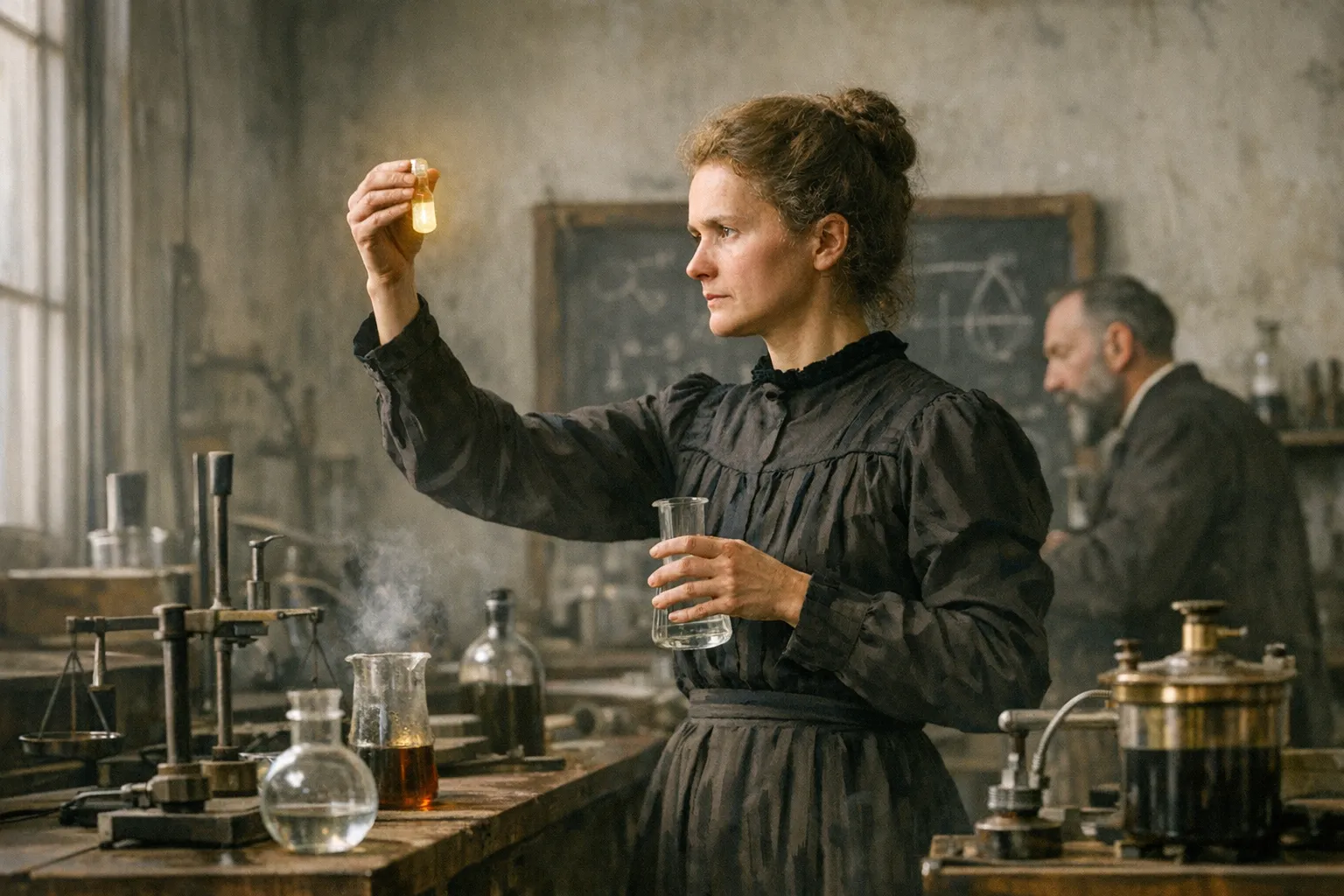
This article will delve into Curie's extraordinary scientific accomplishments and her remarkable journey as a woman in a male-dominated field. We’ll explore how her discoveries not only propelled the scientific community forward but also made her a symbol of resilience against gender barriers. From her historic Nobel Prizes to her struggles for recognition, Curie's story is one of both groundbreaking science and an unyielding quest for equality.
Introduction to Marie Curie's Legacy
Marie Curie's journey began in Warsaw, Poland, where she was born in 1867. Her early education was marked by a thirst for knowledge, despite facing significant obstacles as a woman. After moving to Paris to study at the Sorbonne, Curie's determination and brilliance shone through, earning her degrees in physics and mathematics.
In 1895, she partnered with Pierre Curie, a fellow scientist who shared her passion for research. This collaboration proved pivotal, culminating in their groundbreaking work in 1898, when they discovered two new elements—polonium and radium. Their findings were not just scientific milestones; they were transformative in understanding radioactivity, a term that Marie herself coined to describe the spontaneous emission of ionizing radiation.
The significance of 1898 extends beyond mere discovery. It marked the beginning of Curie's rise as a trailblazer in a male-dominated field. As she once analogized, "Life is not easy for any of us, but what of that? We must have perseverance and above all confidence in ourselves." Her resolve was tested in an environment rife with skepticism and discrimination.
Curie's legacy is profound. She became the first woman to win a Nobel Prize and remains the only individual to have received Nobel Prizes in two different scientific fields: Physics in 1903 and Chemistry in 1911. Despite facing gender-based barriers—such as being excluded from the 1903 Nobel Prize ceremony—Curie's relentless dedication has made her an emblematic figure in the fight for equal opportunities in science.
The Discovery of Polonium and Radium
In 1898, Marie Curie and her husband, Pierre Curie, made a transformative discovery in the realm of science by identifying two new elements: polonium and radium. These elements were found to be significantly more radioactive than uranium, marking a pivotal moment in the study of radioactivity.
Polonium, named after Marie's homeland of Poland, is a rare and highly radioactive metalloid. Radium, on the other hand, is a luminous element that became a cornerstone in medical treatments. The implications of these discoveries extended far beyond mere scientific curiosity. By isolating radium salts from tons of pitchblende ore in their makeshift lab, the Curies laid the groundwork for future advancements in medical technology, particularly in radiotherapy for cancer patients.
Marie Curie's work with these elements not only advanced the field of radioactivity but also established her as a leading figure in a male-dominated scientific landscape. As she famously stated, “Life is not easy for any of us, but what of that? We must have perseverance and above all confidence in ourselves.” This perseverance allowed her to face the skepticism and barriers that came with being a woman in science.
The discoveries of polonium and radium were crucial in shaping the future of physics and medicine, leading to groundbreaking applications such as X-ray machines. Curie’s relentless dedication and innovative spirit made these advancements possible, highlighting her role not just as a scientist, but as a pioneer for women in science.
Coining the Term 'Radioactivity'
Marie Curie's introduction of the term "radioactivity" in 1898 marked a pivotal moment in the scientific community. Radioactivity refers to the spontaneous emission of ionizing radiation from certain unstable elements. This phenomenon is significant because it not only challenged existing understandings of atomic structure but also opened up new avenues for research in both physics and medicine.
Curie's work with her husband, Pierre, led them to discover two new elements—polonium and radium—both of which exhibited levels of radioactivity far exceeding that of uranium. By coining the term "radioactivity," Curie provided a framework for scientists to study ionizing radiation systematically. This was crucial for future research, enabling breakthroughs in areas such as:
- Medical Diagnostics: Her discoveries laid the groundwork for the development of X-ray machines, revolutionizing how doctors diagnose illnesses.
- Cancer Treatment: The application of radium in radiotherapy transformed cancer treatment, improving survival rates and quality of life for countless patients.
Despite her groundbreaking contributions, Curie's journey was fraught with challenges. She faced skepticism from male colleagues and was often denied access to research facilities. Yet, as she once said, "Nothing in life is to be feared, it is only to be understood." This analogy underscores her belief in the power of knowledge to overcome barriers.
Curie's relentless dedication to her research not only advanced the field of science but also made her an emblematic figure in the fight for gender equality in academia. Her achievements have inspired generations of women to pursue careers in science, making her legacy both scientific and social.
Challenges Faced by Marie Curie
During Marie Curie's time, societal attitudes towards women in science were largely dismissive. The prevailing belief was that scientific pursuits were reserved for men, relegating women to supportive roles at best. This gender bias created an environment where female scholars struggled for recognition and respect.
Curie faced specific instances of discrimination that would have deterred many. Notably, she was denied membership in the French Academy of Sciences, a prestigious institution that reflected the pinnacle of scientific achievement. Additionally, during the 1903 Nobel Prize ceremony, she was excluded from the festivities, even though she was a co-recipient of the award alongside her husband, Pierre Curie. This exclusion highlighted the entrenched biases that pervaded even the highest echelons of scientific acclaim.
These challenges significantly impacted Curie's career. She often conducted her groundbreaking research in a poorly ventilated shed, isolating radium salts from tons of pitchblende ore. This not only put her health at risk—exposing her to harmful radiation without adequate protection—but also illustrated her relentless commitment to science amidst adversity.
As Curie herself famously said, "Life is not easy for any of us, but what of that? We must have perseverance and, above all, confidence in ourselves." Her tenacity not only advanced the field of radioactivity, leading to monumental discoveries in medicine, such as the development of cancer radiotherapy, but also paved the way for future generations of women in science.
Marie Curie's Nobel Prizes
Marie Curie's achievements are monumental, not only for their scientific significance but also for their impact on gender equality in academia. Her trajectory began with her groundbreaking work in 1898, where she, alongside her husband Pierre, discovered polonium and radium—elements that would later transform medical treatment.
In 1903, Curie became the first woman to win a Nobel Prize in Physics, a historic milestone that highlighted her exceptional contributions to science in an era dominated by men. This recognition was not without its challenges; she was notably excluded from the Nobel Prize ceremony that year, showcasing the gender biases that persisted even in the scientific community.
Her accolades didn't stop there. In 1911, she won a second Nobel Prize, this time in Chemistry, making her the only individual to receive Nobel Prizes in two different scientific fields. This dual recognition underscores her unique position in history, as she shattered barriers that had long limited women's participation in science.
Curie once remarked, "Life is not easy for any of us, but what of that? We must have perseverance and above all confidence in ourselves." This sentiment resonates deeply with her journey, as she faced skepticism from male colleagues and limited access to research facilities, yet continued to push the boundaries of scientific knowledge.
Her discoveries laid the groundwork for advancements in medical diagnostics and treatment, particularly in cancer therapy, revolutionizing healthcare. Marie Curie's relentless dedication is an enduring symbol in the fight for equal opportunities in science and beyond.
The Impact of Curie's Research on Medicine
Marie Curie's discoveries in 1898, particularly her isolation of radium, had profound implications for the field of medicine, particularly in cancer treatment. The introduction of radium as a treatment option revolutionized radiotherapy, making it a cornerstone of modern oncology. Before Curie's work, options for treating cancer were limited and often ineffective, but her research laid the groundwork for targeted therapies that could directly attack malignant cells.
-
Radium's Role in Cancer Treatment: Curie's isolation of radium led to its application in treating various cancers. Radiotherapy, which uses ionizing radiation to kill cancer cells, has become a standard method of treatment, with radium playing a pivotal role in its evolution.
-
Long-term Effects on Medical Diagnostics: Beyond treatment, Curie's findings also paved the way for advancements in medical diagnostics, including the development of X-ray machines. These technologies have enhanced the ability to detect diseases early, significantly improving patient outcomes.
-
Curie's Lasting Legacy: Today, Curie's work is recognized not only for its scientific merit but also for its impact on public health. Her relentless pursuit of knowledge, often in the face of gender-based discrimination, makes her a symbol of perseverance and progress. As a colleague once noted, "Her legacy is like radium itself—radiating influence long after its initial discovery."
Curie's contributions have undeniably shaped modern medicine, cementing her status as an icon in both scientific and gender equality movements. For more on her groundbreaking achievements, you can explore her Nobel Prizes and the impact of radioactivity in medicine.
Curie's Role as a Female Pioneer in Science
Marie Curie's achievements in the late 19th and early 20th centuries not only transformed the field of science but also carved a path for women in a predominantly male arena. As the first female professor at the University of Paris, Curie broke through significant barriers, serving as a beacon of hope and inspiration for future generations of women scientists.
Her groundbreaking discoveries—most notably the identification of polonium and radium in 1898—were monumental, but her influence extended far beyond her scientific contributions. Curie faced skepticism and discrimination throughout her career, including being denied membership in the French Academy of Sciences and being excluded from the 1903 Nobel Prize ceremony. Yet, she persevered, showcasing a relentless dedication to her work that resonated deeply within the scientific community.
Curie’s legacy as a mentor is equally significant. She inspired countless women to pursue careers in science, proving that gender should not dictate one’s ability to contribute to groundbreaking research. Her role in promoting education for women in science is a testament to her commitment to gender equality. As she once said, "Life is not easy for any of us, but what of that? We must have perseverance and above all confidence in ourselves."
Today, her impact remains relevant. Many contemporary female scientists cite Curie as a pivotal figure in their own journeys. Her work laid the groundwork for advancements in medical treatments like radiotherapy, revolutionizing cancer care and emphasizing the importance of women in science. Marie Curie's legacy continues to inspire, reminding us that the fight for equality in science is far from over, yet progress is possible.
Myths vs. Reality: The Life of Marie Curie
Marie Curie's life is often shrouded in myths that obscure her true accomplishments and the realities she faced as a pioneering woman in science.
One common misconception is about her health and safety practices during her groundbreaking work. Many believe she recklessly handled radioactive materials without concern for safety. In reality, Curie conducted her research in a poorly ventilated shed, isolating radium salts from tons of pitchblende ore, exposing herself to harmful radiation without adequate protection. This highlights her dedication but also the lack of understanding of radiation hazards at the time.
Another myth revolves around her personal life overshadowing her professional achievements. While Curie's marriage to Pierre Curie is often romanticized, it was her own relentless pursuit of knowledge that defined her legacy. She was the first woman to win a Nobel Prize and remains the only person to have received Nobel Prizes in two different scientific fields—Physics in 1903 and Chemistry in 1911. Her triumphs were hard-won in a male-dominated field, where she faced significant discrimination, including being denied membership in the French Academy of Sciences.
Curie's struggles were emblematic of the broader gender barriers in science. She bravely navigated skepticism from male colleagues and limited access to research facilities. As she once stated, “Life is not easy for any of us, but what of that? We must have perseverance and above all confidence in ourselves.” Her perseverance not only led to revolutionary discoveries, such as the identification of polonium and radium but also laid the groundwork for advances in medical treatments, particularly in cancer radiotherapy.
In essence, the reality of Marie Curie's life is one of resilience and groundbreaking achievement, challenging the myths that often overshadow her legacy.
Lessons from Marie Curie's Journey
Marie Curie's path through the male-dominated world of late 19th-century science offers invaluable lessons for contemporary scientists. Her perseverance in the face of adversity stands as a powerful reminder that determination can break through even the toughest barriers.
-
Perseverance Against Odds: Curie's tireless work in a poorly ventilated shed, where she isolated radium salts while exposing herself to harmful radiation, exemplifies her unyielding dedication. Modern scientists can learn that overcoming obstacles often requires not just skill, but also relentless commitment.
-
Diversity and Inclusion: Curie's experiences highlight the critical need for diversity in scientific fields. As she faced skepticism and exclusion, her achievements remind us that innovation flourishes in inclusive environments. Today, fostering diverse teams can lead to groundbreaking discoveries.
Curie's legacy doesn't just lie in her scientific achievements, such as coining the term "radioactivity" and discovering polonium and radium; it also symbolizes resilience and innovation. As she once said, "Life is not easy for any of us. But what of that? We must have perseverance and above all confidence in ourselves." This analogy encapsulates her journey and serves as an inspiration for future generations.
By reflecting on Curie's struggles and triumphs, we can pave the way for a more equitable scientific community, where all individuals can thrive and contribute to the advancement of knowledge. Her story is a clarion call for ongoing efforts toward gender equality in science, ensuring that future pioneers face fewer barriers on their paths to discovery.
Conclusion: The Enduring Legacy of Marie Curie
Marie Curie's contributions to science are monumental and continue to resonate today. In 1898, she and her husband, Pierre Curie, discovered polonium and radium, elements that were significantly more radioactive than uranium. This groundbreaking work not only led to her coining the term "radioactivity" but also laid the foundation for advancements in medical diagnostics and treatments, particularly in cancer therapy.
Despite facing considerable gender-based discrimination—such as being denied membership in the French Academy of Sciences and being excluded from the 1903 Nobel Prize ceremony—Curie persevered. She became the first woman to win a Nobel Prize and remains the only individual to have received Nobel Prizes in two distinct scientific fields, Physics and Chemistry. Her resilience in the face of skepticism and limited access to resources serves as a powerful reminder of the barriers women have historically faced in science.
As we reflect on her legacy, let us remember the analogy: "Curie's journey was like a lighthouse in the fog of gender bias, guiding future generations of women in science." This enduring legacy calls for continued support and advocacy for women pursuing careers in science, technology, engineering, and mathematics (STEM). The strides made by Curie remind us that the pursuit of knowledge must be accessible to all, regardless of gender.