
The Magna Carta is more than just an ancient document; it's a cornerstone of modern democracy. Sealed in 1215, it marked a radical shift in the balance of power between the monarchy and its subjects, laying the groundwork for the rule of law we recognize today.
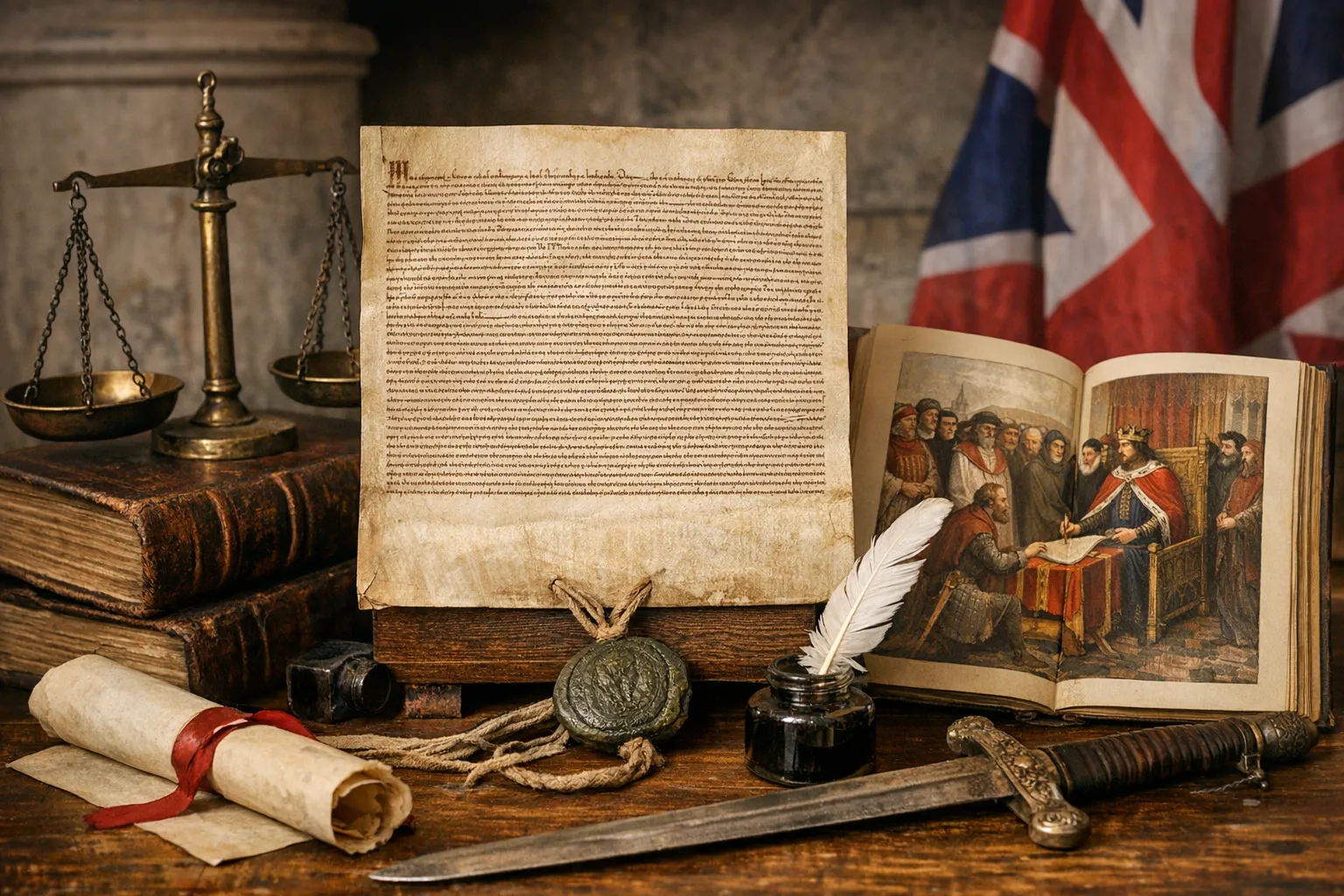
In this exploration, we'll dive into the key clauses of the Magna Carta and their historical significance, examining how this pivotal charter has influenced contemporary legal systems and the development of individual rights. By understanding its legacy, we can appreciate how the principles established over 800 years ago continue to shape our democratic institutions and protect citizens' rights across the globe.
Introduction to the Magna Carta
Sealed in 1215, the Magna Carta represents a pivotal shift in governance, marking the transition from absolute monarchy to a system that acknowledges the rule of law. Its significance lies in establishing the principle that no king, including King John of England, is above the law. This foundational document originally comprised 63 clauses, addressing various feudal rights and legal procedures.
Among its notable provisions, Clause 39 states that "no free man shall be seized or imprisoned... except by the lawful judgment of his equals or by the law of the land." This principle laid the groundwork for the right to a fair trial and has been integral to the development of habeas corpus.
The Magna Carta’s legacy is profound, as it has influenced the evolution of constitutional governance across the globe. It insists that power must be exercised according to established law, which resonates in many modern legal systems today. As one historian aptly put it, the Magna Carta was "the cornerstone of individual rights, like a seed that grew into the mighty oak of democracy."
The document has been reissued and modified numerous times since its inception, reflecting its evolving role in English governance. Its principles continue to echo in contemporary democratic frameworks, including the U.S. Constitution and Bill of Rights, which embody the values of due process and protection against arbitrary authority.
For those interested in exploring more about the historical context of the Magna Carta, you can read here. To understand its impact on modern law, check out this resource.
Key Clauses of the Magna Carta
The Magna Carta, sealed in 1215, is a cornerstone of modern democracy, with several key clauses that have profoundly influenced contemporary legal systems.
-
Clause 39: This clause asserts that "no free man shall be seized or imprisoned... except by the lawful judgment of his equals or by the law of the land." This foundational principle laid the groundwork for the right to a fair trial and due process. It established a legal framework that protects individuals from arbitrary detention, influencing modern legal concepts such as habeas corpus.
-
Clause 1: The protection of church liberties is enshrined in this clause, ensuring that the Church would not be subjected to the king's arbitrary power. By safeguarding the rights of the Church, this clause highlighted the importance of institutional independence in governance, which has echoes in modern legal systems that uphold the separation of church and state.
-
Clause 12: This clause limits taxation without representation, asserting that no taxes can be levied without the consent of the barons. This principle is a precursor to the democratic ideal that citizens should have a say in how they are governed and taxed, resonating in today’s discussions about fair representation in government.
"The Magna Carta is like a compass; it provides direction for justice in the murky waters of power."
These clauses, among others, illustrate the Magna Carta's lasting legacy in shaping the rule of law and promoting individual rights within democratic frameworks. For a deeper dive into the historical context of the Magna Carta, you can explore more here. To learn about its impact on modern law, visit this link.
The Historical Context of the Magna Carta
The creation of the Magna Carta in 1215 was a direct response to the tumultuous socio-political landscape of medieval England, particularly the escalating conflict between King John and his barons. King John's heavy taxation and arbitrary rule fueled widespread discontent among the nobility, who felt their rights and privileges were under threat. This conflict was not merely a power struggle; it represented the broader tensions within the feudal system that governed England at the time.
-
Feudal System Implications: The feudal system dictated a hierarchical structure where land ownership and loyalty were paramount. Barons held lands granted by the king in exchange for military service. However, as King John imposed excessive taxes and failed to fulfill his feudal obligations, the barons began to see his rule as oppressive, leading to a desire for a legally binding agreement that would protect their rights.
-
Influence of the Church: The Church played a pivotal role in the political landscape of medieval England. It often acted as a counterbalance to royal authority, advocating for the rights of the barons and the necessity of fair governance. The Church's backing of the barons during their rebellion against King John highlighted its influence in shaping the political discourse of the time.
The Magna Carta emerged as a revolutionary document that sought to limit the king’s power and establish the principle that even monarchs are subject to the law. This marked a significant shift toward constitutional governance, laying the groundwork for modern democratic legal systems. As noted in Clause 39, it asserted that "no free man shall be seized or imprisoned... except by the lawful judgment of his equals or by the law of the land," a precursor to contemporary notions of due process and individual rights.
For a deeper understanding of the historical context surrounding the Magna Carta, consider exploring more about its implications in modern governance here.
Myth vs. Reality: Common Misconceptions about the Magna Carta
The Magna Carta is often surrounded by myths that can obscure its actual significance and impact on modern governance. One prevalent myth is that the Magna Carta established democracy. In reality, this document, sealed in 1215, primarily served to limit the power of the monarchy. Its core purpose was to ensure that even the king was subject to the law, marking a critical shift towards constitutional governance.
Another common misconception is that all clauses of the Magna Carta remain relevant today. However, many of the original 63 clauses have been repealed or replaced as societies evolved and legal systems developed. For instance, while Clause 39 laid the groundwork for the right to a fair trial, addressing that "no free man shall be seized or imprisoned…except by lawful judgment," numerous other clauses focused on feudal rights are now outdated.
To clarify:
-
Myth: The Magna Carta established democracy.
- Reality: It limited the power of the monarchy.
-
Myth: All clauses are still relevant today.
- Reality: Many have been repealed or replaced.
Understanding these distinctions helps illuminate the Magna Carta's true legacy: its influence on the development of constitutional law and the emphasis on individual rights. Its principles are evident in modern legal systems, including the U.S. Constitution and Bill of Rights, which reflect its enduring commitment to due process and protection against arbitrary authority.
For a deeper dive into the historical context of the Magna Carta, check out this resource, and to learn more about its impact on modern law, visit this link.
The Magna Carta's Influence on Modern Legal Systems
The Magna Carta, sealed in 1215, is often hailed as a cornerstone of modern legal frameworks. Its influence extends beyond British law, serving as a foundational document for constitutional law in various countries around the globe.
One of the most significant impacts of the Magna Carta is its direct influence on the U.S. Constitution and the Bill of Rights. The principles encapsulated in this historic document resonate within these foundational texts, particularly in the emphasis on individual rights and due process. For instance, Clause 39 states that "no free man shall be seized or imprisoned... except by the lawful judgment of his equals or by the law of the land." This laid the groundwork for rights such as habeas corpus, which protects individuals from arbitrary detention.
Key principles derived from the Magna Carta include:
- Due Process: Establishing that legal proceedings must be fair and lawful.
- Protection Against Arbitrary Authority: Ensuring that government power is limited and subject to the law.
The legacy of the Magna Carta is also evident in its impact on the development of constitutional governance. By insisting that power be exercised according to established law, it shaped the legal systems of many democratic nations. Its insistence on the rule of law challenges the notion of unchecked authority, advocating for a system where everyone, including leaders, is subject to the law.
In summary, the Magna Carta's enduring influence can be seen in the principles of modern democracy, shaping legal systems that prioritize individual rights and due process. For a deeper dive into its historical context, explore more about the Magna Carta. Additionally, you can learn about its impact on modern law.
Case Study: The Magna Carta's Impact on the U.S. Constitution
The Magna Carta's influence on the U.S. Constitution is profound, establishing foundational legal principles that continue to shape American governance. Here are specific examples of this impact:
-
Direct References in the Bill of Rights: The Bill of Rights, ratified in 1791, echoes the ideals set forth in the Magna Carta. For instance, the Fifth Amendment guarantees that no one can be deprived of life, liberty, or property without due process of law, a clear lineage to Clause 39 of the Magna Carta which asserts that "no free man shall be seized or imprisoned... except by the lawful judgment of his equals or by the law of the land."
-
Concept of Habeas Corpus: The Magna Carta laid crucial groundwork for the legal principle of habeas corpus, which protects against unlawful detention. This concept is enshrined in the U.S. Constitution under Article I, Section 9, ensuring that individuals cannot be imprisoned without cause, further embedding the value of due process within American law.
-
Influence on the Separation of Powers: While the Magna Carta did not explicitly outline the separation of powers, its insistence on limiting the monarch's authority informed the framers of the U.S. Constitution. They established a system of checks and balances among the executive, legislative, and judicial branches to prevent any single entity from wielding unchecked power, mirroring the principles of governance that emerged from the Magna Carta's legacy.
The Magna Carta's enduring principles continue to serve not only as historical milestones but also as vital components of modern democratic systems. For a deeper understanding of the historical context of the Magna Carta, you can explore more here. To learn about its impact on modern law, visit this link.
The Evolution of the Magna Carta
The Magna Carta, sealed in 1215, was not merely a one-time event but rather a living document that evolved through subsequent reissuances and modifications. Over the years, it was reissued multiple times, reflecting the changing landscape of governance and legal thought in England.
-
Reissues and Modifications: The Magna Carta was reissued in 1216, 1217, and 1225, among others, with various clauses modified or removed. This adaptability allowed it to remain relevant to the political climate of the time.
-
Evolving Governance: Each iteration of the Magna Carta addressed the pressing issues of its day, such as taxation and feudal rights. The original 63 clauses covered a wide range of concerns, many of which have since been replaced or repealed in favor of modern legal frameworks.
-
Continued Relevance: Even today, the Magna Carta serves as a cornerstone in discussions about rights and liberties. Clause 39, which asserts that "no free man shall be seized or imprisoned... except by the lawful judgment of his equals or by the law of the land," laid the groundwork for principles like due process and habeas corpus.
The legacy of the Magna Carta is profound, influencing the development of constitutional law and the concept of individual rights in democracies around the world. Its insistence on the rule of law and limitation of arbitrary power can be seen echoed in modern legal systems, including the U.S. Constitution and Bill of Rights.
For a deeper understanding, you can explore the historical context of the Magna Carta or learn about its impact on modern law here.
FAQs about the Magna Carta
The Magna Carta, sealed in 1215, is often cited as a cornerstone of modern democracy. Let’s address some common questions about this pivotal document.
What was the primary purpose of the Magna Carta?
The primary purpose of the Magna Carta was to limit the power of the English monarchy and protect the rights of the barons. By establishing that the king was subject to the law, it marked a significant shift towards constitutional governance. Originally comprising 63 clauses, it addressed various feudal rights, taxation, and legal procedures.
How did it influence later documents?
The Magna Carta laid the groundwork for many foundational legal documents. Its principles can be seen in the U.S. Constitution and the Bill of Rights, particularly concerning due process and individual rights. For instance, the right to a fair trial, encapsulated in Clause 39, is echoed in contemporary legal systems worldwide. Its emphasis on the rule of law and limitations on arbitrary power has influenced countless legal frameworks.
Are any clauses still in effect today?
While many clauses of the Magna Carta have been repealed or replaced by modern laws, some principles remain. Clause 39, which guarantees that "no free man shall be seized or imprisoned... except by the lawful judgment of his equals or by the law of the land," has laid the foundation for the modern principle of habeas corpus. The document’s legacy continues to resonate, shaping the development of constitutional law and individual rights.
For a deeper understanding, you can explore more about the historical context of the Magna Carta or learn about its impact on modern law.
Pitfalls in Understanding the Magna Carta
While the Magna Carta is often heralded as a cornerstone of modern democracy, several common misunderstandings can cloud its true significance. Here are key pitfalls to consider:
-
Overlooking its Feudal Context: The Magna Carta was primarily a product of its time, rooted in the feudal system. It addressed the grievances of the barons against King John, focusing on specific rights and privileges rather than universal human rights. This context is crucial for understanding its original intent and limitations.
-
Assuming It Was a Democratic Document from the Start: Many view the Magna Carta as an early form of democratic governance. However, it did not establish democratic principles in their entirety. Instead, it aimed to limit the king's power, primarily benefiting the nobility. The broader application of its principles to all citizens emerged much later.
-
Ignoring Its Gradual Evolution and Reinterpretation: The Magna Carta has undergone several revisions and reinterpretations since its initial signing in 1215. Originally consisting of 63 clauses that addressed various feudal rights, many of these clauses have been repealed or replaced. Its legacy evolved, influencing concepts like due process and the rule of law over centuries.
Understanding these pitfalls helps clarify the Magna Carta's role in shaping modern legal systems and emphasizes its journey from a feudal charter to a symbol of constitutional governance. For a deeper dive, you can explore more about the historical context of the Magna Carta or learn about its impact on modern law.
Conclusion: The Legacy of the Magna Carta
The Magna Carta, sealed in 1215, serves as a cornerstone in the development of modern democracy and legal systems. Its enduring principles continue to resonate, inspiring movements for rights and liberties across the globe. This historic document not only marked a critical shift toward limiting monarchical power but also established the foundational idea that everyone, including the king, is subject to the law.
One of the most significant aspects of the Magna Carta is its role as a symbol of the rule of law and governance. Clause 39, which asserts that "no free man shall be seized or imprisoned... except by the lawful judgment of his equals or by the law of the land," laid the groundwork for the right to a fair trial. This principle has become integral to contemporary legal discussions, particularly in debates surrounding civil rights and due process.
Moreover, the Magna Carta's influence extends beyond its immediate context. Its insistence on limitations to arbitrary power and the importance of lawful governance has shaped constitutions and legal frameworks worldwide. The U.S. Constitution and Bill of Rights, for instance, reflect its core tenets, embodying the ideals of due process and protection against tyranny.
In summary, the legacy of the Magna Carta is profound and multifaceted. It underscores the importance of individual rights and serves as a reminder of the ongoing struggle for justice and equality. As we navigate contemporary legal challenges, the principles established in this historic document remain as relevant today as they were over 800 years ago.