
Jesse Owens' triumph at the 1936 Berlin Olympics was more than just a remarkable athletic achievement; it was a powerful statement that reverberated across the globe. By winning four gold medals and setting world records in the 100m, 200m, long jump, and 4x100m relay, Owens not only defied expectations but also directly challenged the racist ideologies espoused by the Nazi regime.
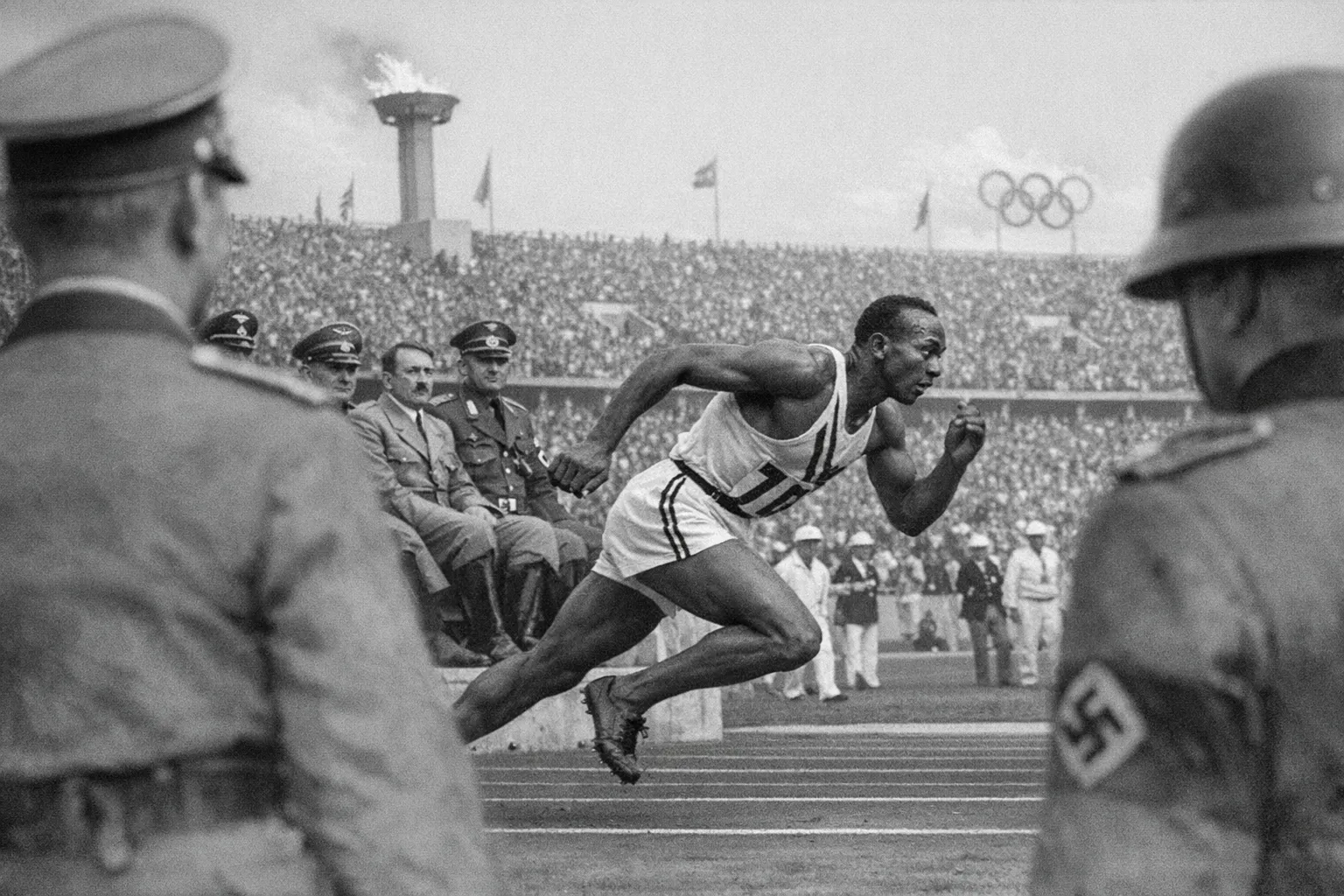
In this analysis, we'll explore how Owens' victories transcended the realm of sports, highlighting the complex interplay between athletics and politics during a time when racial tensions were palpable both in Germany and the United States. We will delve into how his success contradicted Nazi propaganda, the implications for African American athletes facing segregation at home, and the limited recognition he received in the aftermath of his historic achievements. By examining these elements, we can better understand the broader societal implications of Owens' remarkable performance at the 1936 Berlin Olympics.
The Historical Context of the 1936 Berlin Olympics
The 1936 Berlin Olympics served as a pivotal propaganda tool for Nazi Germany, orchestrated to showcase the supposed superiority of the Aryan race. Adolf Hitler aimed to leverage the global stage of the Olympics to promote his regime’s ideologies, presenting a vision of a powerful, racially pure nation. The significance of these Games lay not just in athletic competition, but in their role as a veneer for the oppressive political climate of the time.
Leading up to the Olympics, the world was rife with tension. The Nazi regime had already begun implementing policies that marginalized Jews and other minorities, setting the stage for a broader campaign of discrimination and violence. The U.S. Olympic Committee faced intense debate over whether to boycott the Games, given the regime's blatant racism. Ultimately, they decided to participate, sending athletes like Jesse Owens to Berlin, which added layers of complexity to the event.
Owens’ triumphs—winning four gold medals and setting world records—directly contradicted the narrative of Aryan supremacy that Hitler hoped to promote. As Owens ran and jumped to victory, he symbolized a powerful challenge to the regime's ideology. The impact of his achievements extended far beyond the stadium, highlighting the racial tensions within the U.S., where African American athletes faced segregation and discrimination despite their athletic prowess.
As one commentator noted, the Olympics were "a stage where the athletes danced to the tunes of their nations’ politics." Owens' success became a profound moment at this intersection, forcing the world to confront its own prejudices while directly undermining the Nazi narrative.
These Games left a lasting legacy, illustrating how sports can serve as a battleground for political ideologies. The triumph of Jesse Owens at the 1936 Berlin Olympics was not just a personal victory; it was a historic challenge to the very foundations of racial discrimination.
Jesse Owens: The Athlete and His Achievements
Jesse Owens' performance at the 1936 Berlin Olympics remains one of the most iconic displays of athletic prowess and political defiance in sports history. He won four gold medals, dominating the 100m, 200m, long jump, and 4x100m relay events. Each victory not only showcased his extraordinary talent but also set world records, fundamentally altering the landscape of athletics.
- 100m: Owens sprinted to victory, clocking in at 10.3 seconds, a record that would stand for years.
- 200m: He followed up with another gold, finishing in 20.7 seconds.
- Long Jump: Perhaps his most dramatic event, Owens leaped 8.06 meters, a record that also stood for more than two decades.
- 4x100m Relay: Owens anchored the U.S. team to victory, solidifying his place in Olympic history.
Owens’ achievements were particularly significant against the backdrop of Nazi propaganda, which aimed to promote Aryan superiority. As he stood on the podium, his triumphs directly contradicted Adolf Hitler’s narrative, demonstrating that athletic excellence knows no racial boundaries.
In many ways, Owens was a beacon in a murky political climate. As noted by one commentator, “His victories were like a powerful wind, sweeping away the cobwebs of racial prejudice.” This metaphor captures how Owens’ success challenged the prevailing ideologies of the time.
Comparatively, other athletes struggled to gain recognition in a world rife with discrimination. Despite his incredible accomplishments, Owens received limited acknowledgment from the U.S. government, illustrating the racial tensions that persisted even as he made history.
Owens' legacy is not merely about medals but the profound impact he had on sports and society, serving as a reminder of the intersection of athletics and politics during a tumultuous period.
Nazi Propaganda vs. Reality: The Impact of Owens' Victories
The 1936 Berlin Olympics were designed by Adolf Hitler to showcase Aryan supremacy, promoting an ideology steeped in racial superiority. The event was intended to solidify his regime's narrative that Aryans were the pinnacle of human achievement. However, Jesse Owens' extraordinary performance directly countered this propaganda.
Owens won four gold medals, setting world records in the 100m, 200m, long jump, and 4x100m relay. Each victory was a pointed rebuttal to Nazi claims of racial superiority. As Owens himself put it, "It’s all about the spirit of competition, not the color of your skin." This sentiment encapsulated how sports can transcend racial and political boundaries, challenging entrenched ideologies.
The reactions from the Nazi regime were revealing. Following Owens' triumphs, Hitler's initial excitement turned to discomfort. He famously declined to congratulate Owens, reflecting a desperate attempt to maintain the façade of Aryan dominance in light of undeniable evidence to the contrary. In his view, the success of an African American athlete was an embarrassment, undermining the very foundation of his propaganda.
Owens' achievements also resonated within the United States, highlighting the racial tensions prevalent at the time. While he was celebrated in Berlin, back home, Owens faced segregation and discrimination, a stark reminder that his victories did not erase the struggles of African Americans. The contrast between his Olympic glory and the limited recognition from figures like President Franklin D. Roosevelt further illustrated the complexities of race relations in America.
In essence, Owens’ success at the 1936 Berlin Olympics was not just about athletic prowess; it was a pivotal moment that exposed the hypocrisy of Nazi ideology and underscored the broader societal challenges faced by African Americans.
The U.S. Olympic Committee's Dilemma: Boycott or Compete?
As the 1936 Berlin Olympics approached, the U.S. Olympic Committee faced a moral quandary: to boycott the games in protest against Nazi policies or to compete and potentially legitimize Adolf Hitler’s regime. The initial discussions leaned toward a boycott, spurred by growing concerns about the oppressive treatment of Jews and other minorities in Germany.
Advocates for a boycott argued that participating would be seen as an endorsement of Nazi ideology. The thought of American athletes competing under a regime that promoted racial superiority was deeply troubling. Some committee members, athletes, and civil rights activists believed it was imperative to take a stand against the blatant discrimination that defined Nazi Germany.
However, as the debate continued, the committee ultimately decided to participate. This decision was influenced by a variety of factors, including the desire to maintain the integrity of the Olympic spirit and the opportunity for American athletes to showcase their talents on a global stage. Among those athletes was Jesse Owens, whose potential to win gold medals brought a glimmer of hope for challenging Nazi propaganda. His expected success represented a counter-narrative to the Aryan supremacy myth that the Nazis sought to promote.
The implications of this decision were profound. Owens’ victories did more than just bring glory to the U.S.; they symbolized a significant challenge to the racial ideologies espoused by the Nazi regime. As one observer noted, it was as if Owens had "run through the walls of prejudice" and emerged victorious.
Despite his monumental achievements—winning four gold medals and setting world records—Owens returned home to a country still grappling with its own racial tensions. He faced limited recognition from political leaders, including President Franklin D. Roosevelt, who failed to publicly acknowledge his accomplishments. This stark contrast between Owens' triumph in Berlin and the societal realities of his time highlights the complex interplay of sports and politics, a theme that resonates well beyond the 1936 Olympics.
For more insight into these historical events, you can learn more about the 1936 Berlin Olympics or explore Jesse Owens' biography.
Racial Tensions in America: A Paradox of Achievement
Jesse Owens' triumphs at the 1936 Berlin Olympics stand in stark contrast to the racial dynamics of his time in the United States. African American athletes, including Owens, faced systemic segregation and discrimination, a reality that persisted even as they achieved remarkable success on the global stage.
-
Segregation and Discrimination: African Americans were routinely barred from professional sports teams, college athletic programs, and even public facilities. This institutionalized racism created an environment where Owens’ accomplishments were not just personal victories, but also acts of defiance against a deeply entrenched social order.
-
Owens' Achievements: Winning four gold medals and setting world records in events like the 100m and long jump, Owens became an international symbol of excellence. Yet, his achievements occurred against a backdrop of racial inequality, where his status as a champion did not shield him from the harsh realities of Jim Crow laws.
-
Public Perception: Despite his monumental success, public recognition in America was limited. Owens’ victories in Berlin directly challenged Nazi propaganda that promoted Aryan supremacy, yet back home, he received scant acknowledgment from influential figures like President Franklin D. Roosevelt, who did not publicly celebrate his accomplishments.
As Owens himself noted, "To be a Negro in America is like being a man in a world of boys." His triumphs in Berlin illuminated not just his personal prowess but also the broader societal paradox: a nation that celebrated athletic excellence while simultaneously perpetuating racial injustice.
In this sense, Owens' legacy extends beyond sports; it serves as a reminder of the complexities of race, achievement, and recognition in American society.
Political Recognition and the Aftermath of the Olympics
Despite his extraordinary achievements at the 1936 Berlin Olympics, Jesse Owens received limited acknowledgment from President Franklin D. Roosevelt. While Owens won four gold medals and shattered records, the lack of a formal invitation to the White House exemplified the political ramifications of race in America. Roosevelt’s silence on Owens' feats illustrated a reluctance to confront the racial tensions prevalent in the U.S. at the time.
Owens' victories resonated beyond the Olympic arena, playing a pivotal role in the civil rights movement. His success became a symbol of resistance against racism, challenging the narrative of racial inferiority propagated by Nazi ideology. The stark contrast between his achievements in Berlin and the segregation he faced at home highlighted the hypocrisy of American society. As Owens himself noted, “It’s like being an eagle in a chicken coop,” capturing the duality of his triumph and the societal constraints he still navigated.
In the long run, Owens' legacy in both sports and politics was profound. His Olympic success not only contradicted Nazi propaganda but also served as a catalyst for conversations about race and equality in America. The impact of his achievements is still felt today, as they laid groundwork for future athletes to engage in social justice initiatives. Owens’ story is a reminder that the intersection of sports and politics can spark significant change, despite the barriers that may exist.
The Legacy of Jesse Owens: Sports and Social Change
Jesse Owens emerged from the 1936 Berlin Olympics not just as an athlete but as a powerful symbol of resistance against racial oppression. His four gold medals—won in events designed to showcase Aryan superiority—directly contradicted Nazi propaganda and exposed the fallacy of racial ideologies. Owens’ triumphs highlighted the absurdity of discrimination, demonstrating that talent and excellence transcend race.
Owens influenced future generations of athletes and civil rights activists. His victories became a rallying point for those fighting against racial discrimination. Figures like Tommie Smith and John Carlos, who made their own political statements during the 1968 Olympics, cited Owens as a source of inspiration. His legacy also resonates in the actions of contemporary athletes who use their platforms to advocate for social justice.
In today’s discussions on race and sports, Owens' impact remains relevant. His story serves as a reminder of the struggles faced by athletes of color and the ongoing fight against systemic racism. As the world grapples with issues of inequality, Owens’ legacy encourages a deeper understanding of how sports can serve as a vehicle for social change.
"Owens didn’t just run fast; he shattered the chains of oppression with every stride."
Overall, Owens’ achievements at the 1936 Berlin Olympics were more than records; they were a profound challenge to societal norms and a beacon of hope for future generations.
Myths vs. Reality: Common Misconceptions about Owens and the Olympics
Jesse Owens’ triumph at the 1936 Berlin Olympics has been surrounded by various myths that often distort the historical context. One common misconception is the notion that Owens had a direct relationship with Adolf Hitler. While it’s true that Owens was photographed in close proximity to the Führer, he was not singled out nor did he engage with Hitler personally. The German leader’s intentions to use the Games for propaganda were thwarted by Owens’ victories, which directly challenged Nazi ideology.
Another prevalent myth suggests that Owens was ignored by the U.S. government. In fact, the U.S. Olympic Committee faced internal debates about boycotting the Games due to Nazi policies but ultimately decided to participate. Owens, alongside other athletes, was sent to Berlin, reflecting the complexities of U.S. politics at the time. His achievements did not receive the recognition they deserved from President Franklin D. Roosevelt, who never publicly acknowledged Owens’ groundbreaking accomplishments.
Additionally, the narrative surrounding Owens’ experiences in Berlin often overlooks the broader racial tensions in the United States. Despite his monumental success—winning four gold medals and setting world records—Owens returned to a country where he faced segregation and discrimination. His victories highlighted the hypocrisy of a nation that celebrated his athletic prowess while simultaneously denying African Americans equal rights.
Ultimately, Owens’ legacy transcends his athletic feats; it serves as a poignant reminder of the intersection of sports and politics, challenging both Nazi propaganda and American racial policies.
FAQs about Jesse Owens and the 1936 Berlin Olympics
What were the main events Owens competed in?
Jesse Owens made history at the 1936 Berlin Olympics by competing in four events: the 100 meters, 200 meters, long jump, and the 4x100 meter relay. He won gold medals in all these events, setting world records in the process. His performances not only showcased his extraordinary athleticism but also disrupted the prevailing narratives of racial superiority being promoted by the Nazi regime.
How did the public react to Owens' victories?
Owens' victories elicited mixed reactions. Many in the United States celebrated his achievements, viewing them as a triumph against racial discrimination. However, his success also exposed the racial tensions in America, where African American athletes faced significant societal challenges despite their accomplishments. Internationally, his wins undermined Nazi propaganda, challenging the idea of Aryan supremacy and generating both admiration and anger within different factions of the German audience.
What was the significance of Owens' achievements in the context of the Olympics?
Owens' triumphs at the 1936 Berlin Olympics were significant on multiple levels. They directly contradicted Adolf Hitler's intentions to showcase Aryan superiority and highlighted the intersection of sports and politics. His victories became a powerful symbol of resistance against oppressive ideologies, ultimately transcending the world of athletics. Owens not only redefined what was possible for Black athletes but also forced a global audience to confront the realities of racism, both in Nazi Germany and in the United States.
For more insights into the 1936 Berlin Olympics, you can learn more here. To explore Jesse Owens' biography, visit this link.
Conclusion: The Enduring Impact of Jesse Owens on Sports and Politics
Jesse Owens’ extraordinary performance at the 1936 Berlin Olympics not only earned him four gold medals but also positioned him as a pivotal figure in the interplay between sports and politics. By setting world records in the 100m, 200m, long jump, and 4x100m relay, Owens defied the Nazi regime’s narrative of Aryan superiority, demonstrating that athletic prowess transcends race. His victories were a direct affront to Adolf Hitler’s propaganda, which aimed to promote Aryan nationalism, highlighting the profound impact of sports on societal ideologies.
Owens’ success resonated deeply within the context of racial tensions in the United States, where African American athletes were simultaneously celebrated for their achievements yet subjected to systemic discrimination and segregation. This contradiction was stark; while Owens was celebrated globally, he received limited recognition at home, notably from President Franklin D. Roosevelt, who did not publicly acknowledge his Olympic triumphs.
In reflecting on Jesse Owens' legacy today, it’s clear that his achievements continue to inspire discussions about race, equality, and the role of sports in social justice movements. His triumphs serve as a reminder of the power of sports to challenge societal norms and promote change. Owens’ story is not just one of athletic excellence but a powerful symbol of resilience and progress in the ongoing fight against racism. As we navigate contemporary issues of inequality, Owens' legacy remains an enduring testament to the intersection of sports and politics, urging us to recognize and confront the biases that persist in society.