
In 1541, Francisco de Orellana embarked on a journey that would reshape Europe's understanding of South America. As the first European to navigate the entire length of the Amazon River, Orellana's expedition unveiled a vast and complex landscape filled with untold resources and indigenous cultures. His discoveries not only expanded geographical knowledge but also ignited a wave of European exploration and exploitation.
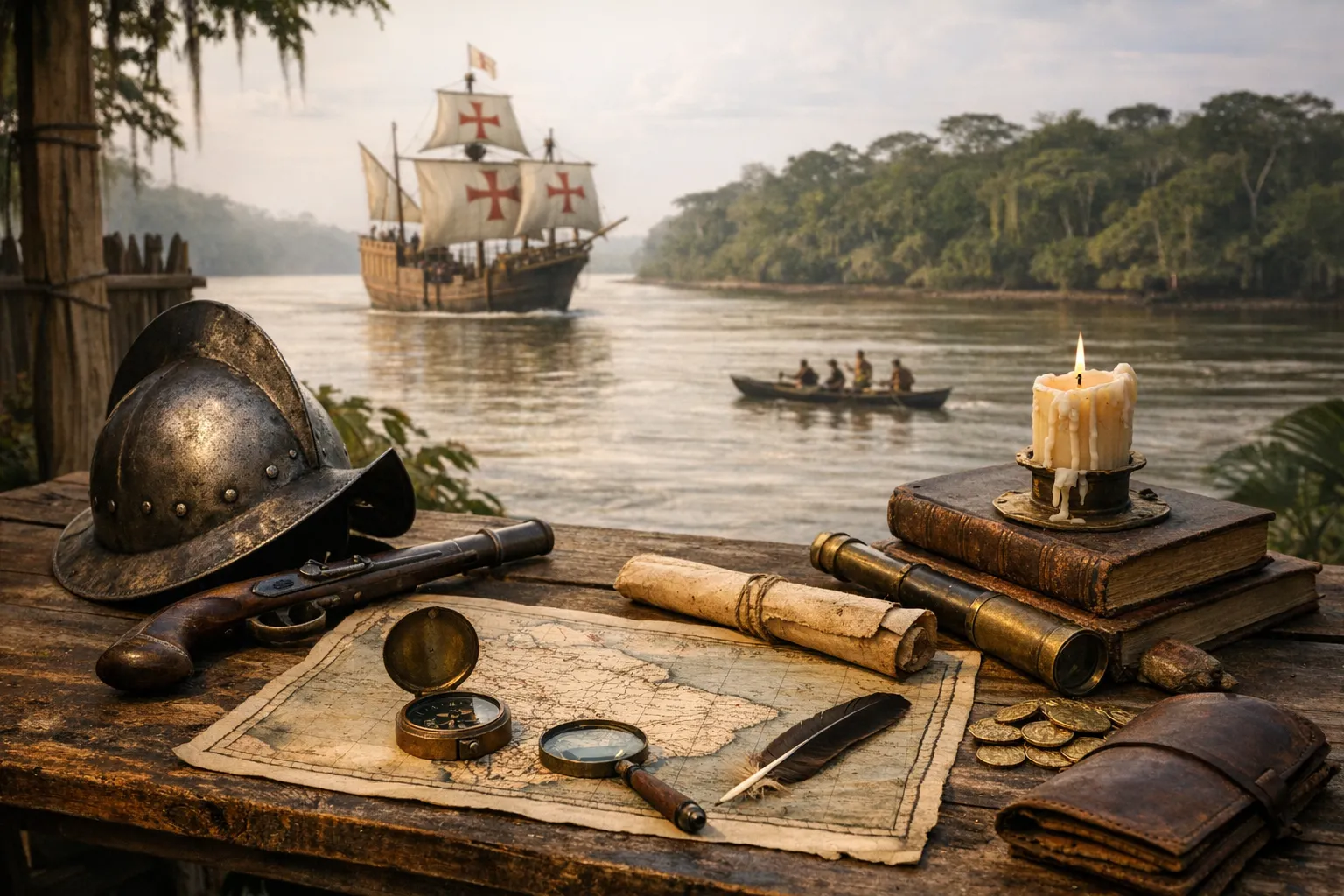
This article will dive into the historical significance of Orellana's expedition, exploring how his encounters with the Amazon's geography and its indigenous tribes fundamentally altered European perceptions of the continent. From the challenges he faced to the wealth he reported, we will examine how these elements laid the groundwork for future colonial ambitions and subsequent explorations into the heart of South America.
Introduction to Francisco de Orellana's Expedition
In 1541, Francisco de Orellana embarked on a transformative journey that would reshape European understanding of South America. Initially part of Gonzalo Pizarro's expedition, which sought the fabled 'Land of Cinnamon,' Orellana's mission quickly morphed into something far more significant. By navigating the entire length of the Amazon River and reaching the Atlantic Ocean on August 26, 1542, he became the first European to do so.
The discovery of the Amazon River was monumental. Not only did it unveil a previously uncharted expanse of land, but it also challenged existing geographical knowledge. Orellana's reports, particularly those chronicled by Gaspar de Carvajal, offered Europeans their first comprehensive accounts of the Amazon's ecosystems and the diverse indigenous cultures inhabiting the region.
Despite the promise of wealth and resources, the expedition faced immense hardships. Starvation, disease, and violent encounters with indigenous tribes led to significant losses, illustrating the dangers of exploration. Orellana’s naming of the river after the mythical Amazons reflected both the fierce resistance he encountered and the dramatic narratives that emerged from his journey. As one historian aptly noted, “Exploration is like peeling an onion; each layer reveals both beauty and tears.”
Ultimately, Orellana's expedition laid the groundwork for future colonial ambitions and increased European interest in the Amazon, setting the stage for subsequent explorations aimed at exploiting its vast resources.
The Journey: Challenges and Triumphs
Francisco de Orellana's expedition down the Amazon River was fraught with hardships that tested the limits of human endurance. As part of Gonzalo Pizarro's quest for the elusive 'Land of Cinnamon,' Orellana faced starvation and disease, which claimed many lives within his crew. The dense jungles of the Amazon were unforgiving, and the men struggled to find sufficient food. Reports suggest that the lack of resources led to desperate measures, with crew members resorting to consuming whatever they could find.
Conflicts with indigenous tribes were another major obstacle. Orellana's encounters were often hostile, as he and his men intruded upon territories that were fiercely defended. This led him to name the river after the Amazons of Greek mythology, highlighting both the ferocity of the tribes and the challenges he faced. "Navigating through the Amazon was like trying to dance on a tightrope—one wrong step could lead to disaster," encapsulates the precarious nature of their journey.
Despite these tremendous challenges, Orellana successfully completed the journey in 1541, becoming the first European to navigate the entire length of the Amazon River, reaching the Atlantic Ocean on August 26, 1542. This monumental achievement had profound implications for European exploration. His expedition not only provided detailed knowledge of the Amazon's geography but also sparked a wave of interest in the region's resources and potential wealth. The subsequent reports, especially those by Gaspar de Carvajal, opened up a new chapter in European understanding of South America's interior, laying the groundwork for future exploration and colonial ambitions.
Geographical Knowledge Before and After Orellana
Before Francisco de Orellana's expedition in 1541, European maps of South America were largely speculative and incomplete. Most cartographers relied on vague reports from earlier explorers and Indigenous accounts, which painted a fragmented picture of the continent. Notably, the Amazon River was a mere myth on these maps, often depicted as a series of disconnected waterways or nonexistent altogether.
Orellana's groundbreaking journey transformed this understanding dramatically. His navigation of the entire length of the Amazon, from the Andes to the Atlantic Ocean, provided Europeans with their first comprehensive accounts of this vast river system. His reports, particularly those by chronicler Gaspar de Carvajal, detailed not only the river's immense size but also its complex ecosystems and the diverse cultures of the indigenous tribes inhabiting the area.
-
Discovery of the Amazon: Orellana's expedition, initially part of Gonzalo Pizarro's quest for the 'Land of Cinnamon,' resulted in the naming of the river after the mythical Amazons, inspired by encounters with Indigenous warriors.
-
Revealing Complexity: The Amazon's geography showcased a rich tapestry of biodiversity and topographical variation, challenging the simplistic views held by Europeans. The river was no longer just a myth; it was a living entity filled with potential.
Orellana's journey is often likened to "opening a door to a new world, revealing treasures and challenges previously hidden." The insights gained from this expedition ignited a fervor among European nations, leading to increased interest and subsequent expeditions into South America's interior, forever altering the course of exploration.
In summary, Orellana's expedition marked a pivotal shift in European geographical knowledge, laying the groundwork for future colonial ambitions and the mapping of South America's intricate landscapes.
Cultural Encounters: Indigenous Tribes and Their Impact
The expedition led by Francisco de Orellana was not just a journey through uncharted waters, but a complex interaction with the diverse indigenous tribes inhabiting the Amazon. Orellana's crew encountered various communities, each with distinct cultures and traditions. Some tribes were welcoming, while others reacted with hostility, often viewing the Europeans as a threat to their sovereignty.
-
Descriptions of Indigenous Tribes: Tribes such as the Tupinambá and the Yanomami displayed rich cultural practices. The Tupinambá, for instance, were known for their agricultural skills and communal living, while the Yanomami engaged in intricate social rituals.
-
Hostile Encounters: The interactions were frequently marked by violence. Orellana faced fierce resistance, leading to skirmishes that resulted in casualties on both sides. This hostility was so pronounced that Orellana named the river after the Amazons of Greek mythology, evoking the image of warrior women.
-
Impact on Indigenous Communities: The consequences of these encounters were dire. European diseases, to which indigenous populations had no immunity, spread rapidly. This led to significant mortality rates among the tribes, drastically altering their demographics and social structures. As one historian noted, “The arrival of Europeans was like a flood, washing away centuries of tradition and community.”
The expedition ultimately provided crucial insights into the Amazon's geography, prompting increased interest from European powers. Orellana's reports, particularly those of chronicler Gaspar de Carvajal, revealed not only the river's vastness but also its potential wealth, setting the stage for future explorations and colonial ambitions.
The Naming of the Amazon: Myth vs. Reality
The name "Amazon" carries with it a wealth of cultural significance and misunderstanding rooted in both Greek mythology and European perceptions of indigenous cultures. When Francisco de Orellana navigated the river in the early 1540s, he drew a parallel between the fierce women he encountered and the legendary Amazons of antiquity. This connection illuminates the European mindset of the time, which often viewed indigenous women through a lens of exoticism and misunderstanding.
-
Connection to Greek Mythology: Orellana's choice of name references the mythic female warriors known for their strength and independence. This allusion not only romanticizes the indigenous tribes but also distorts their realities, framing them in a narrative that prioritizes European interpretations of bravery and femininity.
-
Perceptions of Indigenous Women: The naming reflects a broader European tendency to misinterpret and objectify indigenous cultures. The fierce resistance Orellana faced from some tribes contributed to a warped view of local women as warriors, ignoring the complexities of their societies and roles.
-
Cultural Misunderstandings: The decision to name the Amazon after these mythical figures resulted in a series of cultural misunderstandings. It overshadowed the rich and diverse realities of the tribes inhabiting the region, reducing them to mere caricatures of European fantasies about gender and power.
As historian John Hemming notes, "Naming is often a way of claiming; it signifies possession, even when the land and its people remain untouched by the namer's hand." This analogy encapsulates how the act of naming the Amazon became a tool for European powers to assert dominance over new territories, even as they grappled with the complexities of the cultures they encountered.
Orellana’s expedition did more than chart new waters; it laid the groundwork for future European exploration, driven by a need to exploit resources and expand colonial ambitions. The narratives that emerged from this journey would shape European understanding of South America for centuries to come.
Reports and Accounts: Gaspar de Carvajal's Contributions
Gaspar de Carvajal played a crucial role in documenting Francisco de Orellana's groundbreaking expedition along the Amazon River. His reports not only chronicled the journey but also provided the first comprehensive accounts of the Amazon's diverse ecosystems and the indigenous cultures encountered.
Carvajal's writings detailed the river's vastness, the flora and fauna, and the intricate interactions with various tribes. These narratives significantly influenced European thought, challenging pre-existing geographical knowledge and igniting curiosity about the Amazon. His observations painted a picture of a land rich in resources, leading to heightened European interest in the region.
- First Comprehensive Accounts: Carvajal's documentation highlighted the Amazon's ecological complexity. He described unique species and geographical features, aiding in the understanding of this previously mysterious territory.
- Influence on European Exploration: The reports stirred a wave of subsequent expeditions aimed at exploring and exploiting the Amazon's resources. European powers began to envision the economic possibilities of the region.
As Carvajal noted, the Amazon was “a new world within a world,” emphasizing its vast and untapped potential. This fresh perspective laid the groundwork for future colonial ambitions and the extensive mapping of South America's interior.
In summary, Gaspar de Carvajal's contributions were vital. His accounts not only chronicled Orellana's expedition but also transformed European perceptions of the Amazon, encouraging further exploration and exploitation of its rich resources.
The Economic Implications of Orellana's Discovery
Francisco de Orellana's expedition in 1541 not only unveiled the Amazon River but also ignited a fervent interest in its resources among European powers. His detailed accounts revealed a landscape rich in possibilities, transforming European economic ambitions.
Reports of Abundant Resources
Orellana's observations highlighted the Amazon's vast wealth, from exotic timber to potential agricultural land. His reports indicated that the river was teeming with fish and wildlife, which suggested opportunities for trade and exploitation. As Orellana navigated the river, he encountered lush ecosystems that promised untapped resources, prompting European nations to consider the area as a new frontier for economic gain.
Subsequent Expeditions
Driven by Orellana's findings, numerous expeditions followed, each aiming to exploit the region's wealth. Explorers sought not only gold but also spices, timber, and other commodities. For instance, the Spanish Crown quickly organized missions to capitalize on the lucrative prospects Orellana had unveiled, further intensifying the race for colonial expansion.
"The Amazon was like a treasure chest, waiting for the right key to unlock its riches."
Long-Term Economic Impacts
The implications of Orellana's journey extended far beyond immediate exploration. The knowledge gained about the Amazon laid the groundwork for long-term economic strategies, shaping European colonial ambitions in South America. As nations vied for control over the region, the quest for resources accelerated the colonization process, leading to significant geopolitical shifts.
In summary, Orellana's discovery spurred a wave of economic interests that not only transformed the Amazon into a focal point of European exploration but also set the stage for the exploitation of its resources, forever changing the landscape of South American colonization.
Legacy of Orellana's Expedition in European Exploration
Francisco de Orellana's expedition in the 1540s significantly altered the course of European exploration. By becoming the first European to navigate the entire length of the Amazon River, he provided a crucial foundation for future expeditions into the heart of South America.
Orellana's journey, initially part of Gonzalo Pizarro's quest for the elusive 'Land of Cinnamon,' led to the European discovery of the Amazon River. His reports were some of the first detailed accounts of the river's vastness and complexity, challenging existing geographical knowledge. This newfound understanding spurred interest among European explorers and monarchs, leading to a wave of subsequent expeditions aimed at mapping and exploiting the region.
Key impacts of Orellana's journey include:
- Mapping and Geography: Orellana's detailed accounts helped create more accurate maps of South America, guiding future explorers like Hernán Cortés and Francisco de la Cruz.
- Increased Exploration: His reports of abundant resources and the potential for wealth in the Amazon motivated numerous expeditions, as Europeans sought to tap into the region's riches.
- Cultural Encounters: Orellana's interactions with indigenous tribes, though often hostile, provided European powers with insights into the diverse cultures and ecosystems of the Amazon.
Ultimately, Orellana's expedition marked a significant expansion of European geographical knowledge and laid the groundwork for colonial ambitions in South America. It not only transformed the understanding of the Amazon but also set the stage for the extensive exploitation that would follow.
Conclusion: The Lasting Impact of Orellana's Journey
Francisco de Orellana's expedition in 1541 marked a pivotal moment in the history of exploration. As the first European to navigate the Amazon River from the Andes to the Atlantic Ocean, Orellana expanded the geographical understanding of South America significantly. His journey not only revealed the vastness of the Amazon but also its complex ecosystems and indigenous cultures.
However, the consequences of Orellana's discovery were profound for the indigenous populations he encountered. Many tribes were met with hostility, leading to conflicts that resulted in loss of life and the spread of diseases that devastated local communities. The interactions during this expedition foreshadowed the tumultuous relationship between European explorers and indigenous peoples, a theme that would recur throughout the colonial era.
Orellana's legacy continues to resonate in modern exploration. His detailed reports, particularly those by chronicler Gaspar de Carvajal, provided Europeans with their first comprehensive accounts of the Amazon's resources and potential wealth. This sparked increased interest in the region, prompting subsequent expeditions aimed at exploiting its riches. Today, understanding Orellana's journey is crucial as we reflect on the lasting impacts of exploration, both on the environment and on the cultures that inhabit these regions.
FAQs about Francisco de Orellana and the Amazon River
What motivated Orellana's expedition?
Initially, Francisco de Orellana set out as part of Gonzalo Pizarro's expedition, which aimed to find the 'Land of Cinnamon.' However, the challenges faced during the journey, including dwindling supplies and hostile encounters, pushed Orellana to forge his own path. This decision ultimately led him to navigate the entire length of the Amazon River, marking a pivotal moment in exploration history.
How did Orellana's journey change European views of the Amazon?
Orellana's expedition provided the first detailed accounts of the Amazon's geography and ecosystems. Europeans learned about the vastness and complexity of the region, which contradicted previous notions of it being merely a jungle. His reports, particularly those by Gaspar de Carvajal, revealed rich resources and diverse indigenous cultures, spurring further interest in exploration.
What were the long-term effects of Orellana's discovery?
The implications of Orellana's journey were profound. His discovery of the Amazon River led to increased European expeditions into South America's interior, driven by reports of abundant resources. However, these expeditions often brought conflict with indigenous populations and contributed to the spread of diseases that devastated native communities. Orellana's journey not only expanded geographical knowledge but also laid the groundwork for future colonial ambitions in the region.