
In 1541, Francisco de Orellana set out on an expedition that would forever alter European perceptions of South America. As the first European to navigate the entire length of the Amazon River, Orellana's journey unveiled not just a vast waterway, but a complex ecosystem teeming with life and cultures previously unknown to Europeans. This monumental exploration had far-reaching implications, reshaping geographical knowledge and igniting colonial ambitions.
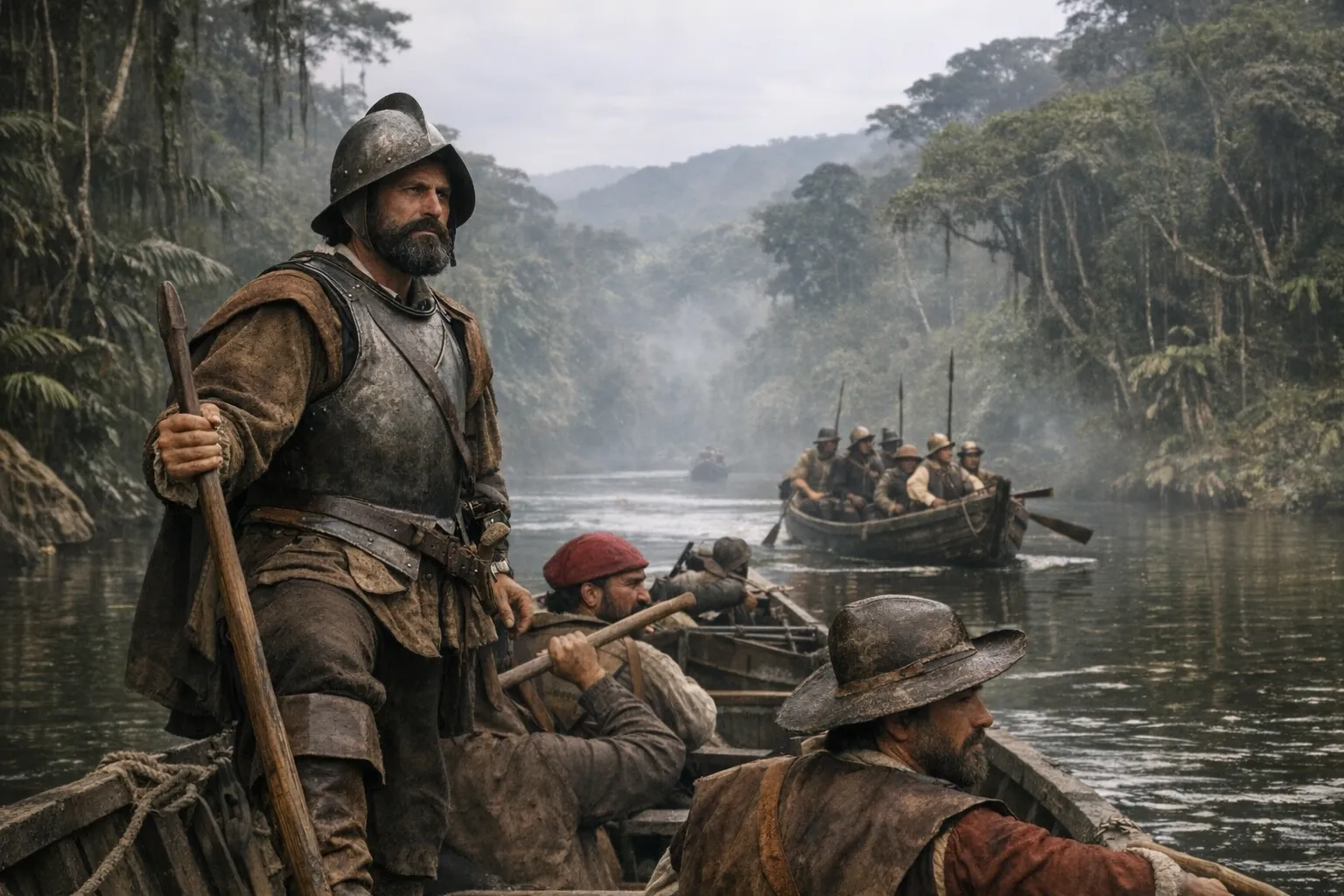
In this analysis, we will delve into how Orellana's discoveries challenged existing misconceptions about the continent, introduced Europeans to the rich tapestry of indigenous cultures, and spurred an insatiable quest for resources. By examining Orellana’s accounts and their lasting impact, we will uncover the intricate web of cultural exchanges, conflicts, and aspirations that emerged from this pivotal moment in history.
Introduction: The Journey Begins
In 1541, Francisco de Orellana embarked on a groundbreaking expedition down the Napo River, ultimately becoming the first European to navigate the entire length of the Amazon River. This journey was not merely a quest for exploration; it was a pivotal moment that would reshape European understanding of South America.
Orellana’s role in exploration cannot be overstated. He provided the first detailed accounts of the Amazon's vastness and complexity, which challenged the prevailing misconceptions about the continent's interior, often perceived as a land of mythical riches and dangers. As he traversed the river, he encountered indigenous tribes, some led by formidable women warriors, inspiring him to name the river 'Amazon' after the legendary female warriors of Greek mythology.
"Navigating the Amazon was like peeling an onion; with every layer, new complexities and realities emerged that had long been obscured by myth."
His reports of abundant resources—gold, cinnamon, and other riches—stoked European interest and ambitions in the region. This newfound knowledge not only fueled further expeditions but also laid the groundwork for the colonial ambitions that would follow. However, these encounters also led to significant cultural exchanges, often marred by conflict and the spread of diseases that devastated native populations.
Orellana's journey highlighted the Amazon River as a crucial waterway, influencing future trade routes and settlement patterns along its banks. The implications of his expedition echoed through history, forever altering the landscape of European exploration and colonialism in South America.
Navigating the Unknown: Orellana's Route
Francisco de Orellana's expedition began in 1541 at the Napo River, where he and his crew embarked on a daunting journey into uncharted territory. The initial challenges were formidable: navigating swift currents, dense jungles, and the ever-present threat of hostile encounters with indigenous tribes. These obstacles tested not only their physical endurance but also their resolve to continue the expedition.
As Orellana traveled down the Napo, the party faced dwindling supplies and hostile conditions. They were forced to adapt their strategies, relying on local knowledge and resources. The journey was perilous, yet it ultimately led them to the Amazon's mouth in August 1542, marking Orellana as the first European to navigate the entire length of this vast river.
Reaching the mouth of the Amazon was not merely a geographical milestone; it significantly altered European understanding of South America. Orellana's detailed accounts unveiled the river's vastness and complexity, dispelling previous misconceptions about the continent's interior. His observations included:
- The Amazon as a major waterway, pivotal for future trade routes.
- Encounters with diverse indigenous tribes, some led by women warriors, which inspired the river's name, 'Amazon.'
- Reports of abundant resources such as gold and cinnamon, which ignited European interest and fueled further explorations.
These findings not only reshaped geographical knowledge but also contributed to myths like that of El Dorado, influencing European narratives and ambitions in the New World. The expedition's cultural exchanges, although often fraught with conflict and disease transmission, laid the groundwork for future interactions between Europeans and indigenous peoples. Orellana's journey was a significant chapter in the history of exploration, one that opened the door to a deeper understanding of the Amazon basin and its role in global trade.
A New Perspective: The Amazon's Vastness and Complexity
Francisco de Orellana's expedition in 1541 marked a pivotal moment in European understanding of the Amazon River and its vast ecosystem. As the first European to navigate the entire length of the river, Orellana provided detailed accounts that dramatically reshaped perceptions of South America's interior.
Orellana's writings challenged existing geographical misconceptions. Before his journey, many Europeans imagined the Amazon as a sparse, navigable river. However, Orellana chronicled a rich tapestry of biodiversity and indigenous cultures, revealing the complexity and enormity of the region. His descriptions highlighted:
- The vastness of the Amazon basin and its intricate waterways.
- Encounters with diverse indigenous tribes, including those led by formidable women warriors, which led him to name the river after the mythical Amazons from Greek mythology.
His observations significantly impacted cartography and exploration maps. Maps were redrawn to reflect the Amazon's true scale and character, integrating Orellana's findings into European geographical knowledge. This new perspective spurred further interest in the region, particularly as Orellana reported abundant resources like gold and cinnamon. Such accounts fueled colonial ambitions and laid the groundwork for subsequent expeditions.
Moreover, Orellana's interactions with indigenous populations led to complex cultural exchanges, often resulting in conflict and the tragic spread of diseases that devastated native communities. The echoes of his journey would resonate through centuries, contributing to myths like El Dorado and influencing European narratives about South America. Overall, Orellana's discoveries not only enriched European maps but also deepened the understanding of the Amazon's significance in global exploration.
Cultural Encounters: Indigenous Tribes and the Amazon
Francisco de Orellana's expedition down the Amazon River in 1541 marked a significant moment in European interactions with indigenous populations. His journey, notable for being the first complete navigation of the river, brought Europeans face-to-face with diverse tribes, including those led by formidable women warriors. This encounter inspired Orellana to name the river 'Amazon,' drawing from the legendary Amazons of Greek mythology.
These cultural exchanges were complex. While they facilitated some sharing of knowledge and resources, they often escalated into conflict. European explorers frequently misinterpreted indigenous practices and governance, leading to tensions. Instances of aggression from both sides were common, as Orellana and his men sought to assert dominance over an unfamiliar territory.
Moreover, the arrival of Europeans brought devastating diseases to native communities. The lack of immunity among indigenous populations resulted in significant mortality rates, undermining their social structures and altering the demographic landscape of the region. This tragic consequence of contact further complicated the dynamics between Orellana's expedition and the tribes they encountered.
In addition to these immediate impacts, Orellana's reports of the Amazon's vast resources—such as gold and cinnamon—ignited European interest in the region. The allure of wealth spurred further exploration and colonization efforts, laying the groundwork for a long history of exploitation in South America. Consequently, Orellana's journey not only expanded geographical knowledge but also marked the beginning of profound cultural and ecological changes in the Amazon, effects that would resonate for centuries.
The Myth of the Amazons: Naming the River
Francisco de Orellana's naming of the Amazon River after the mythical Amazons of Greek mythology is a striking example of how European explorers interpreted their encounters with the unknown. The Amazons, renowned as fierce female warriors, provided a poignant symbol for Orellana as he navigated the river and encountered indigenous tribes, some of whom were led by women. This connection not only reflected his personal observations but also influenced broader European narratives about the New World.
Connection to Greek Mythology
Orellana's choice of name tied directly into the rich tapestry of Greek mythology. The Amazons were depicted as powerful figures, embodying strength and independence. By associating the river with these legendary warriors, Orellana framed the Amazon as a landscape filled with both wonder and danger, emphasizing its untamed nature. This mythological reference resonated with European audiences, who often viewed the Americas through the lens of classical antiquity.
Influence on European Narratives
Orellana's reports transformed European perceptions of South America. His accounts highlighted the Amazon's vastness and complexity, challenging the prevailing misconceptions of a sparsely populated and easily conquerable territory. The idea of encountering warrior-like women further fueled the imaginations of writers and scholars, embedding the Amazon in European literature and culture. The river became a symbol of adventure and mystery, inviting further exploration.
Symbolism of Female Warriors in Exploration
The symbolism of female warriors in Orellana's narrative also underscored the often romanticized view of exploration. These women represented both a threat and a challenge to European masculinity, complicating the dynamics of conquest. As explorers sought to assert dominance over new territories, the presence of formidable women inspired a mix of awe and fear, which was instrumental in shaping colonial attitudes.
In conclusion, Orellana's naming of the Amazon River serves as a critical lens through which we can examine the interplay between myth, exploration, and cultural perceptions. His journey not only expanded geographical knowledge but also laid the groundwork for enduring narratives that would permeate European understanding of South America for centuries to come.
Economic Motivations: Gold and Cinnamon
Francisco de Orellana's expedition down the Amazon River in 1541 unveiled a wealth of resources that would shape European colonial ambitions. His detailed accounts highlighted the presence of valuable commodities, particularly gold and cinnamon, which were highly sought after in Europe.
-
Discovery of Valuable Resources: Orellana reported extensive cinnamon groves and gold deposits in the Amazon basin. These findings ignited a frenzy of interest among European powers eager to exploit these riches.
-
Impact on Future Expeditions: His revelations led to a series of subsequent expeditions into the region. Explorers were motivated not just by Orellana's findings but also by the potential for immense wealth. The Amazon, once viewed as a daunting and mysterious interior, was now seen as a treasure trove.
-
Connection to the Myth of El Dorado: Orellana's journey contributed significantly to the myth of El Dorado, a legendary city of gold. This myth would haunt European explorers for centuries, shaping their narratives and justifying their incursions into South America.
Orellana's exploration thus served as a catalyst for European exploitation, fundamentally altering the trajectory of South American colonization. His journey not only expanded geographical knowledge but also fueled a relentless pursuit of economic gain, with consequences that would resonate throughout history.
Long-term Implications: Trade Routes and Settlements
Francisco de Orellana's expedition in 1541 fundamentally altered European perceptions of South America, particularly through his navigation of the Amazon River. By being the first European to traverse the entire length of this colossal waterway, Orellana opened a new chapter in the continent's exploration and subsequent exploitation.
Amazon as a Major Waterway
The Amazon River emerged as a critical artery for trade, linking inland regions with coastal ports. Orellana’s detailed accounts illuminated the river’s vastness and complexity, challenging existing geographic misconceptions. This newfound understanding encouraged European powers to consider the river as a viable route for transporting goods and resources.
Development of Settlements Along the River
Orellana's journey led to the establishment of settlements along the riverbanks, as European settlers sought to capitalize on the resources he reported, such as gold and cinnamon. The river’s accessibility fueled a surge in colonial ambitions, prompting the creation of trading posts and agricultural hubs. Over time, these settlements would evolve into significant urban centers.
Influence on Future Economic Activities
Orellana's reports not only sparked immediate interest but also laid the groundwork for long-term economic activities. The prospect of exploiting the Amazon's resources attracted merchants and settlers alike, influencing:
- Resource Extraction: The pursuit of gold and other commodities became a focal point for colonial enterprises.
- Cultural Exchanges: Interaction with indigenous tribes, although often fraught with conflict, led to a dynamic exchange of goods and ideas.
- Ecological Impact: The influx of European settlers began to alter the Amazonian ecosystem, sowing the seeds for environmental challenges that resonate to this day.
In summary, Orellana's journey was pivotal in establishing the Amazon River as a central component of European economic strategies in South America, shaping trade routes and settlement patterns for generations to come.
Cultural Exchange or Cultural Conflict?
Francisco de Orellana's expedition down the Amazon River in 1541 marked a pivotal moment in the history of European exploration. It opened the door to a complex interplay of cultural exchanges that were, at once, enriching and devastating.
Positive Exchanges
Orellana’s encounters with indigenous tribes provided Europeans with invaluable insights into the Amazon’s ecosystems and cultures. For example:
- Resource Knowledge: Orellana reported abundant resources like gold and cinnamon, which sparked European interest and subsequent expeditions.
- Cultural Insights: The discovery of tribes led by women warriors inspired Orellana to name the river after the mythical Amazons, reflecting a new fascination with indigenous cultures.
Negative Impacts
However, these encounters were often marred by conflict and tragedy. The introduction of European diseases had catastrophic effects on native populations, leading to significant declines in their numbers and cultural practices. The consequences included:
- Violence: Conflicts arose as European explorers sought to assert control over the land and its resources.
- Cultural Erosion: The imposition of foreign values and practices led to the erosion of indigenous cultures, altering their social structures and traditions.
Long-Term Effects
The dual nature of these exchanges set the stage for the long-term legacy of conflict and cooperation in the region. Orellana's journey not only contributed to the myth of El Dorado but also influenced the development of future trade routes along the Amazon. The river became a vital artery for colonial ambitions, fundamentally altering the landscape of South America and its indigenous cultures.
In summary, while Orellana's expedition fostered some positive cultural exchanges, it also initiated a legacy of conflict that would resonate through the ages. The complexities of these interactions remind us that exploration often carries with it both discovery and destruction.
Legacy of Orellana's Expedition
Francisco de Orellana's expedition in the early 1540s not only mapped the Amazon River but also set the stage for a series of profound implications for European exploration and understanding of South America.
Influence on Subsequent Explorers
Orellana's detailed accounts of the Amazon’s vastness and its complex ecosystems reshaped the geographical knowledge of the continent. His navigation of the river inspired later explorers, such as Sir Walter Raleigh and the Jesuit missionaries, who sought to uncover the riches and mysteries of the region. The allure of the Amazon became a focal point for European expeditions, each seeking to capitalize on the resources Orellana had illuminated.
Shaping European Perceptions of South America
Before Orellana's journey, European understanding of South America was largely superficial, characterized by myths and vague reports. His exploration challenged these misconceptions, revealing a land teeming with life and diversity. Reports of indigenous tribes, some led by women warriors, not only gave the river its name but also introduced Europeans to the rich cultural tapestry of the region. This encounter reshaped narratives around gender and power in indigenous societies, influencing European views on civilization.
Enduring Myths and Narratives
Orellana's journey inadvertently contributed to the creation of enduring myths, most notably the legend of El Dorado. His reports of abundant gold and cinnamon ignited imaginations and fueled colonial ambitions. For decades, the search for this fabled city became a driving force for explorers, shaping their narratives and justifying their incursions into the Amazon basin. These stories, steeped in adventure and wealth, masked the often tragic realities of cultural encounters and the devastating effects of disease on indigenous populations.
In essence, Orellana's expedition was a catalyst for a transformative period in European exploration, profoundly affecting how South America was perceived and approached in the centuries to follow.
Conclusion: A Transformative Journey
Francisco de Orellana's expedition in 1541 changed the European perception of South America forever. As the first European to navigate the entire length of the Amazon River, Orellana provided invaluable insights into its vastness and complexity. His detailed accounts debunked earlier misconceptions, revealing a region rich in biodiversity and cultural diversity.
The implications of Orellana's journey extended beyond mere geographic knowledge. His encounters with indigenous tribes, including those led by women warriors, introduced Europeans to the varied social structures of native communities. This led to the river being named 'Amazon,' a nod to the powerful figures of Greek mythology. Such narratives shaped European understanding and attitudes toward indigenous cultures.
Moreover, Orellana's reports of abundant resources like gold and cinnamon fueled colonial ambitions and subsequent expeditions. This not only intensified European interest in the Amazon basin but also contributed to the myth of El Dorado, which would enchant explorers for generations.
However, these explorations came at a cost. The cultural exchanges initiated by Orellana often resulted in conflict and the tragic spread of diseases that devastated native populations. The transformative journey of Orellana thus serves as a complex legacy—one that highlights the dual nature of exploration as both a catalyst for knowledge and a source of profound consequences.
For further exploration of these themes, you might find the following links useful: Cultural Impact of Exploration and The Myth of El Dorado.