
The Treaty of Versailles is often viewed as a pivotal moment in 20th-century history, marking the end of World War I while simultaneously setting the stage for future conflicts. It imposed harsh penalties on Germany, fostering a climate of resentment that would later fuel extremist ideologies. Understanding the long-term consequences of this treaty reveals how it exacerbated geopolitical tensions in the years leading to World War II.
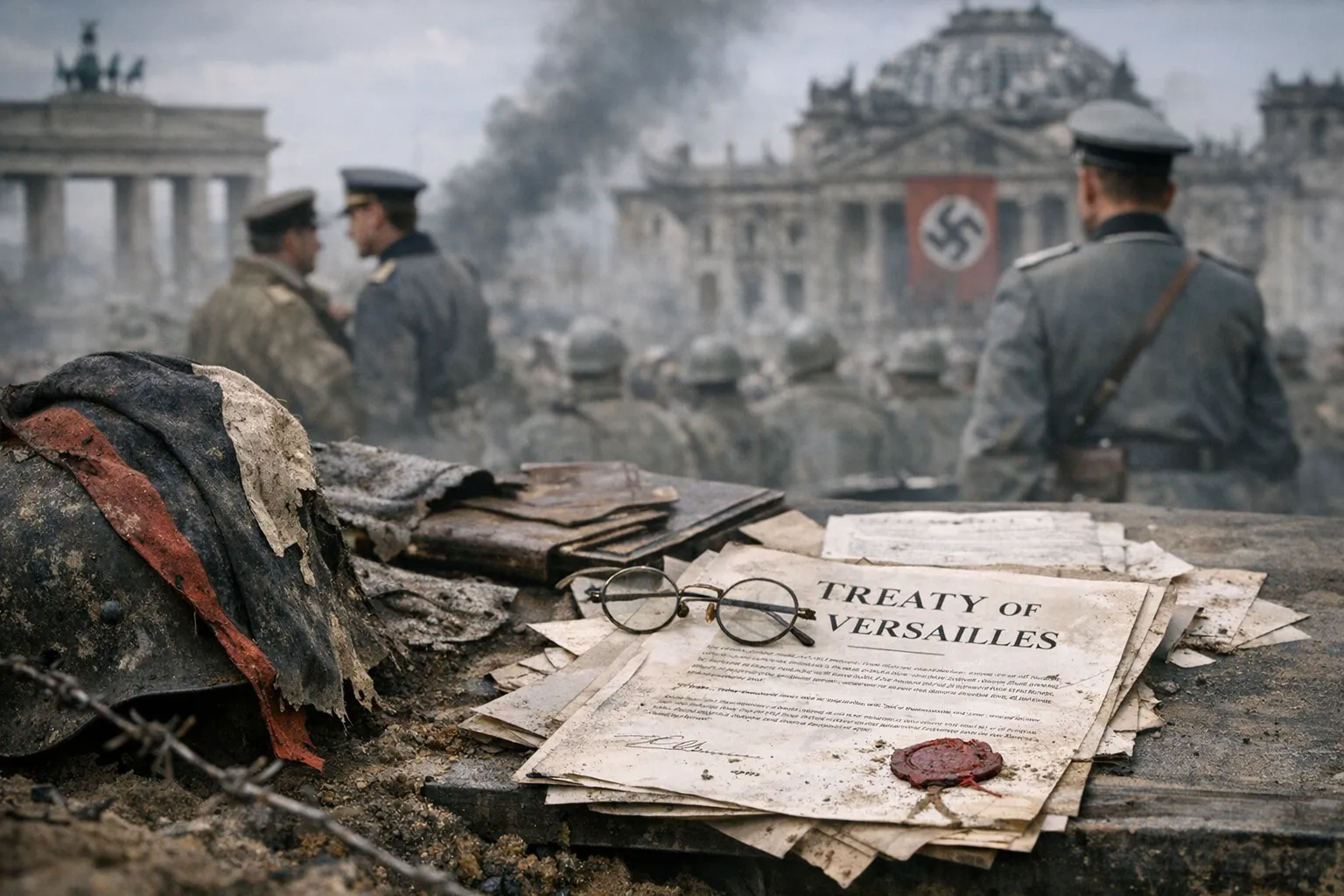
In this analysis, we will delve into the specific terms of the Treaty of Versailles, including the infamous "War Guilt Clause," and explore how its economic repercussions and territorial adjustments contributed to instability in Europe. We will also examine the failure of the League of Nations and how these factors collectively created an environment ripe for conflict, paving the way for the rise of authoritarian regimes and the outbreak of another devastating war.
Introduction to the Treaty of Versailles
The Treaty of Versailles, signed on June 28, 1919, marked the official conclusion of World War I. This pivotal document not only reshaped the geopolitical landscape of Europe but also laid the groundwork for future tensions that would culminate in World War II.
Key terms and conditions imposed on Germany included:
- War Guilt Clause: Article 231 placed full responsibility for the war on Germany and its allies, fostering a sense of national humiliation and resentment among the German populace.
- Territorial Losses: Germany lost about 13% of its prewar territories, including valuable colonies and land in Europe, which diminished its economic and strategic position.
- Military Restrictions: The treaty severely limited the German military to 100,000 soldiers, banning tanks, aircraft, and submarines, thereby undermining its defense capabilities.
- Reparations: Germany was mandated to pay reparations estimated at 132 billion gold marks, leading to crippling economic strain and hyperinflation during the Weimar Republic.
The immediate aftermath of the war saw not only the dismantling of empires but also the creation of new nation-states, often ignoring ethnic and cultural divisions. As a result, many regions became hotbeds of tension and conflict that resonate to this day. The establishment of the League of Nations was intended to prevent future wars, yet its effectiveness was severely hampered by the absence of the United States and its inability to enforce decisions.
As historian Margaret MacMillan aptly noted, “The Treaty of Versailles was like a peace built on quicksand.” The punitive measures and economic hardships it imposed paved the way for extremist ideologies, most notably Nazism, ultimately contributing to the outbreak of World War II.
For those looking to dive deeper, you can learn more about World War I and explore the League of Nations.
The War Guilt Clause: Article 231
Article 231 of the Treaty of Versailles, commonly referred to as the War Guilt Clause, explicitly placed full responsibility for World War I on Germany and its allies. This provision was intended to justify the severe penalties imposed on Germany, including exorbitant reparations and military restrictions. However, its implications extended far beyond legal terms, deeply affecting German national identity and sentiment.
The immediate impact on the German populace was profound. The clause fostered a sense of national humiliation and resentment, igniting a collective feeling of betrayal. Many Germans viewed the treaty as a "Diktat," or dictated peace, which they felt was unjustly forced upon them. This sentiment was not just a political reaction; it morphed into a deep-rooted psychological wound that would color German politics and society for decades.
In the long term, the psychological effects of Article 231 were equally damaging. As Germany grappled with hyperinflation and economic instability—partly due to the reparations estimated at 132 billion gold marks—this humiliation fueled extremist ideologies. The rise of movements like Nazism can be traced back to the anger and desperation stemming from this punitive measure. As one historian aptly put it, “A wound that is not healed festers into a poison.”
- National Identity: Article 231 reshaped how Germans viewed themselves, often leading to a perverse sense of victimhood.
- Psychological Impact: Generations grew up with a narrative of humiliation, feeding into nationalist and extremist sentiments.
- Facilitation of Extremism: The anger and despair created fertile ground for extremist ideologies, contributing to the eventual outbreak of World War II.
The repercussions of the War Guilt Clause illustrate how a single article in a treaty can have far-reaching effects on a nation's psyche and political landscape.
Economic Consequences: Reparations and Hyperinflation
The Treaty of Versailles had profound economic repercussions for Germany and, by extension, for Europe. One of its most significant provisions was the demand for reparations amounting to 132 billion gold marks. This staggering sum placed an unprecedented burden on the already weakened German economy.
The repercussions of this financial obligation were immediate and severe. During the Weimar Republic, Germany experienced hyperinflation, with the value of the mark plummeting. By November 1923, it took 4.2 trillion marks to buy a loaf of bread. This hyperinflation not only decimated savings but also led to widespread despair and anger among the German populace. As one observer noted, “For the Germans, money became as worthless as confetti at a party.”
The effects of economic instability rippled throughout Europe. Countries heavily reliant on German reparations, like France and Belgium, faced their own economic challenges. As Germany struggled to meet its obligations, tensions escalated. The economic distress contributed to the rise of extremist ideologies, including Nazism, as disillusioned Germans sought radical solutions to their plight.
In summary, the harsh reparations and resultant hyperinflation did not merely cripple Germany; they destabilized the entire European economic landscape, setting the stage for future conflicts. This cycle of economic hardship and political turmoil would prove to be a catalyst for World War II.
Territorial Changes and Ethnic Tensions
The Treaty of Versailles had profound implications for Europe, particularly regarding territorial changes that reshaped national borders and sowed the seeds of ethnic conflict. By mandating that Germany relinquish about 13% of its prewar territories, including valuable industrial regions and colonies, the treaty severely weakened Germany both economically and strategically. This loss not only fueled resentment among Germans but also disrupted the lives of millions who found themselves suddenly living in foreign nations.
The treaty's redrawing of borders created several new nation-states, often disregarding historical ethnic and cultural divisions. For example:
- Poland was reestablished, incorporating territories that had previously belonged to Germany and Russia, leading to tensions with German nationals who now found themselves in a newly formed state.
- Czechoslovakia was created, bringing together various ethnic groups including Czechs, Slovaks, and ethnic Germans, which laid the groundwork for future conflicts.
- Yugoslavia was formed from the remnants of the Austro-Hungarian Empire, uniting South Slavic peoples but ignoring significant ethnic divisions that would later erupt into violence.
These changes did not just result in immediate conflicts; the ramifications are still evident today. The lingering tensions from these territorial adjustments have contributed to ongoing disputes in regions formerly affected by the treaty.
“The Treaty of Versailles was like a band-aid on a festering wound; it covered the injury but did nothing to heal the underlying issues.”
In summary, the Treaty of Versailles not only reshaped the map of Europe but also established a volatile environment where ethnic tensions could fester, ultimately contributing to the rise of extremist ideologies. This instability would later become a critical factor in the lead-up to World War II.
Military Restrictions and Their Impact
The Treaty of Versailles imposed stringent military restrictions on Germany, fundamentally altering the nation's military landscape and its implications for European security. Key provisions included:
- Army Limitations: Germany was restricted to an army of 100,000 soldiers, significantly reducing its military capacity.
- Prohibited Weapons: The treaty banned the possession of tanks, aircraft, and submarines, effectively crippling Germany's ability to engage in modern warfare.
These limitations had profound effects on German military strategy and national pride. The reduction in military size not only undermined Germany's defensive capabilities but also fostered a sense of humiliation among its populace. The national narrative was one of betrayal and victimization, largely fueled by Article 231, the 'War Guilt Clause,' which placed full responsibility for World War I squarely on Germany. This clause deepened resentment and contributed to a burgeoning desire for rearmament and revenge, laying fertile ground for extremist ideologies, notably Nazism.
On a broader scale, the military restrictions shifted European security dynamics. With Germany weakened, neighboring countries, particularly France and Poland, felt emboldened. However, this imbalance also led to increased tensions, as the lack of a strong German military created a security vacuum that other nations sought to exploit.
Ultimately, the punitive military measures contributed to a cycle of instability in Europe. They not only failed to prevent future conflict but also set the stage for the very circumstances that would lead to World War II. The vulnerabilities exposed by these restrictions would be exploited by extremist factions, demonstrating how the Treaty of Versailles sowed the seeds for further geopolitical strife.
For a deeper understanding of the ramifications of World War I, you can learn more about World War I.
The League of Nations: A Failed Peacekeeping Effort
The League of Nations was established as part of the Treaty of Versailles to promote peace and prevent future conflicts. Its intended role was to facilitate diplomacy, resolve disputes between nations, and provide a forum for international cooperation. However, the League's effectiveness was severely undermined by several key factors.
One major blow to the League was the U.S. Senate's refusal to ratify the Treaty of Versailles. Without the United States, a significant global power, the League struggled to assert its authority. This absence meant that the League lacked the military backing necessary to enforce its resolutions, leading to a perception of weakness among member states.
Examples of the League's failures illustrate its inability to maintain peace. For instance:
- Manchuria Crisis (1931): When Japan invaded Manchuria, the League's response was slow and ineffective. Its condemnation lacked any real enforcement, leading to Japan's withdrawal from the League.
- Abyssinia Crisis (1935-1936): Italy’s invasion of Abyssinia (Ethiopia) showcased the League's ineffectiveness. Sanctions were imposed but were largely ignored by member states, allowing Italy to succeed militarily without facing significant consequences.
These failures not only demonstrated the League's limitations but also contributed to rising tensions in Europe. The punitive measures and economic hardships imposed by the Treaty of Versailles facilitated the rise of extremist ideologies, such as Nazism, which ultimately led to the outbreak of World War II. The League of Nations, intended as a beacon of hope, became a symbol of diplomatic failure, leaving a legacy that influenced international relations for decades to come.
Rise of Extremist Ideologies: The Path to Nazism
The Treaty of Versailles not only marked the end of World War I but also sowed the seeds of extremism in Germany, leading to the rise of movements like Nazism. The punitive measures imposed by the treaty created an environment ripe for political radicalization.
Economic Hardship and Nazism
- The treaty mandated reparations amounting to 132 billion gold marks, which crippled Germany's economy. This economic strain led to hyperinflation during the Weimar Republic, devastating the middle class and eroding public trust in democratic institutions.
- As unemployment soared and savings evaporated, extremist parties, including the National Socialist German Workers' Party (NSDAP), capitalized on the desperation, promising revitalization and prosperity.
National Humiliation and Political Extremism
- Article 231, known as the 'War Guilt Clause,' placed full blame for the war on Germany, fostering a sense of national humiliation and resentment. This sentiment was a powerful recruitment tool for extremist movements that promised to restore national pride.
Case Studies of Political Movements
- The NSDAP: Led by Adolf Hitler, the Nazi Party used the anger stemming from the treaty to gain traction, positioning itself as the savior of a wronged nation.
- Other Extremist Groups: Various paramilitary organizations emerged, exploiting the chaos and instability, advocating for radical solutions that appealed to a population desperate for change.
In summary, the Treaty of Versailles catalyzed economic and social turmoil that fueled the rise of extremist ideologies in Germany, laying the groundwork for the catastrophic events that would follow in World War II.
Myths vs. Reality: Misconceptions about the Treaty
The Treaty of Versailles, signed on June 28, 1919, is often surrounded by myths that distort its true impact on international relations. Here are some common misconceptions:
-
Myth: The Treaty was solely punitive.
While the treaty imposed severe penalties on Germany, it was also intended to establish a framework for lasting peace. However, the punitive aspects overshadowed this intention, leading to resentment. -
Reality: A fractured geopolitical landscape.
The treaty redrew European borders, creating new nation-states that ignored ethnic and cultural divisions. This disregard contributed to ongoing tensions, as seen in the conflicts in the Balkans and Eastern Europe. -
Myth: The League of Nations was a strong peacekeeping body.
Many believe the League was effective in preventing future conflicts. In reality, its establishment was undermined by the absence of key nations like the United States and its lack of enforcement capabilities. -
Reality: League's ineffectiveness.
The League struggled to maintain peace and failed to address rising tensions. Without the U.S. and with limited power, it could not respond effectively to aggression, such as Japan's invasion of Manchuria in 1931.
Additionally, the economic hardships imposed by the treaty, including reparations that crippled Germany's economy, facilitated the rise of extremist ideologies like Nazism. This context is crucial for understanding the conditions that led to World War II.
For a deeper dive into these topics, consider exploring World War I and the League of Nations.
Lessons Learned: Historical Reflections on the Treaty
The Treaty of Versailles serves as a critical case study in understanding the long-term consequences of peace agreements on international relations. Its implications resonate in contemporary geopolitics, reminding us of the importance of historical context.
-
Harsh Penalties and National Sentiment: The Treaty imposed severe penalties on Germany, including territorial losses, military restrictions, and reparations. Article 231, the 'War Guilt Clause,' not only assigned blame but also fostered a deep sense of humiliation and resentment among the German populace. This historical lesson emphasizes the need to approach peace treaties with a focus on reconciliation rather than retribution.
-
Economic Strain and Extremist Ideologies: The reparations mandated by the Treaty crippled Germany’s economy, leading to hyperinflation and widespread social unrest during the Weimar Republic. Such economic instability can create fertile ground for extremist ideologies to flourish, as seen with the rise of Nazism. Understanding this relationship is crucial for avoiding similar pitfalls in modern peace processes.
-
Redrawing Borders and Ethnic Tensions: The Treaty’s redrawing of European borders disregarded ethnic and cultural divisions, leading to enduring tensions in the region. This historical reflection advocates for careful consideration of local dynamics when redesigning national boundaries post-conflict.
-
Limitations of International Organizations: The establishment of the League of Nations aimed to prevent future conflicts but was hampered by the absence of major powers like the United States and the lack of enforcement capabilities. This highlights the importance of fostering inclusive and robust international institutions to ensure lasting peace.
In sum, the Treaty of Versailles teaches us that effective peace agreements must prioritize fairness, economic stability, and comprehensive understanding of cultural contexts to avoid repeating past mistakes.
Conclusion: The Lasting Legacy of the Treaty of Versailles
The Treaty of Versailles, signed on June 28, 1919, fundamentally reshaped the geopolitical landscape, sowing the seeds for World War II. Its punitive measures against Germany included territorial losses, military restrictions, and crippling reparations, which collectively fostered resentment and economic instability.
Key points to consider include:
- War Guilt Clause: Article 231 placed full blame for World War I on Germany, leading to national humiliation that fueled extremist ideologies.
- Economic Hardship: The reparations, estimated at 132 billion gold marks, contributed to hyperinflation and economic turmoil during the Weimar Republic.
- Territorial Changes: The redrawing of borders disregarded ethnic and cultural divisions, leading to persistent tensions throughout Europe.
- Ineffective League of Nations: Established to prevent future conflicts, the League was weakened by the absence of the United States, rendering it largely ineffective.
The legacy of the Treaty of Versailles is a poignant reminder of how punitive peace agreements can exacerbate tensions rather than foster stability. As we reflect on its consequences, it is crucial to emphasize the importance of diplomatic resolutions in international relations. By learning from the past, we can strive for a more harmonious future.
For further insights, you can learn more about World War I or explore the League of Nations.