
The Declaration of Independence is not just a historical document; it is a cornerstone of modern democratic thought. Adopted on July 4, 1776, it laid the groundwork for self-governance and the principles of individual rights that resonate in democracies around the world today.
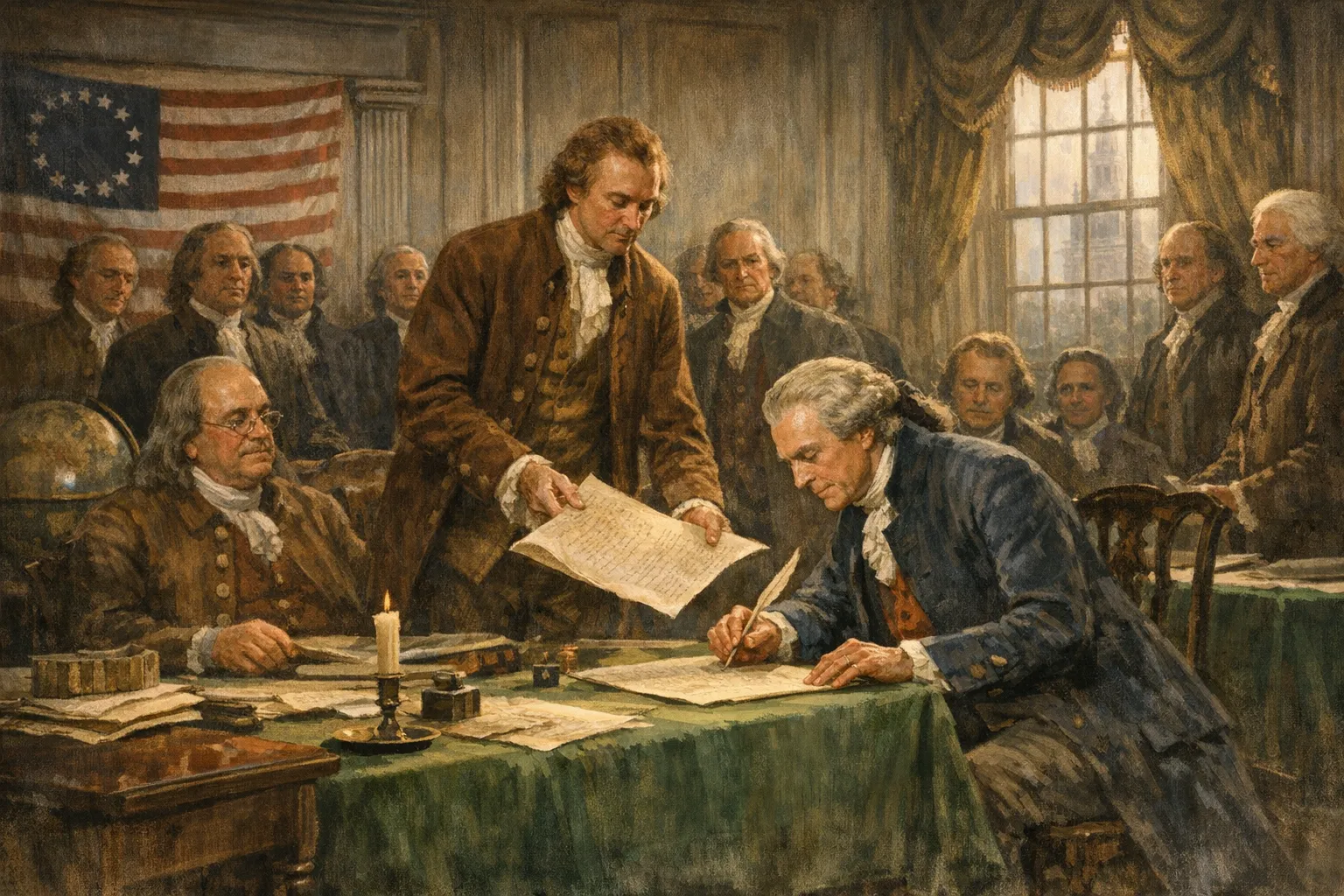
In this analysis, we will explore how the Declaration's core ideas—such as unalienable rights, the consent of the governed, and the right to challenge oppressive rule—have shaped democratic governance. We will also examine its far-reaching influence beyond the United States, inspiring movements for freedom and equality globally. Join us as we delve into the lasting impact of this revolutionary document on the future of democracy.
Introduction: The Birth of a Nation and Its Ideals
The Declaration of Independence, adopted on July 4, 1776, marked a pivotal moment in history by proclaiming the thirteen American colonies' independence from Great Britain. This act was not merely a political statement; it was a bold declaration of ideals that would shape the future of democracy.
Set against the backdrop of the American Revolution, the Declaration emerged during a time of significant unrest and desire for self-governance. Colonists were frustrated with British rule, particularly under King George III, whose policies were perceived as oppressive. The Declaration articulated these grievances, emphasizing the importance of self-governance and the right to alter or abolish a government that fails to serve its people.
At its core, the Declaration introduced transformative principles that resonate to this day. It famously asserts the concept of unalienable rights, including "Life, Liberty, and the pursuit of Happiness." This notion has influenced democratic constitutions around the world, serving as a touchstone for the rights individuals should universally possess.
As the Declaration boldly states, "A government that does not serve its people is like a ship without a compass, lost at sea." This analogy encapsulates the essence of the document: a call for governments to derive their powers from the consent of the governed.
The Declaration's legacy extends far beyond the United States, inspiring democratic movements and independence declarations globally. Its emphasis on equality and natural rights has been cited as a foundational influence on liberal democracy, laying the groundwork for the democratic ideals we uphold today.
Unalienable Rights: A New Paradigm for Governance
The Declaration of Independence, adopted on July 4, 1776, introduced the revolutionary idea of unalienable rights—"Life, Liberty, and the pursuit of Happiness." These rights were defined as inherent and cannot be surrendered or transferred. This concept fundamentally shifted the basis of governance from divine right to individual rights, asserting that the legitimacy of government comes from the consent of the governed.
This notion has had a profound impact on future democratic constitutions around the globe. For instance, many nations followed the American lead, embedding similar principles in their own declarations:
- France: The Declaration of the Rights of Man and of the Citizen (1789) emphasized liberty, equality, and fraternity, echoing the sentiments of the American Declaration.
- South Africa: The Constitution of 1996 enshrined rights to dignity, equality, and freedom, reflecting the unalienable rights framework.
- India: The Constitution adopted in 1950 emphasized fundamental rights akin to those articulated in the Declaration of Independence.
The Declaration’s assertion that governments derive their powers from the consent of the governed laid the groundwork for modern democratic governance. It underscored the importance of self-governance and the right to challenge oppressive regimes, as evidenced by the grievances listed against King George III.
As historian Gordon Wood once remarked, "The Declaration was like a match that lit a fire of liberty." This analogy captures how the Declaration inspired not just a revolution in America but ignited similar movements worldwide, leading to the establishment of liberal democracies that continue to evolve today.
Through its emphasis on equality and natural rights, the Declaration of Independence remains a cornerstone of democratic principles, influencing countless nations and shaping the discourse on human rights.
The Consent of the Governed: Foundations of Democracy
The phrase "consent of the governed" from the Declaration of Independence encapsulates a critical principle of democratic governance: that legitimate authority stems from the approval of the people. This idea asserts that governments must be accountable to their citizens, who have the right to shape their own destinies.
Historically, numerous governments have failed to secure this consent, often leading to unrest and rebellion. For instance, the absolute monarchy of King Louis XVI in France ultimately succumbed to the French Revolution, as discontent over lack of representation and oppressive rule prompted citizens to demand change. Similarly, the autocratic regimes of the 20th century, such as those of Stalin in the Soviet Union and Hitler in Nazi Germany, exemplify how the absence of consent leads to catastrophic consequences.
In modern democracies, the principle of consent manifests through various mechanisms. Elections allow citizens to choose their representatives, while referendums enable direct participation in significant decisions. This embodies the notion that "democracy is like a car; if you don’t like where it’s going, you can change the driver."
The Declaration's assertion that governments derive their powers from the consent of the governed has not only shaped American democracy but has also inspired global movements for self-determination. Nations around the world have embraced this tenet, seeking to establish systems that honor the will of the people, thereby reinforcing the Declaration's lasting legacy. For further insights, explore the broader implications in Principles of Democracy: A Comprehensive Guide.
Grievances Against Oppression: The Right to Self-Governance
The Declaration of Independence meticulously outlines grievances against King George III, which serve as a powerful indictment of tyranny and a rallying cry for self-governance. Key grievances include:
- Imposing taxes without consent
- Denying the right to a fair trial
- Dissolving representative houses
- Maintaining standing armies in peacetime
These grievances not only articulated the colonies' frustrations but also established a blueprint for the right to alter or abolish oppressive governments. This idea is encapsulated in the phrase that governments derive their powers from the consent of the governed, laying a foundational principle for modern democracy.
The assertion that citizens have the right to challenge tyranny resonates deeply with historical and contemporary struggles for freedom. For instance, in the 20th century, countries like India and South Africa invoked similar rights to overthrow colonial rule and apartheid, respectively. Mahatma Gandhi's nonviolent resistance to British rule was heavily influenced by the Declaration's principles, as was Nelson Mandela's fight against the apartheid regime.
As the Declaration posits, "When a long train of abuses and usurpations, pursuing invariably the same Object evinces a design to reduce them under absolute Despotism, it is their right, it is their duty, to throw off such Government." This analogy highlights the intrinsic belief that the fight for self-governance is not just a right but a moral imperative.
The impact of these grievances has been profound, inspiring movements worldwide and solidifying the notion that the quest for democracy often begins with the articulation of oppression. Nations across the globe continue to look to the Declaration as a beacon of hope in their own struggles for independence and self-determination.
Global Influence: The Declaration Beyond American Borders
The Declaration of Independence, adopted on July 4, 1776, did not just mark the birth of the United States; it also served as a beacon of hope for oppressed peoples around the world. Its principles have reverberated through history, shaping numerous declarations and movements aimed at achieving democracy.
Internationally, many nations have drawn inspiration from the Declaration in their own quests for freedom. Notable examples include:
- The French Declaration of the Rights of Man and of the Citizen (1789): This document echoed the American Declaration’s emphasis on individual rights and equality.
- The Latin American Wars of Independence (early 19th century): Leaders like Simón Bolívar cited the Declaration as a foundational text in their struggle against colonial rule.
As these movements unfolded, the Declaration's assertion that governments derive their powers from the consent of the governed became a rallying cry. This idea laid the groundwork for modern democratic governance and has inspired countless revolutions, such as:
- The Haitian Revolution (1791-1804): Enslaved people fought for their freedom, motivated by ideals of liberty and equality articulated in the Declaration.
- The Indian Independence Movement (20th century): Figures like Mahatma Gandhi referenced the Declaration in advocating for self-rule and civil rights.
The global spread of democratic ideals can often be traced back to the Declaration’s core principles. Its emphasis on unalienable rights—life, liberty, and the pursuit of happiness—has been foundational for many liberal democracies today.
As the philosopher Thomas Paine famously said, “The mind once enlightened cannot again become dark.” This sentiment captures the essence of the Declaration's impact: once people grasp the concepts of equality and self-governance, they are unlikely to accept oppression again.
In summary, the Declaration of Independence transcended its original context to become a universal symbol of freedom, inspiring movements across continents and fostering a global commitment to democratic ideals.
Equality and Natural Rights: Cornerstones of Liberal Democracy
Liberal democracy emphasizes individual freedoms, equality before the law, and the protection of natural rights. Its core principles include the rule of law, separation of powers, and universal suffrage, all designed to ensure that every citizen has a voice in governance.
The Declaration of Independence, adopted on July 4, 1776, introduced revolutionary ideals that have profoundly influenced modern democratic thought. By proclaiming unalienable rights—namely "Life, Liberty, and the pursuit of Happiness"—the Declaration laid the groundwork for future democratic constitutions around the globe. This emphasis on equality and natural rights serves as a cornerstone for liberal democracy, asserting that all individuals are entitled to these fundamental freedoms.
Contemporary issues related to equality and rights often hark back to these foundational principles. For instance:
- Civil Rights Movements: Ongoing struggles for racial equality and gender rights echo the Declaration's call for equal treatment under the law.
- Global Democracy Movements: The Declaration has inspired numerous independence movements worldwide, reflecting its universal appeal and influence.
- Debates on Government Accountability: Discussions around the right to alter or abolish oppressive governments remain relevant today, as citizens advocate for transparency and responsiveness in governance.
As Thomas Jefferson put it, “The price of liberty is eternal vigilance.” This analogy underscores the ongoing responsibility of citizens to uphold the values enshrined in the Declaration and ensure that the rights it champions are protected and expanded.
In a world where the ideals of the Declaration continue to resonate, it is clear that its emphasis on equality and natural rights is not merely historical but a living framework that shapes the discourse on democracy today.
Myth vs. Reality: Misconceptions About the Declaration
The Declaration of Independence is often shrouded in myth, leading to misconceptions about its intentions and outcomes. One prevalent myth is that the document was a comprehensive statement of democratic values applicable to all individuals. In reality, while it proclaimed unalienable rights such as "Life, Liberty, and the pursuit of Happiness," these principles primarily applied to white, land-owning men of the era, leaving many marginalized groups outside its scope.
Another common misconception is that the Declaration instantly established democratic governance in America. The truth is more complex. Although it laid the groundwork for principles like the consent of the governed, the new nation faced significant contradictions, notably the continuation of slavery and disenfranchisement of women and non-whites. These contradictions challenge the myth of an immediately egalitarian society.
These misconceptions shape modern interpretations of democracy. For instance, many contemporary discussions about equality and rights draw from the Declaration, yet they often overlook its limitations. This selective reading can lead to a skewed understanding of democracy that fails to acknowledge ongoing struggles for equality and justice.
"Believing the Declaration was a perfect blueprint for democracy is like claiming a rough sketch is a finished masterpiece."
By critically examining these myths and their realities, we can foster a more nuanced understanding of the Declaration's role in shaping not just American democracy, but democratic movements worldwide. To explore more about its historical context, check out The American Revolution: A Historical Overview and delve into Principles of Democracy: A Comprehensive Guide.
The Declaration's Legacy: A Living Document
The Declaration of Independence remains a vital component of American political discourse, often regarded as a living document that adapts to contemporary issues. Adopted on July 4, 1776, it laid the groundwork for the idea that governments derive their authority from the consent of the governed. This principle continues to resonate in modern democratic governance.
In recent years, various political movements have invoked the Declaration to advocate for change and justice. For instance, the Black Lives Matter movement references the Declaration’s promises of equality and unalienable rights to argue against systemic racism and advocate for civil rights. Similarly, environmental activists often quote the Declaration to emphasize the right to a healthy environment as part of the pursuit of happiness.
However, the principles enshrined in the Declaration are not without challenges. Political polarization frequently leads to debates about what constitutes consent and the role of government in securing rights. The grievances listed against King George III serve as a reminder of the importance of self-governance, yet contemporary issues like voter suppression and gerrymandering raise questions about whether all citizens truly have a voice.
The Declaration’s emphasis on equality and natural rights has inspired democratic movements worldwide, showcasing its enduring influence. As nations strive for freedom and self-determination, the ideals set forth in the Declaration continue to guide and challenge both leaders and citizens alike.
For a deeper exploration of its historical context, see The American Revolution: A Historical Overview, and for an examination of its democratic principles, check out Principles of Democracy: A Comprehensive Guide.
Conclusion: The Enduring Impact of the Declaration of Independence
The Declaration of Independence, adopted on July 4, 1776, has had a profound and lasting influence on the landscape of modern democracy. Key points from our discussion include its introduction of unalienable rights such as "Life, Liberty, and the pursuit of Happiness," which have shaped democratic constitutions globally. Furthermore, the assertion that governments derive their powers from the consent of the governed laid the essential groundwork for contemporary democratic governance.
In today's political climate, the importance of the Declaration remains evident. As various movements advocate for self-governance and the right to challenge oppressive systems, the Declaration serves as a powerful reminder of the principles that underpin democracy. Its grievances against King George III highlight the necessity of accountability and the right of the people to alter or abolish unjust governments, principles that resonate in current struggles for freedom and equality.
As we reflect on the enduring legacy of the Declaration, it’s crucial for readers to engage with democratic principles actively. Understanding the historical context and ongoing relevance of the Declaration can empower individuals to advocate for their rights and those of others. For more insights, consider exploring topics like The American Revolution: A Historical Overview and Principles of Democracy: A Comprehensive Guide. Engaging with these ideas can inspire meaningful participation in our democratic processes, ensuring that the ideals of the Declaration continue to flourish.
FAQs: Understanding the Declaration of Independence
What was the primary purpose of the Declaration of Independence?
The Declaration of Independence, adopted on July 4, 1776, served as a formal statement proclaiming the thirteen American colonies' independence from Great Britain. It was a bold assertion of self-governance and a rejection of British authority, aiming to unify the colonies in their quest for freedom.
How did the Declaration influence other countries?
The impact of the Declaration extended well beyond American borders. Its principles inspired numerous democratic movements and independence declarations worldwide. For instance, revolutionary leaders in France and Latin America drew upon its ideas to challenge colonialism and authoritarian regimes, highlighting the Declaration's role in shaping global democratic ideals.
What are the main principles outlined in the Declaration?
The Declaration articulates several key principles:
- Unalienable Rights: It introduces the concept of rights that cannot be taken away, famously stating 'Life, Liberty, and the pursuit of Happiness.'
- Consent of the Governed: The assertion that governments derive their powers from the consent of the governed laid the groundwork for modern democratic governance.
- Right to Self-Governance: Grievances against King George III underscore the importance of self-governance and the right to alter or abolish oppressive governments.
- Equality and Natural Rights: The Declaration emphasizes equality and natural rights, which have become foundational to liberal democracy.
These principles not only influenced the formation of the U.S. government but also served as a blueprint for democracies around the world. For a deeper dive, check out The American Revolution: A Historical Overview and Principles of Democracy: A Comprehensive Guide.