
Pablo Picasso's Guernica is more than just a painting; it’s a visceral outcry against the horrors of war. Created in 1937, this monumental mural captures the chaos and suffering inflicted upon humanity during the Spanish Civil War, specifically in response to the bombing of the Basque town of Guernica. Through its stark imagery and emotional depth, Guernica has become a powerful anti-war symbol.
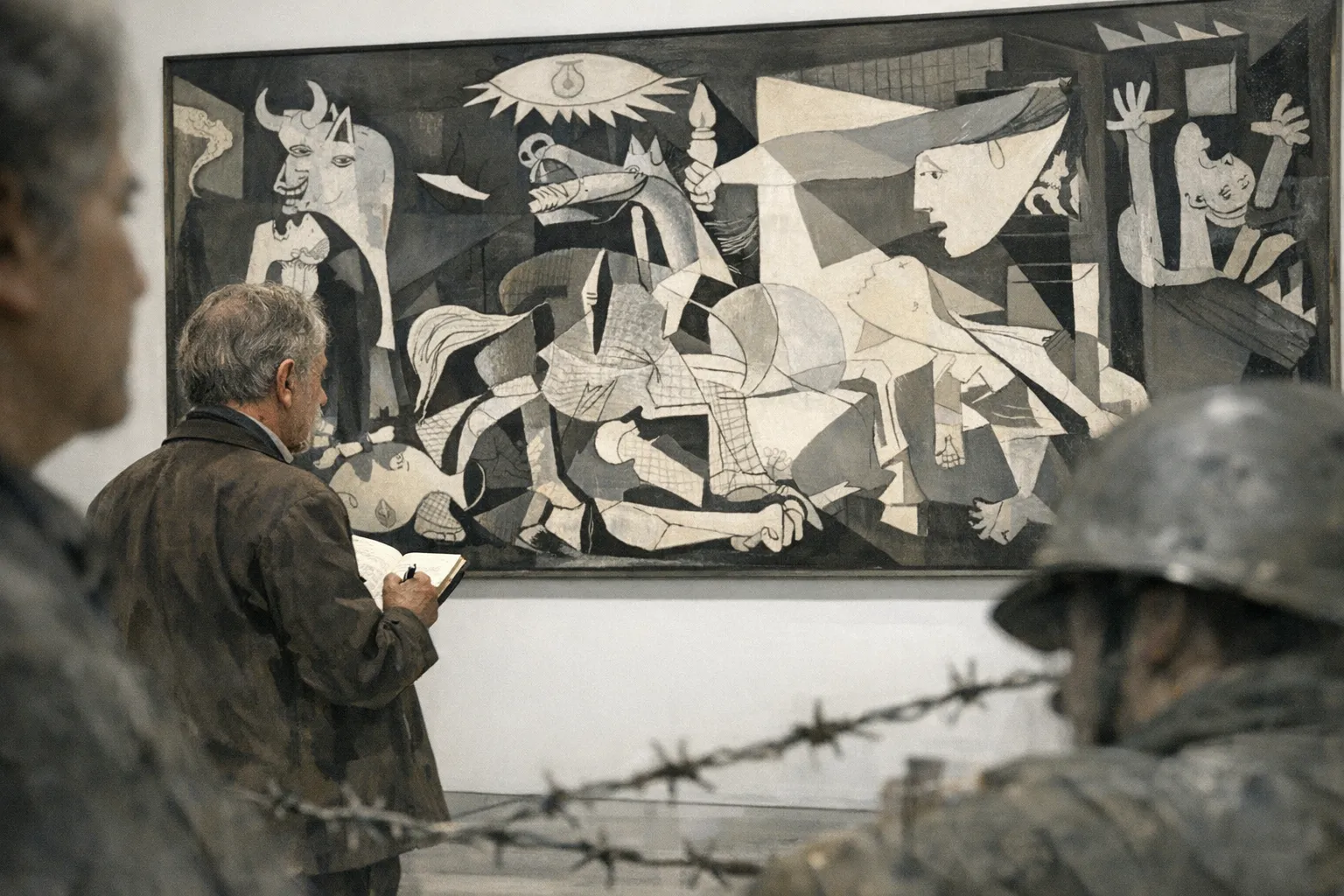
In this analysis, we’ll explore how Guernica encapsulates the anguish of conflict and stands as a testament to human suffering. From its monochromatic palette to its distorted figures, every element plays a crucial role in conveying the tragedy of war. Join us as we delve into the layers of meaning within this iconic work, examining its historical context and enduring impact on political discourse.
The Historical Context of Guernica
The painting 'Guernica' by Pablo Picasso was born out of the turmoil of the Spanish Civil War, a conflict that erupted in 1936 and lasted until 1939. This war was not just a struggle between opposing political ideologies; it was a profound societal upheaval that fractured Spain. The Nationalists, led by General Francisco Franco, sought to overthrow the democratically elected Republican government, resulting in widespread violence and profound human suffering.
One of the war’s most devastating events was the bombing of the town of Guernica on April 26, 1937. German and Italian air forces, supporting Franco’s Nationalists, unleashed a brutal aerial assault that killed hundreds of civilians and destroyed much of the town. This act was significant as it marked one of the first instances of aerial bombardment targeting civilians, foreshadowing the horrors of modern warfare. As Picasso described the aftermath, it was akin to "a wound opened in the heart of the world."
Picasso’s connection to the events was deeply personal. Although he lived in Paris at the time, his Basque heritage made the tragedy of Guernica resonate profoundly with him. The painting, which measures an imposing 3.5 meters in height and 7.8 meters in width, captures the chaos and despair of the bombing through distorted figures—a gored horse, a bull, and screaming women. The monochromatic palette of black, white, and grey adds to the emotional weight, allowing the viewer to feel the tragedy and mourning associated with the event.
Through 'Guernica,' Picasso transformed personal grief into a universal anti-war symbol, embodying the pain and suffering caused by conflict. The painting serves not only as a historical document but as a timeless reminder of the cost of war.
The Artistic Elements of Guernica
Pablo Picasso's Guernica measures an impressive 3.5 meters in height and 7.8 meters in width, making it a monumental mural that commands attention. The sheer scale of the painting amplifies its emotional weight, immersing viewers in the chaos and suffering depicted within its confines. This grandeur is crucial, as it allows the horrors of war to unfold almost physically before the audience.
The choice of a monochromatic palette—black, white, and grey—intensifies the painting's emotional impact. This limited color scheme does not just evoke feelings of despair and mourning; it also creates a stark, reportage quality that compels viewers to confront the grim realities of conflict. As art historian John Berger once noted, “A painting is not an object; it is a moment in time.” In Guernica, that moment is one steeped in tragedy.
The distorted figures within Guernica serve as powerful symbols of suffering. From the gored horse and the raging bull to the screaming women and the lifeless baby, each element is a representation of the chaos unleashed by the bombing of the town. These figures collectively embody the anguish and devastation inflicted by war, making the painting not just an artwork but a poignant commentary on human suffering. Through these artistic choices, Picasso invites viewers to grapple with the profound impact of violence and loss, ensuring that Guernica remains a timeless anti-war symbol.
Guernica as an Anti-War Symbol
Pablo Picasso's 'Guernica' is not just a painting; it's a visceral expression of human suffering that echoes through the ages as a potent anti-war symbol. Created in response to the bombing of the Basque town of Guernica during the Spanish Civil War, the painting encapsulates the chaos and despair that war inflicts on innocent lives.
The themes of suffering and chaos are palpably rendered in the composition. Distorted figures—like the gored horse, the bull, and the screaming women—clash with the background of flames, creating a haunting tableau of destruction. The monochromatic palette of black, white, and grey enhances the emotional impact, offering a stark representation of tragedy and mourning.
Over the decades, 'Guernica' has transcended its original context to become a universal symbol of protest. It has been prominently featured in demonstrations against various conflicts, notably during the Vietnam War. Activists wielded prints of the painting as a rallying cry against the horrors of warfare, reinforcing its role as a visual manifesto for peace.
As one observer aptly noted, "Art is a mirror; Guernica reflects not just the pain of one moment, but the collective anguish of humanity." This analogy emphasizes how Picasso’s work resonates beyond its immediate historical circumstances, serving as a reminder of the enduring consequences of violence.
In every corner of the globe, 'Guernica' continues to inspire movements for peace, solidifying its position as one of the most significant anti-war symbols in modern art history.
The Reception of Guernica
Upon its debut at the 1937 International Exposition in Paris, Guernica elicited a visceral response from both the public and critics. Attendees were struck by its monumental size—3.5 meters tall and 7.8 meters wide—and the somber palette of black, white, and grey that Picasso employed to convey the horrors of war. The painting's raw emotional power left many viewers in stunned silence, as its distorted figures portrayed the chaos and suffering inflicted upon civilians during the bombing of the Basque town of Guernica.
In the years following its exhibition, Guernica transcended its immediate context to become a profound symbol of anti-war sentiment. Its imagery has been invoked in various protests, most notably against the Vietnam War, illustrating how art can influence political discourse. Critics began to recognize the painting not merely as a response to a specific event but as a timeless commentary on the human condition and the devastation wrought by conflict.
Over time, perceptions of Guernica have evolved. Initially viewed through the lens of the Spanish Civil War, it is now seen as a universal emblem of suffering and resilience. As art critic John Berger famously noted, “Guernica is a scream in the face of war, a haunting reminder that the real victims are often the innocent.” This analogy encapsulates the painting's enduring relevance, as it continues to resonate with audiences around the globe.
In summary, Guernica has cemented its place in both art history and political activism, illustrating the intricate connection between artistic expression and societal issues.
Myth vs. Reality: Misinterpretations of Guernica
Despite its monumental status, misconceptions about Picasso's intentions in Guernica often cloud its true meaning. Many see the painting solely as an abstract representation of chaos, neglecting the specific historical context that inspired its creation.
-
Debunking Myths About Picasso's Intentions: Some interpretations suggest Picasso aimed merely to express personal angst. In reality, Guernica was a direct response to the bombing of the Basque town during the Spanish Civil War in 1937. This historical event profoundly shaped his artistic choices, making the artwork a poignant commentary on collective suffering rather than individual despair.
-
Clarifying Historical Context vs. Artistic Interpretation: While the painting evokes universal themes of pain and loss, it is essential to understand the specific context of the Spanish Civil War. The monochromatic palette of black, white, and grey is not just a stylistic choice; it symbolizes mourning and tragedy, intensifying the emotional impact of the depicted horrors.
-
Exploring Personal vs. Collective Interpretations: Viewers often project their own experiences onto Guernica, leading to varied interpretations. However, Picasso’s work transcends personal sentiment; it embodies a collective memory of war's brutality. As art critic John Berger put it, “Art is a lie that helps us see the truth.” In this light, Guernica serves as a vital reminder of the shared human experience of suffering.
In essence, unpacking these myths allows us to appreciate Guernica not just as a work of art, but as a crucial historical artifact that continues to resonate in today's socio-political climate. To delve deeper into the historical backdrop, consider exploring the Spanish Civil War.
The Legacy of Guernica in Modern Art
The impact of Pablo Picasso’s Guernica extends far beyond its 1937 origins, resonating through the decades and influencing a variety of contemporary artistic expressions. Artists continue to draw inspiration from its powerful anti-war message and the raw emotion it conveys.
Modern Artworks Inspired by Guernica
Many modern artists have revisited the themes of suffering and chaos depicted in Guernica. For instance:
- Kara Walker: Her silhouettes often reflect the complexities of race and violence, echoing the emotional weight found in Picasso's work.
- Banksy: Known for his political street art, Banksy channels the urgency of social issues, much like Picasso did, often using stark imagery reminiscent of the monochromatic palette.
- Diana Weymar: With her textile art, Weymar addresses modern conflicts and humanitarian crises, drawing parallels to the suffering portrayed in Guernica.
Relevance in Today's Political Climate
As global conflicts continue to arise, Guernica remains a poignant reminder of the human cost of war. Its relevance is evident in various movements:
- Anti-war protests: The painting has been used as a visual motif in demonstrations against wars, including the Vietnam War, symbolizing collective grief.
- Activist art: Contemporary artists harness Picasso’s legacy to critique current political events, making the painting's message timeless.
Themes in Contemporary Art
The themes of chaos, suffering, and loss that Picasso depicted have become staples in modern art. Artists are increasingly exploring:
- Human resilience: Many works highlight the strength found amid adversity, much like the figures in Guernica who embody both pain and defiance.
- Environmental crises: The chaos of war is now paralleled with themes of ecological destruction, as seen in the works of artists like Olafur Eliasson.
“Art is a weapon, as potent as a bomb, capable of igniting change.”
Guernica stands not just as a masterpiece but as an enduring symbol of the human experience in the face of conflict, inspiring generations of artists to voice their truths amid turmoil.
Guernica in Popular Culture
Pablo Picasso's Guernica has transcended its origins as a poignant anti-war statement, finding significant resonance in literature, film, and other media.
Notable References
- Films: Guernica often appears in films addressing war and human suffering. Movies like The Spanish Earth (1937) utilize the painting to symbolize the devastation of the Spanish Civil War. More recently, The Disappearance of Eleanor Rigby (2013) employs visuals reminiscent of Guernica to evoke emotional chaos.
- Literature: In novels such as The Book Thief by Markus Zusak, Guernica is referenced to highlight the brutality of war, illustrating how art captures the essence of human suffering.
Political Commentary
Guernica serves as a powerful visual metaphor in political discourse. Its imagery has been employed in protests, notably against the Vietnam War, where activists used the painting's themes to underscore the tragedies of conflict. The mural's stark representation of chaos and pain continues to inspire movements advocating for peace and justice.
Global Exhibitions
The painting's presence in exhibitions worldwide cements its role as a cultural touchstone. Displayed in major art institutions like the Museo Reina Sofia in Madrid, Guernica draws countless visitors, each seeking to engage with its profound commentary on war. Temporary installations at various international art fairs and peace rallies further highlight its enduring relevance.
In essence, Guernica not only reflects the historical context of its creation but also continues to influence contemporary discussions about war, suffering, and the human condition.
The Role of Art in Political Discourse
Art has a profound capacity to influence public opinion and shape policy discussions. Pablo Picasso's Guernica is a prime example, transforming the horrors of the Spanish Civil War into a universal message against violence. This monumental painting, measuring 3.5 meters by 7.8 meters, uses a stark monochromatic palette to enhance its emotional impact, allowing viewers to confront the raw suffering depicted within its chaotic composition.
Comparatively, other politically charged artworks, such as Eugène Delacroix's Liberty Leading the People or Francisco Goya's The Third of May 1808, also exemplify art's power in political contexts. Each piece captures the essence of human struggle and resistance, establishing a visual dialogue around political events and ideologies.
The importance of artistic freedom cannot be overstated in these contexts. When artists are free to express dissent and critique power, they not only contribute to political discourse but also inspire collective action. Guernica has served as a symbol during various protests, including those against the Vietnam War, illustrating how art can resonate across different political landscapes and generations.
In summary, artworks like Guernica highlight the crucial role of art in shaping political narratives and fostering societal change, emphasizing that artistic expression remains a vital tool for challenging injustices and advocating for peace.
FAQs about Guernica
What inspired Picasso to create 'Guernica'?
Pablo Picasso created 'Guernica' in 1937 as a visceral response to the bombing of the Basque town during the Spanish Civil War. The brutality of the attack profoundly affected him, prompting a passionate artistic expression of the horrors of war. The painting captures chaos and suffering through distorted figures, including a gored horse and screaming women, embodying the pain inflicted by violence.
How has the painting been preserved over the years?
'Guernica' has undergone several preservation efforts since its creation. Initially displayed at the International Exposition in Paris, it later traveled across various countries for exhibitions. After World War II, the painting was housed at the Museum of Modern Art (MoMA) in New York for several decades. In 1981, it returned to Spain, where it was restored and displayed at the Reina Sofia Museum in Madrid. Ongoing conservation measures ensure its protection from environmental damage.
What is the current location of 'Guernica'?
Today, 'Guernica' resides in the Museo Reina Sofia in Madrid, Spain. This location not only honors Picasso’s monumental work but also serves as a symbol of peace and remembrance of the suffering caused by war. The museum attracts countless visitors who come to reflect on the painting's powerful message against conflict.
Conclusion: The Enduring Impact of Guernica
Pablo Picasso's Guernica remains a potent reminder of the horrors of war, resonating with audiences even today. Created in response to the bombing of the Basque town of Guernica during the Spanish Civil War, this monumental mural serves as a timeless anti-war symbol. Its black, white, and grey palette not only captures the tragedy of the event but also emphasizes the emotional weight of human suffering.
The painting's relevance is underscored by its continued use in political contexts, from protests against the Vietnam War to contemporary movements advocating for peace. By engaging with Guernica, we remember historical events and the pain they inflicted, allowing us to reflect on the cycles of violence that persist in our world.
Art and conflict are intertwined; Guernica encourages us to confront uncomfortable truths about humanity's capacity for destruction. It invites viewers to understand the emotional and psychological impact of war, fostering a dialogue that is crucial for preventing future conflicts.
In a world where the lessons of history can often be forgotten, Guernica stands as a call to action. It urges us to engage with art not merely as spectators but as active participants in the ongoing conversation about peace and human dignity.