
Ana Mendieta's 'Silueta Series' is not just art; it's a profound meditation on identity intertwined with nature. This series, created between 1973 and 1980, challenges viewers to reconsider their relationship with the environment and the self. Through ephemeral body imprints and the interplay of natural materials, Mendieta forges a powerful dialogue about presence and absence.
In this article, we will critically explore how the 'Silueta Series' reshapes our understanding of identity by framing it within the context of nature. As the Tate Modern prepares to showcase this iconic work alongside Mendieta's early paintings and late sculptures from July 9, 2026, to January 10, 2027, we’ll delve into the themes of displacement and the emotional resonance that critics have described as imbued with 'pagan magic.' Join us as we uncover the layers of Mendieta's legacy and her lasting influence on contemporary art's engagement with the environment.
Introduction to Ana Mendieta and the 'Silueta Series'
Ana Mendieta, a Cuban-American artist, is celebrated for her innovative approach to identity and the natural environment. Born in Havana in 1948 and exiled to the United States at a young age, Mendieta’s work reflects her experiences of displacement and longing for a connection to her roots. Throughout her artistic journey, she utilized diverse mediums—ranging from performance art to sculpture—to explore the intersections of culture, gender, and nature.
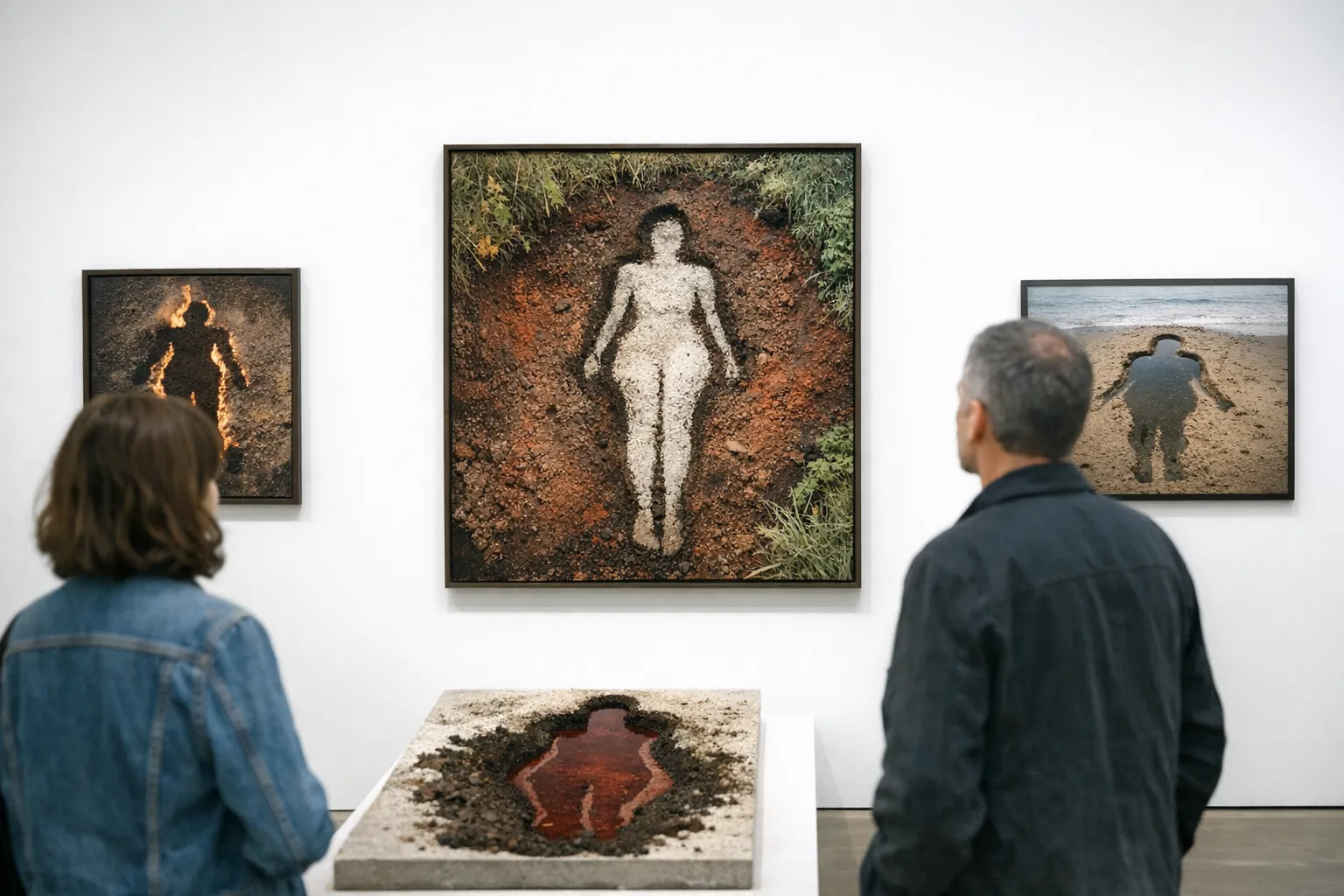
The 'Silueta Series,' created between 1973 and 1980, is one of Mendieta’s most significant bodies of work. This series consists of photographs and films documenting ephemeral imprints of her body in natural landscapes, crafted using materials like earth, fire, water, and vegetation. Each piece captures both the presence of her silhouette and the absence it leaves behind, serving as a poignant metaphor for identity and belonging.
In the context of contemporary art, the 'Silueta Series' is groundbreaking. It challenges traditional notions of representation by immersing the viewer in the dynamic relationship between the human body and the natural world. As Mendieta once said, “My body is a landscape, and I am part of that landscape.” This analogy encapsulates her belief that identity is not just a static concept but rather a fluid interaction with the environment.
The upcoming exhibition at Tate Modern (July 9, 2026 - January 10, 2027) will showcase this series alongside her early paintings and late sculptures, providing an immersive insight into her legacy and the emotional intensity of her work. Mendieta's exploration of identity through nature continues to resonate in contemporary art, making her a pivotal figure in the dialogue surrounding environmental reflection and identity politics.
Thematic Exploration: Identity and Displacement
Ana Mendieta's 'Silueta Series' poignantly reflects her own experiences of displacement as a Cuban exile. Each silhouette she created in natural settings serves as a powerful metaphor for her search for belonging. By embedding her body within landscapes, Mendieta not only marks her presence but also highlights the void left by her absence. This interplay between presence and absence encapsulates her struggle with identity in a new environment.
In Mendieta's art, identity emerges as a fluid concept. The silhouettes are not static; they transform with the elements—earth, fire, water, and vegetation. This transience suggests that identity is not a fixed state but an evolving narrative shaped by external forces. As viewers engage with her work, they are invited to consider the malleability of their own identities, influenced by personal experiences and cultural context.
Moreover, the 'Silueta Series' connects personal and collective identities. Mendieta's individual experience resonates with broader themes of cultural displacement and connection to nature. As she interlaces her personal narrative with the rich tapestry of collective human experiences, she challenges viewers to reflect on their own identities and the environments that shape them.
As one critic aptly noted, Mendieta's work "is like a shadow cast by a fire: it flickers, it dances, it disappears, yet it remains a part of the landscape." This analogy beautifully encapsulates the delicate balance between identity and displacement in her art.
Through the 'Silueta Series,' Mendieta not only redefines identity but also asserts the profound impact of nature on our understanding of self. Her work is a testament to how art can illuminate the complexities of human experience, inviting us to explore our own connections to the world around us.
Nature as a Canvas: The Role of the Environment
Ana Mendieta's Silueta Series uniquely positions nature as both a medium and a subject, challenging viewers to rethink the relationship between identity and the environment. Through her use of earth, fire, water, and vegetation, Mendieta creates ephemeral body imprints that resonate deeply with themes of presence and absence.
Materials and Their Significance
- Earth: Mendieta often utilized mud and soil to create silhouettes that blend into the landscape, emphasizing the connection between body and land.
- Fire: The use of fire in her work not only marks her physical presence but also symbolizes transformation and the ephemeral nature of existence.
- Water: By incorporating water, she evokes fluidity, suggesting that identity can be both formed and eroded by the environment.
- Vegetation: The incorporation of natural flora highlights the organic aspects of identity, suggesting that we are shaped by our surroundings.
These materials do more than serve as a backdrop; they actively engage with Mendieta’s exploration of identity. The natural landscapes she chose were not arbitrary; they are laden with cultural and personal significance, reflecting her own experiences of displacement.
Viewer Interaction and Understanding
Mendieta’s work invites viewers to consider how the environment shapes their understanding of identity. The landscapes she inhabited become a canvas where personal and collective narratives intertwine. As one critic noted, her art is “like a whisper of the earth’s voice, reminding us that we are as much a part of nature as it is of us.”
In essence, Mendieta’s Silueta Series compels us to confront our connections to the natural world, urging us to see identity not as a fixed state but as a fluid interplay between the self and the environment. The exhibition at Tate Modern (July 9, 2026 - January 10, 2027) promises to further illuminate this profound relationship, offering a space for reflection on our own identities within the tapestry of nature.
Visual Poetry: The Aesthetic of the 'Silueta Series'
Ana Mendieta's 'Silueta Series' exudes a striking visual impact that intertwines the physicality of her body with the natural world. Through ephemeral body imprints created in landscapes, Mendieta employs materials like earth, fire, and water to capture her silhouette, transforming the landscape into a canvas of identity. Each imprint serves as a visceral reminder of her presence, now marked yet fleeting, evoking a powerful connection to the environment.
The interplay of presence and absence is central to Mendieta's work. Her photographs and films document these transient moments, where the silhouette becomes both a manifestation of self and a reminder of impermanence. This duality challenges viewers to confront their own understanding of identity, suggesting that who we are is often shaped by the spaces we inhabit and the elements that surround us.
Critics have lauded the emotional intensity of Mendieta's work, often describing it as imbued with 'pagan magic.' Her ability to evoke raw sentiments through simple, yet profound visual narratives is evident. As one critic aptly noted, "Mendieta's work feels like a heartbeat in the earth—a pulse of existence that both celebrates and mourns."
In the 'Silueta Series,' Mendieta not only explores themes of displacement and identity but also crafts a visual poetry that resonates deeply in contemporary art. Her legacy, highlighted in exhibitions like the one at Tate Modern, continues to inspire discussions around the human connection to nature and the complexities of identity.
The Tate Modern Exhibition: A Comprehensive Overview
The highly anticipated exhibition at Tate Modern, running from July 9, 2026, to January 10, 2027, showcases Ana Mendieta's groundbreaking Silueta Series alongside a rich collection of her other significant works. This exhibition is pivotal, as it not only highlights Mendieta's exploration of identity and nature but also situates her legacy within the broader context of contemporary art.
In addition to the Silueta Series, visitors can expect to see:
- Early Paintings: These works provide insight into Mendieta's foundational ideas and her evolving relationship with her cultural identity.
- Late Sculptures: These pieces reflect her growing engagement with three-dimensional forms, intertwining nature and the human experience.
- Remastered Films: Newly restored films bring a fresh perspective to her ephemeral performances, allowing audiences to experience Mendieta’s work in a dynamic way.
The visitor experience promises to be immersive, offering deep insights into Mendieta's artistic legacy. Critics have noted the exhibition's emotional intensity, encapsulated in the phrase that her work resembles "the aftermath of a storm, both beautiful and haunting." This analogy underscores the duality present in Mendieta's exploration of presence and absence, emphasizing how her art engages with themes of displacement.
Overall, the Tate Modern exhibition provides a unique opportunity to engage with Mendieta’s work, illuminating her profound influence on site-specific installations and environmental reflections. It invites a reevaluation of how identity is intertwined with nature, a theme that resonates with contemporary dialogues in the art world.
Influence on Contemporary Art: A Legacy of Engagement
Ana Mendieta's Silueta Series has left a profound mark on contemporary art, particularly in the realm of site-specific installations. Her ability to create ephemeral body imprints in natural landscapes, using materials like earth, fire, and water, not only encapsulates her identity but also invites viewers to reconsider their own connection to the environment. This pioneering approach has inspired a generation of artists to engage directly with nature in their work.
Many contemporary artists draw from Mendieta's themes of displacement and identity. For instance, artists like El Anatsui and Maya Lin have incorporated natural materials and local landscapes into their installations, echoing Mendieta's exploration of the human experience in relation to the earth. This trend demonstrates how her work continues to resonate, encouraging a dialogue between art and nature that is increasingly relevant in today's ecological discourse.
The emotional intensity of Mendieta's work, often described as possessing a "sense of pagan magic," underscores its ongoing significance. As one critic noted, her art acts like "a mirror reflecting the soul's imprint on the earth." This analogy captures how Mendieta's themes of presence and absence resonate powerfully in contemporary discussions about identity.
As we navigate an art landscape that grapples with environmental and social issues, Mendieta's legacy serves as a catalyst for artists to deepen their engagement with the natural world. Her Silueta Series remains a vital reference point, inspiring both reflection and action in the face of ongoing challenges.
Critics' Perspectives: Reception of the 'Silueta Series'
The critical reception of Ana Mendieta's 'Silueta Series' at Tate Modern has been overwhelmingly positive, with reviewers highlighting its emotional depth and resonance. Critics have noted that the exhibition captivates audiences, drawing them into Mendieta’s meditative exploration of identity through the lens of nature.
Mendieta’s work is often interpreted as a profound commentary on the intersections of personal and collective identity. By creating ephemeral body imprints in natural landscapes, she challenges viewers to consider their own relationships to the earth and their heritage. One critic famously likened her art to "the whispers of the earth speaking through the body," underscoring how her pieces evoke a dialogue between presence and absence.
Additionally, the exhibition has been praised for its 'pagan magic' and raw visual poetry. Reviewers have pointed out that Mendieta's use of elemental materials—earth, fire, water—creates a visceral connection to the natural world. This connection is not merely aesthetic; it serves to transcend traditional identity politics, inviting a broader contemplation of existence itself.
- Emotional Intensity: The exhibition elicits strong feelings, with many critics stating it resonates on a deeply personal level.
- Exploration of Identity: Mendieta’s work prompts discussions about cultural displacement and belonging.
- Visual Poetry: The aesthetics of her pieces are celebrated for their ability to convey complex themes through simplicity.
Overall, the 'Silueta Series' is not just an exhibition but a transformative experience that challenges our understanding of identity in relation to nature.
Myths vs. Reality: Common Misconceptions about Mendieta's Work
Ana Mendieta's work is often pigeonholed into narrow categories, leading to misconceptions that dilute its profound depth. One prevalent myth is that her art is solely about feminism. While Mendieta certainly engages with feminist themes, her oeuvre extends far beyond this singular lens.
Reality Check
- Broader Themes: Mendieta's exploration of identity intersects with issues of displacement and the human connection to nature. Her 'Silueta Series' captures the transient nature of existence and the complexity of cultural identity, not just gender.
- Nature's Role: The series employs natural materials—earth, fire, water, and vegetation—to create ephemeral body imprints. This choice underscores a relationship with the environment that transcends political or social narratives.
Another common myth is that the 'Silueta Series' is only relevant to specific cultural contexts, particularly those relating to Latinx identity.
Reality Check
- Universal Resonance: While Mendieta's work reflects her own experiences, the themes of identity and displacement resonate globally. Her art invites viewers to reflect on their own connections to nature and self, making it relevant in diverse cultural settings.
As one critic aptly noted, Mendieta's work is like "a whisper of the earth, reminding us of the silent stories we all carry." This analogy encapsulates how her art transcends boundaries, urging us to reconsider our understanding of identity in relation to the natural world.
In essence, Mendieta's art is a rich tapestry woven from various threads of identity, culture, and nature, challenging us to look deeper than surface-level interpretations.
FAQs about Ana Mendieta and the 'Silueta Series'
What inspired Mendieta to create the 'Silueta Series'?
Ana Mendieta was driven by a deep connection to nature and her own experiences of displacement. The series, created between 1973 and 1980, features ephemeral body imprints in natural landscapes using materials such as earth, fire, and water. This choice illustrates her desire to merge personal identity with the environment, exploring how these elements reflect and shape one's sense of self.
How does Mendieta's background influence her art?
Mendieta's Cuban heritage and her immigration to the United States at a young age significantly inform her work. Her art often grapples with themes of identity, belonging, and the intersection of culture and nature. By placing her body—an emblem of identity—within natural settings, she creates a dialogue about displacement and the search for a home.
"Mendieta’s work is like a whisper of the earth, a fleeting moment where identity and nature kiss."
What can visitors expect from the Tate Modern exhibition?
Running from July 9, 2026, to January 10, 2027, the Tate Modern exhibition promises a comprehensive exploration of Mendieta's oeuvre. Attendees can expect to see:
- Iconic Works: The 'Silueta Series' alongside early paintings and late sculptures.
- Newly Remastered Films: Fresh perspectives on her cinematic contributions.
- Immersive Experience: An insight into her legacy, emphasizing her influence on site-specific installations and environmental reflections.
Critics have lauded the exhibition for its emotional intensity and the "pagan magic" that permeates her work, making it a must-see for anyone interested in contemporary art's engagement with identity and nature.
Conclusion: The Enduring Impact of Ana Mendieta's Art
Ana Mendieta's 'Silueta Series' serves as a profound exploration of identity through the lens of nature. Key themes in her work include:
- Displacement: Mendieta's body imprints in natural landscapes evoke feelings of longing and loss, reflecting her own experiences as a Cuban exile.
- Connection to Nature: By utilizing elements like earth, fire, and water, she emphasizes humanity's relationship with the environment, blurring the lines between self and surroundings.
- Presence and Absence: Her ephemeral silhouettes capture both the physical form and its transience, suggesting a deeper commentary on existence.
Mendieta's legacy is not merely historical; it resonates powerfully in contemporary discussions around identity and environmentalism. Her innovative approach has influenced a generation of artists who explore site-specific installations and the interplay between human experience and nature. The upcoming exhibition at Tate Modern, featuring her 'Silueta Series' alongside other significant works, highlights her emotional intensity and 'pagan magic,' showcasing how her art transcends traditional identity politics.
In conclusion, Mendieta's work remains a vital touchstone for understanding the complexities of identity in relation to the natural world. Her ability to weave personal narrative with broader environmental themes invites viewers to reflect on their own connections to both identity and landscape. As we continue to navigate issues of belonging and displacement in contemporary society, Mendieta's art offers a timeless lens through which to examine these critical questions.