
The 1999 Women's World Cup Final wasn't just a soccer match; it was a cultural phenomenon that transformed the landscape of women's sports in the United States. With a record-breaking attendance of 90,185 at the Rose Bowl, this event marked a pivotal moment in sports history, igniting a passion for female athletics that continues to resonate today.
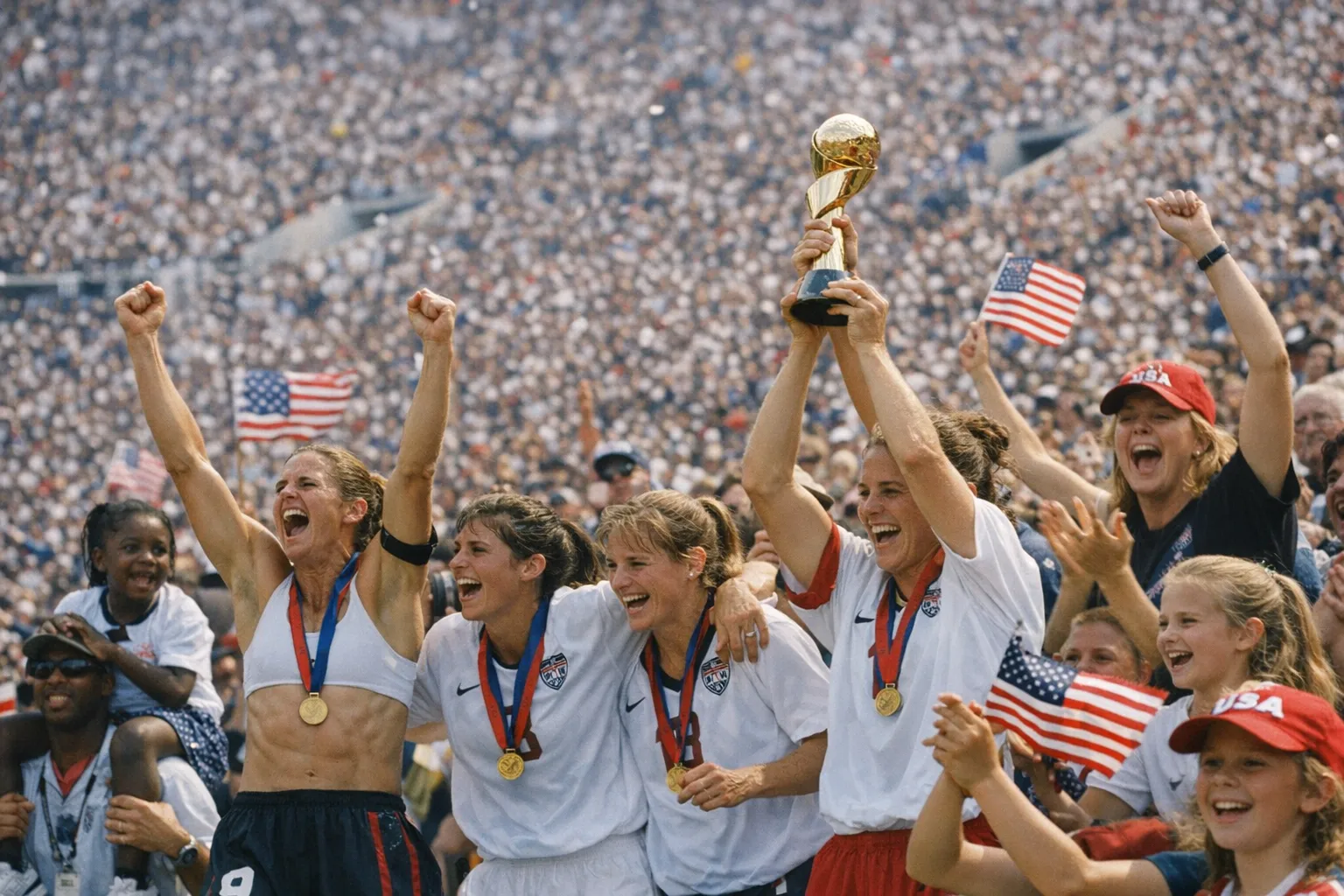
In this exploration, we'll delve into how the 1999 Women's World Cup Final catalyzed interest in women's soccer, spurred advancements in gender equality, and inspired a generation. From Brandi Chastain's unforgettable celebration to the formation of the Women’s United Soccer Association (WUSA), the impact of this match extends far beyond the field, shaping the future of women’s sports in the U.S.
The Historic Match: A Recap of the 1999 Women's World Cup Final
The 1999 Women's World Cup Final took place on July 10, at the Rose Bowl in Pasadena, California. This monumental event saw the United States face off against China, drawing a record-breaking crowd of 90,185 spectators, making it the highest-attended women’s sporting event at that time.
The match unfolded with intense anticipation but ended in a scoreless draw after 120 minutes of play. Both teams showcased remarkable skill and determination, but neither could find the back of the net, leading to the high-stakes penalty shootout that would ultimately decide the champion.
In the penalty shootout, Brandi Chastain emerged as the hero. After several successful penalties, Chastain stepped up to take the final shot. With nerves of steel, she scored and instantly became a symbol of triumph. Her iconic celebration—removing her jersey to reveal her sports bra—was not just a moment of joy but a powerful statement, likening the impact to "the roar of a lion echoing in a quiet forest."
This victory marked the United States' second Women's World Cup title and left an indelible mark on sports culture. The imagery of Chastain's celebration graced the covers of major publications like Sports Illustrated and Time, solidifying the match's place in history. The success of this tournament paved the way for the establishment of the Women's United Soccer Association, the first professional women's soccer league in the U.S., demonstrating the profound cultural impact of the 1999 Women's World Cup Final.
Record-Breaking Attendance: The Rose Bowl Phenomenon
The 1999 Women's World Cup Final at the Rose Bowl in Pasadena, California, drew an astonishing record attendance of 90,185 spectators. This figure not only set an international record for women's sporting events but also marked a significant moment in the visibility and acceptance of women's sports.
To put this in perspective, previous women's sporting events rarely attracted such large crowds. For instance, prior finals and major matches often struggled to fill stadiums, with attendance typically hovering in the low thousands. The 1999 final shattered these norms and, in doing so, created a seismic shift in public perception.
The extraordinary turnout had immediate effects on media coverage and public interest. Major networks began to take women’s sports more seriously, leading to an increase in broadcast opportunities. The match averaged 17.9 million viewers, peaking at 40 million, showcasing the potential for women's sports to capture mainstream attention. As one commentator noted, "The attendance was like a tidal wave, sweeping away the old barriers and flooding the landscape with new possibilities."
Moreover, the success of the tournament led to the establishment of the Women's United Soccer Association (WUSA) in 2000, the first professional women's soccer league in the U.S. This league, though it faced financial challenges, was a direct result of the heightened interest and participation generated by the tournament.
In summary, the record-breaking attendance at the 1999 Women's World Cup Final was more than just a number; it was a catalyst for change in women's sports and a crucial step toward gender equality in athletics.
Cultural Impact: Shifting Perceptions of Women in Sports
Before the 1999 Women's World Cup Final, women's sports were often sidelined, with gender stereotypes dominating public perception. Female athletes were frequently dismissed as less capable or competitive than their male counterparts. The prevailing narrative suggested that women’s sports were merely an extension of traditional roles rather than a legitimate arena for athletic excellence.
The final, however, shattered these stereotypes in dramatic fashion. With a record-breaking attendance of 90,185 at the Rose Bowl, the event showcased the immense talent and determination of female athletes. The U.S. team’s victory against China, culminating in a tense penalty shootout, captivated millions. Brandi Chastain's iconic celebration, where she removed her jersey to reveal her sports bra, became a symbol of empowerment, illustrating that female athletes could embody strength and passion just as much as their male peers. As one commentator noted, it was like "watching a lioness roar."
Public reactions were overwhelmingly positive, with media coverage skyrocketing post-event. Major publications like Sports Illustrated and Time featured female athletes prominently, helping to shift the narrative around women in sports. The event averaged 17.9 million viewers, peaking at 40 million, showcasing the broad appeal of women’s sports and emphasizing their significance in popular culture.
The cultural impact was profound, leading to increased participation and interest in women’s soccer. The success of the tournament paved the way for the establishment of the Women's United Soccer Association (WUSA) in 2000, marking a significant step forward for professional women's sports in the U.S. Overall, the 1999 Women's World Cup Final was not just a game; it was a pivotal moment that transformed societal views on women athletes, fostering a new era of recognition and respect.
Brandi Chastain: An Icon of Empowerment
Brandi Chastain's unforgettable celebration after scoring the decisive penalty in the 1999 Women's World Cup Final became a cultural touchstone, symbolizing empowerment and defiance. When she ripped off her jersey to reveal her sports bra, it transcended the act of scoring a goal; it was a declaration of female strength in a traditionally male-dominated sport. This moment not only showcased her athletic prowess but also challenged societal norms around femininity in sports.
The impact of Chastain's celebration rippled through the world of sports marketing and representation. Major publications like Sports Illustrated and Time featured her on their covers, highlighting a shift in how women in sports were portrayed. This visibility led brands to recognize the commercial potential of women's sports, paving the way for increased sponsorship and media coverage. Her act was "like a lightning bolt striking the status quo," galvanizing both fans and future athletes.
Chastain's influence extends far beyond that singular moment. She became a role model for countless young female athletes, inspiring them to pursue their dreams in sports. The success of the 1999 Women's World Cup not only increased interest in soccer but also contributed to the establishment of the Women’s United Soccer Association (WUSA) in 2000, marking a significant step forward for professional women's soccer in the U.S.
In summary, Brandi Chastain emerged as an icon of empowerment, reshaping perceptions of women in sports and leaving a legacy that continues to inspire future generations.
Media Coverage: The Role of Broadcast and Print
The media coverage surrounding the 1999 Women's World Cup Final played a pivotal role in shaping its cultural legacy. With an average viewership of about 17.9 million and a peak of 40 million viewers on U.S. broadcast television, the final match became one of the most-watched events in women's sports history. This unprecedented exposure marked a turning point, elevating women's soccer to national prominence.
Major publications didn't shy away from spotlighting this historic event. Brandi Chastain's iconic celebration—removing her jersey to reveal her sports bra after scoring the winning penalty—was not just a moment for the players but also a media sensation. It graced the covers of significant magazines like Sports Illustrated and Time, showcasing the event's impact on gender representation in sports.
The narratives surrounding women's sports began to evolve significantly in the wake of this event. Before 1999, coverage often focused on stereotypes or relegated women's sports to the sidelines. Post-World Cup, however, the media started to embrace women's athletics as serious competition, deserving of the same attention afforded to men's sports. As one commentator aptly put it, "The 1999 Women's World Cup was like a spark that ignited a wildfire of interest in women's sports across the nation."
The success of the tournament not only set attendance records, with 90,185 spectators at the Rose Bowl, but also led to the establishment of the Women's United Soccer Association (WUSA) in 2000. This league, while facing its challenges, was a direct outcome of the heightened interest generated by the World Cup, further embedding women's soccer into the fabric of American sports culture.
The Aftermath: Establishing Professional Women's Soccer
The success of the 1999 Women's World Cup Final marked a pivotal moment in U.S. sports history, prompting the formation of the Women's United Soccer Association (WUSA) in 2000. The league aimed to capitalize on the surge of interest in women's soccer, providing a professional platform for female athletes to showcase their talents.
Objectives of WUSA
- Professional Development: WUSA sought to establish a sustainable professional environment for women’s soccer, fostering player development and increasing visibility for the sport.
- Fan Engagement: The league aimed to build a dedicated fan base, leveraging the momentum generated by the World Cup's record attendance of 90,185 spectators.
- Gender Equality: By promoting women's sports, WUSA intended to further the cause of gender equality in athletics, reflecting the cultural shift initiated by the World Cup.
Challenges Faced
Despite its ambitious goals, WUSA encountered significant challenges:
- Financial Struggles: The league faced financial difficulties from the outset, struggling to secure sufficient sponsorships and media coverage.
- Market Saturation: Competing with established men's sports leagues made it difficult to attract a large and consistent fan base.
- Operational Issues: Internal management and operational challenges further complicated the league's sustainability.
Ultimately, WUSA folded in 2003 after just three seasons, a stark reminder that popularity does not always equate to financial viability.
Long-Term Effects on Women's Soccer
While WUSA's existence was brief, its impact was profound:
- Inspiration for Future Leagues: The league laid the groundwork for future women's soccer initiatives, proving that there was a market for women's professional sports.
- Increased Participation: The heightened visibility of women’s soccer led to increased youth participation, with more girls taking up the sport than ever before.
- Cultural Legacy: The famous image of Brandi Chastain’s celebration became emblematic of women's empowerment in sports, illustrating how one moment can resonate far beyond the field.
“The WUSA was like planting a seed; though it didn’t flourish, it paved the way for a forest of future opportunities in women’s soccer.”
Increased Participation: Grassroots Movements and Youth Sports
The cultural phenomenon surrounding the 1999 Women's World Cup Final had a profound effect on youth soccer participation in the United States. In the years following the tournament, youth soccer programs saw a marked increase in female participation. For instance, estimates suggest that girls' soccer participation surged by nearly 100% in various regions, with many local leagues struggling to accommodate the influx of young players.
Schools and community programs played a crucial role in this growth. Many educational institutions responded to the heightened interest by incorporating soccer into their physical education curriculum and establishing girls' teams. Local organizations also stepped up, hosting clinics and camps aimed at young female athletes. This grassroots support created a nurturing environment where aspiring players could develop their skills and passion for the sport.
Personal stories from young athletes illustrate this transformation. Take, for example, a girl named Emily, who watched the final match at the Rose Bowl and was captivated by Brandi Chastain's iconic celebration. Inspired, she joined her local soccer team and eventually earned a scholarship to play in college. Emily's story is echoed by countless others who found motivation in the success and visibility of the U.S. Women's National Team.
The legacy of the 1999 Women's World Cup Final continues to influence the landscape of women's sports, fostering a generation of empowered female athletes who now have a platform to excel. Such grassroots movements not only increased participation rates but also shifted cultural perceptions, paving the way for future advancements in women's sports.
Gender Equality in Sports: Progress and Challenges
The 1999 Women's World Cup Final marked a significant turning point for gender equality in sports. Since that momentous event, there have been notable advancements in women's sports across the U.S.:
- Increased Participation: Youth sports programs have seen a surge in female participation, with many schools now offering girls' teams in sports that were previously male-dominated.
- Media Coverage: Major networks are dedicating more airtime to women's sports, with events like the Women's NCAA Basketball Tournament gaining substantial viewership.
- Professional Leagues: The formation of the Women's United Soccer Association in 2000 was a direct result of the World Cup's success, although it faced financial challenges and folded after three seasons.
Despite these advancements, female athletes still face significant hurdles:
- Pay Disparity: In many sports, female athletes earn considerably less than their male counterparts. For instance, the prize money for women's tournaments often lags behind that of men's.
- Sponsorship: Female athletes receive less sponsorship and endorsement deals, limiting their financial opportunities and visibility.
- Media Representation: Although media coverage has improved, women's sports still do not receive equal attention, often overshadowed by men's events.
A comparative analysis reveals stark differences between men's and women's sports. Men's sports typically enjoy higher viewership and sponsorship deals. For example, the 1999 Women's World Cup Final peaked at 40 million viewers, a remarkable figure but still eclipsed by the ratings of major men's events like the Super Bowl.
As we reflect on the legacy of the 1999 Women's World Cup Final, it is clear that while progress has been made, challenges persist. The journey toward full equality in sports continues, requiring ongoing advocacy and support for female athletes.
Legacy of the 1999 Women's World Cup Final
The 1999 Women's World Cup Final is remembered as a pivotal moment in sports history, particularly for women's athletics in the U.S. The match, held at the Rose Bowl and watched by a record 90,185 spectators, not only captivated fans but also set the stage for a cultural shift regarding women in sports. Brandi Chastain's iconic celebration—removing her jersey to reveal her sports bra after scoring the decisive penalty—has become a symbol of empowerment and continues to resonate today.
Ongoing initiatives for women's sports have built upon the momentum generated by this event. Organizations are now more dedicated than ever to promoting female athletes and providing equal opportunities. Programs aimed at increasing participation in sports at the grassroots level are expanding, encouraging young girls to pursue athletics. For instance, initiatives like Title IX have paved the way for increased funding and support for women's sports programs in schools and colleges.
Looking ahead, the future of women's soccer in the U.S. appears promising. The establishment of professional leagues, such as the Women's United Soccer Association (WUSA) in 2000, was a direct outcome of the 1999 tournament's success, even if the league faced financial challenges. The ongoing popularity of the National Women's Soccer League (NWSL) and the increasing visibility of women's soccer on platforms like ESPN and NBC Sports suggest that women's soccer is gaining traction.
In summary, the legacy of the 1999 Women's World Cup Final is profound. It not only transformed perceptions of women's sports but also laid the groundwork for future advancements in gender equality within athletics. As we reflect on this watershed moment, it's clear that the impact continues to shape the sports landscape today.
FAQs: Understanding the 1999 Women's World Cup Final
What were the key moments of the final?
The 1999 Women's World Cup Final was a nail-biting match between the United States and China, held at the Rose Bowl in Pasadena, California, with a record attendance of 90,185 spectators. Key moments included:
- Scoreless Draw: The game ended in a 0-0 draw, leading to a penalty shootout.
- Brandi Chastain's Winning Shot: Chastain scored the decisive penalty, clinching victory for the U.S.
- Iconic Celebration: Her celebration, where she removed her jersey to reveal her sports bra, became an enduring symbol of women's sports.
How did the event influence women's sports in the U.S.?
The 1999 Women's World Cup Final significantly advanced women's sports in the U.S. by:
- Increasing Visibility: The event averaged 17.9 million viewers, peaking at 40 million, showcasing women's soccer to a vast audience.
- Boosting Participation: The tournament is credited with a surge in interest and participation in women's soccer across the country.
- Foundation of Professional Leagues: The success led to the establishment of the Women's United Soccer Association (WUSA) in 2000, the first professional women's soccer league in the U.S.
What is the legacy of the 1999 Women's World Cup today?
The legacy of the 1999 Women's World Cup remains influential in several ways:
- Cultural Impact: It is regarded as a watershed moment in U.S. women's soccer, inspiring generations of female athletes.
- Continued Popularity: The event helped lay the groundwork for future successes, such as subsequent Women's World Cups and the growth of women's professional leagues.
- Gender Equality Advocacy: The visibility and success of the tournament catalyzed broader conversations about gender equality in sports and beyond.
For further reading, check out the 1999 FIFA Women's World Cup and the Women's United Soccer Association.