
The 16th century was a pivotal era that reshaped the globe through exploration and cartography. As explorers ventured into uncharted territories, they not only mapped the New World but also laid the groundwork for a new global economy. This period marked a profound transformation in trade networks and cultural exchanges that would influence generations to come.
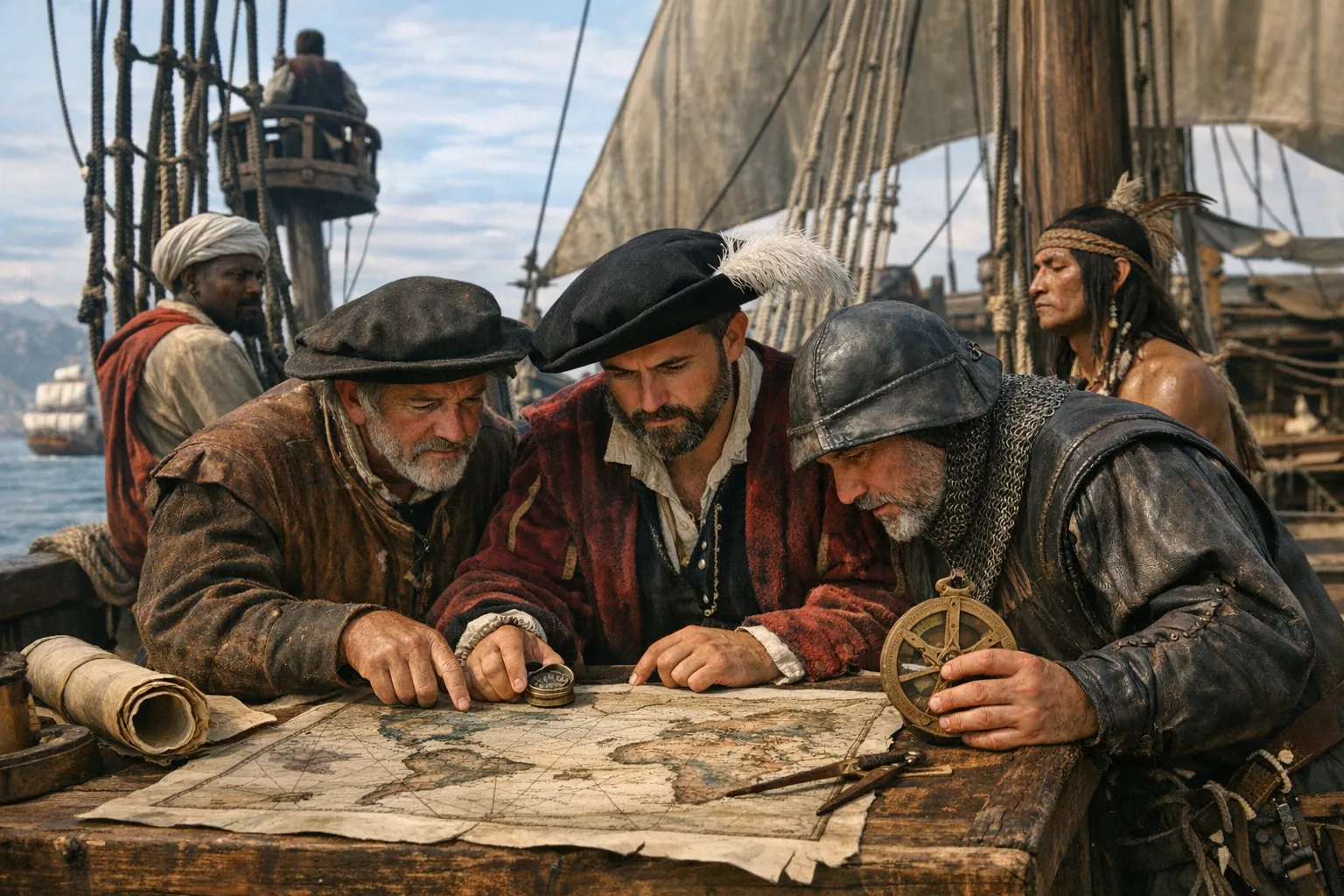
In this article, we will delve into the intricate relationship between 16th-century explorers and the evolution of cartographic practices. We'll examine key maps like the Cantino Planisphere and Waldseemüller's groundbreaking work that introduced "America" to the world. Additionally, we will explore how these advancements in mapping facilitated the explosive growth of global trade, particularly through the lucrative silver trade, and the broader implications of the Age of Discovery on cultural interactions across continents.
The Age of Discovery: A Prelude to Global Transformation
The Age of Discovery, spanning the 15th to the 17th centuries, marked a pivotal shift in global dynamics. This era was characterized by European explorers venturing into uncharted territories, leading to vast changes in trade and cultural exchanges. The motivations for exploration were manifold, including the thirst for new trade routes, the pursuit of precious metals, and the spread of Christianity.
Key motivations for exploration included:
- Economic Gain: Nations sought direct access to spices, silks, and other commodities, bypassing middlemen.
- National Rivalry: Countries like Spain and Portugal were in fierce competition for territorial claims and dominance.
- Curiosity and Knowledge: The Renaissance ignited a desire for discovery, pushing explorers to map the world.
The impact of these explorations on European economies was transformative:
- The influx of silver from the Americas catalyzed the development of a global economy. Silver became a primary currency, especially in China, where it fueled trade.
- The introduction of new crops and livestock, as part of the Columbian Exchange, diversified diets and agricultural practices in Europe.
As historian William H. Prescott observed, “The discovery of the New World was like unlocking a treasure chest; it not only revealed riches but also opened pathways to new cultures and ideas.”
Maps played a crucial role in this transformation. The Cantino Planisphere of 1502, for example, showcased the New World and strategic trade routes. Similarly, Martin Waldseemüller's 1507 map introduced "America," marking a significant shift in European understanding. By the end of the century, cartographic advancements such as the 1562 map by Diego Gutiérrez reflected the intricate knowledge gained from exploration, paving the way for future navigational endeavors.
In sum, the Age of Discovery was not merely about exploration; it was a complex interplay of ambition, trade, and cultural exchange that laid the groundwork for the modern global economy.
Key Explorers and Their Contributions
The 16th century was marked by groundbreaking explorations that reshaped global trade and cultural interactions. Key figures like Christopher Columbus, Ferdinand Magellan, and Francis Drake played pivotal roles in mapping the New World, each contributing unique insights and advancements.
-
Christopher Columbus: Often credited with "discovering" the Caribbean in 1492, Columbus's voyages initiated European awareness of the Americas. His expeditions revealed the islands of the Bahamas, Hispaniola, and Cuba, fundamentally altering European perceptions of geography. The 1502 Cantino Planisphere, which included unpublished information on Portuguese trade routes, exemplified the strategic importance of the New World in global navigation.
-
Ferdinand Magellan: His expedition (1519–1522) achieved the first circumnavigation of the Earth, providing critical data on global geography and maritime routes. Magellan's journey proved the feasibility of linking the Atlantic and Pacific oceans, facilitating trade between Europe and Asia. This monumental achievement marked a turning point in global navigation and trade dynamics.
-
Francis Drake: As an English sea captain and privateer, Drake's voyages across the Pacific in the late 1570s expanded European knowledge of the region. His circumnavigation of the globe (1577-1580) not only enhanced cartographic understanding but also established English claims in the Americas. Drake's exploits illustrated the growing competition among European powers for dominance in overseas territories.
"Exploration during the 16th century was like the first whisper of a new language, setting the stage for a dialogue that would change the course of history."
These explorers not only mapped new territories but also laid the groundwork for the Columbian Exchange, which transformed economies and cultures across continents. Their contributions exemplified the intricate relationship between exploration, cartography, and the burgeoning global economy.
The Role of Cartography in Exploration
Advancements in cartography during the 16th century played a pivotal role in facilitating exploration and trade. Accurate maps were essential for navigators seeking new routes and territories. The ability to visualize the world more precisely allowed explorers to undertake ambitious voyages, ultimately reshaping global commerce.
One significant milestone was the Cantino Planisphere, created in 1502. This Portuguese map, acquired by Italian spy Alberto Cantino, depicted the New World and included vital information about Portuguese trade routes and the coastline of modern-day Brazil. Its strategic importance cannot be overstated; it provided European powers with insights into the new territories ripe for exploitation.
Another landmark in cartographic history was Martin Waldseemüller's 1507 world map, which introduced the name "America." This naming marked a crucial recognition of the New World as a distinct continent, separate from Asia, thereby influencing European perceptions and policies regarding exploration and colonization.
Additionally, the Magellan-Elcano expedition (1519–1522) achieved the first circumnavigation of the Earth, offering comprehensive data on global geography and maritime routes. This expedition laid the groundwork for future trade routes, demonstrating that global maritime trade was feasible.
Key developments in cartography included:
- Increased accuracy: Maps became more precise, reflecting coastlines and landmasses with greater fidelity.
- Innovative techniques: The use of projections and scales improved navigation, making it easier for sailors to traverse vast oceans.
These advancements in cartography not only fueled the Age of Discovery but also significantly contributed to the Columbian Exchange, facilitating the transfer of goods, ideas, and cultures between the Old and New Worlds. The intricate relationship between exploration, mapping, and global trade during this period set the stage for the modern world.
The Columbian Exchange: A Cultural and Economic Shift
The Columbian Exchange, initiated during the Age of Discovery, fundamentally transformed global trade and cultural interactions. This exchange involved the movement of a variety of elements—plants, animals, human populations, and diseases—between the Old and New Worlds.
Key Components
- Agricultural Products: The introduction of New World crops like potatoes, tomatoes, and maize revolutionized diets in Europe, leading to population growth and changes in food culture.
- Livestock: European animals such as horses, cattle, and pigs were introduced to the Americas, which altered Indigenous agricultural practices and lifestyles.
- Diseases: Unfortunately, the exchange also included diseases like smallpox, which devastated native populations in the Americas, resulting in significant demographic shifts.
Agricultural and Dietary Effects
The influx of new crops from the Americas not only diversified European agriculture but also reshaped culinary traditions. For example:
- Potatoes became staple foods in countries like Ireland and Germany, enhancing food security.
- Tomatoes evolved into key ingredients in Mediterranean cuisines, influencing culinary practices globally.
Cultural Exchanges
The Columbian Exchange facilitated profound cultural interactions:
- Religious Influences: European missionaries sought to convert Indigenous peoples, leading to the spread of Christianity in the New World.
- Cultural Syncretism: The blending of European and Indigenous cultures resulted in new art forms, languages, and traditions, exemplified by the fusion seen in music and dance.
In summary, the Columbian Exchange not only marked a significant shift in global trade but also initiated complex cultural exchanges that shaped the modern world. The legacy of this transformative period can still be felt today, as it laid the groundwork for contemporary global interactions. For further exploration, see The Age of Discovery and The Columbian Exchange.
The Silver Trade: Catalyst for a Global Economy
The 16th-century silver trade fundamentally transformed global economic structures, acting as a linchpin in the burgeoning interconnectedness of Europe, Asia, and the Americas. This trade, primarily centered around silver extracted from mines in present-day Bolivia and Mexico, became a driving force behind international commerce.
Overview of the 16th-Century Silver Trade
During this period, Europe increasingly relied on silver as a medium of exchange. The extraction and export of silver from the Americas were immense, with key locations like the Potosí mines in Bolivia becoming pivotal. These mines not only fueled European economies but also laid the groundwork for extensive trade networks.
Impact on European and Asian Economies
The influx of silver had profound effects on both European and Asian markets. In Europe, the wealth generated by silver mining stimulated trade with Asia, particularly with China, which highly valued silver. As a result, silver became a global currency, facilitating trade in goods such as silk and spices.
In Asia, the demand for silver led to the establishment of trade routes that connected the continents. European nations, seeking to capitalize on this demand, engaged in maritime expeditions, exemplified by Ferdinand Magellan's circumnavigation of the globe (1519–1522), which demonstrated the feasibility of global maritime trade routes.
Silver as a Global Currency
Silver's role as a global currency cannot be overstated. It was the backbone of trade in the 16th century, bridging economic gaps between continents. The reliance on silver for transactions created a new economic paradigm, where wealth was not just about land or resources, but also about access to precious metals. This shift marked a significant transition in global trade dynamics.
Overall, the silver trade not only enriched European economies but also facilitated cultural exchanges and laid the foundations for modern global trade systems.
Cartographic Innovations: Mapping the New World
The 16th century was a pivotal era for cartography, marked by significant advancements that transformed how the world was understood and navigated. These innovations not only facilitated exploration but also had profound implications for global trade.
One notable example is the Miller Atlas, produced by the Portuguese in the early 16th century. This atlas, comprising eight detailed maps, showcased Portugal's extensive maritime knowledge and underscored its dominance in the Indian Ocean. Such cartographic resources were integral to maintaining and expanding imperial power.
Another key contributor to this evolution was Gerard Mercator, whose maps introduced a revolutionary projection technique. Mercator's projection allowed for straight-line navigation, making sea voyages more reliable. This innovation greatly aided explorers and traders, enhancing the efficiency of global trade routes established during this period.
The accuracy of maps improved dramatically throughout the century. The Cantino Planisphere of 1502, for instance, depicted the New World with unprecedented detail, including critical information on trade routes and the Brazilian coastline. Similarly, Martin Waldseemüller's 1507 map introduced the name "America," marking a significant shift in how Europeans perceived the New World as a distinct entity separate from Asia.
Lastly, the Magellan-Elcano expedition (1519–1522) provided comprehensive data on global geography, further refining maps and navigational techniques. The collective advancements in cartography during the 16th century not only facilitated exploration but also laid the foundation for the burgeoning global economy, driven by the exchange of goods, ideas, and cultures across continents.
Cultural Interactions and Conflicts
The 16th-century explorers not only mapped new territories but also initiated complex cultural exchanges and conflicts with indigenous populations. As European explorers arrived in the Americas, they encountered diverse societies, leading to both assimilation and resistance.
-
Interactions between European explorers and indigenous populations: Explorers like Hernán Cortés and Francisco Pizarro encountered sophisticated civilizations, such as the Aztecs and Incas. Initial interactions often included trade and the sharing of knowledge, but these quickly escalated into conflict as Europeans sought dominance over resources and land.
-
Cultural assimilation and resistance: Many indigenous groups experienced forced assimilation as Europeans imposed their languages, religions, and customs. However, resistance also emerged, with local populations fighting back against colonization efforts. The blending of cultures sometimes led to unique hybrid societies, but it also resulted in devastating consequences, including significant population declines due to disease and violence.
-
Long-term effects on global cultures: The repercussions of these interactions are still felt today. The Columbian Exchange, for instance, transformed diets and agricultural practices on both sides of the Atlantic, introducing new crops and livestock. This exchange altered global trade patterns and facilitated economic interdependence, laying the groundwork for modern globalization.
The impact of 16th-century exploration extends beyond mere territorial claims; it reshaped global cultures and economies, underscoring the intricate relationship between exploration, cartography, and the unfolding narrative of human history. For more on this transformative period, consider exploring The Age of Discovery and the Columbian Exchange.
Myths vs. Reality: Common Misconceptions about 16th-Century Exploration
The era of 16th-century exploration is often romanticized, leading to several misconceptions about the motivations and behaviors of explorers. Let's clarify these myths.
Myth: Explorers Were Solely Motivated by Wealth
While the quest for gold and resources played a significant role, many explorers were also driven by curiosity and a desire for scientific knowledge. For instance, Ferdinand Magellan's expedition (1519–1522) was not just about finding riches; it aimed to map global maritime routes and understand the world better. The 1502 Cantino Planisphere, which depicted the New World, was a strategic document, showcasing the importance of cartographic knowledge in trade and exploration.
Reality: Complex Motivations Including Curiosity and Scientific Inquiry
Explorers often sought new lands for a variety of reasons:
- Curiosity about the unknown: Many were fascinated by the possibility of discovering new cultures and geographies.
- Scientific inquiry: The age also saw a burgeoning interest in natural history and geography, leading to significant advancements in understanding the world.
- Religious zeal: Some explorers were motivated by a desire to spread Christianity.
Myth: All Explorers Were Heroic Figures
The narrative of the heroic explorer overlooks the darker aspects of their journeys. Many explorers caused significant harm, including the exploitation and subjugation of indigenous populations. Their legacies are complex, often intertwining bravery with brutality.
Conclusion
Understanding these nuances allows for a more balanced view of 16th-century explorers, acknowledging both their contributions to global trade and the cultural interactions that followed. The Age of Discovery was as much about the pursuit of knowledge as it was about wealth and power, shaping the world in ways that continue to resonate today.
The Legacy of 16th-Century Exploration
The exploration of the 16th century laid the groundwork for modern global trade dynamics. As European powers ventured into new territories, they established trade routes that connected continents. This era saw the emergence of the global silver trade, with precious metals flowing from the Americas to Europe and China. Silver became a crucial currency in China, influencing trade relationships and economic structures that still resonate today.
Culturally, the legacies of these explorations are profound. The Columbian Exchange transformed diets and lifestyles across continents, introducing crops like potatoes and maize to Europe and wheat and horses to the Americas. This exchange reshaped societies, leading to lasting changes in agricultural practices and culinary traditions.
Lessons from this historical period remain relevant. The 1502 Cantino Planisphere, for example, emphasized the importance of cartographic knowledge in trade and imperial strategy. Similarly, Martin Waldseemüller's 1507 map, which named the New World "America," reflects how naming and mapping territories can influence perceptions and power dynamics.
As we navigate global challenges today, the 16th-century explorers remind us of the interconnectedness of our world. Their journeys, driven by the quest for wealth and knowledge, underscore the unpredictable consequences of exploration—both beneficial and detrimental. Acknowledging these historical patterns can guide contemporary exploration and trade, as we strive for sustainable and equitable global interactions.
Conclusion: The Interconnectedness of Exploration and Trade
The 16th-century explorers fundamentally transformed global trade, setting the stage for modern economic systems. Their voyages not only unveiled new lands but also opened up lucrative trade routes. For instance, the global silver trade emerged as a game changer, with silver from the Americas flowing into Europe and China, significantly impacting the economies of these regions. The Cantino Planisphere of 1502 and Waldseemüller's 1507 map, which introduced the name "America," exemplify how cartography facilitated trade by providing essential navigational information.
These historical lessons remain relevant today. Understanding the interconnectedness of cultures through trade can provide valuable insights into contemporary global relationships. The Age of Discovery led to the Columbian Exchange, demonstrating how the movement of goods, people, and ideas can reshape societies. This exchange was not merely economic; it was a complex interaction of cultures that influenced everything from cuisine to language.
As we reflect on the past, it's crucial to appreciate how exploration laid the groundwork for our current global landscape. The achievements of explorers like Ferdinand Magellan, who completed the first circumnavigation of the Earth, remind us of the importance of perseverance and curiosity in navigating our interconnected world. By learning from these historical narratives, we can foster a greater understanding of the complexities of globalization today.