
The 'Mona Lisa' is more than just a painting; it's an icon that has captivated audiences for centuries. From its mysterious smile to its historical significance, this masterpiece continues to spark curiosity and debate.
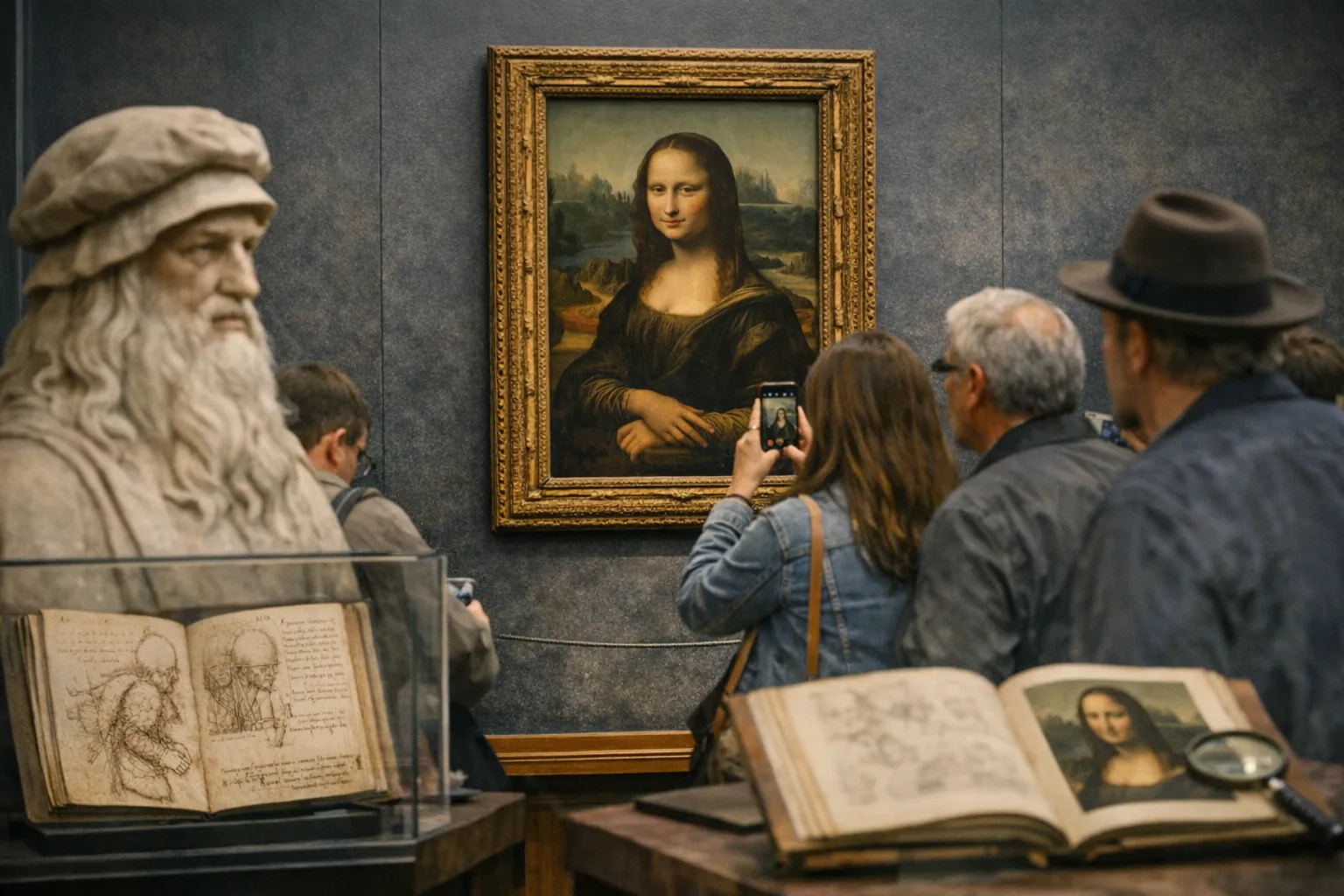
In this exploration, we will delve into the artistic techniques employed by Leonardo da Vinci, particularly his innovative use of sfumato, as well as the historical events that have contributed to the painting's fame. By examining these factors, we aim to uncover why the 'Mona Lisa' remains a focal point in the art world and beyond, inspiring countless interpretations and imitations in various media.
The Artistic Techniques Behind the 'Mona Lisa'
Leonardo da Vinci's 'Mona Lisa' stands as a quintessential example of Renaissance artistry, and its allure can be traced to several groundbreaking techniques employed by the master.
One of the most notable is the sfumato technique, which involves the delicate blending of colors and tones. This method creates soft transitions between light and shadow, allowing for a lifelike quality that captures the viewer's attention. The effect is particularly evident in the painting's enigmatic expression, which seems to shift depending on the angle from which it is viewed. As one art historian aptly put it, “The sfumato technique is like fog; it obscures the details but enhances the mystery.”
Additionally, da Vinci utilized oil paint to enhance the depth and richness of the colors. By applying thin layers of paint, he could build up subtle variations in tone, which adds to the painting's three-dimensionality. This layering technique not only contributed to the luminous quality of the skin but also allowed for a more nuanced portrayal of light and shadow.
These artistic choices culminate in the 'Mona Lisa's' enigmatic quality. The combination of sfumato and oil layering results in an image that feels alive, inviting viewers to engage with its mysteries. This complexity is why the painting has been the subject of countless interpretations and has inspired artists across various fields, from fine art to popular culture.
Through these innovative techniques, da Vinci not only created a portrait of Lisa del Giocondo but also a timeless masterpiece that continues to captivate audiences today.
Historical Context: The Renaissance Era
The Renaissance was a transformative cultural movement that marked the transition from the medieval to the modern world. Spanning roughly from the 14th to the 17th century, it was characterized by a revival of interest in the classical arts, literature, and sciences. This period saw a flourishing of creativity that laid the groundwork for modern Western civilization.
Florence emerged as a key hub during the Renaissance, becoming a melting pot of artistic innovation. The city was home to influential figures such as Lorenzo de' Medici, who patronized artists and thinkers, fostering an environment where creativity could thrive. This patronage allowed artists like Leonardo da Vinci to experiment and develop techniques that would redefine art.
Historical factors played a significant role in shaping the themes and subjects of Renaissance art. The era was marked by:
- Humanism: A focus on human potential and achievements, leading artists to explore more realistic and relatable subjects.
- Scientific Advancements: Discoveries in anatomy and perspective enabled artists to better capture the human form and spatial depth.
- Cultural Exchange: The influx of ideas from the East, particularly after the fall of Constantinople, expanded artistic horizons.
As artist Giorgio Vasari aptly stated, "Renaissance art is like a flower blooming in the garden of history." This analogy emphasizes how the Renaissance served as a catalyst for artistic expression, ultimately influencing masterpieces like the 'Mona Lisa.'
Leonardo's use of sfumato—a technique involving delicate blending of colors—was revolutionary, allowing him to create the painting's iconic enigmatic smile. This mastery reflects the broader artistic developments of the period, showcasing how historical context and innovative techniques intertwine in the creation of lasting art.
The Subject of the 'Mona Lisa': Lisa del Giocondo
Lisa del Giocondo, the enigmatic figure behind the 'Mona Lisa,' was the wife of Francesco del Giocondo, a prominent Florentine silk merchant. Born in 1479, Lisa's life was interwoven with the vibrant culture of the Renaissance, making her an intriguing subject for Leonardo da Vinci's portrait.
The commission for the 'Mona Lisa' is believed to have been a personal celebration—likely marking the purchase of the del Giocondo family's new home and the birth of their second son. This context adds layers of significance to the painting, transforming it from merely a portrait to a testament of familial pride and social standing. As art historian Martin Kemp aptly notes, "The 'Mona Lisa' is not just a face; it’s a window into a life."
Lisa's identity enhances the painting's allure. Her subtle smile, rendered through Leonardo's masterful use of the sfumato technique, invites viewers to ponder her thoughts and feelings. This ambiguity contributes to the painting's mystique, allowing it to resonate with diverse interpretations across centuries.
In addition to her biographical details, Lisa's connection to the Florentine elite and her role as a mother gives the 'Mona Lisa' a relatable quality. Her portrayal transcends time, making her not just a subject of art but a symbol of the complexities of human emotion and experience.
As the world continues to admire the 'Mona Lisa,' Lisa del Giocondo remains a pivotal figure, bridging the gap between a historical moment and contemporary fascination.
The Theft of the 'Mona Lisa' and Its Impact on Fame
The theft of the 'Mona Lisa' in 1911 by Vincenzo Peruggia marked a pivotal moment in its history. Peruggia, an Italian handyman and painter, believed that the artwork belonged in Italy rather than France. He managed to hide the painting in his apartment for over two years, leading to an international frenzy when the theft was discovered.
Public and media reactions were immediate and intense. Newspapers around the world ran stories about the missing masterpiece, turning the 'Mona Lisa' into a household name. The theft transformed the painting from a revered artwork to a sensational news story, creating a sense of urgency and intrigue. As one observer aptly noted, "The 'Mona Lisa' was suddenly no longer just a painting; it became a character in a dramatic story."
The recovery of the painting in 1913 only amplified its fame. When Peruggia was apprehended after attempting to sell the 'Mona Lisa' in Florence, the news sent shockwaves around the globe. Upon its return to the Louvre, the painting attracted even larger crowds, with visitors eager to see the artwork that had become synonymous with the idea of 'masterpiece.'
This incident not only solidified the 'Mona Lisa's' status as a cultural icon but also highlighted the interplay between art and media. The painting's allure grew exponentially, leading to countless imitations and reinterpretations, a testament to its lasting impact on both art and popular culture.
Sfumato: The Technique That Defines the 'Mona Lisa'
Sfumato, derived from the Italian word "sfumare," meaning "to tone down" or "to evaporate," is a painting technique that creates soft transitions between colors and tones. This method allows for a more lifelike representation, particularly in portraiture, by eliminating harsh lines. Leonardo da Vinci, a master of this technique, utilized it extensively in the 'Mona Lisa,' contributing to the painting's enduring allure.
Application of Sfumato in the 'Mona Lisa'
-
Layering: Da Vinci employed thin layers of oil paint, meticulously building up colors to achieve a rich, depth-filled effect. This gradual layering is crucial in creating the elusive expression on Mona Lisa's face.
-
Light and Shadow: By softly blending light and shadow, da Vinci transformed the painting into a three-dimensional form. The contours of her face are not outlined but instead emerge from the background through subtle gradations.
-
Eyes and Smile: The techniques applied to her eyes and enigmatic smile are prime examples of sfumato. The way light interacts with her features suggests movement and emotion, making her expression appear dynamic and alive.
"The sfumato technique is like a whisper in a crowded room—soft, nuanced, and impossible to ignore."
Comparison with Other Techniques
While other Renaissance techniques, such as chiaroscuro (the treatment of light and shadow) and linear perspective, also aimed to enhance realism, sfumato stands out for its ethereal quality. Unlike the stark contrasts found in chiaroscuro, sfumato emphasizes the delicate interplay of tones, resulting in a more harmonious and unified image.
In the context of Renaissance art, sfumato remains a hallmark of da Vinci's style, setting a benchmark that has influenced countless artists and reinterpretations of the 'Mona Lisa.' By mastering this technique, da Vinci not only captured the likeness of Lisa del Giocondo but also created an iconic piece that transcends time and continues to captivate audiences today.
The Enigmatic Smile: A Psychological Perspective
The smile of the Mona Lisa has intrigued viewers for centuries, leading to various psychological interpretations. Scholars and art enthusiasts alike have proposed several theories regarding its meaning:
- Ambiguity of Emotion: Some suggest that the smile embodies a complex mix of emotions—joy, melancholy, and mystery. This ambiguity invites viewers to project their own feelings onto the painting, making it a deeply personal experience.
- Cultural Context: In the Renaissance, smiles were often associated with virtue and beauty. The Mona Lisa's smile may reflect societal ideals of femininity during this period, adding layers to its interpretation.
The psychological impact of ambiguous expressions in art is significant. Such expressions can evoke curiosity and engagement, prompting viewers to linger longer and contemplate the artwork. The Mona Lisa's smile serves as a prime example of how ambiguity can enhance a piece's emotional depth, compelling audiences to explore their interpretations.
Leonardo's use of the sfumato technique plays a crucial role in this mystique. By applying thin layers of oil paint, he created soft transitions between light and shadow, blurring the lines of her smile. This technique not only contributes to the painting’s lifelike quality but also accentuates the smile's enigmatic nature.
Ultimately, the Mona Lisa's smile is more than just a facial expression; it is a psychological puzzle that continues to captivate and inspire. Its allure is a testament to Leonardo da Vinci's artistry and the timeless fascination with human emotion.
Cultural Impact: Imitations and Reinterpretations
The Mona Lisa has transcended its origins, becoming a pivotal cultural icon that has been imitated and parodied in myriad forms. From fine art to digital media, its influence is pervasive and enduring.
Famous Imitations and Parodies
- Salvador Dalí's "The Persistence of Memory" features a melting Mona Lisa, showcasing surrealist elements that challenge traditional representations.
- Andy Warhol's Pop Art embraced the Mona Lisa with vibrant colors and repetitive prints, blending high art with commercial culture.
- Numerous memes and cartoons reinterpret her smile or pose, illustrating her adaptability in modern humor.
Role in Popular Culture
The Mona Lisa appears frequently in films, television, and advertising. For instance:
- In The Da Vinci Code, the painting is central to the plot, drawing attention to its historical significance.
- Commercials often use the image to evoke sophistication or classic beauty, reinforcing its status as a symbol of art.
Reinterpretations Reflecting Societal Values
As societal values evolve, so do reinterpretations of the Mona Lisa. Contemporary artists often infuse her image with themes of feminism, identity, and cultural critique. For example:
- Some reinterpretations challenge the traditional portrayal of women, recasting Lisa as a symbol of empowerment.
- Others incorporate modern fashion or technology, reflecting current societal trends and discussions.
The painting's ability to adapt and resonate with different audiences is a testament to its enduring appeal and cultural significance. By engaging with the Mona Lisa, artists and creators continue to explore and comment on the complexities of both art and society.
The 'Mona Lisa' in the Digital Age
The 'Mona Lisa' has seamlessly transitioned into the digital landscape, becoming a staple in digital art and internet culture. Numerous memes featuring her enigmatic smile circulate on social media platforms, often recontextualizing her image in humorous or thought-provoking ways. This phenomenon not only showcases the painting's versatility but also highlights how timeless art can engage with contemporary issues.
Social media has drastically amplified the painting's visibility. Platforms like Instagram and Twitter serve as galleries for art enthusiasts and casual users alike, allowing them to share their interpretations and experiences with the 'Mona Lisa.' This democratization of art has made the painting accessible to a broader audience, fostering discussions and debates around its significance.
Virtual exhibitions also play a crucial role in maintaining the 'Mona Lisa's' relevance. Museums have embraced technology, offering online tours and interactive experiences that bring the artwork into homes around the world. For instance, the Louvre has hosted virtual events that allow viewers to explore the painting from various angles, providing insights into Leonardo da Vinci's techniques, such as the sfumato method he used to achieve the soft transitions in her expression.
In addition to its historical allure, the 'Mona Lisa' continues to inspire countless reinterpretations in digital art. Artists around the globe are reimagining her in innovative ways, ensuring that her legacy remains vibrant in the ever-evolving digital culture. Whether through memes or virtual exhibitions, the 'Mona Lisa' endures as a symbol of artistic mastery and cultural conversation.
Myths vs. Reality: Common Misconceptions about the 'Mona Lisa'
The 'Mona Lisa' has captured imaginations for centuries, but alongside its acclaim, several myths have emerged that distort its true history and significance. Understanding these misconceptions is crucial for appreciating the artwork's legacy.
-
Myth: The 'Mona Lisa' is a portrait of a mysterious woman.
Reality: The painting depicts Lisa del Giocondo, the wife of Florentine merchant Francesco del Giocondo. It was likely commissioned to celebrate their new home and the birth of their second son. -
Myth: Leonardo da Vinci painted the 'Mona Lisa' using traditional techniques.
Reality: Da Vinci employed the sfumato technique, which involves applying thin layers of oil paint to create soft transitions between light and shadow. This mastery is what gives the painting its enigmatic smile. -
Myth: The 'Mona Lisa' has always been a celebrated masterpiece.
Reality: While renowned today, the painting's fame skyrocketed after it was stolen from the Louvre in 1911. Its recovery in 1913 led to widespread publicity, significantly enhancing its status. -
Myth: The dimensions and materials of the 'Mona Lisa' are unique.
Reality: The painting is on a poplar wood panel measuring approximately 77 cm by 53 cm—typical dimensions for Renaissance portraits, highlighting that it is not as singular as often perceived.
Understanding these myths helps clarify the 'Mona Lisa's' importance not just as a piece of art, but as a cultural icon shaped by historical events and artistic innovation. For a deeper dive into Leonardo da Vinci's life, you can learn more about him here. Additionally, exploring the Renaissance art movement can provide further context on the era's influence on this masterpiece.
Conclusion: The Enduring Legacy of the 'Mona Lisa'
The 'Mona Lisa' remains one of the most iconic masterpieces in art history, encapsulating the brilliance of Leonardo da Vinci's techniques and the cultural dynamics of the Renaissance. Key points discussed throughout this exploration highlight several facets of the painting's significance:
- Artistic Techniques: Leonardo's innovative use of sfumato allowed for the soft blending of tones, creating the painting's signature enigmatic smile and ethereal quality.
- Historical Context: Commissioned by Francesco del Giocondo to celebrate personal milestones, the painting's backstory adds layers to its allure.
- Cultural Impact: The theft in 1911 not only amplified the painting's fame but also solidified its status as a cultural artifact, drawing global attention and intrigue.
The 'Mona Lisa' captivates audiences for various reasons. Her mysterious expression invites interpretation and elicits emotional responses, while the painting's technical mastery continues to inspire admiration among art enthusiasts and scholars alike. Furthermore, it has sparked countless imitations and reinterpretations across different artistic mediums, proving its timeless relevance.
Ultimately, the 'Mona Lisa' occupies a unique position in art history—not just as a remarkable portrait but as a symbol of human creativity and curiosity. Its legacy endures, reminding us of the profound connections that art can forge across time and culture. For those eager to delve deeper, consider exploring Leonardo da Vinci or the broader context of the Renaissance art movement.