
Vincent van Gogh’s 'Starry Night' is more than just a captivating piece of art; it’s a vivid expression of a tumultuous mind grappling with profound emotional distress. Painted during his time in an asylum, this masterpiece reveals layers of complexity that intertwine art with mental health.
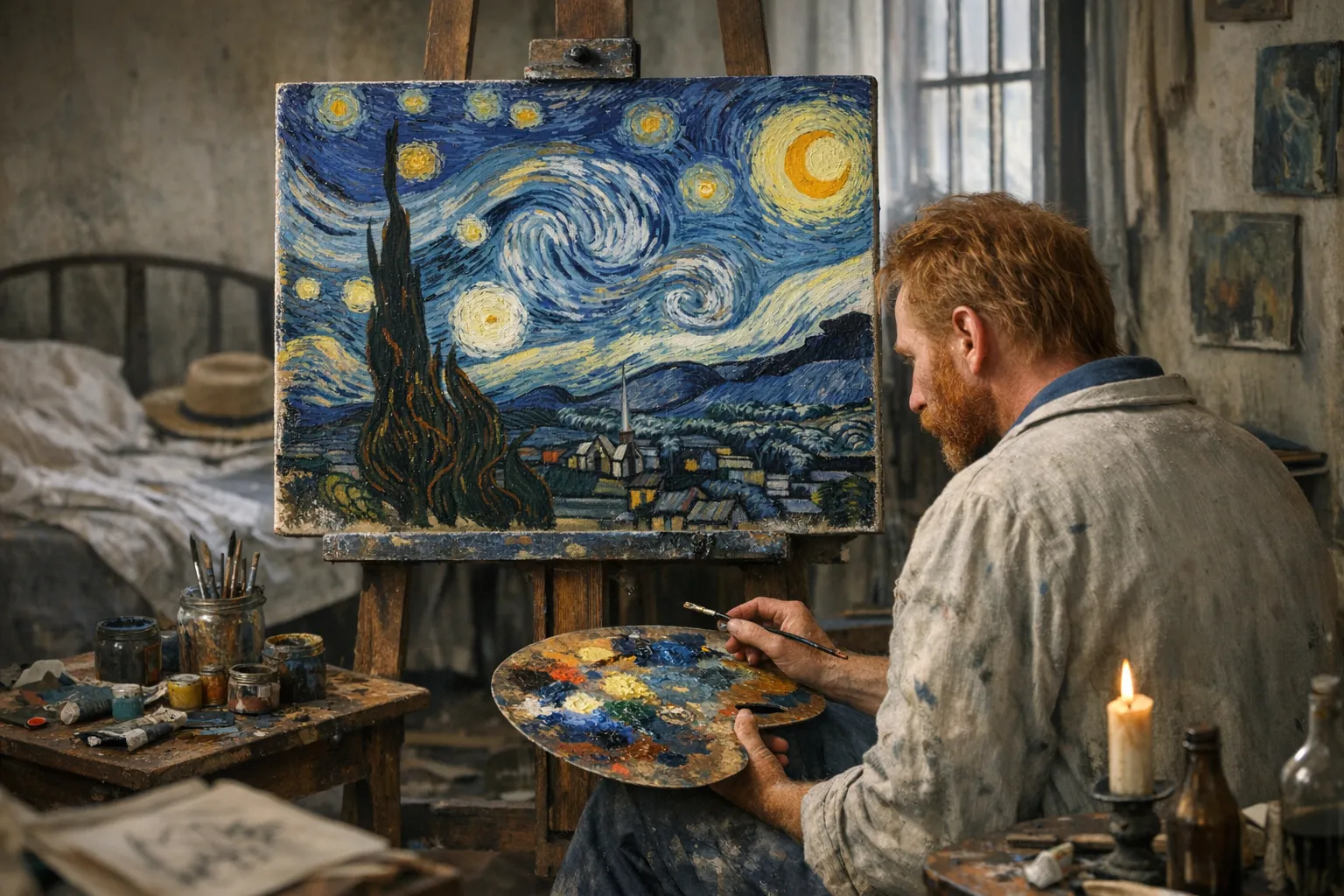
In this exploration, we will delve into how the swirling skies, exaggerated forms, and vibrant colors in 'Starry Night' reflect Van Gogh's mental health struggles. By examining the context of its creation and the artist's own insights, we will uncover the ways in which this painting serves as a window into the emotional landscape of one of history's most iconic figures. Prepare to see 'Starry Night' not just as an artwork, but as a poignant narrative of human experience.
Introduction to Vincent van Gogh and 'Starry Night'
Vincent van Gogh's life was a tapestry of brilliance and struggle, characterized by an intense passion for art juxtaposed with profound mental health challenges. Born in 1853 in the Netherlands, he embarked on a tumultuous artistic journey that spanned just over a decade but produced an astounding body of work. His vibrant use of color and emotive brushstrokes became hallmarks of the Post-Impressionist movement, showcasing not only his talent but also his inner turmoil.
One of his most iconic pieces, 'Starry Night,' was painted in June 1889 during his stay at the Saint-Paul-de-Mausole asylum in Saint-Rémy-de-Provence, France. This masterpiece features a swirling night sky, exaggerated stars, and a crescent moon, elements that were not part of the actual view from his asylum room. The village depicted in the painting is an imaginative creation, illustrating Van Gogh's ability to transcend his immediate reality through art.
Understanding the connection between art and mental health is crucial, particularly in Van Gogh's case. His letters reveal a man grappling with his emotions, perceiving his work as both a refuge and a source of frustration. He once described 'Starry Night' as a "failure," despite its eventual acclaim.
As art historian Rainer Maria Rilke noted, "A work of art is a corner of creation seen through a temperament." This analogy underscores how Van Gogh's emotional landscape is intricately woven into 'Starry Night,' inviting viewers to explore the intersections of creativity and mental well-being.
The Context of Creation: Saint-Paul-de-Mausole Asylum
Vincent van Gogh created Starry Night during a pivotal period in his life spent at the Saint-Paul-de-Mausole asylum in Saint-Rémy-de-Provence, France. This facility, where he admitted himself in May 1889, was crucial not only for his mental health treatment but also as a creative catalyst. The serene yet isolating environment allowed Van Gogh to reflect deeply on his emotions and artistry.
The asylum setting had a profound impact on Van Gogh's mental state and creativity. It provided him with a structured routine while also allowing for moments of intense introspection. Surrounded by the natural beauty of the French countryside, he was inspired to channel his emotional turmoil into his work. As he once described it, "The night is more colorful than the day," reflecting how he perceived the world around him during his manic episodes.
Leading up to the creation of Starry Night, Van Gogh's mental health had been in decline. After a series of crises, including the infamous incident where he severed part of his ear, he sought refuge in the asylum. During his stay, he produced over 130 paintings, with Starry Night emerging in June 1889 as a visual testament to his experiences.
Key elements of the painting include:
- Swirling night sky: A stylized representation of his emotional state, interpreted by art historians as a reflection of his inner turmoil.
- Imaginary village: Van Gogh added a fictional component, demonstrating his creative license and desire to escape reality.
- Cypress trees: These elements were exaggerated in size, emphasizing their aesthetic beauty rather than any symbolic meaning.
In essence, Starry Night serves as a vivid expression of both Van Gogh's struggles and his remarkable ability to find beauty amid chaos.
Visual Analysis of 'Starry Night'
Vincent van Gogh's 'Starry Night' is a masterclass in emotional expression through visual elements. The swirling night sky dominates the composition, drawing viewers into a tumultuous whirlpool of blues and yellows. This dynamic movement can be interpreted as a reflection of Van Gogh's emotional struggles, illustrating a mind in chaos yet infused with beauty.
Color Choices
Van Gogh's palette features ultramarine and cobalt blue prominently in the sky, with vibrant Indian yellow and zinc yellow illuminating the stars and crescent moon. These color choices are not merely aesthetic; they evoke deep emotional resonance. The blues suggest melancholy, while the yellows inject a sense of hope or longing. As art historian M. P. Jones notes, "The colors swirl like thoughts in a restless mind."
Cypress Trees and Imaginary Village
In the foreground, the cypress trees rise dramatically, their exaggerated scale creating a sense of depth and contrast against the expansive sky. While Van Gogh's letters indicate he considered these trees primarily for their aesthetic appeal, their dark form can symbolize the weight of his mental health struggles.
The village depicted in 'Starry Night' is an imaginative construct, not an accurate representation of the landscape outside his asylum window. This fictional element reinforces the painting's dreamlike quality, suggesting a longing for connection and stability amid his turbulent emotions.
Through these visual elements, 'Starry Night' becomes more than just a painting; it’s a vivid embodiment of Van Gogh's inner turmoil, capturing the intersection of art and mental health in a way that resonates deeply with viewers.
Artistic Techniques and Innovations
Vincent van Gogh's Starry Night is a masterclass in the use of unique artistic techniques that echo his complex mental state during its creation. Painted in June 1889 at the Saint-Paul-de-Mausole asylum, the work showcases his distinctive brushwork and texture.
-
Brushwork and Texture: Van Gogh's swirling strokes create a dynamic, almost turbulent sky. The thick application of paint, known as impasto, adds depth and movement, inviting viewers to feel the emotional intensity he experienced. Each brushstroke seems to pulsate with energy, reflecting his inner turmoil.
-
Evolution at the Asylum: During his time at the asylum, Van Gogh's style underwent significant evolution. His earlier works were more subdued, but his later pieces, including Starry Night, burst with vibrancy. This shift mirrors his fluctuating mental health, as he channeled his emotional experiences into bold colors and forms.
-
Color Theory: The colors in Starry Night—ultramarine and cobalt blue for the sky, contrasted with the yellows of the stars and moon—are carefully chosen to evoke deep emotions. Van Gogh's understanding of color theory allowed him to convey feelings of despair and hope simultaneously. As art historian David Sylvester noted, "Van Gogh painted not what he saw, but what he felt."
The painting's composition, featuring exaggerated elements like the cypress trees and the imaginary village, further emphasizes Van Gogh's emotional landscape. These artistic innovations not only transformed his style but also provided a window into his psyche during a tumultuous period of his life.
Van Gogh's Letters: Insights into His Mind
Vincent van Gogh's correspondence with his brother Theo provides a poignant glimpse into his mental state during the creation of Starry Night. In his letters, Van Gogh frequently expressed self-doubt and a sense of failure regarding the painting. For instance, he described Starry Night as a “failure,” revealing his relentless critique of his work despite its eventual acclaim.
Key excerpts from these letters highlight his emotional struggles:
- Artistic Vision: Van Gogh often conveyed his aspirations, articulating a desire to capture the beauty of the night sky, which he felt was intertwined with his mental turmoil.
- Imaginary Elements: He acknowledged that the village depicted in the painting was an imaginary addition, created from sketches rather than the view outside his asylum window. This reflects a blend of reality and imagination in his work.
- Cypress Trees: In his letters, he mentioned the cypress trees, noting he saw them primarily for their aesthetic value rather than any symbolic meaning, indicating a focus on beauty despite his inner chaos.
One of his most memorable analogies captures his artistic journey: “I am always searching for the light.” This phrase encapsulates his struggle between darkness and a yearning for clarity.
Through these letters, Van Gogh's emotional landscape is laid bare, revealing the complexities of his mental health struggles alongside his artistic ambitions. The vivid colors and swirling patterns of Starry Night can thus be interpreted not just as an artistic choice, but as a visual representation of his inner battles.
The Psychological Interpretation of 'Starry Night'
Art historians have long explored the intricate relationship between Vincent van Gogh's mental health and his masterpiece, 'Starry Night.' Various psychological theories suggest that the painting serves as a window into his emotional state during a period of intense struggle.
One prominent interpretation links the painting's swirling forms to Van Gogh's manic episodes. The vibrant, chaotic sky can be seen as a visual manifestation of his heightened emotional turmoil. The exaggerated stars and crescent moon evoke a sense of both wonder and distress, encapsulating the duality of his experiences. As one art critic aptly stated, “The night sky is a tumultuous ocean, with stars as ships battling the storm.”
Key points in this interpretation include:
- Swirling Forms: The dynamic movement in the sky reflects Van Gogh’s psychological instability, suggesting a mind in turmoil.
- Color Choices: His use of ultramarine and cobalt blue contrasts sharply with the yellows of the stars, symbolizing the conflict between despair and hope.
- Imaginary Elements: The village depicted is not a true representation of the landscape outside his window, indicating a departure from reality that aligns with his mental state.
Despite his struggles, Van Gogh produced over 130 paintings during his time at the asylum, making 'Starry Night' a poignant example of how art can reflect profound internal experiences. The cypress trees and the imaginary village further emphasize his aesthetic choices, focusing on emotion over literal representation. This intersection of art and mental health invites viewers to gain insight into the complexities of Van Gogh's life and work.
Cultural Impact and Legacy of 'Starry Night'
Vincent van Gogh's Starry Night transcends its canvas, embedding itself deeply into popular culture as a quintessential masterpiece. Its swirling sky and vibrant colors have become iconic, often referenced in various forms of media, from films to fashion. This painting not only showcases Van Gogh's unique style but also serves as a symbol of the struggle between beauty and turmoil.
The artwork has ignited significant discussions surrounding mental health in art. Art historians and psychologists alike have explored how the painting reflects Van Gogh's emotional state during his time in the asylum. The swirling sky is often interpreted as a manifestation of his inner chaos, inviting viewers to consider the connection between creativity and mental health.
In contemporary society, Van Gogh's story remains relevant, particularly as conversations around mental health evolve. His journey serves as a reminder that great art can emerge from profound suffering. As one observer aptly noted, "Art is like a night sky: beneath its beauty lies a universe of unseen struggles."
The ongoing legacy of Starry Night underscores its role as a catalyst for empathy and awareness in mental health discourse, making it a timeless piece that resonates with generations.
Common Myths About Van Gogh and 'Starry Night'
Vincent van Gogh's life and work have often been romanticized or oversimplified, leading to several common myths. One prevalent myth is that his madness directly fueled his artistic genius. While Van Gogh struggled with mental health issues, it's essential to recognize that his creativity was not solely a product of his turmoil. His brilliance stemmed from a profound understanding of color and form, as well as his ability to convey emotion through art.
Another misconception involves the symbolism within 'Starry Night.' Many believe that the cypress trees and swirling sky hold deep metaphoric meanings. However, Van Gogh's letters indicate he viewed the cypress trees largely for their aesthetic appeal. The village depicted is also imaginary, crafted from his sketches rather than the actual landscape outside his asylum window. This artistic license demonstrates his imaginative capabilities rather than an intention to convey hidden messages.
Moreover, contrary to popular belief, Van Gogh felt a sense of failure regarding his art. In letters to his brother Theo, he referred to 'Starry Night' as a "failure," reflecting his internal struggles rather than the painting's actual merit. As art historian Simon Schama aptly put it, "He painted like a man trying to outrun his demons."
In summary, debunking these myths allows us to appreciate 'Starry Night' not just as a product of Van Gogh's mental health struggles, but as a testament to his artistic innovation and emotional depth.
Conclusion: The Intersection of Art and Mental Health
Vincent van Gogh's Starry Night serves as a poignant reflection of his struggles and triumphs, encapsulating the turmoil that defined much of his life. Painted during his stay at the asylum in Saint-Rémy-de-Provence, the artwork features a swirling night sky filled with exaggerated stars and a crescent moon—elements that transcend mere representation. This vivid depiction acts as a canvas for Van Gogh's emotional state, illustrating the connection between his artistic genius and mental health challenges.
Recognizing mental health in the context of creativity is crucial. Van Gogh's experience highlights how artistic expression can emerge from pain and struggle, providing insight into the human condition. His ability to create over 130 paintings during his year in the asylum, despite self-proclaimed feelings of failure, underscores the therapeutic value of art. As he once noted, "Art is the most beautiful of all lies," suggesting that creativity can transform personal turmoil into something that resonates deeply with others.
Encouragement for further exploration of art as a reflection of human experience is essential. Starry Night not only invites viewers to contemplate Van Gogh's internal battles but also serves as a reminder that art can foster empathy and understanding. By delving into the intersections of creativity and mental health, we can appreciate the complexities of the human experience and the profound stories that artworks like Starry Night convey.
Further Reading and Resources
For those interested in delving deeper into Vincent van Gogh's life, his masterpiece 'Starry Night,' and the intersection of art and mental health, a wealth of resources is available:
Books and Articles
- "Vincent van Gogh: The Life" by Steven Naifeh and Gregory White Smith: This in-depth biography provides insights into Van Gogh's troubled life and prolific output.
- "Van Gogh: The Life" by Philip Conisbee: A concise overview that highlights his artistic journey and struggles with mental health.
- "Letters to Theo": A collection of Van Gogh’s letters that offers personal reflections on his work and emotional state.
Documentaries and Films
- "Loving Vincent": An animated film that explores Van Gogh's life and the circumstances surrounding his death, featuring his iconic paintings.
- "Van Gogh: A New Way of Seeing": A documentary that uses modern technology to showcase Van Gogh's work and his emotional landscape.
- "The Great Art Robbery": A unique take that includes discussions on Van Gogh's impact on art and mental health.
Websites and Organizations
- Art and Mental Health: A resource exploring the therapeutic effects of art on mental well-being. Art and Mental Health
- Vincent van Gogh Museum: The official site of the museum dedicated to Van Gogh, offering extensive information on his works and mental health discussions.
- Mental Health America: An organization focused on mental health resources that often highlights the healing power of creative expression.
"Art is the most beautiful of all lies." — Vincent van Gogh
These resources provide a comprehensive look into Van Gogh's artistic genius and the complexities of his mental health, making them invaluable for anyone looking to understand the profound connection between creativity and psychological struggle.