
Imagine the historic moment when Jesse Owens stood on the Olympic podium, not as a victor but as a defeated athlete. How would a different outcome have reshaped the narrative surrounding the 1936 Berlin Olympics and the Nazi ideology that sought to promote Aryan superiority?
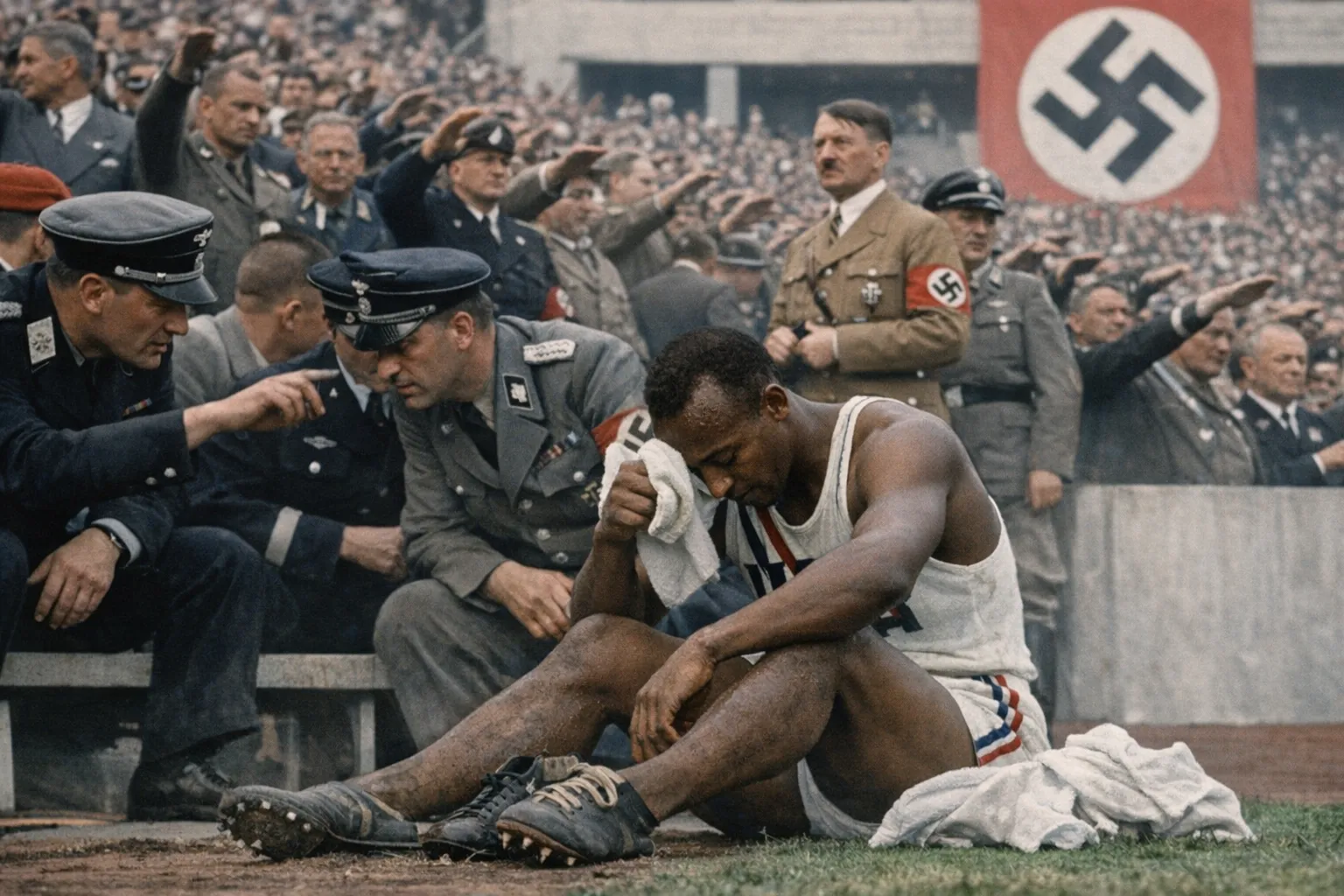
In this analysis, we will explore the counterfactual scenario of Owens losing at the Berlin Olympics and its potential implications on Nazi propaganda and racial ideology. By examining the context of the Games and the significance of Owens' victories, we will uncover how his triumphs not only challenged but also undermined the very foundations of Nazi beliefs. Join us as we delve into this intriguing "what if" scenario and consider the broader ramifications of Owens' hypothetical defeat on the world stage.
Introduction: The Significance of the 1936 Berlin Olympics
The 1936 Berlin Olympics served as a grand stage for Nazi Germany, designed to showcase the regime's ideology of Aryan superiority. Adolf Hitler aimed to use the Games to bolster national pride and promote his vision of a racially pure state. The event was meticulously orchestrated, with propaganda permeating every aspect, from the opening ceremony to the closing events.
Enter Jesse Owens, an African American athlete whose remarkable achievements during the Games directly challenged the Nazi narrative. Owens won four gold medals, setting world records in the 100-meter and 200-meter sprints, the long jump, and the 4x100-meter relay. His victories not only highlighted his individual prowess but also contradicted the core tenets of Nazi ideology, which sought to elevate the Aryan race above all others.
The ideological battle was stark: on one side stood the Nazis, championing a distorted vision of racial superiority; on the other, Owens embodied talent and resilience, proving that excellence knows no racial boundaries. As one commentator aptly noted, “Owens' victories were like a thunderstorm in the clear blue sky of Nazi propaganda.”
Despite Owens' triumphs, the Nazi regime attempted to downplay his achievements. Joseph Goebbels, the Minister of Propaganda, referred to Owens' victories as a "disgrace," lamenting that "white people should be ashamed of themselves." This reaction underscores the profound threat that Owens posed to the Nazi narrative.
Overall, the 1936 Olympics were more than just a sporting event; they represented a critical juncture in the ideological battle between oppression and human achievement. Owens' success became a symbol of resistance against tyranny and a testament to the power of individual excellence. For a deeper look into Jesse Owens' legacy, visit Jesse Owens' Legacy. To understand the full scope of Nazi propaganda during the Games, check out Nazi Propaganda in the 1936 Olympics.
The Ideological Landscape: Nazi Propaganda and Aryan Superiority
Nazi ideology was steeped in a belief system that prioritized Aryan supremacy, asserting that the so-called "master race" was superior in all aspects—physical, intellectual, and cultural. This ideology was not only a foundation for discriminatory policies but also a tool for propaganda, especially during events like the 1936 Berlin Olympics.
The Olympics served as a grand stage for the Nazi regime to showcase Aryan athletes and promote their racial ideology. The Games were meticulously orchestrated to highlight the prowess of German athletes, reinforcing the narrative of Aryan superiority. Joseph Goebbels, the Minister of Propaganda, played a crucial role in shaping this public perception. His strategies included:
- Directing media coverage to focus on German athletes' successes.
- Downplaying achievements of athletes like Jesse Owens, labeling them as mere "black auxiliaries."
- Crafting narratives that emphasized a sanitized version of Nazi ideology, even as Owens shattered records.
Goebbels viewed Owens' success as a direct threat to Nazi propaganda. He recorded in his diary that Owens’ victories were a "disgrace" and that "white people should be ashamed of themselves." This stark admission highlights the extent to which Owens' achievements contradicted the regime’s claims of racial superiority.
As Owens dominated the track, setting records in the 100-meter and 200-meter sprints, long jump, and 4x100-meter relay, he became a symbol of resistance against oppressive ideologies. His performance was a powerful reminder of individual achievement transcending the hateful confines of the regime.
"Owens' triumph was like a bright light in a dark room, illuminating the absurdity of Nazi beliefs."
In summary, while Nazi Germany topped the overall medal count at the 1936 Olympics, Owens' victories remained a significant blow to their propaganda efforts, proving that talent and determination could defy even the most deeply ingrained ideologies.
What If? The Hypothetical Scenario of Owens' Defeat
Had Jesse Owens lost at the 1936 Berlin Olympics, the implications for Nazi ideology and propaganda could have been profound.
-
Impact on Nazi Propaganda: Owens' defeat would likely have bolstered the Nazi narrative of Aryan superiority. The regime could have seized the opportunity to promote their ideology more aggressively, showcasing a supposed validation of their beliefs that Aryans were the superior race. This could have led to a more robust campaign to suppress dissenting views and reinforce their racial policies.
-
Reinforcement of Aryan Superiority Claims: A scenario where Owens did not win gold medals would have provided the Nazis with a powerful tool to claim that their athletes were inherently superior. This could have resulted in heightened nationalistic fervor and greater support for Aryan-centric policies, potentially impacting the social and political landscape in Germany and beyond.
-
International Response: The international community's reaction to a defeated Owens might have varied. While some countries may have expressed relief at the validation of Nazi claims, others could have viewed the defeat as a moment of disappointment for racial equality in sports. The defeat might have lessened the global focus on the Olympics as a platform for resistance against fascism, allowing the Nazi regime to craft a more favorable international image.
In this counterfactual scenario, the symbolic weight of Owens' victories—representing resistance against oppressive ideologies—would have been replaced by a narrative that could have further entrenched racial divides and undermined the progress made toward equality in sports.
The Immediate Aftermath: Reactions to Owens' Victories
Jesse Owens’ remarkable performance at the 1936 Berlin Olympics sent shockwaves through the Nazi regime and the international community. Winning four gold medals and setting world records, Owens directly challenged the very foundation of Nazi ideology that promoted Aryan racial superiority. The reactions to his victories were varied and revealing.
The Nazi regime sought to downplay Owens’ achievements. In his diary, Joseph Goebbels, the Minister of Propaganda, expressed his disdain, calling Owens' victories a "disgrace" and lamenting that "white people should be ashamed of themselves." This reflects a desperate attempt to control the narrative surrounding the Olympics and maintain the illusion of Aryan supremacy.
- Nazi propaganda tactics: The regime referred to Black athletes like Owens as "black auxiliaries," minimizing their accomplishments in an effort to preserve their constructed racial hierarchy.
- Media response: International media coverage celebrated Owens as a hero, contrasting sharply with the Nazi's downplaying efforts. This global recognition amplified Owens’ status as a symbol of resistance against oppressive ideologies.
Despite Owens’ triumphs, the Nazis still topped the overall medal count, winning 89 medals compared to the United States’ 56. However, the significance of Owens’ victories transcended mere medal tallies; they became a powerful testament to individual achievement over the oppressive narrative of the Nazi regime.
Owens’ performance not only underscored the fallacy of Nazi claims but also sparked conversations about race and equality that echoed far beyond the Olympic stadiums. His legacy, rooted in defiance against an oppressive regime, continues to inspire discussions on sports and social justice today. Learn more about Jesse Owens' legacy here.
The Symbolism of Owens' Success Against Oppression
Jesse Owens' triumph at the 1936 Berlin Olympics transcended athletics; it became a beacon of hope and defiance against oppressive ideologies. His four gold medals—particularly in an environment steeped in Nazi propaganda—challenged the regime's assertions of Aryan superiority.
-
Owens as a Figure of Hope: In a time when racial discrimination was rampant, Owens emerged not just as an athlete but as a symbol of resilience. His victories offered a counter-narrative to the prevailing ideologies that sought to marginalize Black individuals.
-
Broader Implications for Black Athletes: Owens' success inspired a generation of Black athletes. It demonstrated that excellence could defy societal expectations and prejudices, paving the way for future athletes to challenge barriers and stereotypes.
-
Challenging Global Perceptions of Race: Owens' achievements prompted a reevaluation of racial perceptions worldwide. His performance contradicted the Nazi regime's claims, forcing audiences to confront the reality that athletic prowess is not dictated by race. This moment became pivotal in shifting global attitudes toward race and equality.
Owens' legacy remains a powerful reminder of how individual achievement can undermine oppressive regimes and inspire hope in the face of adversity. For a deeper understanding of his impact, check out Jesse Owens' Legacy and the context of Nazi Propaganda in the 1936 Olympics.
Nazi Germany's Response: Suppression and Propaganda
The Nazi regime's reaction to Jesse Owens' remarkable success at the 1936 Berlin Olympics was multifaceted, involving both suppression and a strategic shift in propaganda. Owens won four gold medals, directly contradicting the regime's claims of Aryan superiority. In light of this, the Nazis embarked on a campaign to reshape the narrative surrounding the Games.
-
Suppression of Anti-Semitic Propaganda: During the Olympics, the regime made efforts to suppress overt anti-Semitic propaganda. This was crucial for maintaining the façade of a welcoming environment to foreign visitors and media.
-
Creation of a Sanitized Image: The Nazis aimed to project a glorified image of the Olympics, focusing on grand displays of Aryan athletes while downplaying the achievements of non-Aryan competitors. Owens was often referred to dismissively as a "black auxiliary," illustrating the regime's attempt to minimize his accomplishments.
-
Long-term Effects on Propaganda Strategies: Owens' victories forced the Nazis to adapt their propaganda techniques. They sought to distance themselves from the embarrassment of Owens' success, leading to a more careful selection of narratives that emphasized Aryan dominance, even as it became increasingly difficult to ignore the achievements of Black athletes.
Owens’ performance not only became a symbol of defiance against Nazi ideology but also highlighted the limitations of propaganda in the face of undeniable talent and achievement. The regime's response reflected a desperate need to maintain control over the narrative, yet it ultimately backfired, further exposing the contradictions within Nazi ideology. For deeper insights, explore Jesse Owens' Legacy and Nazi Propaganda in the 1936 Olympics.
Comparative Analysis: Other Athletes and Racial Ideologies
The 1936 Berlin Olympics featured several noteworthy athletes, each contributing to the complex dialogue surrounding race and ideology, particularly under the Nazi regime. Notable figures included:
-
Luz Long: A German long jumper who competed against Owens. Despite the intense nationalistic atmosphere, he displayed sportsmanship by befriending Owens. Long's silver medal performance was seen as a testament to Aryan superiority, yet his respect for Owens highlighted the potential for unity beyond racial divides.
-
Marjorie Gestring: The youngest female diver to win a gold medal at the age of 13. While her achievement was celebrated, it was often overshadowed by the male-dominated narratives that emphasized Aryan athleticism, illustrating the selective portrayal of success based on race.
-
Kurt Biedenkopf: A German athlete who won a gold medal in the men's decathlon. His victories were framed within the Nazi agenda, reinforcing the idea of racial superiority. Biedenkopf's success, however, paled in comparison to the global attention Owens received.
Jesse Owens' four gold medals not only set world records but also served as a direct challenge to Nazi propaganda. His victories were monumental, particularly because they:
-
Contradicted Nazi Ideology: Owens' achievements undermined the regime's claims of Aryan racial superiority, showcasing that talent transcends race.
-
Swayed Perceptions: While the Nazis attempted to downplay his success—referring to Black athletes derogatorily—Owens became a powerful symbol of resistance. Joseph Goebbels noted in his diary that Owens' wins were a "disgrace," emphasizing the regime's discomfort with the narrative Owens created.
-
Cultural Impact: Owens’ performance resonated globally, becoming a testament to individual achievement against oppressive ideologies. This was significant even as Nazi Germany topped the overall medal count with 89 medals compared to the U.S.'s 56, illustrating a disparity between propagandistic success and individual triumph.
In summary, while other athletes contributed to the Olympic narrative, none matched the profound impact of Jesse Owens. His legacy redefined the conversation around race and sport, challenging entrenched ideologies and inspiring future generations. For a deeper dive into Owens' legacy, check out Jesse Owens' Legacy. To understand the broader context of Nazi propaganda during the Games, explore Nazi Propaganda in the 1936 Olympics.
Legacy of the 1936 Olympics: Owens and Beyond
Jesse Owens' triumph at the 1936 Berlin Olympics not only shattered records but also created a lasting legacy that influenced future generations of athletes. His four gold medals—achieved in front of a regime that espoused Aryan superiority—served as a powerful counter-narrative to Nazi ideology.
-
Influence on Future Generations: Owens inspired countless athletes, particularly those from marginalized communities, to pursue excellence in sports. His victories showed that talent knows no racial boundaries, encouraging younger athletes to challenge societal norms.
-
Olympics and Racial Discourse: The 1936 Olympics became a pivotal moment in the conversation around race and sports. Owens' success forced the world to confront the uncomfortable truths of racial inequality. Although the Nazi regime aimed to showcase Aryan superiority, Owens' performance contradicted this narrative, demonstrating that excellence can come from anywhere.
-
Ongoing Struggle Against Inequality: The legacy of Owens continues to resonate in today’s sports culture, as athletes still grapple with issues of race and equality. His story serves as a reminder of the ongoing fight against racial discrimination, encouraging current athletes to use their platforms for social change.
In essence, Owens not only challenged the ideologies of his time but also laid the groundwork for future discussions around race in sports, making his legacy as relevant today as it was in 1936. For a deeper dive into his impact, check out Jesse Owens' Legacy.
Conclusion: The Enduring Impact of Jesse Owens
Jesse Owens' triumph at the 1936 Berlin Olympics was not merely a personal victory; it was a profound challenge to Nazi ideology. By winning four gold medals, including setting world records in the 100-meter and 200-meter sprints, Owens directly contradicted the regime's propaganda that promoted Aryan superiority. His achievements forced the Nazis to confront the inconvenient truth that excellence knows no racial bounds.
The significance of individual achievement in the face of oppressive regimes cannot be overstated. Owens' success served as a powerful symbol of resistance, undermining the Nazi narrative that sought to portray racial hierarchies. Despite the regime's attempts to downplay his victories—such as referring to Black athletes as "black auxiliaries"—Owens' legacy has endured, illustrating how one person's accomplishments can challenge and disrupt systemic oppression.
Today, the relevance of Owens' legacy resonates beyond the realm of sports. His story remains a potent reminder of the potential for individual actions to inspire broader societal change. As we reflect on the implications of his victories, we recognize that the fight against prejudice and discrimination continues. Owens stands as a testament to the enduring power of resilience and excellence in confronting even the most entrenched ideologies. For more on his legacy, visit Jesse Owens' Legacy or explore the context of Nazi Propaganda in the 1936 Olympics.
FAQs: Common Questions About Jesse Owens and the 1936 Olympics
What were Jesse Owens' specific achievements at the Olympics?
Jesse Owens had an extraordinary performance at the 1936 Berlin Olympics, winning four gold medals. He set world records in the following events:
- 100-meter sprint
- 200-meter sprint
- Long jump
- 4x100-meter relay
Owens' victories not only highlighted his athletic prowess but also directly challenged Nazi ideology that promoted Aryan racial superiority.
How did the Nazi regime react to Owens' success?
The Nazi regime's reaction was multifaceted. Despite Owens' triumphs, they attempted to downplay his achievements. Joseph Goebbels, the Nazi propaganda minister, noted in his diary that Owens' victories were a "disgrace" and that "white people should be ashamed of themselves." This response indicated the regime's awareness of how Owens' success contradicted their racial narratives.
Additionally, the Nazis suppressed anti-Semitic propaganda during the Games to maintain a sanitized image before the world, showcasing a desire to project strength and unity rather than the divisive ideologies they typically espoused.
What is the legacy of the 1936 Olympics in modern sports?
The legacy of the 1936 Olympics extends far beyond the athletic achievements. Owens' performance has become a symbol of resistance against oppressive regimes. His victories serve as a testament to individual achievement over ideology, inspiring countless athletes and activists worldwide. The Games also marked a turning point in how sports intersect with politics, illustrating the profound impact that athletic events can have on social and cultural narratives.
For more on Jesse Owens' influence, check out Jesse Owens' Legacy or explore the role of propaganda in the Olympics through Nazi Propaganda in the 1936 Olympics.