
The fall of the Berlin Wall in 1989 was more than just a historical event; it was a seismic shift in global politics. This iconic structure, which had stood for 28 years, represented the stark ideological divide of the Cold War. Its collapse not only symbolized the end of a divided Germany but also marked a significant turning point in international relations.
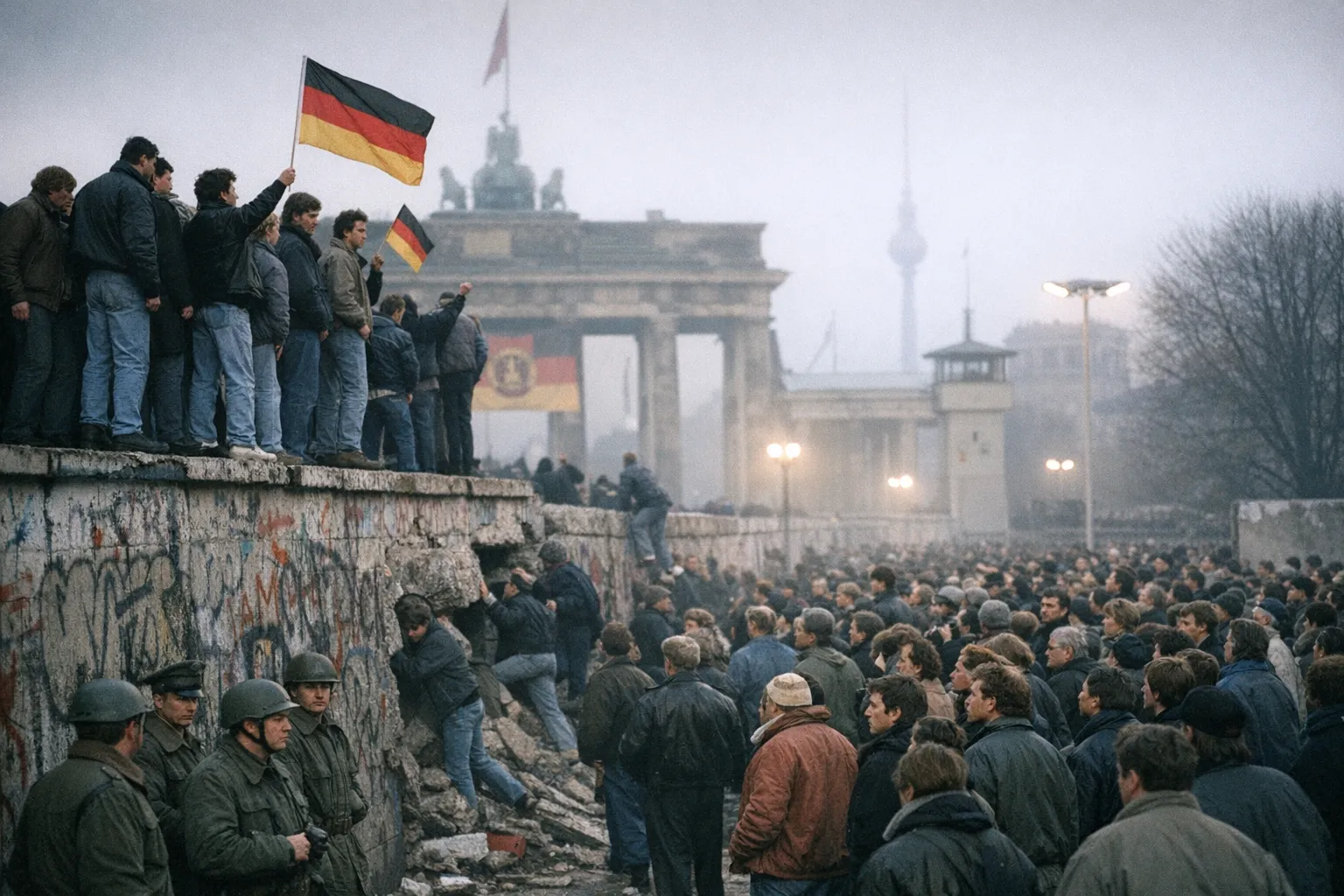
In this analysis, we will explore the political ramifications of the Berlin Wall's fall and its lasting impact on global dynamics. From the reunification of Germany to the dissolution of the Soviet Union, the events surrounding November 9, 1989, reshaped the geopolitical landscape. As we delve deeper, we will uncover how this pivotal moment fostered democratic movements across Eastern Europe and altered perceptions of the Soviet Union in the West, ultimately leading to a new era of global relations.
Introduction: The Berlin Wall as a Symbol of Division
The Berlin Wall, constructed in 1961, served as a stark physical and ideological barrier that divided East and West Berlin for 28 years. Intended to stem the tide of emigration from the East to the West, it quickly became a powerful symbol of the Cold War's ideological divide between communism and capitalism.
The Wall represented more than just a physical separation; it encapsulated the broader geopolitical tensions of the time. For millions, it was a daily reminder of oppression and the struggle for freedom. It stood as a testament to the lengths governments would go to maintain control over their citizens.
Initial global reactions to the Wall's construction were mixed. Western nations condemned it as a “prison wall,” while the Soviet bloc viewed it as a necessary measure to protect their interests. The Wall’s significance was encapsulated in the words of former U.S. President Ronald Reagan, who famously stated: “Freedom is never more than one generation away from extinction,” highlighting the urgency of the struggle against the oppressive regimes.
This complex backdrop paved the way for the Wall's eventual fall on November 9, 1989, an event that would catalyze political change not just in Germany, but throughout Eastern Europe. As the Iron Curtain began to lift, the world watched, hopeful for a future free of division.
For further insights into the Wall's history and its implications, you can explore Berlin Wall History and Cold War Overview.
The Events Leading Up to November 9, 1989
The political landscape in Eastern Europe during the late 1980s was marked by a wave of peaceful protests and a growing desire for reform. In East Germany, citizens began to express their discontent with the oppressive regime through mass demonstrations. These protests were part of a broader trend across Eastern Europe, where calls for democracy and freedom were reverberating throughout the region.
One pivotal moment came in August 1989 when Hungary opened its border with Austria, effectively puncturing the Iron Curtain. This act allowed thousands of East Germans to escape to the West, igniting hope and emboldening protestors back home. This unprecedented opening contributed to the unraveling of communist control in Eastern Europe, setting the stage for the events that would culminate in the fall of the Berlin Wall.
Key political figures played crucial roles during this transformative period. Mikhail Gorbachev’s policies of glasnost (openness) and perestroika (restructuring) signaled a shift in Soviet attitudes toward Eastern Europe. His approach provided the necessary breathing room for reformist movements to gain traction. In East Germany, leaders such as Erich Honecker faced increasing pressure from both citizens and the broader international climate, which was shifting towards democratization.
As November 9 approached, tensions in East Germany reached a boiling point. The government's announcement allowing citizens to cross into West Berlin was a momentous decision that led to spontaneous celebrations. As one observer noted, "The Berlin Wall was like a zipper on a coat that, once undone, could no longer keep the warmth of freedom contained."
The fall of the Berlin Wall on that fateful day not only marked the end of an era for Germany but also heralded a significant political shift worldwide. It was a catalyst for the subsequent reunification of Germany on October 3, 1990, and a decisive step toward the dissolution of the Soviet Union in 1991.
The Announcement That Changed History
On November 9, 1989, the world witnessed a historic turning point when East German official Günter Schabowski inadvertently announced that East Germans could cross into West Berlin "immediately." This declaration, made during a press conference, was not only unexpected but also lacked proper clarity regarding its implementation. The implications, however, were monumental.
As news spread, thousands flocked to the Berlin Wall, transforming it from a symbol of division into a backdrop for celebration. The atmosphere was electric; people from both East and West converged, uniting in their shared desire for freedom. The Wall, which had separated families and friends for 28 years, became a site of jubilation as individuals began to climb over and through the barriers.
Immediate reactions varied dramatically. For East Berliners, the announcement was a long-awaited dream realized, a chance to break free from decades of repression. Conversely, West Berliners reacted with a mix of disbelief and elation, greeting their East German counterparts with open arms. As one individual remarked, “It was as if a dam had broken; the flood of humanity rushed through, erasing decades of division.”
The fall of the Berlin Wall not only symbolized the end of an era but also catalyzed a series of political changes across Eastern Europe. The events of that night would set in motion the reunification of Germany on October 3, 1990, and contribute to the eventual dissolution of the Soviet Union. For many, it became clear that this was more than just a wall coming down; it was the dismantling of ideological barriers that had defined the Cold War.
The ramifications were profound, reshaping not only Germany but also the geopolitical landscape of Europe.
The Reunification of Germany: A New Era
The reunification of Germany, officially completed on October 3, 1990, was a monumental event that reshaped the political landscape of Europe. The timeline leading up to this significant moment is crucial for understanding its implications.
- November 9, 1989: The Berlin Wall fell after East German authorities announced that citizens could cross into West Berlin. This announcement ignited mass celebrations, culminating in the Wall's dismantling.
- Early 1990: Negotiations began between East and West Germany, culminating in a treaty that laid the groundwork for reunification.
- October 3, 1990: Germany officially reunified, marking the end of nearly three decades of division.
The political and economic implications of reunification were profound. Politically, it signified the collapse of the communist regime in East Germany and the broader dissolution of Soviet influence in Eastern Europe. Economically, the integration of two vastly different systems posed challenges. The West was wealthier and more developed, while the East faced significant economic disparities that lingered long after reunification.
Public sentiment varied greatly between the two regions. West Germans largely welcomed reunification as a chance for national healing and unity. In contrast, many East Germans experienced a mix of excitement and anxiety about the transition to a market economy. As one observer noted, “Reunification was like waking from a long dream—exciting yet disorienting.”
The ramifications of this reunification extend beyond Germany. It contributed to the dissolution of the Soviet Union, transformed European relations, and shifted global power dynamics. Despite the passage of over three decades, significant economic disparities still exist, with the East continuing to catch up, as highlighted in discussions about Economic Disparities in Germany.
For a deeper understanding of the Berlin Wall's historical significance, check out the Berlin Wall History and the Cold War Overview.
The Fall of the Berlin Wall: A Catalyst for Change
The fall of the Berlin Wall in 1989 was not just a pivotal moment in German history; it served as a spark that ignited revolutions throughout Eastern Europe. The Wall, erected in 1961, had long been a potent symbol of the ideological divide of the Cold War. Its dismantling marked a significant shift in political power dynamics across the region.
A Wave of Inspiration
The events in Berlin inspired movements in neighboring countries, leading to a series of peaceful revolutions. Countries like Poland, Czechoslovakia, and Hungary witnessed mass protests demanding democratic reforms.
- Poland saw the rise of the Solidarity movement, which galvanized public support and eventually led to semi-free elections in June 1989.
- Czechoslovakia experienced the Velvet Revolution in November 1989, resulting in the peaceful ousting of the communist government.
- Hungary, which had already taken steps towards reform, opened its borders in August 1989, allowing East Germans to flee westward.
These revolutions created a domino effect, demonstrating that change was possible and that the oppressive regimes could be challenged.
Lasting Political Impact
The fall of the Berlin Wall was a catalyst for the collapse of communist regimes across Eastern Europe. It not only led to the reunification of Germany on October 3, 1990, but also contributed to the dissolution of the Soviet Union in 1991. As political scientist Francis Fukuyama noted, “The fall of the Wall was the beginning of the end of history as we knew it.”
The ramifications of these changes resonate to this day, influencing global politics and international relations. The shift from communism to democracy in Eastern Europe reshaped alliances, economic policies, and societal structures, setting the stage for a new world order.
The Economic Disparities Post-Reunification
The fall of the Berlin Wall in 1989 and the subsequent reunification of Germany in 1990 marked a significant political turning point. However, the economic disparities between Eastern and Western Germany have persisted, creating ongoing challenges for East Germany.
Current economic conditions in Eastern Germany reveal a landscape still grappling with the legacy of its communist past. While Western Germany has generally enjoyed robust economic growth, East Germany struggles to catch up. For instance:
- Unemployment Rates: East Germany consistently experiences higher unemployment rates compared to the West, with some regions facing joblessness as high as 10%-15% (estimates).
- Income Levels: Average incomes in the East remain significantly lower than in the West, often cited as around 80% of the national average (estimates).
- Investment Disparities: There is a notable lack of investment in infrastructure and businesses in the East, limiting economic development opportunities.
These economic disparities have long-term implications. The continued economic divide can foster social tensions and regional disparities that affect national cohesion. As one analyst put it, "The economic gap is like a shadow of the Berlin Wall—though it has fallen, the divisions linger."
Moreover, the challenges faced by East Germany are not just economic but also social. Many young people continue to migrate westward in search of better opportunities, leading to demographic shifts that further strain the Eastern regions.
As Germany moves forward, addressing these economic disparities will be crucial not just for the East, but for the overall stability and unity of the nation. The lessons learned from the Berlin Wall's fall and the reunification process must guide future policies aimed at fostering equitable growth across all regions. For more insights, you can explore Economic Disparities in Germany.
The Global Political Landscape Post-Wall
The fall of the Berlin Wall on November 9, 1989, was not just a pivotal moment for Germany but a seismic shift in global politics. It effectively marked the conclusion of the Cold War and reshaped international relations dramatically.
U.S.-Soviet Relations
With the Wall's collapse, U.S.-Soviet relations transformed. The symbolic end of the Wall signaled a thaw in the icy standoff between the superpowers. American public opinion towards the Soviet Union improved significantly, with favorable views jumping from an estimated 40% in 1987 to around 77% by 1989. This shift laid the groundwork for future diplomatic engagements and treaties, ultimately leading to the dissolution of the Soviet Union in 1991.
Emergence of New Nations
The dismantling of the Wall acted as a catalyst for the independence movements within the Soviet sphere. Following its fall, several Eastern European nations began to claim autonomy, resulting in a wave of newly independent states. The Baltic states, Ukraine, and others emerged, reshaping the geopolitical landscape and challenging the remnants of Soviet influence.
Changes in Alliances and Policies
International alliances underwent significant recalibration. NATO expanded eastward, while former Eastern Bloc nations sought integration with Western institutions. The political dynamics shifted, leading to new policies aimed at fostering democracy and economic collaboration.
“The fall of the Berlin Wall was like pulling a thread in a tapestry; the entire fabric of Eastern Europe unraveled.”
This analogy captures how interconnected these political changes were, illustrating the wide-reaching consequences of the Wall's fall. The post-Wall era not only redefined nations but also established new narratives in international relations, emphasizing independence, democracy, and cooperation.
Public Perception and Legacy of the Berlin Wall
The fall of the Berlin Wall in 1989 marked a seismic shift in public opinion, particularly in the United States. Before the Wall's collapse, American sentiments towards the Soviet Union were largely negative, with only about 40% favorably viewing the USSR in 1987. By the end of 1989, that figure had risen dramatically to approximately 77%. This transformation was fueled by the perception of the Wall’s fall as a symbol of hope and change, indicating a decline in communist power.
Culturally, the Wall's fall was immortalized in various media representations, from films and documentaries to music and literature. Notably, documentaries capturing the jubilant celebrations of November 9, 1989, resonated deeply with audiences, portraying the Wall not just as a physical barrier but as a representation of oppression. These narratives contributed to a burgeoning optimism regarding democracy and freedom in Eastern Europe.
The legacy of the Berlin Wall continues to impact contemporary politics. It serves as a reminder of the fragility of freedom and the potential for oppressive regimes to fall. The reunification of Germany on October 3, 1990, was a direct consequence of the Wall's dismantling, yet economic disparities between East and West Germany persist, illustrating that the end of political divisions does not automatically lead to social or economic equality. This ongoing legacy is a crucial aspect of discussions about democracy and governance in former communist states.
In summary, the fall of the Berlin Wall reshaped American views on the Soviet Union, influenced cultural narratives, and left a complex legacy that continues to influence global politics today.
Myths vs. Reality: Understanding the Fall of the Wall
The fall of the Berlin Wall is often romanticized as a singular, dramatic event. However, this narrative oversimplifies a complex historical reality.
-
Myth: The Wall fell overnight due to a single event.
The iconic moment on November 9, 1989, when East German official Günter Schabowski announced that citizens could cross the border, was indeed pivotal. Yet, this was not an isolated incident. It was the culmination of years of mounting political pressure and grassroots protests across Eastern Europe, including the opening of the Iron Curtain between Austria and Hungary just months prior. These developments set the stage for the Wall's eventual collapse. -
Myth: Reunification solved all issues in Germany.
While the reunification of Germany on October 3, 1990, marked a significant political milestone, it did not resolve all underlying challenges. Economic disparities between East and West Germany remain evident even three decades later. The East continues to face hurdles in catching up, with lingering socioeconomic issues that affect the daily lives of its citizens.
Understanding these myths and realities is crucial for grasping the full impact of the Berlin Wall's fall, which not only symbolized the end of the Cold War but also initiated a complex process of reconciliation and transformation within Germany and beyond. For a deeper dive into the historical context, check out the Berlin Wall History or the Cold War Overview.
Conclusion: The Enduring Impact of the Berlin Wall
The fall of the Berlin Wall on November 9, 1989, was not merely the end of a physical barrier; it was a watershed moment in global political history. For 28 years, the Wall symbolized the ideological divide of the Cold War, and its dismantling marked a significant shift towards democracy and unity in Europe. The reunification of Germany on October 3, 1990, underscored the broader implications for international relations, leading to the dissolution of the Soviet Union and the reconfiguration of Eastern Europe.
Remembering the events of 1989 is crucial for understanding contemporary global politics. The peaceful protests and political changes that preceded the Wall's fall ignited a series of revolutions across Eastern Europe, dismantling oppressive regimes and promoting democratic governance. This legacy serves as a reminder of the power of civil society in challenging authoritarianism.
Looking ahead, the implications of the Wall's fall continue to resonate. While reunification has brought many benefits, significant economic disparities remain between eastern and western Germany, illustrating that the legacy of division is not easily erased. Furthermore, the geopolitical landscape remains influenced by the ideologies that the Wall once represented. As nations navigate the complexities of global politics, the lessons of 1989 remind us of the enduring struggle for freedom, unity, and the importance of vigilance against division.