
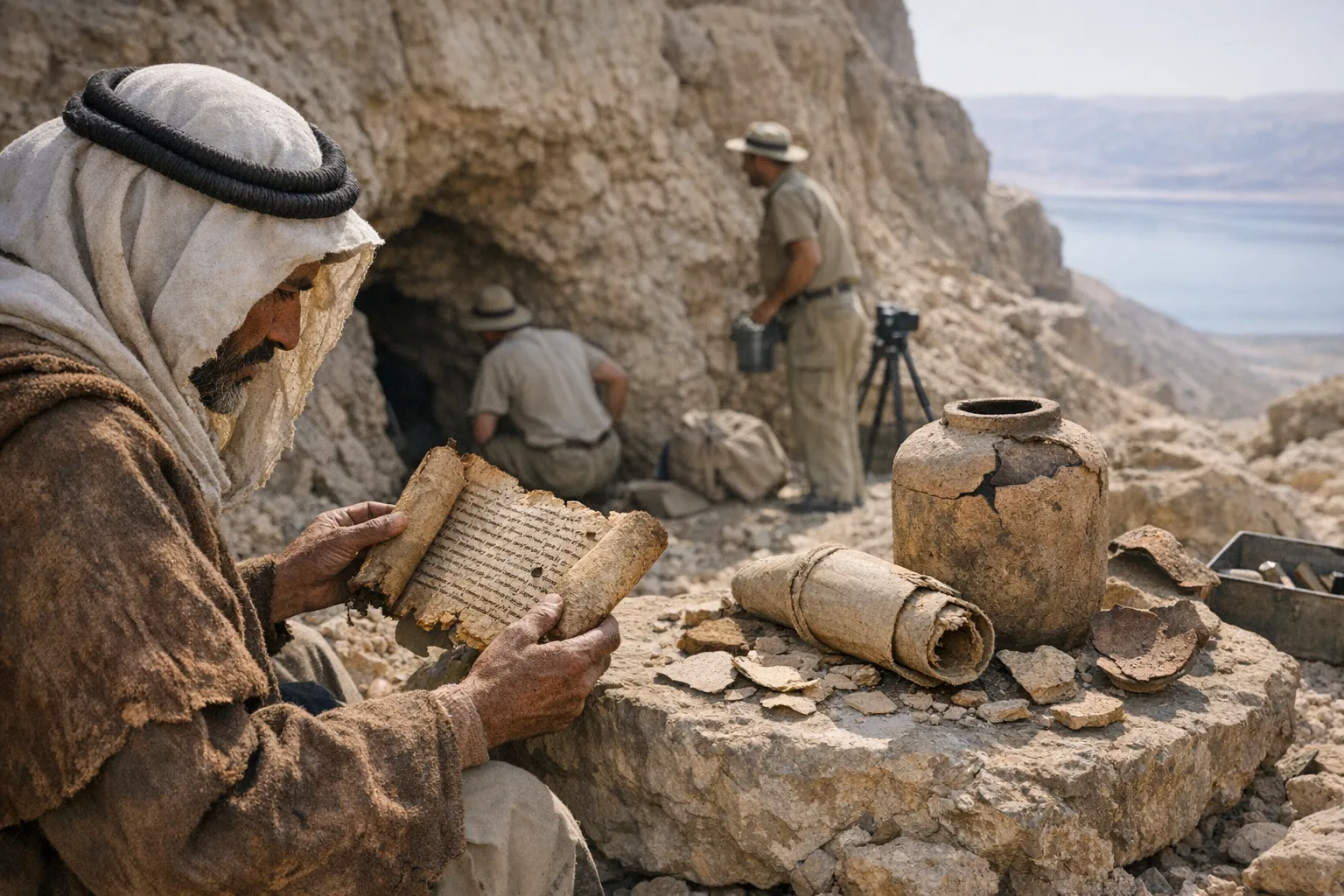
In 1947, a chance discovery by Bedouin shepherds forever altered our understanding of ancient texts and religious history. The Dead Sea Scrolls, found in a remote cave near Qumran, opened a window into the past, revealing manuscripts that had been hidden for centuries. This remarkable find not only unearthed some of the oldest biblical texts but also shed light on the diverse religious landscape of the Second Temple period.
In this article, we will explore the profound implications of the Dead Sea Scrolls on religious texts and historical context. From their origins and preservation to their impact on early Judaism and Christianity, we will delve into how these ancient manuscripts have reshaped scholarly perspectives and continue to influence theological debate today. Join us as we navigate through the intricate tapestry of history woven by the discovery of these scrolls.
The Discovery: A Historical Context
In 1947, a serendipitous moment occurred when Bedouin shepherds stumbled upon the first Dead Sea Scrolls in Cave 1 near Qumran. This initial find was just the beginning; by 1956, archaeologists had unearthed over 900 manuscripts from a total of 11 caves. The scrolls, dating from the 3rd century BCE to the 1st century CE, include some of the oldest known surviving copies of biblical texts, such as Genesis and Isaiah.
These ancient manuscripts were meticulously hidden in clay jars, a choice that remarkably preserved them over the centuries. As if they were time capsules, these jars safeguarded writings that would otherwise have been lost to history. As one scholar aptly noted, "The scrolls are to ancient literature what a time capsule is to modern society."
The scrolls were primarily written in Hebrew, with some texts in Aramaic and Greek, reflecting the linguistic diversity of the period. This variety not only enriches our understanding of the texts themselves but also provides insights into the cultural landscape of the era.
The discovery has had profound implications for our understanding of early Judaism and the emergence of Christianity, shedding light on the diversity of religious thought during the Second Temple period. The scrolls include biblical texts, sectarian writings, and other documents, revealing how different communities engaged with their faith and scripture.
To delve deeper into the context surrounding these findings, explore the Qumran community and the significance of biblical texts.
What Are the Dead Sea Scrolls?
The Dead Sea Scrolls are a collection of ancient manuscripts dating from the 3rd century BCE to the 1st century CE. Discovered in 1947 near Qumran, these scrolls have become a pivotal resource in understanding biblical texts and the historical context of early Judaism and Christianity.
Contents and Languages:
- The scrolls include biblical texts, such as the oldest known manuscripts of Genesis and Isaiah, along with sectarian writings and other documents.
- They were primarily written in Hebrew, with some texts in Aramaic and Greek, showcasing the linguistic diversity of the period.
Significance:
- The discovery includes over 900 manuscripts from 11 caves, providing invaluable insights into the development of religious thought during the Second Temple period.
- As noted, “finding the Dead Sea Scrolls is akin to discovering a time capsule of ancient beliefs and practices.”
Cultural Context:
- The Qumran community, likely associated with the Essenes, is believed to have produced these texts, reflecting a unique perspective within Judaism.
- The scrolls have been instrumental in understanding the textual transmission of the Hebrew Bible, revealing variations and affirming the reliability of biblical texts over time.
The Dead Sea Scrolls not only enrich our understanding of sacred texts but also illuminate the myriad beliefs that shaped early Judaism and the emergence of Christianity. For more on the Qumran community, learn more here.
The Qumran Community: Who Were They?
The Qumran community, widely believed to be a Jewish sect possibly linked to the Essenes, lived during the Second Temple period (approximately 516 BCE to 70 CE). Their isolation near the Dead Sea significantly shaped their beliefs and practices, which are vividly reflected in the Dead Sea Scrolls.
Key Aspects of the Qumran Community:
- Religious Beliefs: The scrolls reveal that the community held unique interpretations of Jewish law and prophecy, emphasizing purity and communal living.
- Isolation: Their secluded lifestyle allowed them to develop distinct religious texts, potentially as a reaction against the practices of mainstream Judaism.
- Diversity of Texts: The manuscripts include not only biblical texts but also sectarian writings that offer a glimpse into the theological debates of the time.
The scrolls, dating from the 3rd century BCE to the 1st century CE, are crucial for understanding early Judaism. They contain the oldest known copies of biblical texts, such as Genesis and Isaiah, and were primarily written in Hebrew, with some in Aramaic and Greek. This linguistic variety highlights the cultural richness of the period.
"Like a hidden garden, the Qumran community cultivated their beliefs away from the world's gaze, preserving a unique interpretation of faith."
The discovery of the Dead Sea Scrolls has significantly advanced our understanding of the development of early Judaism and the emergence of Christianity. They illustrate the diversity of religious thought during a pivotal historical era, revealing not just what was believed, but how beliefs were formed and transmitted.
To delve deeper into the intricacies of the Qumran community, consider exploring more about their practices and the impact of their writings.
Impact on Biblical Textual Transmission
The discovery of the Dead Sea Scrolls has profoundly influenced our understanding of biblical texts and their transmission throughout history. One of the most significant revelations is the existence of variations in biblical manuscripts, which confirm the reliability of the Hebrew Bible. These scrolls, dating from the 3rd century BCE to the 1st century CE, include some of the oldest known surviving copies of biblical texts, such as Genesis and Isaiah.
Key insights from the scrolls include:
- Textual Variations: The scrolls reveal differences among biblical texts, prompting scholars to reconsider the development and transmission of these texts over time.
- Oldest Manuscripts: They provide the earliest surviving manuscripts of entire books that were later canonized, offering a crucial link to the textual history of the Bible.
- Advanced Textual Criticism: The findings have significantly advanced the field of textual criticism, allowing scholars to better understand the historical context and evolution of religious writings.
Furthermore, the scrolls encompass a variety of texts, including sectarian writings that illuminate the diversity of religious thought during the Second Temple period. This discovery has not only enhanced our understanding of early Judaism but also shed light on the emergence of Christianity, underlining the complexity of religious beliefs in that era.
For a deeper exploration of the Qumran community and the significance of biblical texts, consider exploring the available resources on Qumran and biblical texts.
Diversity of Religious Thought in the Second Temple Period
The discovery of the Dead Sea Scrolls has dramatically reshaped our understanding of the religious landscape during the Second Temple period. These ancient texts not only include biblical manuscripts but also a wealth of sectarian writings that illustrate the diversity of beliefs and practices among various Jewish groups of the time.
Key points include:
-
Sectarian Writings: The scrolls feature texts that reflect differing interpretations of the law, rituals, and community life. This suggests that Judaism was not monolithic; instead, it encompassed a range of theological perspectives.
-
Early Christianity: Understanding this diversity is crucial for studying the emergence of early Christianity. The scrolls provide context for how Jesus and his followers interacted with existing Jewish thought, revealing potential influences and divergent beliefs.
-
Linguistic Diversity: Written primarily in Hebrew, with some texts in Aramaic and Greek, the scrolls reflect the linguistic variety of the period. This highlights the cultural exchanges occurring in a time of significant historical transition.
-
Qumran Community: Associated with the scrolls, the Qumran community—often identified as the Essenes—offers an example of a sect that sought to live out its own interpretation of Jewish law and prophecy, further emphasizing the pluralism present in Second Temple Judaism.
The Dead Sea Scrolls serve as a vital resource for scholars and laypeople alike, revealing the complexities of religious thought in a formative era for both Judaism and Christianity. Their insights extend beyond mere textual analysis, inviting deeper exploration into the spiritual and communal dynamics that shaped a pivotal moment in religious history.
Myths vs. Reality: Common Misconceptions
The Dead Sea Scrolls have sparked numerous myths that obscure their true significance. Let’s clarify some of these misconceptions.
-
Myth: The scrolls are only biblical texts.
Reality: While the Dead Sea Scrolls include the oldest known surviving copies of biblical texts, such as Genesis and Isaiah, they also contain a wide range of writings. These include sectarian texts and other documents that shed light on the beliefs and practices of the Qumran community, possibly the Essenes. This variety highlights the diverse religious thought during the Second Temple period. -
Myth: The scrolls were all discovered at once.
Reality: The initial discovery occurred in 1947, when Bedouin shepherds found the first scrolls in Cave 1 near Qumran. Over the subsequent years, more than 900 manuscripts were unearthed from 11 different caves, with findings continuing into 1956. This gradual discovery process has enriched our understanding of the scrolls and their context. -
Myth: The scrolls are irrelevant today.
Reality: Far from being outdated, the Dead Sea Scrolls continue to play a crucial role in biblical scholarship and religious studies. They provide invaluable insights into the development of early Judaism and the emergence of Christianity. The scrolls reveal variations in biblical texts that confirm the overall reliability of these texts over time.
By dispelling these myths, we can appreciate the profound impact of the Dead Sea Scrolls on our understanding of ancient texts and history. For a deeper exploration, consider learning more about the Qumran community and the significance of biblical texts.
The Archaeological Significance of the Scrolls
The Dead Sea Scrolls hold immense archaeological significance, primarily because they offer a unique snapshot of Jewish life and thought during the Second Temple period. The texts reveal the beliefs, practices, and social dynamics of a community that was not only deeply religious but also engaged in the complex interplay of various traditions and sects.
Following their discovery in 1947 by Bedouin shepherds near Qumran, over 900 manuscripts from 11 caves were unearthed. This monumental find has spurred further archaeological exploration in the Qumran region, leading to a better understanding of the site itself and its occupants. Researchers continue to investigate the area, aiming to uncover more about the community that produced these texts.
The preservation methods employed by this community also offer valuable insights. The scrolls were primarily written in Hebrew, with some texts in Aramaic and Greek, indicating the linguistic diversity of the time. Stored in clay jars, these documents remained remarkably well-preserved for centuries, providing a wealth of information about ancient document storage techniques.
Key points of significance include:
- Cultural Snapshot: The scrolls illuminate Jewish life, showcasing a variety of religious thoughts and practices.
- Archaeological Exploration: Their discovery has catalyzed ongoing archaeological efforts in Qumran.
- Preservation Techniques: The use of clay jars demonstrates sophisticated methods for document conservation.
Overall, the Dead Sea Scrolls have profoundly impacted our understanding of early Judaism and the emergence of Christianity, highlighting the rich tapestry of beliefs during a crucial period in history. For more on the Qumran community, learn here.
Modern Implications: The Scrolls in Contemporary Scholarship
The discovery of the Dead Sea Scrolls has profoundly transformed modern scholarship, particularly in biblical studies and archaeology. Since their unearthing in 1947, the scrolls have opened new avenues for research, providing a wealth of material that challenges existing narratives about ancient texts.
Key Areas of Impact:
-
Biblical Studies: The scrolls include the oldest known surviving copies of biblical texts, such as those of Genesis and Isaiah, dating from the 3rd century BCE to the 1st century CE. This has made them crucial in discussions about the textual transmission of the Hebrew Bible, revealing variations that confirm its reliability over time.
-
Historical Jesus and Early Christianity: Scholars frequently reference the Dead Sea Scrolls in discussions about the historical Jesus and the development of early Christianity. They offer insight into the religious context of the time, allowing researchers to explore how early Christians may have interacted with contemporary Jewish thought.
-
Debates on Religious History: The scrolls have sparked ongoing debates regarding their implications for understanding religious history. For instance, they highlight the diversity of thought during the Second Temple period, suggesting that early Judaism was not monolithic but rather a tapestry of beliefs and practices.
The Qumran community, believed to be associated with the scrolls, is thought to have been a Jewish sect, possibly the Essenes, who lived in the area during this transformative period. Their writings not only reflect the linguistic diversity of the time—primarily Hebrew, with some Aramaic and Greek—but also provide a broader understanding of the religious landscape.
In summary, the Dead Sea Scrolls have not only enriched our understanding of biblical texts but also continue to shape the discourse surrounding early Judaism and Christianity, underscoring their lasting significance in contemporary scholarship.
FAQs About the Dead Sea Scrolls
What are the Dead Sea Scrolls?
The Dead Sea Scrolls are a collection of ancient manuscripts discovered in 1947 near Qumran. These scrolls date from the 3rd century BCE to the 1st century CE and include over 900 texts, comprising biblical manuscripts, sectarian writings, and other documents.
Why are they important?
The significance of the Dead Sea Scrolls lies in their role in advancing our understanding of early Judaism and the emergence of Christianity. They provide insights into the diversity of religious thought during the Second Temple period and include some of the oldest known copies of biblical texts, such as Genesis and Isaiah.
How were they preserved?
The scrolls were stored in clay jars, which played a crucial role in their preservation. This method safeguarded them from the harsh desert conditions, allowing them to remain intact for centuries until their discovery.
What languages are they written in?
The majority of the Dead Sea Scrolls are written in Hebrew, but there are also texts in Aramaic and Greek. This linguistic variety reflects the cultural and linguistic diversity of the region during that era.
Who discovered them?
The initial discovery of the Dead Sea Scrolls was made by Bedouin shepherds, specifically Muhammed edh-Dhib and his cousin Jum'a Muhammed, between November 1946 and February 1947. Their find in Cave 1 set off a series of excavations that unearthed additional manuscripts from 11 caves.
For more on the Qumran community, learn more here. To explore the significance of biblical texts, click here.
Conclusion: The Lasting Legacy of the Dead Sea Scrolls
The Dead Sea Scrolls have fundamentally transformed our understanding of ancient texts and religious thought. Discovered in 1947 by Bedouin shepherds, these manuscripts date from the 3rd century BCE to the 1st century CE and include some of the oldest surviving copies of biblical texts, such as Genesis and Isaiah. This wealth of material has reshaped our views on the textual transmission of the Hebrew Bible, revealing both variations and confirming the reliability of these ancient writings over time.
Their discovery has sparked ongoing research and debate across various fields, including archaeology, theology, and history. Scholars continue to analyze the scrolls, which encompass biblical texts, sectarian writings, and other documents, offering rich insights into the diversity of religious thought during the Second Temple period. The debates surrounding these texts, especially regarding their implications for early Judaism and the emergence of Christianity, remain vibrant and contentious.
The legacy of the Dead Sea Scrolls continues to influence contemporary religious and historical studies. They serve as a crucial resource for understanding the complexities of early religious communities, particularly the Qumran community, believed to be associated with the Essenes. This ongoing relevance underscores not only their historical significance but also their role in shaping modern interpretations of faith and scripture.
For those interested in delving deeper, you can learn more about the Qumran community and explore the significance of biblical texts.