
Vincent van Gogh's 'Starry Night' is more than just a captivating visual experience; it’s a profound exploration of the artist's psyche. Painted during a turbulent period in his life, this masterpiece encapsulates the emotional highs and lows that defined his existence.
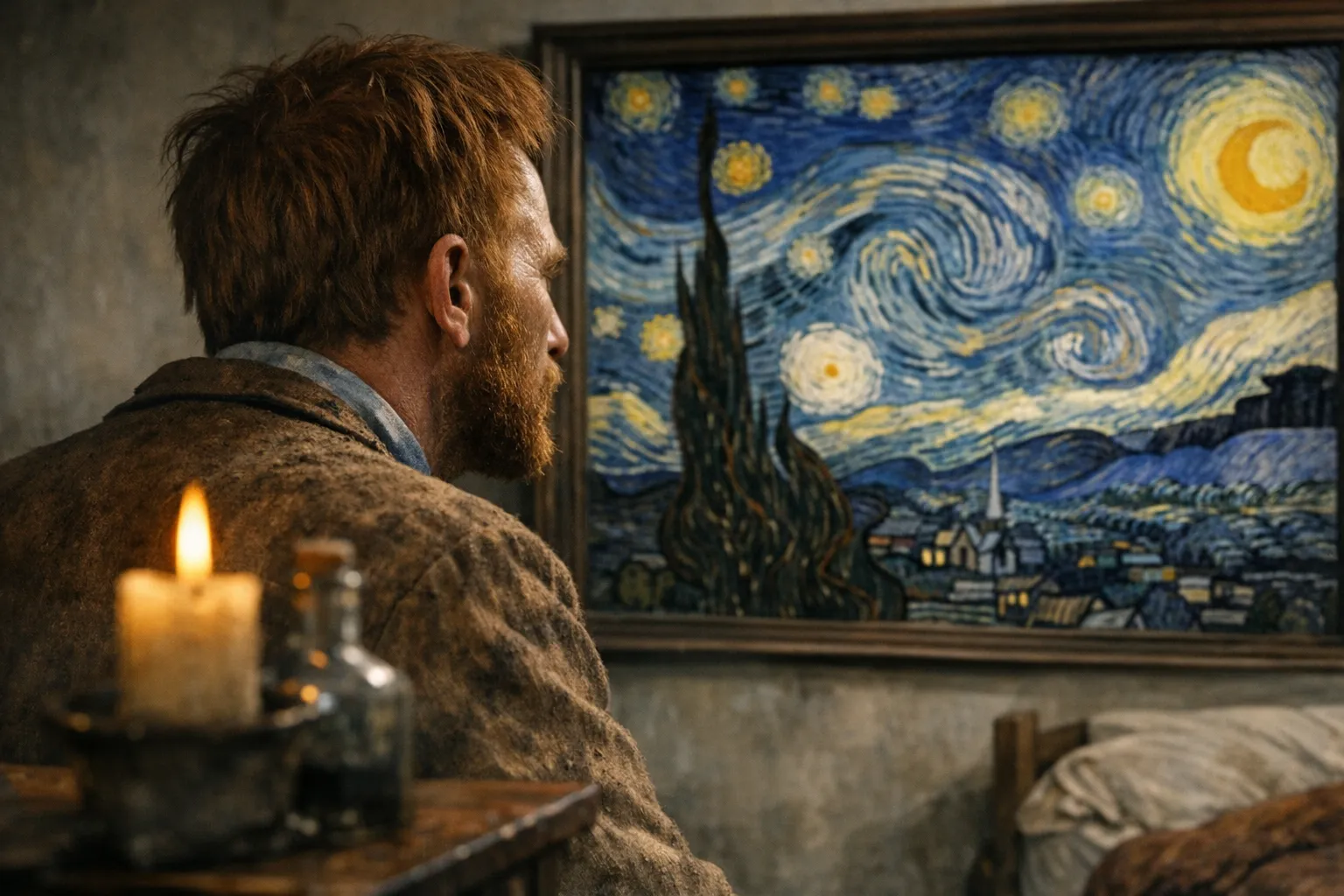
In this article, we will delve into the psychological themes embedded in 'Starry Night' and how they mirror Van Gogh's life experiences. From the swirling patterns in the sky that reflect his inner turmoil to the contrasting colors that symbolize hope and despair, we'll uncover how this iconic painting serves as a window into the complexities of Van Gogh's mind. Prepare to explore the intersection of art and psychology through the lens of one of history's most enigmatic artists.
Introduction to Vincent van Gogh and 'Starry Night'
Vincent van Gogh's life was marked by profound struggles, including mental illness, poverty, and a relentless pursuit of artistic expression. Born in the Netherlands in 1853, he battled depression and anxiety, which heavily influenced his work. His artistic journey was filled with both passionate creation and episodes of despair, ultimately culminating in his tragic death in 1890.
'Starry Night,' painted in June 1889 during his stay at the Saint-Paul-de-Mausole asylum in Saint-Rémy-de-Provence, France, stands as a pivotal work in art history. This masterpiece captures a swirling night sky filled with vibrant stars and a prominent cypress tree, elements that are rich in psychological significance. Art historians Meyer Schapiro and Sven Loevgren argue that the dynamic brushwork reflects Van Gogh's emotional turmoil and visionary experiences.
The painting's contrasting colors—deep blues and bright yellows—serve as a poignant metaphor for Van Gogh's own emotional fluctuations, with blue often symbolizing melancholy and yellow representing hope. As the tranquil village rests beneath the tumultuous sky, the scene may echo Van Gogh's feelings of isolation and longing for connection.
As one art critic aptly noted, “The stars are a reflection of his restless mind, swirling in a cosmic dance of despair and hope.” This encapsulates how 'Starry Night' not only depicts the external world but also offers a glimpse into the complex inner landscape of Van Gogh's psyche.
For a deeper understanding of his life, you can explore more about Van Gogh's experiences here.
The Emotional Turmoil Reflected in the Swirling Sky
In Vincent van Gogh's 'Starry Night,' the swirling patterns of the sky serve as a vivid representation of his emotional state during a turbulent period of his life. Painted in June 1889 at the Saint-Paul-de-Mausole asylum, the artwork encapsulates his struggles with mental health through dynamic brushwork and vivid colors.
Art historians Meyer Schapiro and Sven Loevgren have analyzed these swirling patterns, asserting that they symbolize Van Gogh's inner chaos. Their interpretations suggest that the sky's movement mirrors the artist's emotional fluctuations, reflecting a mind in turmoil yet searching for serenity. As Schapiro noted, the sky appears "to be alive, pulsating with the energy of Van Gogh's tumultuous spirit."
The contrast between the dynamic sky and the tranquil village below further highlights Van Gogh's feelings of isolation. While the vibrant stars swirl in a dance of chaos, the calm village represents a longing for connection that was often elusive for him. This juxtaposition emphasizes the duality of his experience: a yearning for peace amidst overwhelming emotional distress.
Van Gogh's use of contrasting colors—deep blues signifying melancholy and bright yellows symbolizing hope—adds another layer to this emotional narrative. The impasto technique, where paint is applied thickly, captures the intensity of his feelings, making the sky not just a visual spectacle but an emotional battleground.
- The cypress tree, often linked to death, underscores his preoccupation with mortality.
- The swirling sky, a manifestation of his visionary experiences, invites viewers into his complex emotional landscape.
In 'Starry Night,' Van Gogh transforms his psychological turmoil into a visual language that resonates with the viewer, making it a profound exploration of the human condition.
The Symbolism of the Cypress Tree
In Vincent van Gogh's 'Starry Night', the prominent cypress tree serves as a striking symbol that weaves together themes of mortality and the divine. Traditionally associated with mourning and death, cypress trees often mark graves and signify loss. This connection adds a layer of depth to Van Gogh's work, reflecting his own preoccupation with mortality during his time at the Saint-Paul-de-Mausole asylum.
The cypress acts as a bridge between the earthly realm and the celestial, towering upward into the swirling night sky. This duality suggests a yearning for transcendence, as if Van Gogh is grappling with the tension between life and death. As art historian Meyer Schapiro noted, "The cypress stands like a sentinel between the living and the stars." This analogy captures the essence of the tree's role in the painting.
Van Gogh's emotional state during the creation of 'Starry Night' is also crucial to understanding this symbolism. The artist painted this masterpiece in June 1889, a time when he faced profound mental turmoil. The dark, turbulent hues of the cypress contrast sharply with the vibrant colors of the sky, reflecting his inner struggles. The deep blues may symbolize despair, while the radiant yellows hint at hope, illustrating his fluctuating emotional landscape.
Furthermore, the tranquil village beneath the chaotic sky underscores a sense of isolation, amplifying Van Gogh's longing for connection. The cypress, standing tall amidst the turmoil, symbolizes a search for solace amidst chaos, encapsulating the psychological themes that resonate throughout 'Starry Night'.
To explore more about Van Gogh's life, visit Van Gogh Gallery.
Color Psychology: Blues and Yellows in 'Starry Night'
In Vincent van Gogh's 'Starry Night,' the contrasting colors of deep blues and vibrant yellows serve as a powerful exploration of psychological themes, reflecting his emotional landscape.
-
Deep Blues: The predominant blues in the painting evoke feelings of melancholy and despair. These shades create a sense of depth and introspection, mirroring Van Gogh's own struggles during his time at the asylum. Art historians have noted how the swirling patterns in the night sky can be interpreted as a manifestation of his inner turmoil.
-
Vibrant Yellows: In contrast, the bright yellows symbolize hope and vitality. They stand out against the cooler tones, suggesting moments of clarity and joy. This interplay of color mirrors Van Gogh's emotional fluctuations, encapsulating the duality of his experience—moments of despair interspersed with bursts of inspiration.
The use of color in 'Starry Night' is not merely aesthetic; it serves as a reflection of Van Gogh's psyche. As a poignant analogy puts it, "Colors are the smiles of nature," illustrating how these hues convey a spectrum of emotions.
- Emotional Fluctuations: The dynamic interaction between blues and yellows encapsulates the complexity of Van Gogh's mental state. Each stroke of color tells a story of his longing for connection, underscored by the tranquil village juxtaposed against the chaotic sky.
Ultimately, the colors in 'Starry Night' are more than just visual elements; they are a window into Van Gogh's mind, revealing the profound psychological themes that define his work.
Isolation vs. Connection: The Tranquil Village
In Vincent van Gogh's 'Starry Night,' the peaceful village serves as a poignant symbol of his longing for connection. Nestled comfortably under the swirling chaos of the night sky, the village embodies a stark contrast to the emotional turbulence that Van Gogh experienced throughout his life.
-
Symbol of Longing: The quiet village, with its simple houses and serene atmosphere, reflects Van Gogh’s desire for community and belonging. This desire often clashed with his lived reality, marked by profound isolation.
-
Contrasting Elements: Above the village lies a dynamic sky, filled with swirling patterns and vibrant stars. This chaos can be interpreted as a manifestation of Van Gogh's inner turmoil, illustrating how his emotional state often disrupted his yearning for peace and connection.
-
Implications of Isolation: Van Gogh spent time in the Saint-Paul-de-Mausole asylum, where he created this masterpiece. His isolation during this period is evident not just in his life experiences but also in the painting itself. The cypress tree, often linked to mourning, stands tall in the foreground, serving as a bridge between the earthly village and the chaotic cosmos, highlighting his struggles with mortality and despair.
As noted by art historian Meyer Schapiro, the swirling sky can be seen as "an emotional storm, where each brushstroke conveys the intensity of Van Gogh’s feelings." This interplay between the tranquil and the tumultuous encapsulates the complexities of his psyche.
In 'Starry Night,' the serene village juxtaposed with the dynamic sky does more than depict a landscape; it reveals the profound psychological themes of isolation and the deep-seated need for connection that defined Van Gogh’s life.
Impasto Technique: Texture and Emotional Expression
Vincent van Gogh's use of the impasto technique in 'Starry Night' is a striking example of how texture can enhance emotional depth in art. Impasto involves applying paint thickly, allowing brushstrokes to remain visible, which adds a tactile quality to the artwork. In this masterpiece, the swirling sky and vibrant stars are rendered with such intensity that they seem to pulsate with emotion.
The thick application of paint not only creates a three-dimensional effect but also intensifies the emotional expression. This technique mirrors Van Gogh's inner turmoil during his time at the Saint-Paul-de-Mausole asylum in 1889. The dynamic brushwork conveys a sense of movement, reflecting his psychological state—an emotional rollercoaster of despair and hope.
Key Aspects of Impasto in 'Starry Night':
- Visible Brushstrokes: The texture invites viewers to engage with the emotional landscape of the painting.
- Color Contrast: Deep blues and vibrant yellows symbolize the tension between melancholy and optimism, enhancing the emotional narrative.
- Dynamic Motion: The swirling patterns can be seen as visual representations of Van Gogh's visionary experiences and psychological struggles.
Van Gogh’s impasto technique is not limited to 'Starry Night.' Other notable works, such as 'The Café Terrace on the Place du Forum, Arles, at Night' and 'The Sower,' also showcase thick paint applications that evoke powerful feelings. As art historian Meyer Schapiro puts it, "Van Gogh's brushwork is like a heartbeat, pulsing with the fervor of his spirit."
This emotional resonance achieved through the impasto technique invites viewers to delve deeper into Van Gogh’s psyche, revealing the complex interplay of isolation, longing, and hope that defines much of his work. To explore more about Van Gogh's life, check out this resource.
Case Study: Van Gogh's Mental Health and Artistic Expression
Vincent van Gogh's struggles with mental illness are well-documented, and they profoundly influenced his artistic output. During his time at the Saint-Paul-de-Mausole asylum in 1889, he created 'Starry Night,' a piece that encapsulates his emotional state and mental turmoil.
The connection between Van Gogh's psychological health and his art is evident in several ways:
-
Swirling Patterns: The chaotic, swirling sky in 'Starry Night' reflects Van Gogh's inner turmoil. Art historians Meyer Schapiro and Sven Loevgren suggest that these patterns express his emotional and visionary experiences.
-
Color Symbolism: The use of deep blues conveys melancholy, while the vibrant yellows symbolize hope. This contrast mirrors Van Gogh's emotional fluctuations, highlighting the interplay between despair and aspiration in his life.
-
Cypress Tree: The prominent cypress tree, often linked to mourning and death, symbolizes Van Gogh's preoccupation with mortality. It serves as a bridge between the earthly realm and the divine, embodying his complex relationship with life and death.
-
Tranquil Village: The serene village contrasts sharply with the tumultuous sky, reflecting Van Gogh's feelings of isolation and longing for connection. This dichotomy illustrates his internal conflict—yearning for peace amidst chaos.
As Van Gogh once remarked, "I dream my painting, and then I paint my dream." This analogy encapsulates how his mental state directly influenced his artistic vision, making 'Starry Night' not just a masterpiece but also a poignant reflection of his struggles.
For more insights into Van Gogh's life, visit Van Gogh Gallery. To explore the psychological impact of art, check out Art Psychology.
Myths vs. Reality: Common Misconceptions about Van Gogh
Vincent van Gogh's life and art have inspired countless myths that often overshadow the truth about his talent and creative process. One prevalent myth is that he was a madman without talent. In reality, Van Gogh's struggles with mental health profoundly influenced his artistic expression. His battles fueled an innovative vision that led to masterpieces like 'Starry Night,' created during his stay at the Saint-Paul-de-Mausole asylum in 1889.
Another misconception is that 'Starry Night' was painted in a fit of rage. While the swirling patterns and dynamic brushwork reflect his emotional turmoil, they also embody a deep introspection. As art historians Meyer Schapiro and Sven Loevgren noted, these elements are expressions of visionary experiences, not merely chaotic outbursts. Van Gogh himself described his art as “like a dream” reflecting his emotional landscape.
-
Myth: Van Gogh was a madman without talent.
-
Reality: His struggles fueled his creativity and innovation.
-
Myth: 'Starry Night' was created in a fit of rage.
-
Reality: The painting emerged from a place of deep introspection and emotional complexity.
The prominent cypress tree in the foreground symbolizes a bridge between the earthly and the divine, often associated with mourning and death. This choice showcases Van Gogh's preoccupation with mortality and adds depth to the serene village below the tumultuous sky. The contrasting use of deep blues and vibrant yellows captures the interplay of despair and hope in his life, revealing a complex emotional narrative.
In the words of Van Gogh, "There is nothing more artistic than to love people." This sentiment encapsulates the essence of his work, illustrating that his art is not merely a reflection of madness but a profound exploration of the human experience.
For more insights into Van Gogh’s life, explore here. To learn about the psychological impact of art, click here.
FAQs about 'Starry Night' and Van Gogh's Psychology
What inspired Van Gogh to paint 'Starry Night'?
Vincent van Gogh created 'Starry Night' in June 1889 during his stay at the Saint-Paul-de-Mausole asylum in Saint-Rémy-de-Provence. This period was marked by mental health struggles, and the painting reflects his attempts to find solace in nature. The dynamic sky and vibrant stars were inspired by his nighttime observations from the asylum, infused with imaginative reinterpretation.
How does 'Starry Night' reflect Van Gogh's life experiences?
The painting vividly illustrates Van Gogh's emotional landscape. The swirling patterns in the sky symbolize his inner turmoil and visionary experiences, while the tranquil village contrasts sharply with the chaos above, highlighting his feelings of isolation. As art historian Meyer Schapiro noted, “The sky is like a heart bursting with emotion.”
What psychological theories can be applied to understand the painting?
Several psychological theories can shed light on 'Starry Night':
- Expressionism: Van Gogh's use of color and form expresses deep emotional truths rather than realistic depictions, allowing viewers to connect with psychological states.
- Symbolism: The cypress tree, often associated with mourning, reflects his preoccupation with death, while the contrasting blues and yellows may illustrate the duality of despair and hope in his life.
- Isolation Theory: The contrast between the serene village and tumultuous sky can be seen as a representation of Van Gogh's longing for connection, capturing the profound loneliness he often felt.
This blend of personal history and psychological depth makes 'Starry Night' not just a visual masterpiece, but also a poignant exploration of Van Gogh's psyche. For a deeper dive into Van Gogh's life, explore more.
Conclusion: The Lasting Impact of 'Starry Night' on Art and Psychology
Vincent van Gogh's 'Starry Night' remains a cornerstone in art history, celebrated not just for its aesthetic beauty but also for its profound psychological depth. The painting encapsulates the essence of Van Gogh's turbulent life, inviting viewers to explore their own emotional landscapes through its vibrant swirls and contrasting colors.
The legacy of 'Starry Night' is evident in its continued relevance. Art historians note how the swirling patterns symbolize Van Gogh's inner turmoil, reflecting a universal experience of emotional struggle. As Meyer Schapiro and Sven Loevgren have pointed out, these dynamic brushstrokes serve as a window into the artist’s psyche, making the work resonate deeply with audiences today.
Understanding the psychological themes in art enhances our appreciation of masterpieces like 'Starry Night.' The cypress tree, often linked to death, bridges earthly existence with the divine, echoing Van Gogh's preoccupation with mortality. Similarly, the tranquil village juxtaposed against the tumultuous sky symbolizes isolation and a yearning for connection, themes that many can relate to in today’s fast-paced world.
“Viewing 'Starry Night' is akin to peering into a stormy sea; the waves of emotion and color reveal the depths of the human experience.”
In this way, Van Gogh's work not only offers insight into his own life but also serves as a mirror for our collective emotional experiences. By engaging with these themes, we unlock a richer understanding of both art and ourselves.