
Pablo Picasso's Guernica is more than just a painting; it’s a visceral response to the horrors of war. Created in 1937, this monumental work captures the anguish and chaos inflicted by the bombing of the Basque town of Guernica during the Spanish Civil War. Its stark imagery and monochromatic palette serve as a haunting reminder of humanity's struggles.
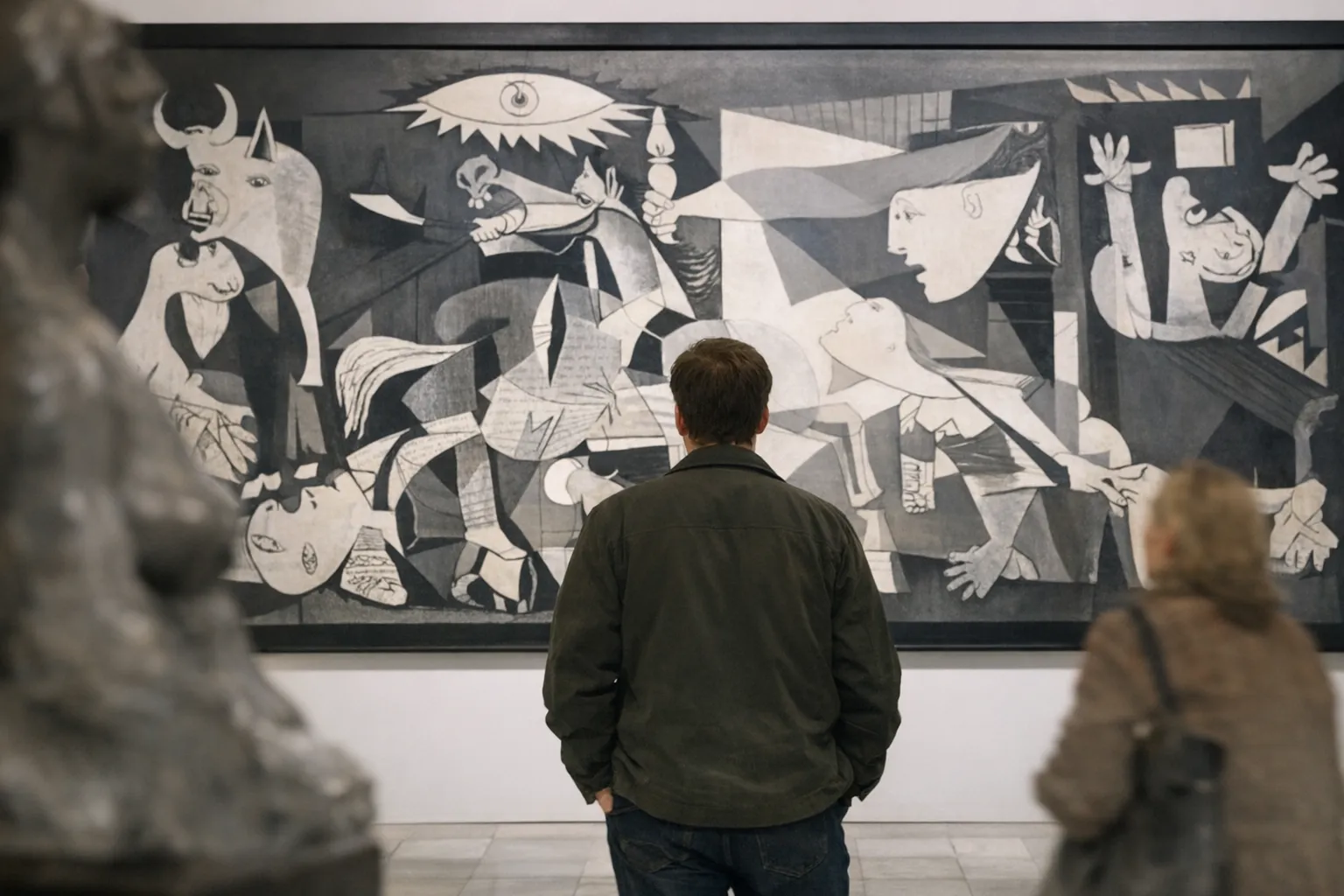
In this article, we will delve into the profound significance of Guernica, examining how its distorted figures and chaotic composition reflect the trauma of conflict. We'll explore the symbolism embedded in its elements, from the gored horse to the screaming women, and discuss how this masterpiece remains a relevant commentary on the consequences of violence and the resilience of the human spirit.
The Historical Context of Guernica
The creation of Picasso's Guernica is deeply rooted in the tumultuous events of the Spanish Civil War (1936-1939). This conflict emerged from a struggle between the Republicans, who supported a democratic government, and the Nationalists, led by General Francisco Franco, who aimed to establish a fascist regime. The war became a significant battleground for ideologies, drawing international attention and involvement from various countries.
On April 26, 1937, the town of Guernica was bombed by Nazi Germany’s Condor Legion and Fascist Italy, marking a devastating moment in the war. This aerial attack resulted in the deaths of countless civilians and left the town in ruins. The event shocked the world, highlighting the brutal reality of modern warfare and its impact on innocent lives. As one observer poignantly noted, “The bombing was like a storm of wrath unleashed upon a peaceful village.”
Picasso, originally from Málaga, felt a personal connection to the events in Spain. Living in Paris at the time, he was profoundly affected by the news of the bombing and the suffering of his countrymen. In response, he poured his anguish into Guernica, which became a powerful anti-war statement. The painting, measuring 3.49 meters by 7.76 meters, uses a monochromatic palette of blacks, whites, and grays to convey the horror of war's devastation.
The imagery in Guernica—from the gored horse to the dismembered soldier—serves as a haunting reminder of the chaos and suffering caused by conflict. Picasso's fragmented composition reflects the disorientation experienced during the air raid, making the painting not just a historical artifact but a universal symbol against the horrors of war.
Artistic Elements of Guernica
Pablo Picasso's Guernica is a masterclass in using visual elements to convey the profound emotional impact of war. The painting's monochromatic palette of grey, black, and white plays a crucial role in establishing its somber tone. By stripping away color, Picasso emphasizes the stark reality of devastation, making viewers confront the horror without distraction. This choice evokes a sense of mourning, as if the canvas itself is draped in the shrouds of its victims.
The distorted figures within Guernica further amplify its emotional resonance. A gored horse, a bull, and screaming women populate the scene, each symbolizing different facets of chaos and suffering. For instance, the bull can be interpreted as a representation of brutality or resilience, possibly reflecting the spirit of the Spanish people during the Civil War. The dismembered soldier and the dead baby heighten the sense of loss and despair, illustrating the indiscriminate violence inflicted upon civilians.
Additionally, Picasso's fragmented composition creates a powerful sense of chaos and disorientation. Overlapping forms and abrupt angles mimic the confusion experienced during an air raid, allowing viewers to feel the panic and terror of that moment. As art historian John Berger noted, "A painting is not a window onto another world; it is a mirror reflecting our own." This analogy encapsulates how Guernica serves not only as a historical commentary but as a timeless warning against the horrors of conflict.
Symbolism in Guernica
Picasso's Guernica is rich with symbols that encapsulate the horrors of war and the suffering it inflicts on humanity. Each element serves as a poignant reminder of the chaos that ensues from conflict.
-
The Bull: This figure stands as a dual symbol; it represents both brutality and resilience. The bull’s aggressive posture can be seen as a metaphor for the violence of war, while its endurance reflects the spirit of the Spanish people amidst adversity. As art critic Robert Hughes noted, “The bull is to Spain what the lion is to England.”
-
The Gored Horse: This central figure symbolizes profound suffering. The horse, a creature often associated with nobility and strength, is depicted in agony, reflecting the civilian casualties of the bombing. Its distorted form evokes empathy and highlights the indiscriminate nature of violence.
-
The Screaming Women and Dead Baby: These figures amplify the emotional weight of the painting. The screaming women signify despair and the loss of innocence, while the dead baby emphasizes the tragic consequences of war on the most vulnerable. Together, they create a visceral image of mourning and helplessness.
Picasso’s use of a monochromatic palette of black, white, and gray further intensifies the overall somber tone, allowing these symbols to resonate powerfully. Each element in Guernica serves not just as a representation of a specific event but as a universal warning against the destructiveness of conflict, transcending its historical context.
Guernica's Reception and Impact
When Picasso's Guernica debuted at the 1937 Paris International Exposition, it was displayed in the Spanish Pavilion, immediately attracting attention. The painting, measuring 3.49 meters in height and 7.76 meters in length, demanded viewers' engagement not just through its size but through its haunting imagery.
Public and critical reactions were mixed at first. Some patrons were shocked by its raw emotional power, while others struggled to understand its abstract expression. The monochromatic palette of black, white, and gray, combined with distorted figures—such as the gored horse and the anguished women—evoked a visceral response that linked directly to the horrors of war. One observer noted, “Guernica is a mirror reflecting the chaos of humanity, fractured and disfigured.”
Over time, Guernica transcended its original context, evolving into a universal symbol of anti-war sentiment. It became an emblematic piece for various peace movements, echoing the suffering caused by armed conflict around the globe. The painting's fragmented composition and chaotic forms encapsulate the disorientation of wartime experiences, making it a timeless warning against violence and destruction.
Today, Guernica is not just a reflection of the Spanish Civil War but a powerful reminder of the ongoing struggles against war and oppression, serving as a poignant call for peace in an ever-turbulent world.
Myth vs. Reality: Common Misconceptions about Guernica
Despite its iconic status, Guernica is often misunderstood. One prevalent myth is that Picasso's intentions were narrowly focused on the Spanish Civil War. In reality, the painting serves as a broader condemnation of war itself. Picasso once said, "Art is a lie that makes us realize the truth," emphasizing that Guernica transcends its specific context to address universal themes of suffering and chaos.
The historical context of the bombing of Guernica on April 26, 1937, by Nazi Germany’s Condor Legion is crucial. While many interpret the work as purely a Spanish symbol, it resonates with global anti-war sentiments. Its monochromatic palette of blacks, whites, and grays amplifies this message, capturing the stark reality of destruction.
Additionally, the fragmented composition and distorted figures—like the gored horse and screaming women—are not merely for shock value; they represent the chaos and disorientation of war. The bull, often thought of as a symbol of brutality, may also embody the resilience of the Spanish people, complicating interpretations further.
In summary, Guernica is not just a historical painting; it is a timeless reflection on the human condition in the face of conflict, urging viewers to confront the horrors of war beyond national borders.
The Legacy of Guernica in Modern Art
Picasso's Guernica continues to resonate deeply within contemporary art, inspiring a diverse array of modern artists and movements. Its themes of suffering and loss in the face of conflict have influenced creators from various backgrounds.
Modern Artists Inspired by Guernica
- Banksy: The elusive street artist often incorporates anti-war sentiments reminiscent of Guernica, particularly in pieces that highlight civilian suffering in conflict zones.
- Ai Weiwei: His installations address themes of human rights abuses and the brutality of war, echoing the emotional weight of Picasso’s work.
- Kara Walker: Through her silhouettes and installations, Walker explores racial violence, drawing parallels to the chaos depicted in Guernica.
Resonance in Today's Conflicts
The universal message of Guernica remains strikingly relevant amidst ongoing global conflicts. Its portrayal of anguish speaks to the collective trauma experienced in war-torn regions today. For instance, the painting's distorted forms and chaotic composition mirror the disorientation faced by civilians in modern warfare.
Role in Contemporary Anti-War Movements
Guernica has become a symbol for anti-war activism. It is often referenced in protests and exhibitions aimed at raising awareness about the horrors of war. As one activist noted, "Viewing Guernica is like holding a mirror to humanity’s darkest impulses."
In this way, Picasso's masterpiece transcends its historical context, serving as a timeless warning against the devastation wrought by conflict. Its legacy endures, reminding us of the fragility of peace and the urgent need for empathy in our increasingly tumultuous world.
Guernica in Popular Culture
The impact of Picasso's Guernica extends far beyond the canvas, resonating through literature, film, and various media. Its powerful imagery has inspired numerous works that explore the themes of war, suffering, and resilience.
Notable References
- Films: Movies like The Spanish Earth (1937) and Guernica (2016) directly reference the painting, using its imagery to evoke the emotional weight of conflict.
- Books: Literary works such as The Guernica Generation by Caroline C. H. Moore delve into the historical context and symbolism, illustrating how the painting serves as a lens for understanding human suffering.
Political Protests
Guernica has also become a potent symbol in political protests and campaigns. Activists have utilized its imagery to denounce war and violence, often displaying banners or reproductions during demonstrations. For example, during protests against the Iraq War, images of Guernica were used to highlight the ongoing human cost of conflict.
Modern Art Exhibitions
In contemporary art exhibitions, Guernica continues to be a focal point. Its monochromatic palette and fragmented composition create a visceral response in viewers, prompting discussions about the nature of war. Many modern artists have cited Guernica as a source of inspiration, creating works that reflect on current conflicts through a similar lens.
“Like a mirror reflecting the chaos of our times, Guernica reminds us that history often repeats its darkest chapters.”
Through these various mediums, Guernica remains a timeless warning against the horrors of war, urging society to confront its past and present struggles.
The Emotional Resonance of Guernica
Picasso's Guernica elicits a profound emotional response from viewers and critics alike. Many describe their experiences with the painting as overwhelming; the chaos of the imagery, combined with its massive scale of 3.49 meters in height and 7.76 meters in length, envelops them in a visceral confrontation with the horrors of war.
-
Personal Reflections: Critics frequently highlight how the distorted figures—like the gored horse and the screaming women—evoke raw empathy. Viewers often find themselves grappling with feelings of outrage and sorrow, as the painting's stark monochromatic palette of black, white, and gray enhances its somber tone.
-
Empathy and Outrage: The emotional depth of Guernica stems from its ability to transcend its historical context. While it specifically responds to the bombing of the Basque town of Guernica during the Spanish Civil War, its themes resonate universally, warning against the atrocities of conflict.
-
Art and Trauma: The fragmented composition and overlapping forms create a sense of chaos, mirroring the confusion of an air raid. This artistic approach allows viewers to process trauma, both personally and collectively. Many find that engaging with Guernica facilitates a deeper understanding of human suffering and resilience.
In summary, Guernica serves not only as a powerful anti-war statement but also as a testament to the enduring emotional impact of art in confronting humanity's struggles. Its ability to evoke empathy and outrage remains a timeless reminder of the consequences of conflict.
FAQs about Guernica
What inspired Picasso to create Guernica?
Pablo Picasso was profoundly affected by the bombing of the Basque town of Guernica on April 26, 1937, during the Spanish Civil War. This tragic event, orchestrated by Nazi Germany's Condor Legion and Fascist Italy, resulted in significant civilian casualties. Picasso's desire to express the horror and suffering caused by this act of war inspired him to create one of his most iconic works. The painting serves as a powerful anti-war statement, reflecting the chaos and devastation of that time.
How has Guernica been preserved over the years?
Since its completion, Guernica has undergone careful preservation efforts. Initially displayed at the Spanish Pavilion during the 1937 Paris International Exposition, it toured extensively to raise awareness about the atrocities of war. In 1981, the painting was returned to Spain, where it was housed in the Museo Reina Sofía in Madrid. Continuous conservation work ensures that this monumental piece remains a poignant reminder of the consequences of conflict.
What is the current location of the painting?
Today, Guernica is housed in the Museo Reina Sofía in Madrid, Spain. This museum is dedicated to modern and contemporary Spanish art, and Guernica is one of its most significant attractions. The painting, measuring 3.49 meters in height and 7.76 meters in length, is displayed prominently, allowing visitors to engage directly with Picasso's haunting depiction of war's impact.
For more insights, you can learn more about Pablo Picasso or explore the Spanish Civil War.
Conclusion: Guernica as a Timeless Warning
Pablo Picasso's Guernica serves as a profound reflection on the horrors of war, encapsulating the chaos, suffering, and devastation experienced during the bombing of the Basque town in 1937. The painting's monochromatic palette of black, white, and gray amplifies its somber message, making it not just a historical artifact but a universal symbol against the brutality of conflict.
The importance of remembering history through art cannot be overstated. Guernica stands as a reminder of the civilian toll of warfare, highlighting the need for empathy and understanding in our modern world. By engaging with this artwork, viewers can confront the painful realities of the past, ensuring that the lessons learned are not forgotten.
As we reflect on the themes of Guernica, it’s crucial to consider how they resonate today. In an era marked by ongoing conflicts and humanitarian crises, Picasso's work urges us to advocate for peace and justice. We must challenge ourselves to recognize the parallels between past and present, prompting discussions that can foster a more compassionate society.
In engaging with Guernica, let us honor its message against war and commit to remembering the lessons it imparts. Only then can we hope to create a future free from the tragedies that Picasso so vividly captured.