
Marie Curie’s groundbreaking work with radium not only reshaped scientific research but also redefined the role of women in science. Her achievements are a testament to perseverance in an era that often sidelined female scientists.
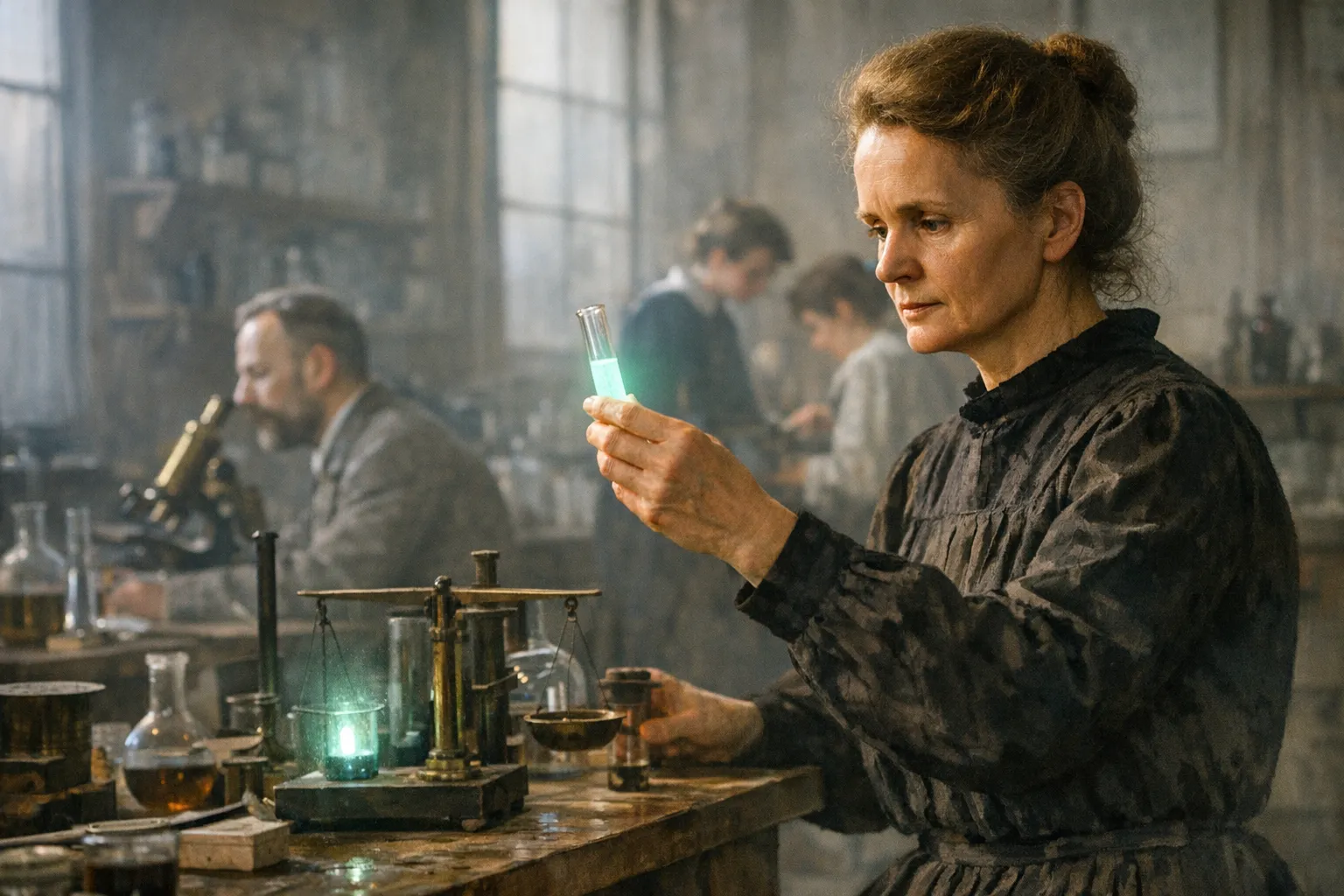
In this article, we will delve into Curie's remarkable contributions, including her discoveries of polonium and radium, her dual Nobel Prizes, and her innovative applications of radioactivity during World War I. We’ll also explore how her legacy continues to empower women in the scientific community, highlighting the challenges she faced and the barriers she broke. By examining Curie's life and work, we can appreciate the profound impact she had on both science and gender equality in academia.
Introduction: The Legacy of Marie Curie
Marie Curie's life and achievements are a testament to the transformative power of perseverance and innovation in science. Born in Warsaw in 1867, she defied societal norms to become a pioneering physicist and chemist. Alongside her husband, Pierre Curie, and chemist Gustave Bémont, she discovered the radioactive elements polonium and radium in 1898. This groundbreaking work not only earned her the distinction of being the first woman to win a Nobel Prize in 1903 but also positioned her as the only individual to receive Nobel Prizes in two different scientific fields—Physics and Chemistry.
Curie's discoveries had profound implications for scientific research. Her work on radioactivity laid the groundwork for radiation therapy, fundamentally changing cancer treatment. The understanding that radium could target and destroy diseased cells more effectively than healthy ones remains a cornerstone of modern medicine. As she once noted, "Life is not easy for any of us, but what of that? We must have perseverance and above all confidence in ourselves."
Her influence extended beyond her scientific contributions. Curie faced immense challenges as a woman in a male-dominated field, often encountering skepticism from colleagues and restricted access to research facilities. Yet, she broke barriers by becoming the first female professor at the University of Paris, inspiring future generations of women in science. Her daughter, Irène Joliot-Curie, followed in her footsteps, winning a Nobel Prize in Chemistry and further shattering gender stereotypes.
In summary, Marie Curie's legacy is not only defined by her scientific achievements but also by her role as a trailblazer for women in science, reshaping how society views women's contributions to the field. For more on her remarkable journey, visit Marie Curie's Nobel Prizes.
The Discovery of Radium and Polonium
In 1898, Marie Curie, alongside her husband Pierre Curie and chemist Gustave Bémont, made groundbreaking contributions to science with the discovery of the radioactive elements polonium and radium. This collaboration was not just a professional partnership but also a profound personal journey, as they navigated the complexities of scientific research together.
To isolate these elements, the Curies employed meticulous methods, including the processing of tons of uranium ore. They used a combination of chemical techniques to extract radium from pitchblende, a mineral rich in uranium. This process involved repeated chemical separations and careful measurements, illustrating Curie's dedication and precision in a field dominated by male scientists.
The scientific implications of discovering radioactive elements were monumental:
-
Understanding Radioactivity: Curie's work expanded the scientific community's understanding of radioactivity, a term she coined. This not only provided new insights into atomic structure but also paved the way for future research in nuclear physics.
-
Medical Advancements: The discovery of radium laid the foundation for radiation therapy, a treatment method that would later revolutionize cancer treatment. Curie demonstrated that radium could target and destroy diseased cells more effectively than healthy ones, which changed the landscape of medical science.
"Curie's discovery was like finding a key that unlocks a door to a previously uncharted realm of science."
Beyond the laboratory, Curie's achievements challenged societal norms, as she faced skepticism and barriers in a male-dominated field. Her determination not only furthered scientific knowledge but also empowered future generations of women in science, exemplified by her daughter, Irène Joliot-Curie, who also won a Nobel Prize. Through her work, Marie Curie not only transformed scientific research but also reshaped the roles of women in academia and beyond.
Breaking Gender Barriers in Science
Marie Curie's journey through the male-dominated landscape of scientific research highlights the relentless challenges women faced in the early 20th century. Despite her groundbreaking achievements, she encountered significant skepticism from her male colleagues. Her work on radioactivity—culminating in the discovery of polonium and radium in 1898—was often doubted, as many viewed her as an outsider in a field largely reserved for men.
Access to research facilities was another barrier that Curie had to navigate. At a time when women were largely excluded from academic institutions, she struggled to find adequate lab space and resources for her experiments. This lack of support didn't deter her; instead, it fueled her determination to prove her capabilities.
Curie's perseverance and resilience were key to her success. She overcame these obstacles not only by excelling in her research but also by becoming the first woman to win a Nobel Prize in 1903. Later, she became the only person to earn Nobel Prizes in two different scientific fields, underscoring her exceptional contributions to science.
Her legacy extends beyond her discoveries; she paved the way for future generations of women in science. Curie's daughter, Irène Joliot-Curie, also won a Nobel Prize, further breaking down the gender barriers that had constrained women for so long. Through her tenacity and groundbreaking work, Marie Curie transformed not only scientific research but also the role of women within it.
Nobel Prizes: A Historic Achievement
Marie Curie's groundbreaking achievements in science are highlighted by her receipt of two Nobel Prizes, a feat that redefined the role of women in scientific research. In 1903, she became the first woman to win a Nobel Prize in Physics, sharing the honor with her husband, Pierre Curie, and Gustave Bémont for their joint work on radioactivity. This marked a significant moment in history, showcasing that women could excel in fields traditionally dominated by men.
Curie's accomplishments didn't stop there; she is the only person to have won Nobel Prizes in two different scientific fields. In 1911, she was awarded the Nobel Prize in Chemistry for isolating pure radium. This dual recognition not only underscored her exceptional talent but also served as an inspiration for future generations of women pursuing careers in science.
The impact of Curie's achievements extends beyond her own accolades. Her pioneering work laid the foundation for cancer treatment through radiotherapy, profoundly influencing medical science. The methods she developed for utilizing radium in medicine continue to inform modern practices.
Curie's legacy is evident in the increasing number of women who have followed in her footsteps, including her daughter, Irène Joliot-Curie, who also won a Nobel Prize in Chemistry. This lineage of scientific excellence illustrates how Curie's groundbreaking work has empowered women to break barriers and achieve recognition in the scientific community.
For more on Curie's Nobel Prizes, visit Marie Curie's Nobel Prizes.
The Development of Radiation Therapy
Marie Curie's groundbreaking research on radium fundamentally transformed the landscape of cancer treatment. In 1898, she, alongside her husband Pierre Curie and chemist Gustave Bémont, discovered radium's unique properties, including its ability to emit radiation that could target and destroy diseased cells more effectively than healthy ones. This pivotal finding laid the groundwork for the development of radiation therapy as a viable treatment option for various types of cancer.
The evolution of radiation therapy has been significant since Curie's discoveries. Initially, the application of radium in medicine was experimental, but it quickly gained traction as a cornerstone treatment. Physicians began to harness its power to shrink tumors and alleviate pain in patients suffering from cancer. Over the years, advancements in technology and a deeper understanding of radiobiology have refined these techniques, leading to more precise and effective treatments.
Long-term implications of Curie's work extend beyond immediate medical applications. Her pioneering efforts not only opened doors for radiation therapy but also inspired further advancements in cancer research. Today, her legacy continues to influence the scientific community, encouraging ongoing exploration into the potential of radiotherapy and the development of new methodologies.
Curie's contributions exemplify how one woman's determination and intellect reshaped an entire field, ultimately empowering future generations of scientists and medical professionals. For more on her remarkable achievements, you can explore Marie Curie's Nobel Prizes and The Impact of Radium on Cancer Treatment.
Curie's Contributions During World War I
During World War I, Marie Curie made significant strides in medical technology that would revolutionize battlefield care. Her most notable innovation was the development of mobile X-ray units, affectionately dubbed "Little Curies." These units were pivotal in assisting battlefield surgeons by providing critical imaging capabilities.
-
Mobile X-ray Units: Curie recognized the urgent need for advanced medical tools during the war. She designed portable X-ray machines that could be transported to front-line hospitals. This innovation allowed doctors to locate bullets and shrapnel in wounded soldiers, significantly improving surgical outcomes.
-
Assistance to Battlefield Surgeons: The "Little Curies" became invaluable to medical teams, enabling quicker diagnoses and targeted surgeries. Curie's initiative not only saved countless lives but also highlighted the importance of scientific advancements in emergency medicine.
-
Legacy of Medical Technology: The impact of Curie's work extended beyond the war. Her contributions laid the groundwork for modern radiology and cancer treatment. The principles she established have influenced the development of radiation therapy, becoming a cornerstone in treating various cancers.
Curie's efforts during this tumultuous period not only showcased her scientific brilliance but also reinforced the role of women in science, proving that innovation knows no gender. Her legacy continues to inspire future generations of scientists and medical professionals.
The Influence of Marie Curie on Future Generations
Marie Curie's groundbreaking achievements did not just revolutionize the scientific community; they also inspired a lineage of women in science. Her legacy is particularly evident in the accomplishments of her daughter, Irène Joliot-Curie, who won the Nobel Prize in Chemistry in 1935 for her work on artificial radioactivity. This achievement underscored the possibility for women to excel in fields traditionally dominated by men, helping to pave the way for future generations.
Curie's influence extends beyond familial ties. Her pioneering role as the first woman to win a Nobel Prize and the only individual to earn Nobel Prizes in two distinct scientific domains shattered glass ceilings. This not only elevated her status but also motivated countless women to pursue careers in science, defying societal expectations. Today, women represent a steadily growing percentage of the scientific workforce, inspired by trailblazers like Curie.
Furthermore, Curie's research laid the foundation for modern cancer treatments, specifically through radiation therapy. Her discoveries about radium's ability to target diseased cells have fundamentally transformed cancer treatment protocols. This ongoing impact serves as a testament to the relevance of her work in contemporary research, inspiring new generations of scientists to explore and expand upon her findings.
In summary, Marie Curie's legacy is a powerful reminder of the potential for women in science, encouraging not only personal ambition but also a commitment to advancing scientific knowledge. Her contributions continue to resonate, fostering an environment where future women scientists can thrive.
Myths vs. Reality: The Life of Marie Curie
Marie Curie is often shrouded in myths that overshadow her incredible achievements. One common misconception is that her relentless work with radioactive materials directly led to her declining health. While Curie's exposure to radiation was significant, the long-term effects of such exposure were not well understood at the time. It’s crucial to recognize that she took precautions, but the science of safety in radiation was still in its infancy.
Curie's life was a series of struggles and triumphs. As the first woman to win a Nobel Prize in 1903, she faced skepticism from male colleagues and limited access to research facilities. Yet, her determination allowed her to break through barriers. She went on to win a second Nobel Prize in Chemistry in 1911, making her the only person to have received Nobel Prizes in two different scientific fields. This accomplishment was not just personal; it was a clarion call for women in science everywhere.
Her true legacy in science extends far beyond her awards. Curie's groundbreaking work laid the foundation for cancer radiotherapy, with her discovery that radium could destroy diseased cells faster than healthy ones. This was not merely an academic achievement; it has had lasting implications for cancer treatment, influencing countless lives. Furthermore, she also developed mobile X-ray units during World War I, showcasing her commitment to applying science for humanitarian purposes.
In summary, while myths surround her life, the reality is that Marie Curie's legacy is one of resilience, groundbreaking discoveries, and a profound impact on both science and the empowerment of women in the field.
Conclusion: The Enduring Impact of Marie Curie
Marie Curie's legacy is a multifaceted tapestry of groundbreaking achievements and formidable challenges. As the first woman to win a Nobel Prize and the only individual to secure Nobel Prizes in two different scientific fields, her contributions have transformed the landscape of scientific research. Curie's discovery of radium not only spurred advancements in cancer treatment but also paved the way for future generations in nuclear physics.
However, her journey was fraught with obstacles. Curie faced skepticism from male colleagues and limited access to research facilities, yet she persevered, breaking significant gender barriers. Her determination has inspired countless women in science, including her daughter, Irène Joliot-Curie, who also won a Nobel Prize, furthering the fight for gender equality in academia.
Today, the relevance of Curie's work remains profound. The methods developed from her research on radium continue to form the backbone of radiation therapy, a cornerstone in treating various cancers. As we reflect on her achievements, it is crucial to acknowledge the ongoing need for support and empowerment of women in science.
By advocating for greater inclusivity and equal opportunities, we can honor Curie's legacy and ensure that future generations of women can contribute to scientific advancements. Let us champion their voices and innovations, just as Curie did, for the benefit of all humanity.
FAQs about Marie Curie and Her Discoveries
What were the key discoveries of Marie Curie?
Marie Curie's most significant contributions include the discovery of the radioactive elements polonium and radium in 1898, alongside her husband Pierre Curie and chemist Gustave Bémont. These discoveries not only advanced the understanding of radioactivity but also paved the way for later scientific research in fields like nuclear physics and radiotherapy.
How did Curie's work influence modern science?
Curie's research on radium fundamentally transformed the field of cancer treatment. Her findings led to the development of radiation therapy, a critical approach for treating various types of cancer. This breakthrough has saved countless lives and established a foundation for ongoing research in medical physics. Furthermore, by being the first woman to win Nobel Prizes in two different scientific fields, she set a precedent for future female scientists, demonstrating that women could excel in rigorous scientific disciplines.
What challenges did she face as a woman in science?
Curie's journey was fraught with challenges typical of women in science during her era. She encountered skepticism from male colleagues, who often doubted her capabilities due to her gender. Additionally, she faced significant barriers in accessing research facilities and funding, which were predominantly available to men. Despite these obstacles, she not only succeeded but also became the first woman to serve as a professor at the University of Paris, breaking crucial gender barriers in academia.