
In 1936, Jesse Owens stunned the world by winning four gold medals at the Berlin Olympics, a feat that not only showcased his extraordinary athleticism but also delivered a profound blow to Nazi racial ideology. His victories challenged the very foundations of Adolf Hitler's claims of Aryan superiority, making a significant statement during a time when racial tensions were at an all-time high.
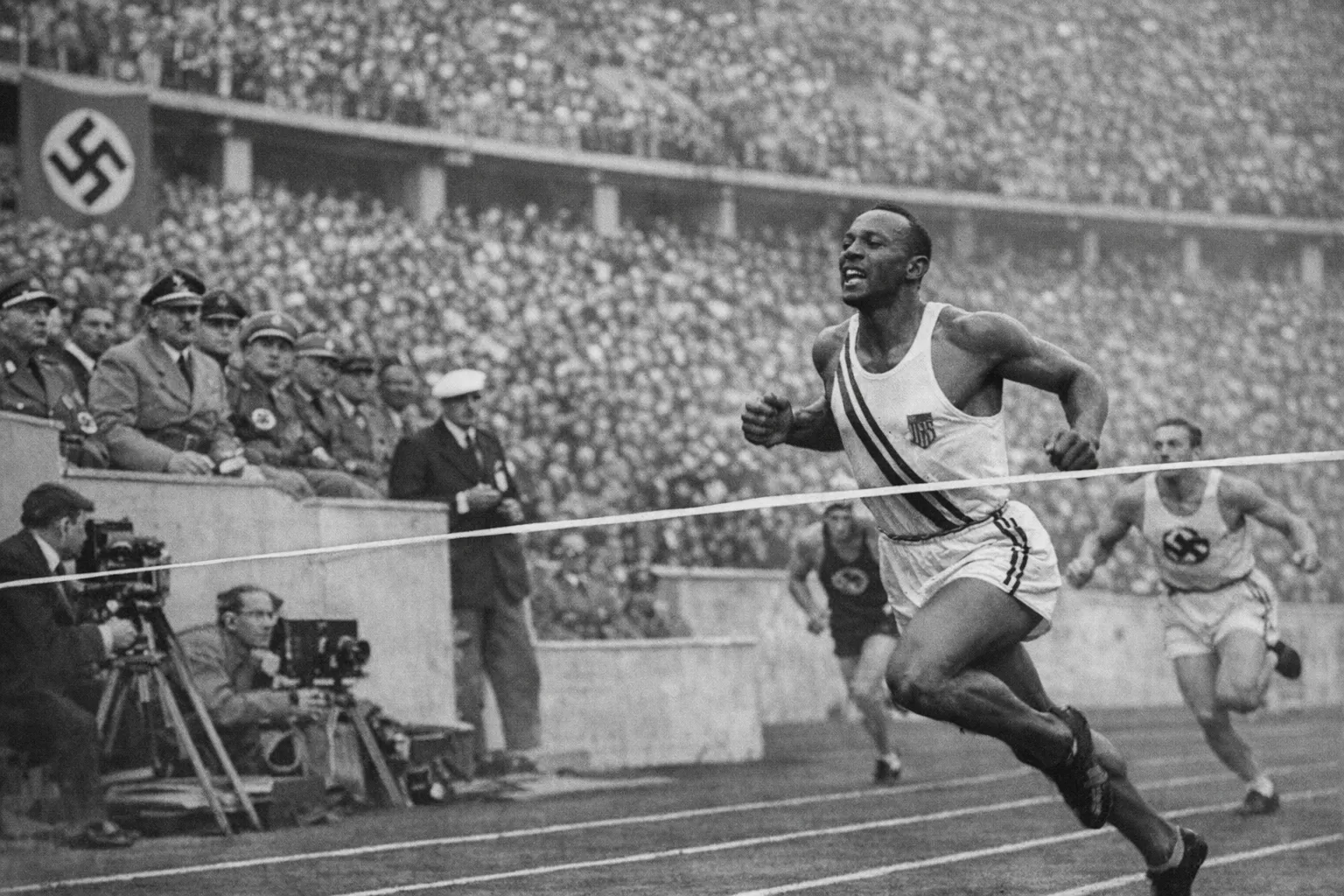
This article will explore how Owens’ triumphs at the 1936 Olympics reshaped perceptions of race in sports and resonated far beyond the stadium. We will analyze the implications of his achievements on Nazi propaganda, the racial dynamics in the United States, and how Owens inspired future generations of Black athletes. Through this lens, we will uncover the complex interplay between sports, race, and ideology during one of history's most pivotal moments.
Introduction: The 1936 Berlin Olympics
The 1936 Berlin Olympics stood as a pivotal moment in the interplay of sports and politics, serving as a grand stage for Nazi propaganda. Adolf Hitler aimed to showcase Aryan superiority to the world, believing that the Games would validate his regime's racial ideologies. However, this carefully orchestrated narrative was challenged by the extraordinary achievements of African American athlete Jesse Owens.
Owens emerged as a key figure during these Olympics, winning four gold medals in the 100m, 200m, long jump, and 4x100m relay events. His victories not only embarrassed Hitler—who famously refused to congratulate him—but also contradicted the very claims of racial superiority that the Nazis were intent on promoting. As Owens dashed past his competitors, he dismantled the myth of Aryan dominance, becoming an icon of resistance against racial prejudice.
The global context of sports in the 1930s further amplified the significance of this event. Countries were grappling with economic turmoil and rising nationalism, and the Olympics were seen as a platform for national pride. With this backdrop, the Berlin Games introduced lasting traditions, such as the torch relay, and exemplified the blending of sports with extreme nationalism—a trend that continues today.
"The Olympics were meant to be a showcase of Aryan superiority, but Owens turned it into a stage for equality."
Owens' triumphs inspired not only his contemporaries but also future generations of Black athletes, illuminating the potential of sports to challenge societal norms. Unfortunately, upon returning to the United States, Owens faced the harsh realities of racial discrimination, revealing the stark contrast between his Olympic glory and the everyday injustices he endured.
Jesse Owens: A Brief Biography
Jesse Owens was born on September 12, 1913, in Oakville, Alabama, into a world marked by segregation and racial discrimination. Growing up in a poor family, Owens faced numerous challenges, including the pervasive racism of the Jim Crow South. His family moved to Cleveland, Ohio, where he began to excel in track and field, showing potential that would eventually earn him a spot on the Olympic stage.
Owens attended East Technical High School, where he quickly made a name for himself as an athlete. His remarkable speed during high school competitions caught the attention of college scouts, leading him to enroll at Ohio State University. There, he trained under the guidance of coach Larry Snyder and achieved significant success, including setting three world records in a single day in 1935. These accomplishments positioned him as a top contender for the 1936 Olympics.
Leading up to the Berlin Olympics, Owens' performances were nothing short of extraordinary. He won four gold medals in the 1936 Olympics—100m, 200m, long jump, and 4x100m relay—defeating competitors from around the world and challenging the Nazi narrative of Aryan superiority. His triumphs not only embarrassed Adolf Hitler, who famously refused to congratulate him but also showcased the power of sports to transcend racial barriers and inspire future generations of athletes. Despite his Olympic glory, Owens returned to a United States still rife with racial discrimination, illustrating the stark contrast between his international acclaim and domestic reality.
The Four Gold Medals: A Historic Achievement
Jesse Owens' performance at the 1936 Berlin Olympics is widely regarded as one of the most significant achievements in sports history. Competing in four events—100m, 200m, long jump, and the 4x100m relay—Owens not only showcased his athletic prowess but also challenged the prevailing racial ideologies of his time.
Overview of Events
- 100m: Owens sprinted to victory, clocking in at 10.3 seconds, setting a new Olympic record.
- 200m: He followed up with another gold, finishing in 20.7 seconds, once again breaking the Olympic record.
- Long Jump: Owens' jump of 8.06 meters not only earned him the gold but also stood as a world record for years.
- 4x100m Relay: Teaming up with his American counterparts, Owens helped secure a gold medal, further cementing his legacy.
Analysis of Performances
Owens' performances were not just victories; they were statements. Each event was a direct contradiction to the Nazi regime's claims of Aryan superiority. His ability to dominate in a setting designed to showcase Aryan athletes was particularly striking. The 1936 Olympics were the first to be televised, allowing millions to witness Owens' triumphs, amplifying their impact on a global scale.
Immediate Impact
The immediate aftermath of Owens' victories was profound. Adolf Hitler, who had intended to use the Olympics as a propaganda tool, was visibly embarrassed and left the stadium during Owens' events. His triumphs not only embarrassed the Nazi regime but also redefined narratives surrounding race in sports. Owens' success inspired future generations of African American athletes, illustrating the potential of sports to challenge societal prejudices.
Despite this monumental achievement, Owens returned to a country where he faced racial discrimination, highlighting the stark contrast between his Olympic glory and the realities of Jim Crow America. This dichotomy serves as a reminder of the complexities of race relations in sports, making Owens' legacy even more significant.
Nazi Ideology and the Propaganda of the Olympics
The 1936 Berlin Olympics served as a grand stage for the Nazi regime, intended to showcase Aryan superiority to the world. Adolf Hitler and his administration carefully orchestrated this event to promote their racial ideology, emphasizing the physical prowess of Aryan athletes as a testament to their supposed racial dominance. This was highlighted by the use of propaganda techniques, including grand ceremonies and the introduction of traditions like the torch relay, to blend sports with extreme nationalism.
Jesse Owens’ remarkable performance at these Olympics fundamentally challenged this narrative. Winning four gold medals in events such as the 100m, 200m, long jump, and 4x100m relay, Owens not only showcased extraordinary athletic talent but also directly contradicted the Nazi claims of Aryan superiority. His victories were not just personal triumphs; they were symbolic defeats for the Aryan ideal that the Nazis sought to propagate.
The reactions from Nazi leadership were telling. Hitler, who had hoped to use the games to bolster his regime's image, was reportedly humiliated by Owens' success. In a notable act of defiance, he refused to congratulate Owens and left the stadium during the events in which the African American athlete was competing. This embarrassment highlighted the fissures in the Nazis' carefully constructed racial narrative.
Despite his success on the world stage, Owens returned to a United States rife with racial discrimination, facing the harsh reality of being treated as a 'second-class' citizen. His accomplishments inspired future generations of Black athletes, emphasizing the potential of sports not only to challenge racial prejudices but also to unite people across divides. Owens' legacy remains a powerful reminder of the impact sports can have on societal perceptions, making the 1936 Olympics a pivotal moment in history.
The Global Impact of Owens' Triumphs
Jesse Owens' remarkable performances at the 1936 Berlin Olympics reverberated around the globe, challenging the Nazi regime's narrative of Aryan superiority. His four gold medals in the 100m, 200m, long jump, and 4x100m relay not only showcased his extraordinary talent but also served as a powerful contradiction to the propaganda machine of Nazi Germany.
Media Coverage of Owens' Achievements
The 1936 Olympics were the first to be televised, allowing millions worldwide to witness Owens' victories in real-time. This unprecedented media coverage amplified his achievements, creating an international spotlight on an athlete who defied racial stereotypes. Newspapers and broadcasters celebrated him as a hero, and his success became a symbol of resistance against racial discrimination.
A Symbol of Hope
Owens emerged as a beacon of hope for oppressed communities, particularly in the United States. His triumphs inspired future generations of Black athletes, proving that excellence in sports transcended racial barriers. He became a figure of resilience, representing not just athletic prowess but also the fight against systemic racism.
Despite his Olympic success, Owens returned to a country where he faced continued racial discrimination. This juxtaposition highlighted the ongoing struggle for equality, making his victories even more poignant in the context of American civil rights.
Owens' legacy endures as a reminder of the potential for sports to challenge societal norms and change perceptions about race, leaving an indelible mark on history.
Post-Olympics: Racial Discrimination in America
Upon returning to the United States after his historic triumphs at the 1936 Berlin Olympics, Jesse Owens faced a stark reality that contrasted sharply with the global acclaim he received. Despite winning four gold medals—challenging the Nazi narrative of Aryan superiority—Owens was met with the harsh realities of segregation and discrimination.
-
Segregation and Discrimination: Owens returned to a society still deeply entrenched in Jim Crow laws. He was often denied basic rights and services, such as dining in certain restaurants or staying in hotels that catered to white patrons. The very country he represented on the world stage treated him as a second-class citizen.
-
Contrast with Olympic Fame: While Owens basked in the spotlight of international fame, his homecoming was marred by systemic racism. The accolades he received abroad stood in stark contrast to the everyday indignities he faced back home. For instance, he was unable to find sponsors or endorsements that matched his Olympic success, highlighting the economic barriers imposed by racial discrimination.
-
Ongoing Struggle for Civil Rights: Owens’ experiences were emblematic of the broader struggle for civil rights in America. His victories inspired future generations of Black athletes but also underscored the reality that sports success did not equate to social equality. The civil rights movement was gaining momentum, and Owens’ story would eventually serve as a powerful narrative in the fight against racial injustice.
Owens' journey reveals the complex interplay between sports, race, and social change, reminding us that even monumental achievements can coexist with ongoing struggles for equality. The legacy of his triumphs at the 1936 Olympics is not just in the records he set but in the conversations they sparked about race and justice in America.
Legacy of Jesse Owens: Inspiring Future Generations
Jesse Owens' performance at the 1936 Berlin Olympics not only secured his place in history but also became a beacon of hope and inspiration for future generations of Black athletes. His four gold medals—won in the 100m, 200m, long jump, and 4x100m relay—defied the Nazi propaganda that promoted Aryan superiority, proving that athletic prowess transcends race.
Owens served as a role model for athletes like Tommie Smith and John Carlos, who famously raised their fists in protest during the 1968 Olympics. They cited Owens’ achievements as a catalyst for their own activism. His legacy encouraged them to challenge social injustices, demonstrating how sports can be a platform for racial equality.
The long-term impact of Owens’ victories on sports and race relations is profound. He opened doors for Black athletes in various sports, fostering an environment where talent was increasingly recognized over racial prejudices. His triumphs challenged societal norms and encouraged a reexamination of race in athletics.
Today, Owens' legacy continues to resonate in discussions about race in sports. His story is often referenced in debates surrounding racial inequality, and his life serves as a reminder of the ongoing struggles faced by athletes of color. Owens embodies the potential of sports to challenge and change societal perceptions, making him a vital figure in both sports history and the fight for racial justice.
The 1936 Olympics: A Turning Point in Sports History
The 1936 Berlin Olympics marked a significant intersection of sports and extreme nationalism. Designed as a showcase for Nazi ideology, the Games introduced several enduring traditions, including the torch relay, which symbolized a supposed connection to ancient Greece and the Aryan race. This blend of athleticism and propaganda set a precedent for future Olympic ceremonies, where national pride often overshadows the spirit of competition.
Jesse Owens, an African American athlete, emerged as a powerful symbol of resistance against the Nazi narrative. His remarkable achievement of winning four gold medals—100m, 200m, long jump, and the 4x100m relay—directly contradicted Adolf Hitler's claims of Aryan superiority. Owens' victories not only embarrassed the Nazi regime but also showcased the potential of sports to challenge racial prejudices.
The 1936 Olympics were also the first to be televised, bringing Owens' triumphs to a global audience. This exposure played a crucial role in inspiring future generations of Black athletes, demonstrating that excellence in sports could defy societal norms and racial discrimination. However, upon returning to the United States, Owens faced persistent racial discrimination, highlighting the stark contrast between his Olympic success and the realities of Jim Crow America.
In essence, the 1936 Olympics did not just serve as a sporting event; it became a pivotal moment in the history of race relations in sports, setting the stage for how nationalism and athletic excellence would intertwine in the decades to follow.
Myths vs. Reality: The True Impact of Owens' Wins
The narrative surrounding Jesse Owens' triumphs at the 1936 Berlin Olympics is often shrouded in myth and misinterpretation. A common myth suggests that Owens received a warm reception in Germany, celebrated by the German public. In reality, while he did garner attention, the Nazi regime's official stance was one of disdain. Adolf Hitler infamously left the stadium rather than congratulate Owens, signaling his embarrassment over Owens' victories that undermined the Aryan superiority narrative the Nazis had sought to promote.
After the Olympics, the myth of universal acclaim quickly dissipates. Owens returned to the United States not as a national hero, but as a victim of racial discrimination. Despite his four gold medals—which included victories in the 100m, 200m, long jump, and the 4x100m relay—Owens faced the harsh realities of Jim Crow laws and was treated as a "second-class" citizen. This stark contrast highlights the limitations of sports as a vehicle for social change, as his accomplishments did not shield him from the pervasive racism of the time.
The lasting impact of Owens' victories extends beyond his immediate fame. His performance challenged existing racial attitudes and paved the way for future generations of Black athletes. Owens symbolized the potential for sports to challenge deeply entrenched prejudices, inspiring countless athletes to pursue their dreams despite societal barriers. His legacy is a testament to the ongoing struggle against racial discrimination in sports, illustrating that while victories can inspire, they are often just the first step in a much larger battle.
Conclusion: The Enduring Legacy of Jesse Owens
Jesse Owens' extraordinary performance at the 1936 Berlin Olympics marked a pivotal moment in sports history. Winning four gold medals—100m, 200m, long jump, and 4x100m relay—Owens not only showcased his athletic prowess but also directly challenged the Nazi regime's claims of Aryan superiority. His victories served as a powerful rebuttal to the propaganda that sought to promote racial hierarchy.
The relevance of Owens' story persists as discussions around race and sports continue to evolve. Today, his legacy inspires athletes worldwide, particularly in the face of ongoing racial discrimination. Despite the acclaim he received in Berlin, Owens returned to a United States that still marginalized him as a 'second-class' citizen. This stark reality underscores the importance of continuing dialogue about racial equality in athletics and society at large.
As we reflect on Owens' impact, it's crucial to keep the conversation alive. His triumphs remind us that sports can be a platform for social change, challenging not only prejudices within the athletic community but also broader societal norms. Let us honor his legacy by advocating for racial equality and supporting the next generation of athletes in their fight against discrimination. For further exploration, consider delving into resources like Jesse Owens' Biography and discussions on Racial Discrimination in Sports.