
In 1936, the world watched as Jesse Owens made history at the Berlin Olympics, not just as an athlete but as a symbol of defiance against a regime that championed Aryan supremacy. His four gold medals in events like the 100 meters and long jump underscored a powerful narrative that contradicted the very foundations of Nazi propaganda.
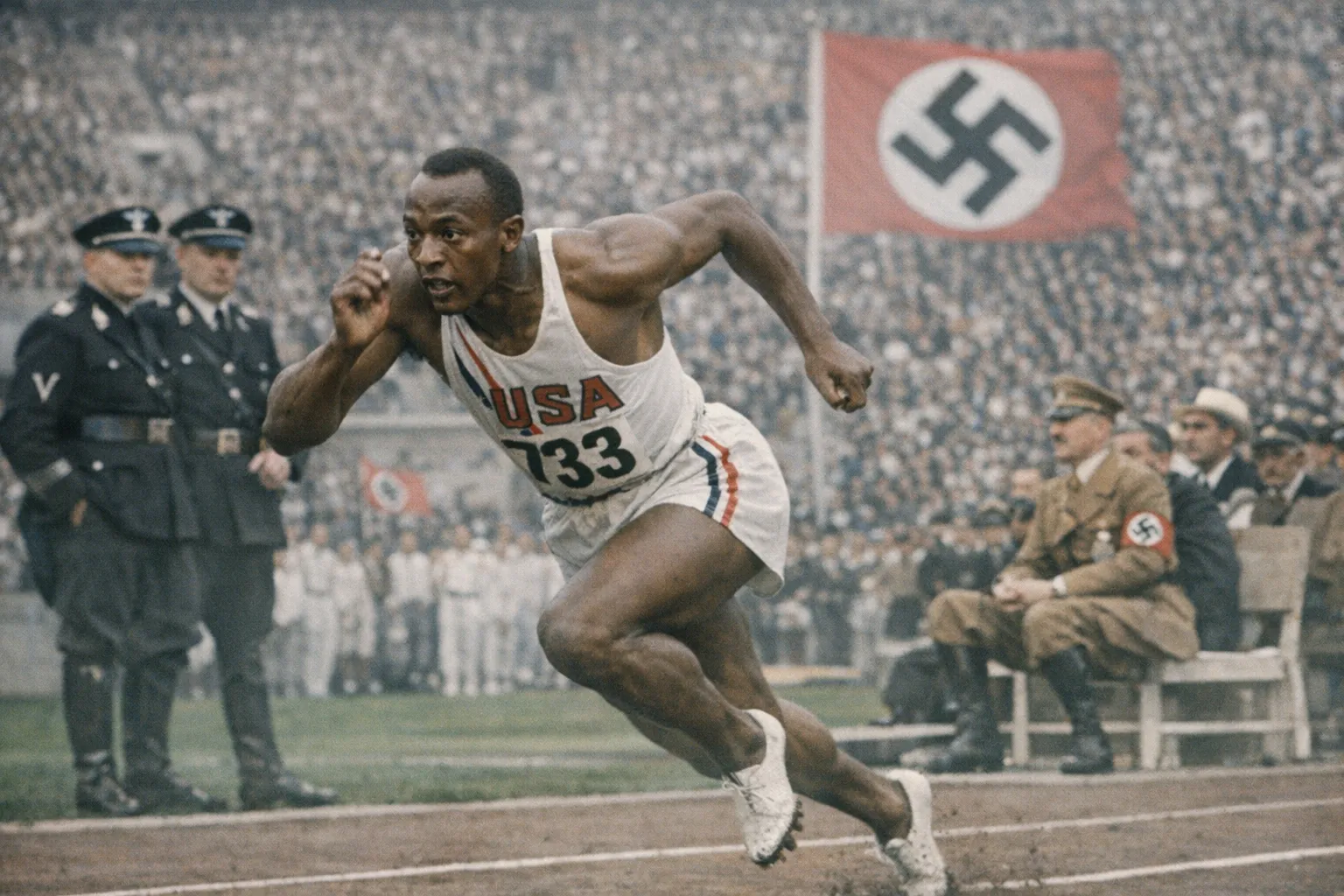
This article explores how Owens' remarkable achievements at the Games reshaped global perceptions of race and challenged the racist ideologies of the time. We will delve into his friendships on and off the track, the political implications of his victories, and how Owens became a beacon of hope and resilience in the face of discrimination, both in Germany and back home in the United States. Through his athletic prowess, Owens not only claimed victory for himself but also delivered a resounding message that would resonate for generations.
The Context of the 1936 Berlin Olympics
The 1936 Berlin Olympics were steeped in political significance, serving as a stage for Nazi Germany's grand propaganda efforts. Adolf Hitler aimed to use the Games to showcase Aryan superiority and promote his regime's racial ideologies. The Olympics were strategically timed to coincide with the regime's attempts to assert its dominance on both the national and international stage.
-
Goals of Nazi Germany: The Nazis sought to present an image of a strong, unified, and racially superior Aryan race. They believed that a successful Olympics would validate their beliefs and reinforce their ideology.
-
Showcasing Aryan Superiority: The event was designed to highlight the prowess of German athletes, particularly those who fit the Aryan ideal. This was not merely about sports; it was about affirming a worldview that placed Aryans at the pinnacle of human achievement.
-
Propaganda Tool: The Nazis used the Olympics as a vehicle to spread their messages. They invested heavily in elaborate ceremonies and media coverage, hoping to manipulate public perception. As one commentator noted, it was akin to “a grand stage set for a play where the script was written long before the actors took their places.”
Despite the regime's intentions, Jesse Owens' remarkable achievements turned this grand spectacle into a counter-narrative. Owens won four gold medals, including events like the 100 meters and long jump, directly challenging the myth of Aryan supremacy. His friendship with German athlete Luz Long further illustrated the potential for unity beyond racial divides, as Long offered Owens crucial advice during the long jump competition.
Even with Owens' undeniable success, Nazi officials attempted to downplay his accomplishments, with some media outlets dismissing Black athletes as mere "black auxiliaries." However, Owens' victories resonated worldwide, reshaping perceptions of race and delivering a significant blow to Nazi propaganda.
Jesse Owens: The Athlete and His Journey
Jesse Owens was born on September 12, 1913, in Oakville, Alabama, into a family facing the harsh realities of racial inequality. His early life was marked by poverty, but his natural athleticism shone through as he excelled in various sports during his school years. Moving to Cleveland, Ohio, as a teenager, Owens honed his skills and quickly became a standout track star at East Technical High School.
Leading up to the 1936 Olympics, Owens garnered national attention. He won three events at the 1935 Big Ten Championships, setting world records in the process. His performance at the 1935 National Collegiate Athletic Association (NCAA) championships further solidified his reputation, where he famously set records in long jump and sprint events. These achievements were not just personal victories; they represented a beacon of hope for African Americans in a segregated society.
Despite his growing fame, Owens faced significant racial challenges in the U.S. The era was rife with discrimination, and his success was often overshadowed by a society that struggled to accept Black excellence. When Owens arrived in Berlin, he not only competed against the world’s best athletes but also against the prevailing Nazi ideology that promoted Aryan superiority.
As Owens famously stated, "To me, the Olympics is a place where you can get away from everything." This sentiment encapsulated his journey, as he transcended the barriers of race and prejudice on the global stage. His four gold medals—won in the 100 meters, long jump, 200 meters, and 4x100-meter relay—were not just athletic feats; they were a powerful statement against the oppressive narratives of his time.
Owens' remarkable friendship with German athlete Luz Long during the long jump further illustrated his character. Long's advice helped Owens achieve a world-record jump, marking a profound moment of sportsmanship amidst the political tension of the games. Despite attempts by Nazi officials to downplay his achievements, Owens' victories stood as a direct rebuke to the regime's ideology, reshaping perceptions of race and athleticism globally.
Owens' journey from the fields of Alabama to the Olympic podium in Berlin remains a testament to the resilience of the human spirit in the face of adversity.
The Historic Performances: Four Gold Medals
Jesse Owens’ performance at the 1936 Berlin Olympics remains a pivotal moment in sports history, not just for his athleticism but for the powerful message it sent against Nazi ideology.
-
100 Meters: Breaking Records and Expectations
In the 100 meters, Owens shattered expectations with a time of 10.3 seconds, setting a new Olympic record. His victory was not just a personal triumph; it was a direct challenge to the Nazi narrative that aimed to showcase Aryan superiority. -
Long Jump: The Friendship with Luz Long
Owens’ long jump event was particularly memorable. After struggling to qualify, he received advice from German athlete Luz Long, who encouraged him to adjust his takeoff. This act of sportsmanship not only led Owens to a gold medal with a jump of 8.06 meters but also forged a lasting friendship that transcended the political tensions of the time. Long earned a silver medal, underscoring the universal bond that sports can create. -
200 Meters: Dominating the Field
In the 200 meters, Owens further solidified his dominance, winning with a time of 20.7 seconds. His performance was a masterclass in speed and technique, leaving no doubt about his superiority on the track. This victory further undermined the Nazis' claims of racial superiority. -
4×100-Meter Relay: A Team Effort for Victory
Owens capped off his Olympic success with a gold medal in the 4×100-meter relay. His seamless teamwork with fellow American athletes demonstrated that collaboration and unity were key to triumph, contrasting sharply with the divisive ideology promoted by the Nazi regime.
"Owens' triumphs were like a gust of wind that blew away the carefully constructed facade of Aryan supremacy."
Each of these victories not only showcased Owens’ extraordinary talent but also served as a profound rebuttal to the racist ideologies that permeated the Berlin Games. His achievements resonate as a powerful statement against oppression and prejudice, inspiring generations to come.
The Friendship with Luz Long: A Symbol of Unity
During the long jump event at the 1936 Berlin Olympics, Jesse Owens formed an unexpected bond with German athlete Luz Long. Their friendship emerged amidst a racially charged atmosphere, showcasing a remarkable moment of solidarity. Long's advice was pivotal for Owens, as he suggested adjusting his take-off point to help him qualify for the final. This collaboration not only led to Owens achieving a world-record jump but also earned Long a silver medal.
The significance of this friendship transcends the competition itself. In a time when Nazi ideology promoted Aryan supremacy, the camaraderie between a Black American athlete and a German competitor defied the prevailing racial tensions. Their mutual respect and support stood in stark contrast to the discriminatory environment fostered by the Nazi regime. Long’s willingness to assist Owens highlighted a shared humanity, challenging the very essence of Nazi propaganda.
After Owens clinched the gold medal, Long was genuinely thrilled for his friend. His reaction was a testament to their bond, as he celebrated Owens’ victory, understanding its broader implications. Despite the attempts by Nazi officials to downplay Owens' achievements—some even referred to Black athletes as "black auxiliaries"—Long’s support exemplified a rejection of such divisive rhetoric.
Ultimately, the friendship between Owens and Long at the 1936 Berlin Olympics serves as a powerful symbol of unity in the face of adversity. It underscored the ability of sport to bridge divides and challenge deeply ingrained prejudices, marking a significant moment in history that resonated far beyond the track.
Nazi Reactions: Attempting to Downplay Owens' Success
The triumph of Jesse Owens at the 1936 Berlin Olympics posed a significant threat to Nazi ideology, which sought to promote Aryan racial superiority. In reaction to his unprecedented success—four gold medals in events including the 100 meters and long jump—Nazi officials initiated a range of propaganda efforts aimed at diminishing his achievements.
-
Official Propaganda Efforts: Despite Owens' impressive performance, some Nazi newspapers dismissed him and other Black athletes as “black auxiliaries,” a term meant to belittle their accomplishments. This language was part of a broader strategy to undermine the narrative that a Black athlete could excel in a setting orchestrated to showcase Aryan dominance.
-
Portrayal of Black Athletes in Nazi Media: The Nazi regime attempted to portray Black athletes as inferior, using negative stereotypes to reinforce their racial theories. Instead of celebrating Owens’ victories, state-controlled media focused on portraying him in a manner that aligned with their racially charged agenda, often ignoring the magnitude of his accomplishments.
-
Contradictions Between Nazi Ideology and Owens' Success: Owens' victories starkly contradicted the Nazi regime's claims of racial superiority. His success was not just athletic; it symbolized a direct challenge to the very foundation of Nazi beliefs. During the long jump event, for instance, Owens formed a friendship with German athlete Luz Long, who provided him with advice—an act that further highlighted the absurdity of racial divisions espoused by the Nazis.
Ultimately, Owens' performance at the Berlin Olympics served as a resounding rebuke to Nazi propaganda, reshaping global perceptions of race and athleticism. His achievements were a powerful statement against the ideology that sought to define human worth by racial lines, making his legacy one of resilience and triumph over oppression.
Owens' Legacy: A Challenge to Racial Ideology
Jesse Owens' remarkable performance at the 1936 Berlin Olympics was not just about athletic achievement; it was a profound challenge to Nazi racial ideology. By winning four gold medals—in the 100 meters, long jump, 200 meters, and 4x100-meter relay—Owens directly contradicted the Nazis' claims of Aryan supremacy. His success in front of Adolf Hitler and the world served as a powerful rebuttal to the regime’s propaganda that sought to promote Aryan dominance.
Owens' victories had immediate global implications. They showcased that excellence in sports was not determined by race, but by talent and determination. His triumphs inspired countless individuals worldwide, reshaping perceptions of race and ability. Moreover, despite the racial discrimination he faced in the United States, Owens became a symbol of resistance against racism, demonstrating that barriers could be challenged and overcome through sheer skill and perseverance.
The friendship he formed with German athlete Luz Long during the long jump event further highlighted this theme. Long’s advice helped Owens achieve a world-record jump, illustrating camaraderie beyond racial divides, which stood in stark contrast to the divisive ideologies of the time.
In a broader context, Owens’ achievements at the Olympics have been celebrated as a significant blow to the Nazi myth of racial superiority. Even as Nazi officials attempted to downplay his accomplishments, labeling Black athletes as "black auxiliaries," Owens remained a beacon of hope and a testament to human potential. His legacy continues to inspire discussions about race, equality, and the enduring impact of sports as a platform for social change.
Myth vs. Reality: The Narrative of the 1936 Olympics
The 1936 Berlin Olympics are often shrouded in myth, particularly regarding Jesse Owens' pivotal role in challenging Nazi ideology. While many remember the Games as a grand showcase of Aryan superiority, the reality was far more complex.
Common Misconceptions
- Showcase of Aryan Supremacy: The Olympics were intended to highlight the might of the Aryan race, yet Owens' four gold medals directly contradicted this narrative.
- Isolation of Athletes: Some narratives suggest that Owens competed in a hostile environment with no support. In truth, he formed a friendship with German athlete Luz Long during the long jump event, who even offered him strategic advice.
The Reality of Owens' Experiences
Despite the oppressive atmosphere, Owens thrived. His victories in the 100 meters, long jump, 200 meters, and the 4x100-meter relay made him the most successful athlete of the Games. This success was not just an athletic feat; it was a significant blow to the Nazi regime's propaganda.
- Downplayed Achievements: Nazi officials attempted to minimize Owens' accomplishments, referring to Black athletes as "black auxiliaries" in their media. This dismissal only highlighted the regime's desperation to cling to their racial myths.
- Global Impact: Owens’ triumphs resonated beyond the stadium, reshaping perceptions of race both in Germany and globally, especially considering the racial discrimination he faced back home.
How History Remembers Owens
Owens has been immortalized as a symbol of resilience and defiance against racism. His achievements at the 1936 Olympics are celebrated not only for their athletic merit but also as a powerful statement against Nazi ideology. The narrative that Owens stood as a beacon of hope amid the oppressive environment of Berlin continues to inspire discussions about race, equality, and the power of sport.
For a deeper dive into Owens' legacy, check out Jesse Owens: A Legacy of Excellence and The 1936 Berlin Olympics: A Historical Overview.
The Cultural Impact of Owens' Achievements
Jesse Owens' triumphs at the 1936 Berlin Olympics left an indelible mark on both sports and society. His four gold medals—won in the 100 meters, long jump, 200 meters, and 4x100-meter relay—did more than just earn him accolades; they challenged the very foundation of Nazi ideology that sought to promote Aryan superiority.
Role Model for Future Athletes
Owens became a symbol of perseverance and excellence for future generations of athletes. His achievements showed that talent and hard work could transcend race. Young athletes, regardless of their background, found inspiration in his story, encouraging them to aspire to greatness in the face of adversity.
Impact on Civil Rights Movements
Owens' success resonated deeply within the civil rights movement in the United States. His victories contradicted the prevailing racial stereotypes and opened conversations about equality and representation. Owens proved that African Americans could excel on the world stage, providing momentum to movements seeking justice and equality.
Cultural Representations in Media
In the years following the Olympics, Owens became an icon, featured in various forms of media that celebrated his legacy. Documentaries, books, and films chronicled his life and achievements, reinforcing his status as a hero who defied oppression. His friendship with German athlete Luz Long during the long jump event, where Long offered Owens advice that led to his victory, further humanized the narrative, illustrating the potential for camaraderie across racial divides.
Owens' performance at the Berlin Olympics was not just a sporting achievement; it was a cultural watershed that reshaped perceptions of race and equality, leaving a legacy that continues to inspire and challenge societal norms today.
Lessons from Jesse Owens: Resilience and Triumph
Jesse Owens' remarkable performance at the 1936 Berlin Olympics stands as a testament to the power of perseverance in the face of adversity. Competing under the oppressive gaze of Nazi ideology, Owens not only excelled but did so while defying the very principles that sought to diminish him. His four gold medals in the 100 meters, long jump, 200 meters, and 4x100-meter relay serve as a reminder that hard work and determination can break through barriers.
Owens' influence extends far beyond his athletic achievements. He became an enduring symbol of triumph against racial injustice, inspiring countless individuals and future athletes to challenge societal norms. His friendship with German athlete Luz Long during the long jump event exemplifies this spirit. Long's support and advice not only helped Owens secure victory but also illustrated how sports can forge connections that transcend racial and cultural divides.
Moreover, Owens' success directly undermined Nazi propaganda that promoted Aryan racial superiority. His victories offered a powerful rebuttal to the regime's claims, reshaping global perceptions of race. Despite the attempts of Nazi officials to downplay his achievements, Owens' performance at the Berlin Olympics is celebrated as a significant blow to the myth of Aryan supremacy.
This narrative of resilience, friendship, and defiance continues to resonate today, reminding us that the realm of sports is not just about competition but also about challenging societal norms and fostering understanding.
Conclusion: The Enduring Significance of Owens' Legacy
Jesse Owens' remarkable performance at the 1936 Berlin Olympics was not just a series of athletic triumphs; it was a seismic shift in how race was perceived globally. By winning four gold medals—100 meters, long jump, 200 meters, and the 4x100-meter relay—Owens directly challenged the Nazi propaganda that promoted Aryan racial superiority. His victories served as a poignant reminder that talent and determination transcend racial boundaries.
The continued relevance of Owens' story resonates today, as issues of race and equality remain prominent in sports and society. His friendship with German athlete Luz Long during the long jump event exemplifies the power of sports to foster understanding and collaboration, even amidst political tension. This narrative encourages us to reflect on the progress made and the work still needed in the fight against racial discrimination.
In summary, Owens’ achievements at the Berlin Olympics stand as a powerful statement against the ideologies that seek to divide. The intersection of sports and politics is complex, but Owens' legacy demonstrates that athletic excellence can serve as a catalyst for social change. His story continues to inspire athletes and advocates alike, reminding us that the pursuit of greatness is not confined by race or ideology but is a universal human endeavor.