
Albert Einstein's Theory of Relativity reshaped the landscape of modern physics, challenging age-old notions of time and space. With its groundbreaking ideas, this theory has not only altered scientific thought but also transformed our perception of the universe itself.
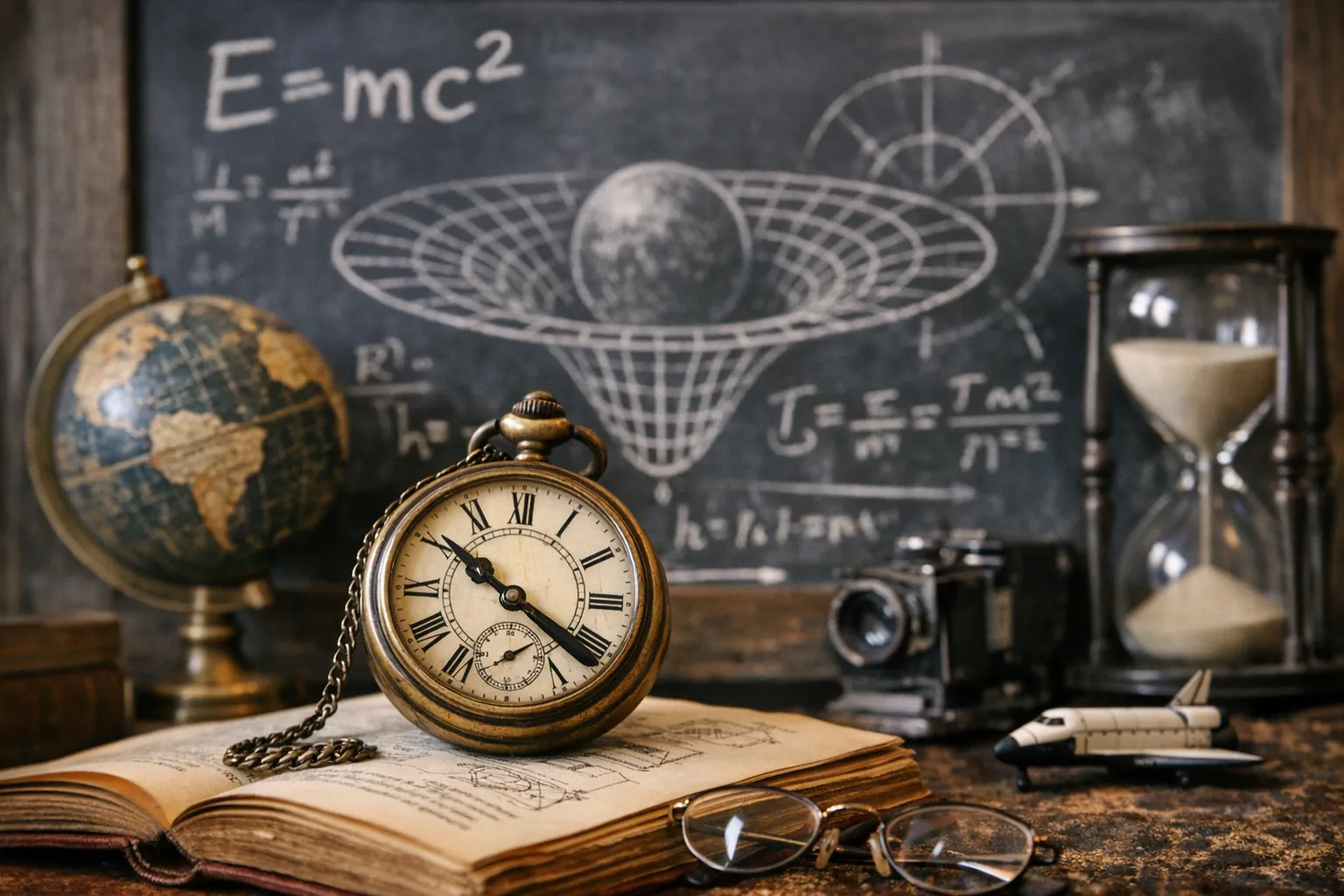
In this exploration, we'll delve into how Einstein's Special and General Relativity revolutionized our understanding of fundamental concepts, such as spacetime, gravity, and the very nature of time. By examining key principles like time dilation and mass-energy equivalence, you will gain insight into the profound implications of these theories on both science and daily life.
Introduction to Einstein's Theories
Albert Einstein, born in 1879, emerged as one of the most influential physicists in history. His academic journey began with a focus on mathematics and physics, leading to groundbreaking theories that would forever change our understanding of the universe.
Einstein's contributions can be divided into two major theories: Special Relativity and General Relativity. Introduced in 1905, Special Relativity established that the laws of physics apply uniformly to all observers in uniform motion relative to one another. It also introduced the revolutionary idea that the speed of light in a vacuum remains constant for all observers, irrespective of their motion or that of the light source. This principle laid the groundwork for concepts like time dilation—where moving clocks tick more slowly than stationary ones—and length contraction, which describes how objects appear shorter in the direction of motion relative to a stationary observer.
In 1915, Einstein expanded his ideas with General Relativity, which proposed a fundamental shift in understanding gravity. Rather than viewing gravity as a force, Einstein described it as the curvature of spacetime caused by mass and energy. This concept of spacetime unifies space and time into a four-dimensional continuum, fundamentally altering how we perceive gravity's influence on the fabric of the universe.
"Gravity is not a force; it's the way mass bends the very fabric of spacetime."
The implications of Einstein's theories are profound and far-reaching, forming the basis for many aspects of modern physics, including the development of nuclear energy through his famous equation, E=mc². These theories have been experimentally confirmed through various phenomena, such as the bending of light around massive objects and gravitational waves.
Einstein's work has not only enhanced our understanding of the cosmos but also paved the way for advancements that continue to shape scientific inquiry today.
The Special Theory of Relativity: Key Concepts
Einstein's Special Theory of Relativity, introduced in 1905, fundamentally transformed our understanding of physics. At its core, it established two pivotal principles:
-
Constancy of the Speed of Light: The theory asserts that the speed of light in a vacuum is constant for all observers, regardless of their relative motion. This means that whether you're stationary or moving towards a light source, the speed of light remains unchanged.
-
Principle of Relativity: This principle posits that the laws of physics are the same for all observers in uniform motion relative to one another. This radical idea challenged the Newtonian framework that had dominated physics for centuries.
The implications of special relativity extend far beyond theoretical physics. They include:
-
Spacetime: Einstein introduced the concept of spacetime, a unified four-dimensional continuum where space and time are interwoven. The geometry of spacetime is influenced by mass and energy, which leads to new ways of understanding gravitational effects (learn more about spacetime here).
-
Time Dilation: One of the most intriguing consequences of special relativity is time dilation. It suggests that time passes at different rates for observers in relative motion, meaning that a moving clock ticks more slowly compared to a stationary one (source: Institute of Physics).
-
Length Contraction: Similarly, length contraction states that objects in motion appear shorter along the direction of their motion when viewed by a stationary observer (source: Institute of Physics).
Additionally, the famous mass-energy equivalence formula (E=mc^2) illustrates that mass and energy are interchangeable, laying the groundwork for advancements in nuclear energy and particle physics (source: Institute of Physics).
Einstein's theory has been experimentally validated through various phenomena, including the bending of light around massive objects and gravitational time dilation, further solidifying its place in modern physics.
Understanding Spacetime: A Unified Continuum
Einstein's Theory of Relativity transformed our understanding of time and space by introducing the concept of spacetime—a unified four-dimensional continuum where space and time are interwoven. This fundamental idea reshapes how we perceive the universe.
Definition of Spacetime
Spacetime merges the three dimensions of space with the dimension of time into a single framework. This means that events are not just located in space but also occur at specific moments in time, creating a holistic view of the cosmos.
Influence of Mass and Energy
One of the most revolutionary aspects of general relativity is how it describes gravity. Instead of viewing it as a conventional force, Einstein proposed that gravity results from the curvature of spacetime caused by mass and energy. This insight leads to several significant implications:
- Curved Paths: Massive objects like stars and planets curve the spacetime around them, causing smaller objects to follow curved paths.
- Gravitational Time Dilation: Time passes more slowly in stronger gravitational fields, affecting everything from GPS satellites to atomic clocks on Earth.
Real-World Implications
The implications of spacetime extend to practical applications and experimental confirmations:
- Time Dilation: Observers in relative motion experience time differently; moving clocks tick more slowly compared to stationary ones.
- Length Contraction: Objects in motion contract along the direction of their movement when observed from a stationary frame.
These phenomena have been confirmed through experiments, such as the bending of light around massive objects and the detection of gravitational waves, showcasing the profound impact of Einstein’s theories on modern physics.
For further insights, you can learn more about Einstein's life or explore the implications of spacetime.
Time Dilation: The Nature of Time in Motion
Time dilation, a fascinating consequence of Einstein's Theory of Relativity, reveals that time is not a constant but varies depending on relative motion. According to the principles of Special Relativity, moving observers will experience time differently than stationary ones. Specifically, a clock moving at high speeds will tick more slowly than a clock at rest. This phenomenon challenges our intuitive understanding of time as a fixed entity.
Real-World Examples
Several real-world scenarios illustrate time dilation:
-
GPS Satellites: The satellites orbiting Earth experience time differently than clocks on the ground due to their high velocity and altitude. Corrective measures are necessary to ensure the accuracy of GPS systems, as the difference in time can affect positioning calculations.
-
High-Speed Particles: Experiments with particles accelerated close to the speed of light, such as those in particle colliders, show that their decay rates slow down compared to slower-moving particles, confirming time dilation in practice.
Experimental Evidence
The scientific community has validated the concept of time dilation through numerous experiments:
-
Hafele-Keating Experiment: In 1971, atomic clocks flown on commercial airliners showed a measurable difference in elapsed time compared to clocks on the ground, supporting Einstein's predictions.
-
Muon Decay Observations: Muons generated by cosmic rays decay more slowly when traveling at relativistic speeds, a direct observation of time dilation that reinforces the theory.
Einstein's insights into time dilation not only revolutionized physics but also transformed our understanding of the universe. For more on Einstein's life, click here. To explore the implications of spacetime further, click here.
Length Contraction: Perception of Space
Length contraction is a fascinating aspect of Einstein's Theory of Relativity, fundamentally altering our perception of space for objects in motion. According to this principle, objects that are moving at significant fractions of the speed of light appear shorter along the direction of their motion when viewed from a stationary observer's perspective. This phenomenon emphasizes that space is not an absolute entity but is instead relative and dependent on the observer's frame of reference.
Illustrative Examples
-
High-Speed Particles: When particles, such as electrons, are accelerated close to the speed of light in particle accelerators, they exhibit length contraction. Observers measuring these particles from a stationary point will note that their lengths are shorter than expected.
-
Spacecraft Travel: Imagine a spacecraft traveling towards a distant star at a significant fraction of light speed. To an observer on Earth, the spacecraft would appear contracted in length along its trajectory, although the astronauts inside would experience no change in their perception of the ship's size.
Theoretical Implications for High-Speed Travel
The implications of length contraction extend beyond theoretical musings; they raise intriguing questions about the future of high-speed travel. As humanity explores the possibility of interstellar travel, understanding length contraction becomes crucial:
- Navigational Calculations: For missions to distant stars, the idea of contracted distances could simplify navigation and mission planning.
- Perception of Space Travel: Pilots and passengers may perceive shorter journeys than what is measured from an Earth-based perspective, altering our understanding of travel time across vast distances.
In summary, length contraction illustrates how our understanding of space is intricately tied to motion, highlighting the transformative nature of Einstein's Theory of Relativity. To delve deeper into the broader implications of spacetime, consider exploring Einstein's life and the comprehensive effects of relativity on our understanding of the universe.
General Theory of Relativity: Gravity Redefined
Albert Einstein's General Theory of Relativity, published in 1915, marked a pivotal shift in our understanding of gravity. Unlike Isaac Newton's view of gravity as an invisible force acting at a distance, Einstein proposed that gravity arises from the curvature of spacetime caused by mass and energy. This revolutionary idea fundamentally altered the framework of physics.
Key Concepts
-
Spacetime: Einstein introduced the concept of spacetime, a four-dimensional continuum where space and time are interwoven. This means that the geometry of our universe is directly affected by the mass of objects within it, leading to new ways of understanding gravitational interactions.
-
Curvature of Spacetime: Rather than seeing gravity as a force pulling objects together, general relativity describes it as the warping of spacetime. Massive objects, like planets and stars, create indentations in this fabric, causing smaller objects to follow curved paths—essentially "falling" into the curvature.
Predictions and Confirmations
Einstein's theory predicted several phenomena, many of which have since been confirmed through experimentation:
-
Bending of Light: One of the first confirmations came during a solar eclipse in 1919, where light from stars passing near the sun appeared bent, aligning with Einstein's predictions.
-
Gravitational Time Dilation: This concept suggests that time passes more slowly in stronger gravitational fields. Observations with atomic clocks have confirmed this, showing that clocks at higher altitudes (weaker gravity) tick slightly faster than those at sea level.
-
Gravitational Waves: The direct detection of gravitational waves in 2015 provided further validation of general relativity, confirming that these ripples in spacetime can occur from massive astronomical events like colliding black holes.
Einstein's General Theory of Relativity not only transformed our understanding of gravity but also laid the groundwork for modern physics, influencing everything from cosmology to quantum mechanics. Its implications continue to shape our exploration of the universe.
Mass-Energy Equivalence: E=mc² Explained
Einstein's mass-energy equivalence formula, E=mc², is one of the cornerstones of modern physics. At its core, the equation states that energy (E) is equal to mass (m) multiplied by the speed of light (c) squared. This relationship reveals a profound truth: mass and energy are interchangeable.
Implications of E=mc²
- Interchangeability: The formula illustrates that a small amount of mass can be converted into a large amount of energy, due to the speed of light being a massive number (approximately 299,792,458 meters per second).
- Nuclear Physics: The implications of this equivalence are monumental in nuclear physics. When atomic nuclei undergo fission or fusion, the mass lost in these reactions is transformed into energy, which powers everything from nuclear reactors to atomic bombs.
Real-World Applications
- Energy Production: E=mc² has real-world applications in energy generation. In nuclear power plants, the fission of uranium and plutonium releases energy that can be harnessed for electricity. This process is a direct application of mass-energy equivalence, demonstrating how mass can be converted into usable energy.
- Medical Technologies: Beyond energy production, the formula plays a significant role in medical technologies, such as positron emission tomography (PET) scans, where the annihilation of matter and antimatter produces detectable energy signals.
Einstein's mass-energy equivalence not only reshaped our understanding of the universe but also laid the groundwork for advances in various fields, from astrophysics to energy technology. This revolutionary concept continues to influence scientific inquiry and technological development today. For a deeper dive into Einstein's life and theories, check out Learn more about Einstein's life.
Experimental Confirmations of Relativity
Einstein's Theory of Relativity has been validated through a series of groundbreaking experiments that fundamentally changed our understanding of the universe. Here are key confirmations that illustrate the theory's profound implications.
Bending of Light
One of the earliest confirmations came during a solar eclipse in 1919, when Arthur Eddington measured the bending of light from stars passing near the sun. This experiment demonstrated that massive objects can warp spacetime, causing light to curve around them—an observation consistent with Einstein's predictions in General Relativity. Such findings continue to influence modern astrophysics and our understanding of gravity.
Gravitational Time Dilation
Gravitational time dilation, another critical aspect of Einstein's theories, has been observed through precise experiments. For instance, atomic clocks placed at different altitudes show that clocks closer to massive bodies, like Earth, tick more slowly compared to those further away. This phenomenon is a direct consequence of the curvature of spacetime, as described in General Relativity, and has practical implications in technologies like GPS, where accurate timing is essential.
Detection of Gravitational Waves
The detection of gravitational waves in 2015 marked a monumental validation of General Relativity. These ripples in spacetime, produced by the collision of massive astronomical objects, were first observed by the LIGO observatory. The event corroborated Einstein's prediction that massive objects could induce waves in the fabric of spacetime, further confirming the theory's predictions and opening new avenues for astrophysical research.
Through these experiments, Einstein's Theory of Relativity not only reshaped our understanding of time and space but also laid the groundwork for continued exploration in theoretical physics. For a deeper dive into Einstein's life, learn more here. To explore the implications of spacetime further, check out this resource.
Myths vs. Reality: Common Misconceptions about Relativity
Einstein's Theory of Relativity has inspired a multitude of myths that often misrepresent its true nature. Addressing these misconceptions is crucial for a deeper understanding of both the theory itself and its implications.
Time Travel Misconceptions
A popular myth suggests that relativity enables time travel. While time dilation—where time passes at different rates depending on relative motion—does occur, it does not allow for the kind of time travel portrayed in movies. Instead, it means that astronauts traveling at high speeds experience time differently than those on Earth, but they cannot jump through time.
Understanding Spacetime and Gravity
Another common misconception is that gravity is a conventional force. General Relativity clarifies this by describing gravity not as a force, but as the curvature of spacetime caused by mass and energy. This means that large objects, like planets and stars, warp the fabric of spacetime, influencing the movement of other objects.
Relativistic Effects in Everyday Life
Many people believe that relativistic effects are only relevant at astronomical scales. However, they manifest in everyday life. For instance, GPS satellites account for both special and general relativity to provide accurate positioning data. Without these adjustments, our location readings would be significantly off.
In summary, the reality of Einstein's Theory of Relativity is far more nuanced than its myths suggest. Understanding these truths not only enriches our grasp of physics but also enhances our perception of the universe.
For a deeper dive into Einstein’s life, learn more here and to explore the implications of spacetime, click here.
Conclusion: The Lasting Impact of Einstein's Work
Einstein's Theory of Relativity has fundamentally reshaped our understanding of modern physics. By introducing the concepts of spacetime, time dilation, and length contraction, Einstein provided a new framework for understanding the universe.
-
Reshaping Modern Physics: Special relativity, established in 1905, and general relativity, published in 1915, redefined concepts of space, time, and gravity. For instance, general relativity posits that gravity is not merely a force but a curvature of spacetime influenced by mass and energy. This perspective has been pivotal in advancing theories about black holes and the expansion of the universe.
-
Ongoing Relevance: Einstein's theories remain central to contemporary research. The predictions of phenomena such as gravitational waves have been experimentally confirmed, validating his work and inspiring ongoing studies in cosmology and astrophysics. The mass-energy equivalence formula, E=mc², continues to underpin advancements in nuclear energy and particle physics.
-
Future Implications: As we continue to explore the universe, the implications of relativity will only grow. Understanding how spacetime interacts with dark matter and dark energy could unlock further mysteries of the cosmos. The framework Einstein established not only revolutionized physics but also laid the groundwork for future scientific inquiry.
In summary, the impact of Einstein's work is profound and enduring, influencing not just scientific thought but also our philosophical perspectives on reality. For further insights into Einstein's life, you can learn more here. To explore the implications of spacetime further, check out this resource.