
As the world continues to grapple with climate change, few places are more vulnerable than the Maldives. This archipelago, with over 80% of its land area less than one meter above sea level, faces an existential threat from rising sea levels. The implications are not just environmental; they extend deeply into the socio-economic fabric of the nation.
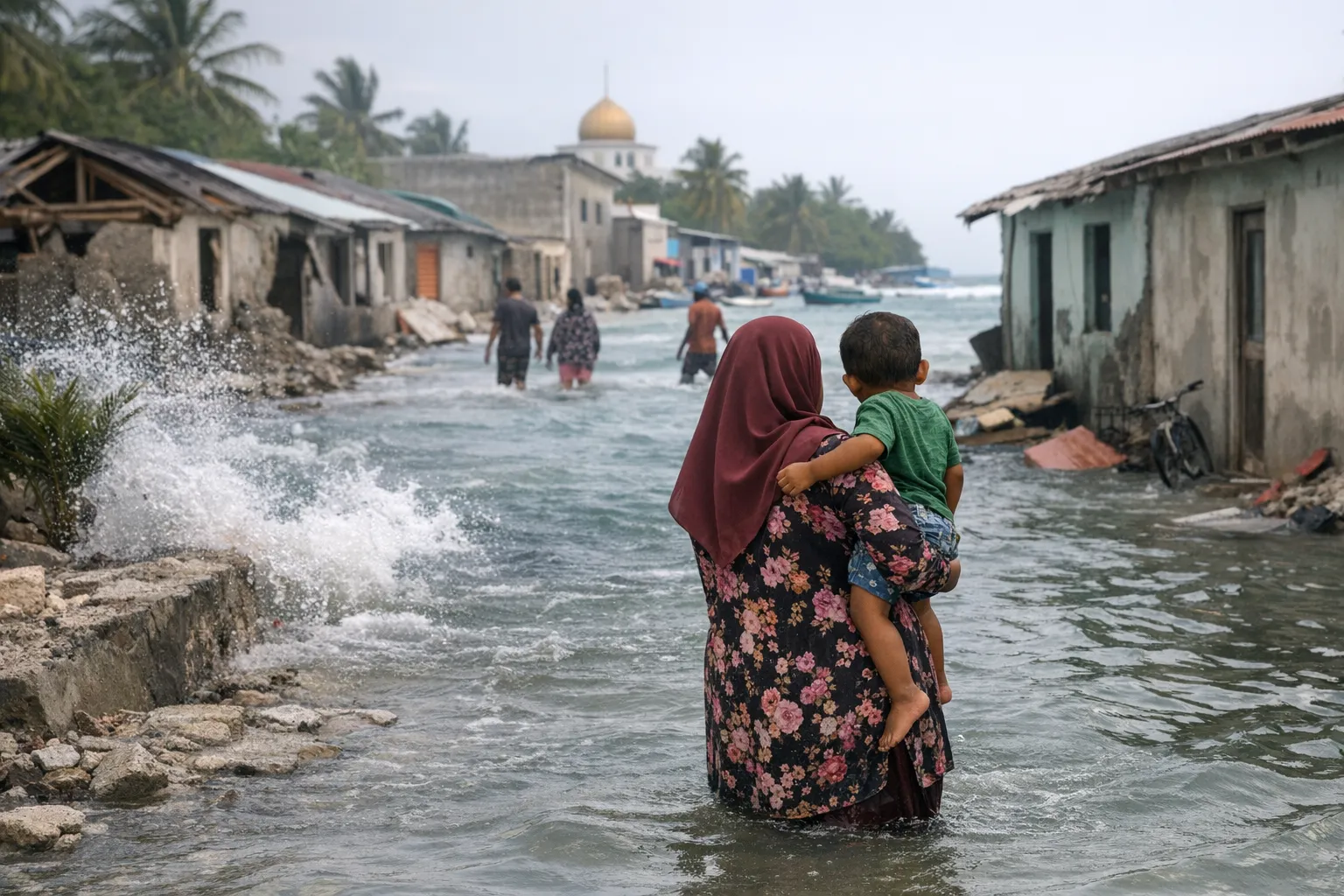
In this analysis, we'll explore how the anticipated changes in climate are projected to impact the Maldives' economy and society by 2026. Focusing on the critical sectors of tourism and fisheries—both accounting for nearly half of the nation’s GDP—we’ll examine the potential for widespread economic disruption and increased vulnerability among the local population. By understanding these interconnected challenges, we can better appreciate the urgent need for adaptation and intervention strategies in one of the world's most picturesque yet precarious nations.
Understanding the Geography of the Maldives
The Maldives is an archipelago consisting of around 1,190 coral islands spread across 26 atolls in the Indian Ocean. Its geography is characterized by low-lying islands, with over 80% of its land area situated less than one meter above sea level. This makes the nation exceptionally vulnerable to the impacts of rising sea levels, a direct consequence of climate change.
Significance of Low-Lying Islands
The low elevation of these islands presents significant challenges. For instance, even a modest rise of 0.9 meters in sea levels by 2100 could lead to extensive coastal flooding, threatening homes, infrastructure, and vital ecosystems. The Maldives' coral reefs, which are essential for coastal protection and tourism, are deteriorating rapidly. If global temperatures exceed 2°C, nearly all coral cover could disappear, exacerbating the risks posed by rising seas.
Impact on Climate Vulnerability
The geographical features of the Maldives amplify its climate vulnerability in several ways:
-
High Exposure to Coastal Flooding: With much of the land at risk of inundation, the frequency of coastal flooding is expected to increase, potentially damaging up to 3.3% of the nation's total assets by 2050. This could result in economic damages estimated between US$0.7 and 1.1 billion.
-
Dependence on Vulnerable Sectors: The economy relies heavily on tourism and fisheries, which together contribute about 50% of GDP and employment. As both sectors are highly sensitive to environmental changes, their viability is increasingly threatened by climate impacts.
"The Maldives is like a delicate flower blooming just above the ocean's surface; a single wave could wash it away."
Overall, the geographical vulnerabilities of the Maldives make it a focal point for discussions around climate change adaptation and resilience. The urgent need for innovative solutions, like the Maldives Floating City, highlights the critical intersection of geography, economy, and environmental sustainability in this island nation.
Projected Sea-Level Rise: What to Expect by 2026
The Maldives faces a critical challenge as sea levels continue to rise, with projections estimating increases of up to 0.9 meters by 2100. This significant rise will have dire implications for the archipelago, where over 80% of the land area sits less than one meter above sea level.
Factors Contributing to Rising Sea Levels
Several factors contribute to this alarming trend:
- Global warming: As temperatures rise, polar ice melts and ocean water expands, leading to higher sea levels.
- Coral reef degradation: The Maldives' coral reefs, essential for coastal protection, are deteriorating rapidly. If global temperatures exceed 2°C, nearly all coral cover could disappear, further exposing coastal areas to erosion and flooding.
Potential Impacts on Coastal Areas
The socio-economic ramifications of rising sea levels are profound:
- Increased coastal flooding: As sea levels rise, the frequency of coastal flooding is expected to increase. By 2050, typical 10-year floods could damage up to 3.3% of the Maldives' total assets, resulting in economic losses estimated between US$0.7–1.1 billion.
- Threats to tourism and fisheries: The economy of the Maldives is heavily reliant on tourism and fisheries, which together contribute nearly 50% of GDP and employment. Rising sea levels threaten these critical sectors, risking livelihoods and the overall economic stability of the nation.
- Infrastructure damage: With 60% of resorts reporting damage from rising sea levels and beach erosion, the tourism industry faces an uncertain future.
The urgency for adaptation measures is clear as the Maldives navigates the challenges posed by climate change. For more insights, consider reviewing the World Bank Report on Maldives and Climate Change.
The Economic Landscape: Tourism and Fisheries at Risk
The Maldivian economy is intricately tied to its natural environment, with tourism and fisheries contributing nearly 50% of the nation's GDP and employment. However, rising sea levels and climate change pose significant threats to these vital sectors.
Impact on Tourism
- Vulnerability to Erosion: Over 90% of resorts in the Maldives have reported beach erosion, with 60% experiencing infrastructure damage due to rising sea levels. This situation not only affects the aesthetic appeal of tourist destinations but also their operational viability.
- Coral Reef Degradation: The Maldives’ coral reefs, essential for attracting tourists and protecting coastlines, are rapidly degrading. If global temperatures rise above 2°C, nearly all coral cover could disappear, further jeopardizing the tourism sector.
Impact on Fisheries
- Threat to Livelihoods: The fisheries sector, already under strain from changing ocean temperatures and acidification, faces additional risks from rising sea levels, which can lead to habitat loss for key fish species.
- Economic Losses: Coastal flooding could severely damage up to 3.3% of the Maldives' total assets by 2050, translating to estimated damages of US$0.7–1.1 billion in GDP during typical 10-year floods.
Case Studies
- Resort Closures: Some resorts have had to close or relocate due to beach erosion and flooding. For instance, a luxury resort recently reported a significant decline in bookings due to concerns over environmental conditions.
- Fisheries Decline: Local fishers are noticing decreased catches as fish populations migrate due to changing sea temperatures, leading to reduced income and food security.
In conclusion, the economic landscape of the Maldives is precariously balanced on the brink of climate change. Immediate adaptation strategies are crucial to safeguard the tourism and fisheries sectors, ensuring the sustainability of the nation’s economy amid rising sea levels.
Socio-Economic Consequences of Rising Sea Levels
Rising sea levels pose a critical threat to the Maldives, a nation already grappling with its geographical vulnerabilities. With over 80% of its land less than one meter above sea level, the socio-economic implications are profound.
Displacement of Communities
As coastal areas succumb to flooding, entire communities face displacement. Many Maldivians may be forced to relocate, leading to:
- Loss of cultural heritage: Displacement disrupts traditional lifestyles and community bonds.
- Increased migration pressures: Rural populations may migrate to urban centers, straining infrastructure and resources.
Impact on Livelihoods and Employment
The Maldivian economy heavily relies on tourism and fisheries, which together contribute nearly 50% of the nation's GDP. The effects of climate change on these sectors include:
- Tourism decline: With 90% of resorts reporting beach erosion and 60% experiencing infrastructure damage, the attractiveness of the Maldives as a tourist destination is at risk.
- Fisheries jeopardized: Coral reefs, vital for fish populations and tourism, are degrading rapidly. If global temperatures rise significantly, nearly all coral cover could disappear, threatening both the ecosystem and livelihoods.
Challenges in Urban Planning and Infrastructure
Rising sea levels complicate urban planning efforts. Key challenges include:
- Inadequate infrastructure: Current urban designs are ill-equipped to handle increased flooding. Significant investment in adaptive infrastructure is required.
- Public debt constraints: With public debt reaching 123% of GDP, funding for necessary adaptations becomes increasingly challenging, limiting the government’s ability to implement effective solutions.
In light of these challenges, innovative projects like the Maldives Floating City, set to open in 2027, offer a glimpse of potential solutions, aiming to house residents in eco-friendly floating homes as a response to rising sea levels.
Overall, the socio-economic repercussions of rising sea levels in the Maldives necessitate urgent action and long-term planning to safeguard both communities and the economy.
Coral Reefs: The First Line of Defense
Coral reefs serve as a vital barrier protecting the Maldives from the relentless forces of the ocean. These ecosystems absorb wave energy, reducing coastal erosion and safeguarding islands from severe storms. Without healthy reefs, the Maldives—where over 80% of the land is less than one meter above sea level—faces increased vulnerability to rising sea levels.
Current State of Coral Reefs
Unfortunately, the coral reefs in the Maldives are experiencing rapid degradation. Climate change, primarily through rising sea temperatures and ocean acidification, threatens the health of these reefs. Estimates suggest that if global temperatures rise above 2°C, nearly all coral cover could disappear. This loss not only endangers marine biodiversity but also compromises the very coastal protection that these reefs provide.
Future Projections for Coral Health
Looking ahead, projections are grim. The Maldives is expected to see a sea-level rise of up to 0.9 meters by 2100, which will exacerbate coastal flooding. The degradation of coral reefs is closely tied to these changes; as reefs weaken, their ability to protect the coast diminishes. This situation poses a significant risk to the Maldives' economy, which heavily relies on tourism and fisheries—sectors that contribute nearly 50% of the nation's GDP and employment.
In summary, the degradation of coral reefs represents a critical challenge for the Maldives. Without urgent action to protect these ecosystems, the socio-economic ramifications could be devastating, jeopardizing the livelihoods of thousands and the future of the islands themselves. For more information, refer to the World Bank Report on Maldives and Climate Change.
Public Debt and Climate Adaptation Challenges
The Maldives faces a precarious financial landscape, with public debt reaching approximately 123% of GDP in 2023. This staggering debt burden significantly hampers the government's capacity to invest in crucial climate adaptation measures. The reliance on tourism and fisheries—sectors that contribute nearly 50% of the nation’s GDP—exacerbates the urgency for sustainable solutions.
Impact on Climate Adaptation Funding
- Debt Constraints: High public debt limits the Maldives' ability to allocate funds towards infrastructure improvements and resilience initiatives necessary to combat rising sea levels. With over 80% of its land area sitting below one meter above sea level, the stakes are high.
- Risk to Economic Stability: Coastal flooding, driven by projected sea-level rises of up to 0.9 meters by 2100, could damage around 3.3% of the Maldives' total assets by 2050, translating to estimated losses of US$0.7–1.1 billion.
Potential Solutions and International Support
- International Aid: Engaging global financial institutions and donor countries for climate adaptation funding could alleviate some of the fiscal pressure. Programs aimed at reducing vulnerability, like the Maldives Floating City project set to open in 2027, showcase innovative housing solutions for rising sea levels.
- Sustainable Practices: Investing in coral reef restoration and sustainable tourism can enhance resilience while diversifying income sources, ultimately reducing dependency on high-risk sectors.
Addressing the intertwined issues of public debt and climate adaptation is essential for the Maldives to secure its future against the looming threats of climate change. Without strategic financial planning and international support, the country risks exacerbating its socio-economic vulnerabilities.
Innovative Solutions: The Maldives Floating City
The Maldives is taking a bold step to address the threats posed by climate change through the development of the Maldives Floating City. Set to open in 2027, this innovative project aims to create a sustainable living environment for approximately 20,000 residents in eco-friendly floating homes. The city is designed to adapt to rising sea levels, which are projected to increase by up to 0.9 meters by 2100, threatening much of the nation's coastal areas.
Expected Benefits
- Sustainable Living: The floating city utilizes renewable energy sources, potentially reducing reliance on fossil fuels and minimizing carbon footprints.
- Economic Resilience: By creating a new residential area, the project aims to stimulate local economies, especially in tourism and fisheries, sectors that together contribute nearly 50% of the Maldives' GDP.
- Disaster Mitigation: Floating structures can help safeguard against coastal flooding, which is expected to become more frequent and severe.
Challenges Ahead
- Financial Constraints: The Maldives’ public debt reached 123% of GDP in 2023, complicating funding for such large-scale projects. The country will need innovative financing solutions to support this initiative.
- Environmental Concerns: The ongoing degradation of coral reefs, crucial for coastal protection, poses a significant threat. Without healthy coral ecosystems, the floating city may face challenges in maintaining its structural integrity against strong tides and storms.
Long-Term Vision
The Maldives Floating City represents a forward-thinking approach to climate adaptation. It not only aims to provide a safe living space for its residents but also embodies a vision for sustainable urban development amidst rising sea levels. As the nation navigates these challenges, the success of this project could serve as a model for other vulnerable regions globally. For more details about the project, you can check the Maldives Floating City Overview.
Myths vs. Reality: Common Misconceptions about Climate Change in the Maldives
As the Maldives grapples with the impacts of climate change, several myths have emerged that distort the reality of the situation. Understanding these misconceptions is crucial for informed discussions about the future of this vulnerable nation.
Myth: The Maldives Will Be Completely Submerged
Many believe that the Maldives will eventually be entirely underwater due to rising sea levels. While it is true that over 80% of the land area is less than one meter above sea level, complete submersion is unlikely in the near future.
Reality: Adaptation Measures Are Being Implemented
The Maldivian government is actively pursuing various adaptation strategies, such as constructing sea walls and developing floating cities. For instance, the Maldives Floating City, set to open in 2027, aims to house around 20,000 residents in eco-friendly floating homes, directly addressing the threat of rising tides. This proactive approach highlights the commitment to resilience rather than resignation.
Myth: Climate Change Only Affects the Environment
Another common misconception is that climate change impacts solely the natural environment, neglecting socio-economic repercussions.
Reality: Economic Vulnerabilities Are Significant
The Maldivian economy heavily relies on tourism and fisheries, which together account for nearly 50% of the nation's GDP. As climate change threatens these sectors—evidenced by reports that over 90% of resorts have faced beach erosion—there are dire implications for employment and national stability. Rising sea levels could damage up to 3.3% of total assets by 2050, resulting in economic losses estimated between US$0.7 to 1.1 billion during severe flooding events.
By debunking these myths, we can foster a more nuanced understanding of the challenges facing the Maldives, paving the way for more effective policies and community engagement. For further insights, the World Bank Report on Maldives and Climate Change provides a comprehensive analysis of the situation.
FAQs: Understanding Climate Change in the Maldives
What is the current state of the Maldives' coral reefs?
The coral reefs in the Maldives are essential for coastal protection and tourism but are rapidly degrading. As global temperatures rise, nearly all coral cover could disappear if the increase exceeds 2°C. This loss would severely impact the ecosystem and the economy, given that the reefs support fisheries and attract tourists.
How is the government responding to climate change?
The Maldivian government is actively addressing climate change through various initiatives. One notable project is the Maldives Floating City, scheduled to open in 2027, which aims to provide eco-friendly floating homes for about 20,000 residents. However, funding remains a challenge, as the country's public debt was reported to be 123% of GDP in 2023, complicating efforts for critical climate adaptation investments.
What can tourists do to help?
Tourists can play a significant role in combating climate change in the Maldives. Here are some actionable steps:
- Choose Eco-Friendly Resorts: Opt for accommodations that prioritize sustainability and environmental protection.
- Participate in Conservation Programs: Engage in local marine conservation efforts, such as reef cleaning or coral planting.
- Reduce Plastic Use: Bring reusable items to minimize plastic waste, which can harm marine life.
- Educate Others: Share knowledge about the impacts of climate change on the Maldives and advocate for responsible tourism practices.
By taking these steps, tourists can contribute to the preservation of the Maldives' unique environment while supporting the local economy.
Conclusion: The Path Forward for the Maldives
The urgency of addressing climate change in the Maldives cannot be overstated. With over 80% of its land area less than one meter above sea level, the nation faces a precarious future. Immediate action is essential to mitigate the risks posed by rising sea levels, which are projected to increase by up to 0.9 meters by 2100.
Importance of Immediate Action
To safeguard its economy and society, the Maldives must prioritize adaptation measures. Key strategies include:
- Investing in coastal infrastructure to withstand flooding and erosion.
- Restoring coral reefs, which are critical for coastal protection and tourism.
- Developing innovative projects like the Maldives Floating City, aimed at providing sustainable living solutions for a rising population.
Role of International Cooperation
The Maldives cannot tackle this challenge alone. Global partnerships are vital for:
- Securing funding for climate adaptation initiatives, especially considering the country's public debt levels, which reached 123% of GDP in 2023.
- Sharing technology and expertise to enhance resilience against climate impacts.
- Advocating for stronger international climate policies that hold industrialized nations accountable for their emissions.
Vision for a Sustainable Future
Looking ahead, the Maldives can aspire to a sustainable future by:
- Emphasizing eco-friendly tourism and sustainable fishing practices that align with climate resilience.
- Educating citizens about climate adaptation and fostering community involvement in environmental conservation.
- Setting ambitious yet achievable targets for reducing carbon emissions and enhancing green infrastructure.
By taking these steps, the Maldives can not only navigate the immediate challenges of climate change but also pave the way for a more resilient and sustainable future. For further insights, check the World Bank Report on Maldives and Climate Change and explore the Maldives Floating City Overview.