
IBM is at the forefront of a technological revolution, pushing the boundaries of quantum computing. With groundbreaking innovations like the Nighthawk and Loon processors, the company is not just dreaming about the future; it’s building it. As quantum systems evolve, the implications for industries ranging from finance to healthcare could be transformative.
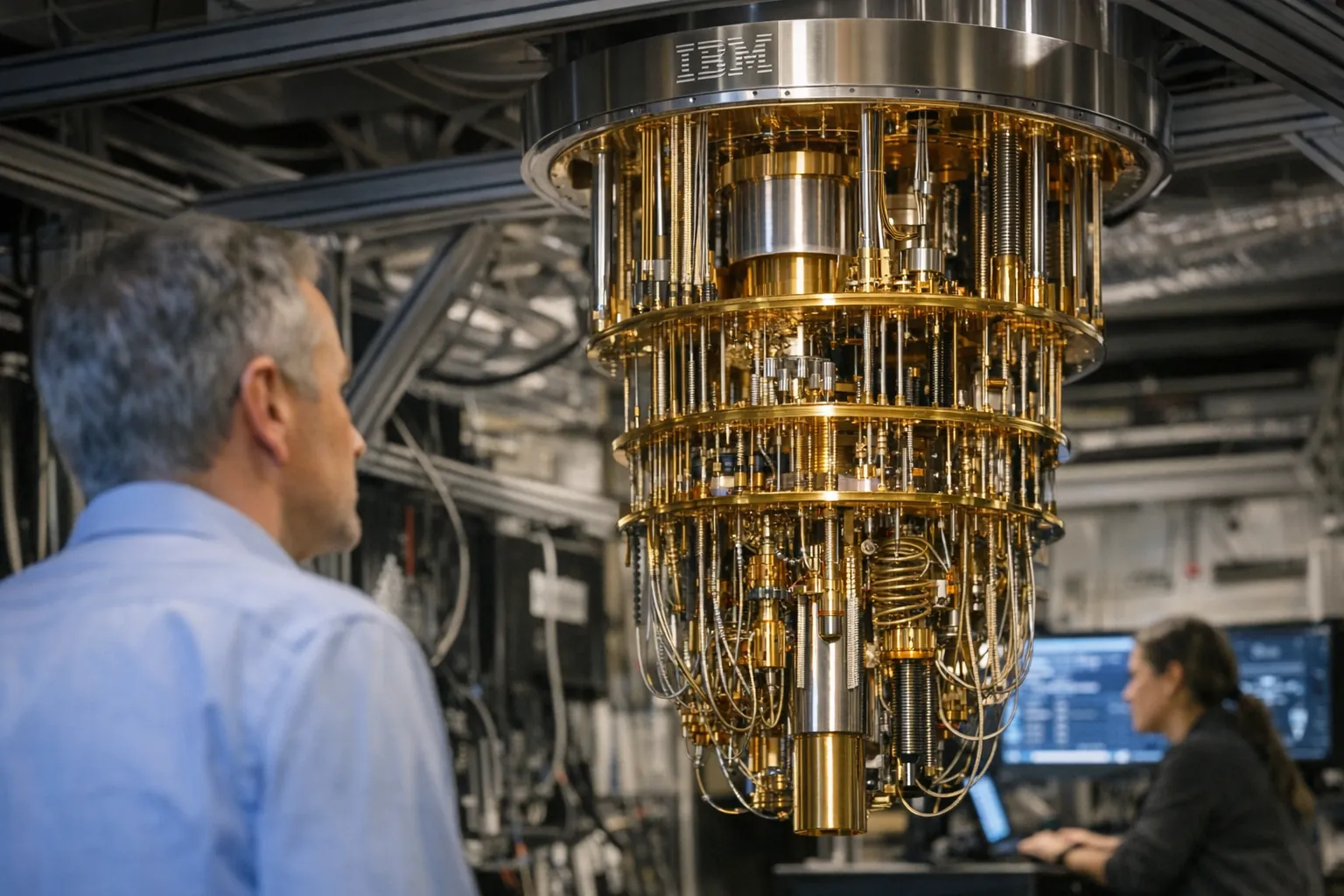
In this analysis, we will explore IBM's recent breakthroughs in quantum computing, including the launch of the modular Quantum System Two and the advanced Heron processor, which promises significant error reduction. We will delve into the practical applications of these innovations and their potential to reshape various sectors, while also considering the broader implications for society and security in a quantum-enabled future.
Introduction to Quantum Computing
Quantum computing represents a revolutionary leap in computational capability, fundamentally differing from classical computing. At its core, quantum computing utilizes qubits, which can exist in multiple states simultaneously, unlike classical bits that are strictly binary (0 or 1). This property allows quantum computers to process vast amounts of data more efficiently.
The contrast between quantum and classical computing can be likened to a vast library. A classical computer is like a person searching for a book by examining each shelf one at a time. In contrast, a quantum computer can explore multiple shelves simultaneously, dramatically speeding up the search process.
Key Points:
- Definition: Quantum computing harnesses the principles of quantum mechanics to perform calculations at unprecedented speeds.
- Comparison: Classical computing relies on binary bits, while quantum computing operates on qubits, enabling parallel processing.
- Importance of Quantum Advantage: Achieving quantum advantage means performing tasks that are infeasible for classical computers. IBM aims to demonstrate this by the end of 2026, showcasing how quantum systems can outperform their classical counterparts in specific applications.
In recent developments, IBM has introduced the Quantum System Two, which is the first modular quantum computer designed to integrate multiple processors, enhancing performance and scalability. This system marks a significant step toward achieving practical quantum advantage, particularly with the advanced capabilities of the IBM Quantum Heron processor, which boasts a five-fold improvement in error reduction over previous models.
Understanding quantum computing is crucial as it paves the way for breakthroughs in fields like cryptography, materials science, and complex system simulations, ultimately shaping the future of technology and computation.
IBM's Quantum Roadmap: Key Milestones
IBM's strategic roadmap for quantum computing outlines several pivotal milestones that highlight its commitment to advancing the field. The timeline showcases a series of breakthroughs aimed at achieving quantum advantage and enhancing fault tolerance.
Key Developments
-
Nighthawk and Loon Processors: In its latest push, IBM unveiled the Nighthawk and Loon processors, setting the stage for the next generation of quantum computing. These processors are designed to significantly improve performance and reliability, further bridging the gap toward practical quantum applications.
-
Quantum System Two: Launched in December 2023, the Quantum System Two represents a leap forward as IBM's first modular utility-scaled quantum computer. This system integrates multiple IBM Quantum Heron processors, which are noted for their impressive five-fold improvement in error reduction compared to previous models. As IBM's CEO, Arvind Krishna, aptly noted, "Building a quantum computer is like assembling a highly complex puzzle where every piece must fit together perfectly."
Future Aspirations
-
Demonstrating Quantum Advantage: IBM plans to showcase the first instances of quantum advantage using high-performance computing (HPC) by the end of 2026. This milestone could redefine computational capabilities across various sectors.
-
Large-Scale Fault-Tolerant Computing: Looking toward 2029, IBM aims to introduce Quantum Starling, projected to be the first large-scale, fault-tolerant quantum computer capable of executing 100 million quantum gates on 200 logical qubits.
This roadmap not only emphasizes IBM's leadership in the quantum arena but also sets the foundation for a transformative future in technology. For more information on IBM's latest advancements, check out IBM Quantum System Two and IBM Qiskit.
The Heron Processor: A Game Changer
IBM's Heron processor, unveiled in December 2023, represents a significant leap in quantum computing technology with its innovative 156-qubit tunable-coupler design. This architecture allows for enhanced connectivity and control between qubits, crucial for performing complex calculations more efficiently.
One of the most notable features of the Heron processor is its impressive error reduction capabilities. IBM claims it offers up to a five-fold improvement in error rates compared to previous models. This advancement means that quantum computations can be executed with greater reliability, paving the way for more practical applications of quantum technology.
The impact on overall quantum computing performance is profound. With reduced error rates, the Heron processor can tackle more intricate problems that were previously too error-prone. As IBM's CEO Arvind Krishna aptly puts it, “It’s like moving from a flickering candle to a bright light bulb.” This analogy encapsulates how the Heron processor enhances clarity and efficiency in quantum computations.
In summary, the Heron processor not only elevates IBM's quantum capabilities but also sets the stage for future innovations. Its modular integration into IBM Quantum System Two allows for a flexible approach to scaling quantum operations, making it a pivotal player in the quest for quantum advantage by the end of the decade.
Applications of IBM's Quantum Technologies
IBM's advancements in quantum computing are not just theoretical; they are already finding practical applications across various sectors. The potential of these technologies is vast, revolutionizing industries from pharmaceuticals to finance.
Pharmaceuticals and Drug Discovery
One of the most promising applications of IBM Quantum Computing is in pharmaceuticals. Quantum algorithms can significantly accelerate drug discovery processes by simulating molecular interactions at an unprecedented scale. For instance, researchers can explore complex chemical reactions that would be infeasible using classical computers. This capability can lead to faster identification of effective drugs and potentially reduce the time and cost of bringing new medications to market.
"Quantum computing is like having a supercharged microscope that allows scientists to see the unseen in molecular structures."
Finance and Risk Analysis
In finance, quantum computing can enhance risk analysis and portfolio optimization. IBM’s quantum technologies can process vast amounts of data to identify patterns and correlations that traditional models might miss. This allows financial institutions to make more informed decisions, manage risks better, and optimize investment portfolios in real-time.
Optimization Problems Across Industries
Optimization is another area where IBM's quantum technologies shine. Industries such as logistics, manufacturing, and telecommunications face complex optimization problems that can benefit from quantum solutions. For example, companies can use quantum computing to determine the most efficient routes for delivery trucks or to optimize resource allocation in manufacturing processes.
The modular design of IBM’s Quantum System Two, which combines multiple processors, enhances its ability to tackle these optimization challenges effectively. As IBM continues to develop powerful processors like the Heron, the scope of what is possible in optimization will expand dramatically.
Through these applications, IBM quantum technologies are set to redefine industry standards, making processes faster, cheaper, and more efficient. As we look toward the future, the implications of these advancements will likely extend beyond mere profit, influencing how we tackle global challenges.
The Role of Qiskit in Quantum Development
Qiskit is a pivotal open-source toolkit developed by IBM, making strides in the quantum programming landscape. As a Python-based software development kit, it provides the essential tools required to create and execute quantum programs on both quantum computers and classical simulators. This flexibility is crucial for researchers and developers aiming to explore quantum algorithms and applications.
Several notable quantum programs have been constructed using Qiskit, showcasing its versatility:
- Quantum Chemistry Simulations: Researchers can model molecular structures and reactions, aiding drug discovery and material science.
- Optimization Problems: Qiskit enables users to tackle complex optimization challenges common in logistics and finance, utilizing quantum algorithms for potentially faster solutions.
- Machine Learning: Qiskit facilitates the integration of quantum computing with machine learning, allowing for advancements in data analysis and predictive modeling.
The community surrounding Qiskit is another significant asset. It offers numerous educational resources, including:
- Online Tutorials and Courses: These are designed to help newcomers understand quantum computing concepts and Qiskit's application.
- Qiskit Community Forums: Users can share insights, troubleshoot issues, and collaborate on projects, fostering a vibrant ecosystem of innovation.
As IBM continues to advance its quantum hardware, such as the newly unveiled IBM Quantum System Two, which features the Heron processor, Qiskit remains integral in bridging the gap between theoretical quantum mechanics and practical applications. The future of quantum computing relies heavily on tools like Qiskit, empowering a new generation of developers to harness the transformative potential of quantum technology.
Challenges and Limitations of Quantum Computing
As IBM continues to innovate in the field of quantum computing, several significant challenges remain. These hurdles must be addressed to realize the full potential of this transformative technology.
Technical Hurdles in Achieving Fault Tolerance
One of the primary challenges is achieving fault tolerance in quantum systems. Quantum bits, or qubits, are highly susceptible to errors caused by environmental noise and operational imperfections. IBM's Quantum Heron offers a five-fold improvement in error reduction over previous models, yet the quest for a truly fault-tolerant quantum computer—like the future IBM Quantum Starling—requires further advancements.
Scalability Issues with Quantum Systems
Scalability is another pressing concern. While IBM's Quantum System Two represents a modular approach that combines multiple processors into a single system, scaling up to a large number of qubits without compromising performance is complex. The goal is to create systems capable of running extensive quantum operations, such as the projected 100 million quantum gates on 200 logical qubits by 2029.
Concerns About Quantum Security
Finally, the rise of quantum computing brings security implications. Quantum computers could potentially break current encryption methods, posing risks to data integrity and privacy. IBM's Quantum Safe technology aims to mitigate this threat by developing tools that secure enterprise systems against quantum attacks. As we move toward widespread quantum adoption, addressing these security concerns is crucial.
In summary, while IBM is making significant strides in quantum computing, overcoming these challenges is essential for its successful implementation and broader acceptance in various industries.
Future Prospects: Quantum Advantage and Beyond
As IBM continues to innovate within the quantum computing landscape, the company is making significant predictions for the near future. By the end of 2026, IBM aims to demonstrate quantum advantage through high-performance computing, marking a pivotal moment where quantum systems can outperform classical counterparts in practical applications.
Looking further ahead, IBM Quantum Starling is set to become the first large-scale, fault-tolerant quantum computer, with capabilities projected to run 100 million quantum gates on 200 logical qubits by 2029. This ambitious goal highlights IBM's commitment to not only advancing quantum technology but also making it accessible for widespread use.
The long-term implications of these advancements are profound. Industries such as pharmaceuticals, finance, and logistics could experience revolutionary changes:
- Pharmaceuticals: Accelerated drug discovery through complex molecular simulations.
- Finance: Enhanced risk analysis and algorithmic trading capabilities.
- Logistics: Optimized supply chain management with real-time data processing.
Moreover, as IBM's Quantum System Two integrates multiple processors for modularity and flexibility, it sets a foundation for scalable quantum solutions. This system, featuring the advanced IBM Quantum Heron processor, boasts a five-fold improvement in error reduction over its predecessors, leading to more reliable computations.
Lastly, IBM's focus on quantum safety ensures that enterprises can secure their systems against potential quantum threats, further embedding quantum technology into the fabric of future technological ecosystems. The journey toward quantum advantage is not just about capabilities; it's about reshaping the very structure of industries and society at large.
IBM's Quantum Safe Technology
IBM Quantum Safe technology represents a crucial advancement for enterprises in the face of evolving cybersecurity threats posed by quantum computing. As quantum computers become more capable, traditional encryption methods may become vulnerable, necessitating robust solutions to safeguard sensitive data.
Overview of IBM Quantum Safe Technology
IBM's Quantum Safe technology is a comprehensive suite designed to prepare enterprises for a quantum future. It includes:
- Advanced encryption algorithms that can withstand quantum attacks.
- Tools and frameworks for assessing and upgrading existing security protocols.
- Integration capabilities with current IT infrastructures to facilitate a smooth transition.
Strategies for Securing Systems Against Quantum Threats
Enterprises can adopt several strategies to enhance their defenses against quantum threats:
- Implement hybrid cryptography that employs both classical and quantum-resistant algorithms.
- Regularly update security protocols to incorporate new findings and technologies developed within the quantum space.
- Educate teams about quantum risks and the importance of adopting quantum-safe practices early.
Importance of Preparing for a Quantum Future
Preparing for a quantum future is not just a technical necessity; it’s a strategic imperative. Organizations that embrace Quantum Safe technology now will be better positioned to:
- Protect sensitive data against future breaches.
- Maintain customer trust by demonstrating a commitment to security.
- Ensure compliance with emerging regulations around data protection in a quantum context.
As IBM continues to innovate with products like the Quantum System Two and the highly performant Quantum Heron processor, the urgency to adopt Quantum Safe technology becomes even clearer. By proactively addressing quantum threats, businesses can secure their digital landscapes for years to come.
Case Studies: IBM's Impact on Industries
IBM's advancements in quantum computing are making waves across various sectors, particularly in healthcare and finance. Here are notable examples illustrating IBM's transformative impact:
Healthcare Innovations
IBM collaborated with major healthcare institutions to leverage quantum computing for complex data analysis. A successful project involved analyzing genetic data to expedite drug discovery. By employing IBM's Quantum System Two, researchers could run simulations that previously took weeks, achieving results in mere hours. This capability not only accelerates the development of personalized medicine but also enhances the understanding of complex diseases.
Financial Sector Applications
In finance, firms like JPMorgan Chase are using IBM's quantum technologies to optimize portfolio management and risk assessment. By utilizing IBM's Qiskit software, financial analysts can run sophisticated models that account for various market scenarios in real-time. This application helps financial institutions stay ahead in a rapidly changing market, demonstrating the practical advantages of quantum computing.
Collaborations with Research Institutions
IBM has also partnered with top research institutions globally to explore new quantum algorithms and applications. These collaborations have resulted in groundbreaking findings, such as improved machine learning techniques that can process vast datasets more efficiently than classical computers.
Real-World Outcomes
The outcomes of these projects are already evident. IBM's Quantum Heron processor has shown a five-fold improvement in error reduction, enhancing the reliability of quantum computations. As IBM continues to push the boundaries of quantum technology, the expectation is to demonstrate quantum advantage in high-performance computing by the end of 2026.
In summary, IBM's quantum computing innovations are not just theoretical—they are actively reshaping industries by providing faster, more efficient solutions to complex problems.
Conclusion: The Future of IBM and Quantum Computing
IBM has made significant strides in quantum computing, solidifying its position as a leader in this transformative field. Innovations such as the IBM Quantum System Two, which integrates multiple processors like the Heron, highlight IBM's commitment to achieving modular, utility-scaled quantum systems. This approach not only enhances performance but also reduces error rates by up to five times compared to previous models.
The societal implications of these advancements are profound. Quantum computing promises to revolutionize industries by solving complex problems that classical computers struggle with. From drug discovery to optimizing supply chains, the potential applications are vast and can lead to more efficient processes and groundbreaking innovations.
As businesses navigate this evolving landscape, engagement with quantum technologies becomes imperative. Companies should consider exploring platforms like IBM Qiskit, which enables developers to create quantum programs seamlessly. By investing in or collaborating with quantum initiatives, organizations can position themselves at the forefront of technological advancement.
In summary, IBM's advancements in quantum computing not only pave the way for future innovations but also challenge businesses to rethink their strategies in a quantum-enabled world. Embracing these changes could define the competitive edge of tomorrow.