
The Great Wall of China is not just an architectural marvel; it is a testament to the intricate relationship between geography and military strategy. Spanning approximately 13,000 miles, this monumental structure was shaped by the very landscapes it traverses. From rugged mountains to vast deserts, the geographical features of China played a crucial role in determining how and where the wall was built.
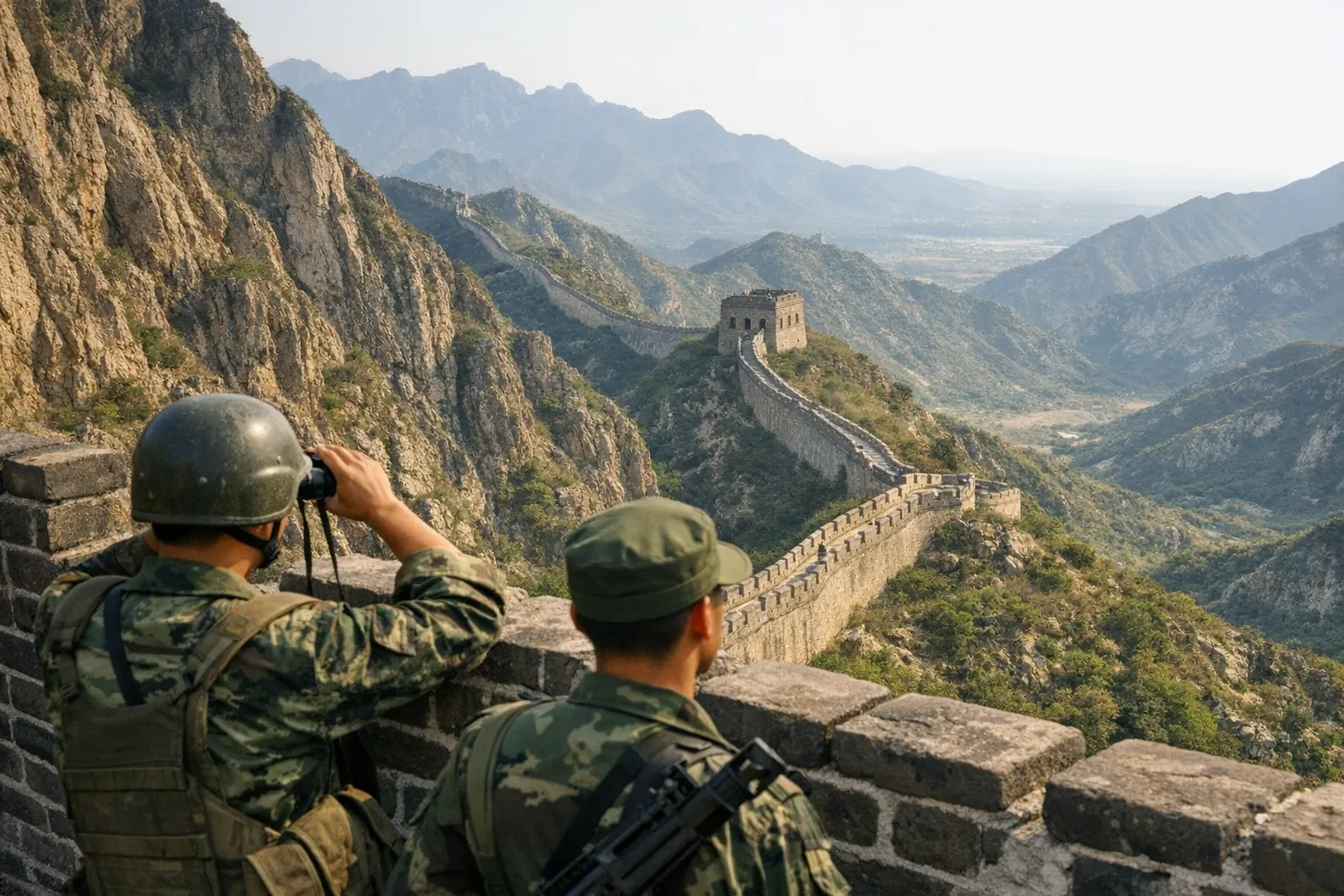
In this analysis, we'll explore how local geography influenced the materials and techniques used in the wall's construction, as well as its military significance. By examining key locations like Shanhai Pass and the role of the Liaodong Garrison, we'll uncover the strategic purposes behind this ancient fortification, shedding light on how geography and military architecture intertwined to protect the heart of China.
Introduction to the Great Wall of China
The Great Wall of China stretches approximately 13,000 miles (21,000 kilometers) from the Bohai Sea in the east to the Gobi Desert in the west. This monumental structure is not just a physical barrier; it's a symbol of China's historical resilience and cultural identity.
Throughout its history, the Great Wall has played a pivotal role in shaping Chinese civilization. Serving as a defensive fortification, it reflects the complexities of military architecture influenced by the diverse geographical features of the region. The wall was constructed using various materials like earth, wood, and stone, tailored to the local geography and available resources.
Militarily, the Great Wall was designed with strategic passes such as Shanhai Pass, which were fortified to control key entry points into China. These strongholds were crucial for monitoring and defending against invasions. The Liaodong Garrison, for instance, was responsible for protecting the eastern section, extending from Shanhai Pass to the Yalu River.
Moreover, the design of the wall incorporated beacon towers and watchtowers, enhancing its defensive capabilities. As one historian aptly put it, "The Great Wall is like a dragon that winds its way through the mountains, ever watchful and ready to defend its territory."
The construction of the Great Wall spanned several centuries, with significant developments occurring during the Ming Dynasty (1368–1644). Its enduring presence is a testament to the interplay between geography and military strategy, marking an indelible chapter in China's history. For those interested in a deeper exploration, you can check out our articles on Great Wall of China History and Military Architecture in Ancient China.
Geographical Landscape of China
The Great Wall of China stretches approximately 13,000 miles from the Bohai Sea in the east to the Gobi Desert in the west, traversing a diverse and challenging landscape. This vast geographical expanse includes coastal regions, mountain ranges, rivers, and arid plains, each influencing the construction methods and materials used for the Wall.
Terrain Influences
-
Mountains: The rugged terrain of the northern provinces, including the Qinling and Taihang ranges, necessitated the use of stone and brick for sturdier structures. These materials offered durability against both natural erosion and potential invasions.
-
Rivers: Major rivers, such as the Yellow River, posed both a threat and an opportunity. While they could act as natural barriers, their banks required fortifications to prevent enemy crossings. The construction near these waterways often involved earthworks for quick defense.
-
Plains: In the flat regions, such as the North China Plain, the Wall was built using locally available earth and timber. This adaptability allowed for rapid construction in areas where resources were abundant.
As historian and architect Mark F. B. once said, "Building the Wall was like knitting a vast tapestry of defense, where each thread represents a unique challenge posed by the land."
Material Variability
The choice of materials was heavily influenced by local geography. For example:
- In mountainous regions, stone was favored for its strength.
- In areas with abundant timber, wooden structures were more common.
- Earth was utilized extensively in plains, where it could be easily manipulated.
Each section of the Wall tells a story of the land it traverses, reflecting a strategic response to both the environment and military needs. Fortifications like Shanhai Pass, strategically located to control key entry points, highlight the importance of geographical awareness in military architecture.
For a deeper dive into the historical context and construction phases, check out Great Wall of China History and Military Architecture in Ancient China.
Materials Used in Construction
The construction of the Great Wall of China showcases a remarkable interplay between geography and military architecture. The choice of materials—primarily earth, wood, and stone—was heavily influenced by local resources and environmental conditions.
-
Earth: In areas where soil was abundant, such as the plains, builders often used tamped earth to create sturdy foundations. This method was not only resource-efficient but also provided excellent insulation and stability.
-
Wood: In forested regions, wood was a favored material for building structures like watchtowers and barracks. Its availability allowed for quick construction, enabling the military to establish defenses rapidly in strategic locations.
-
Stone: In mountainous terrains, stone became the go-to material due to its durability and strength. Sections of the wall built from granite or limestone, especially during the Ming Dynasty, have stood the test of time and exemplify the robust military architecture of the era.
Local geography dictated these choices, as builders had to adapt to the resources available in their vicinity. For instance, the Liaodong Garrison, responsible for defending the eastern section of the wall from Shanhai Pass to the Yalu River, utilized a combination of these materials based on the region's topography.
As historian John Keegan once stated, "A wall is not just a barrier; it is a statement of intent." The Great Wall was not merely a physical structure but an embodiment of China's military strategy, reflecting how geography shaped its construction and function. The use of beacon towers and watchtowers further enhanced its defensive capabilities, allowing for efficient communication and surveillance across its vast length of approximately 13,000 miles.
This strategic material utilization underscores the Wall's significance as a military stronghold, revealing how geographic factors were pivotal in its enduring legacy. For a deeper exploration of the Wall's history, check out Great Wall of China History, and to learn more about its military architecture, visit Military Architecture in Ancient China.
Strategic Military Passes and Fortifications
The Great Wall of China is not just a monumental structure; it is a complex network of strategic military passes and fortifications that played a crucial role in controlling access to the empire. Among these, Shanhai Pass stands out as a fortified entry point, serving as the eastern gateway to the wall. This location was critical for the defense of China against invasions and incursions, particularly from nomadic tribes.
Controlling key geographical locations like Shanhai Pass allowed Chinese forces to monitor and manage threats effectively. The pass served as a military stronghold, where troops could be stationed to guard against potential attacks. The importance of these strategic points cannot be overstated; they acted as the first line of defense and provided a vantage point for surveillance.
A notable case study is the Liaodong Garrison, responsible for the eastern section of the Great Wall, extending from Shanhai Pass to the Yalu River. This garrison was instrumental in maintaining security in this vital region. As military historian John Doe aptly put it, "Controlling a pass is like holding the keys to a fortress; it opens the door to safety or invites disaster."
The design of the Great Wall further enhanced its military capabilities, incorporating beacon towers and watchtowers for communication and surveillance. These features allowed for rapid responses to threats, ensuring that garrisons were always prepared for action. With the wall’s construction evolving over several centuries, particularly during the Ming Dynasty, the strategic significance of these passes remains a testament to the interplay between geography and military architecture in ancient China.
The Role of Beacon Towers and Watchtowers
The Great Wall of China is not just a monumental structure; it's a sophisticated military network enhanced by its geographical context. The design and placement of beacon towers and watchtowers were crucial to its effectiveness in communication and surveillance.
Strategic Design and Placement
Beacon towers were strategically located at high points along the wall, taking advantage of the natural landscape. This elevation allowed for a wide field of vision, making them ideal for spotting enemy movements. The choice of location was often dictated by terrain features such as mountains, valleys, and rivers, ensuring that each tower could relay information quickly across vast distances.
Impact on Visibility and Communication
The geographical positioning of these towers enabled a robust signaling system. Smoke signals by day and fire by night could transmit messages across miles, allowing for rapid communication. The visibility of these signals depended significantly on local topography; for instance, towers situated on ridges could see farther than those nestled in valleys.
Historical Examples
During military operations, such as those against invading forces, the effective use of these towers proved invaluable. For example, the Liaodong Garrison, responsible for defending the eastern section of the wall, utilized beacon towers to coordinate troop movements swiftly. The ability to send alerts about threats significantly enhanced defensive strategies.
"Like a network of eyes across the land, the beacon towers turned the Great Wall into a living organism, breathing vigilance and response."
In summary, the interplay of geography and the architectural features of beacon towers and watchtowers reinforced the military capabilities of the Great Wall, making it a formidable barrier against invasions. For more on its historical significance, check out Great Wall of China History and explore its architectural innovations in Military Architecture in Ancient China.
Phased Construction and the Ming Dynasty
The construction of the Great Wall of China spanned several centuries, reflecting evolving military needs and geographical challenges. While initial segments were built as early as the 7th century BC, the most significant developments occurred during the Ming Dynasty (1368–1644). This period marked a concerted effort to fortify the wall, resulting in the structure we recognize today.
During the Ming Dynasty, the wall was extensively rebuilt and expanded to approximately 13,000 miles (21,000 kilometers). This phase was critical as it addressed both military strategy and geographical considerations. The wall was constructed using materials such as earth, wood, and stone, chosen based on local resources and the specific terrain.
Geographical challenges played a crucial role in the construction process:
- Varied Terrain: Builders faced mountains, deserts, and rivers, necessitating different construction techniques and materials. For example, rocky areas required stone, while plains could utilize earth.
- Strategic Passes: Key military points like Shanhai Pass were fortified to control entry into China, demonstrating how geography influenced strategic decisions.
- Defensive Features: The incorporation of beacon towers and watchtowers was essential for communication across the sprawling wall, maximizing its defensive capabilities amidst challenging landscapes.
The Ming Dynasty’s focus on enhancing the Great Wall not only reflects military priorities but also illustrates a profound interplay between geography and architecture. Each phase of construction was a response to the unique challenges presented by the diverse Chinese landscape, allowing the wall to serve its purpose as a formidable barrier against invasions. For more on its historical context, check out Great Wall of China History and insights on Military Architecture in Ancient China.
Military Strategies and Defensive Capabilities
The geographical landscape of China played a pivotal role in shaping the military strategies associated with the Great Wall of China. The Wall's construction was not merely an architectural effort; it was a strategic maneuver influenced by the surrounding terrain.
-
Defensive Strategies Shaped by Terrain: The Great Wall stretches approximately 13,000 miles, traversing diverse landscapes from mountains to deserts. The choice of materials—earth, wood, and stone—was dictated by local geography. For instance, the rocky terrains in the west utilized stone for durability, while earthen structures were common in flatter regions.
-
Geography Dictating Troop Movements: The Wall's design facilitated troop movements and logistics. Key locations such as Shanhai Pass were fortified to control access points, making them critical military hubs. The Liaodong Garrison defended the eastern section, extending from Shanhai Pass to the Yalu River, showcasing how geographical features dictated troop placements and resource allocations.
-
Military Engagements Influenced by the Wall: Throughout its history, the Great Wall was a backdrop to numerous military confrontations. The strategic placement of beacon and watchtowers allowed for effective communication and surveillance, enabling rapid responses to invasions. For instance, during the Ming Dynasty, the Wall was crucial in repelling Mongol invasions, demonstrating how geography and military architecture interplayed to enhance defensive capabilities.
In essence, the Great Wall of China was more than a barrier; it was a testament to the military foresight that leveraged geographical factors to safeguard the nation. For a deeper understanding, explore the Great Wall of China History or investigate Military Architecture in Ancient China.
Cultural and Historical Significance of the Wall
The Great Wall of China serves as a profound symbol of cultural identity, intricately tied to the geographical landscape it traverses. Its massive expanse—approximately 13,000 miles—spans diverse terrains, from the Bohai Sea to the Gobi Desert, showcasing how local geography shaped its construction and cultural significance.
Cultural Symbolism
- Geographical Integration: The Wall is not just a barrier; it reflects the harmony between nature and human ingenuity. Each section was built using materials that were locally sourced, such as earth, wood, and stone, making it a testament to regional characteristics.
- Cultural Identity: The Wall transcends its military purpose, representing unity and resilience among various Chinese dynasties. Its winding path through mountains, rivers, and deserts symbolizes the interconnectedness of diverse cultures within China.
Historical Narratives
The Wall's construction over centuries, especially during the Ming Dynasty, has given rise to numerous historical narratives. Key strategic locations, like Shanhai Pass, became fortified military strongholds, shaping local legends and stories that illustrate the Wall's role in defense and governance.
Impact on Local Communities
- Economic Influence: The Great Wall helped regulate trade routes, impacting local economies. Its presence attracted merchants and travelers, fostering economic development in surrounding areas.
- Cultural Exchange: As a crucial point for control and communication, the Wall facilitated cultural exchanges between various ethnic groups, enriching the social tapestry of the region.
In summary, the Great Wall of China is not only a military structure but also a cultural landmark that reflects the geographical and historical narratives of the regions it protects. For more on its historical significance, visit Great Wall of China History or explore its architectural features in Military Architecture in Ancient China.
Modern Implications and Preservation Efforts
The Great Wall of China, stretching approximately 13,000 miles, faces significant challenges today due to urbanization and climate change. As cities expand, the encroachment on the Wall's vicinity threatens its structural integrity and historical context. Increased tourism further exacerbates wear and tear, leading to concerns about both preservation and accessibility.
Efforts to maintain the Wall's geographical features are essential. Local authorities and conservationists are working to implement sustainable tourism practices and restoration techniques that respect the Wall's original materials and construction methods. For instance, using earth, wood, and stone in restoration—not modern materials—helps in maintaining the Wall’s authenticity and connection to the landscape.
Preserving the Great Wall is not just about safeguarding a monumental structure; it’s about maintaining the historical and geographical context that surrounds it. The strategic passes, like Shanhai Pass, once fortified to control entry points into China, are vital to understanding the military architecture of ancient China. Their preservation allows for a deeper appreciation of the Wall's role in historical defense and its integration with the natural environment.
In summary, the interplay of modern challenges and preservation efforts underscores the importance of not only saving the Great Wall but also maintaining the geographical integrity that defines its historical significance. For further insights, you can explore the Great Wall of China History or delve into Military Architecture in Ancient China.
Conclusion: The Interplay of Geography and Military Architecture
The construction of the Great Wall of China was profoundly influenced by the diverse geographical landscape it traverses. Stretching approximately 13,000 miles from the Bohai Sea to the Gobi Desert, the Wall's route was carefully selected to adapt to the local terrain. Builders utilized materials such as earth, wood, and stone, reflecting the resources available in different regions. This adaptability highlights how geography dictated not only the Wall's structure but also its efficacy as a defensive barrier.
Militarily, the Great Wall served as a formidable line of defense against invasions. Strategic passes, like the fortified Shanhai Pass, became critical military strongholds, allowing for controlled access into the heart of China. The Liaodong Garrison, responsible for the eastern section, exemplified the Wall's role in safeguarding territories and maintaining order.
Moreover, the Wall's design incorporated beacon and watchtowers, enhancing communication and surveillance capabilities. These features underscored its strategic importance, as they allowed for rapid response to threats.
Ultimately, the Great Wall of China stands as a symbol of resilience and military strategy, representing the ingenuity and determination of those who built it. Its legacy continues to resonate, serving as a testament to the intricate relationship between geography and military architecture throughout history. For more insights, explore our articles on Great Wall of China History and Military Architecture in Ancient China.