
The interplay between geography and athletic performance can often be overlooked, especially in indoor settings. As we gear up for the 2026 World Athletics Indoor Championships in Toruń, Poland, it's essential to explore how local geographical and climatic factors shape the conditions for athletes.
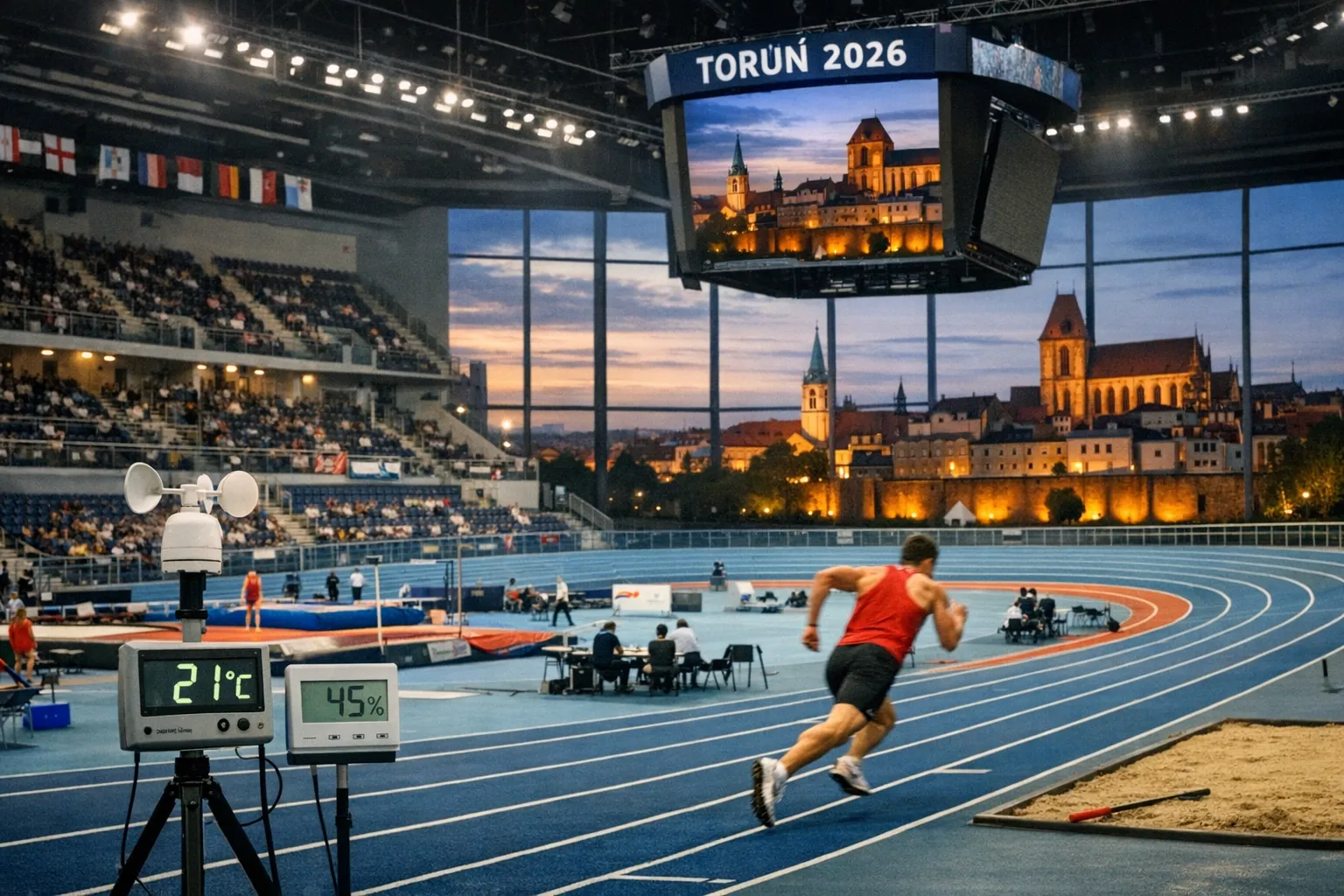
In this analysis, we'll delve into the specific characteristics of Toruń and the Kujawsko-Pomorska Arena, examining how factors like elevation, climate, and venue design contribute to optimal athletic performance. By understanding these elements, we can gain valuable insights into how they impact the competitors during this prestigious event scheduled for March 20 to 22, 2026.
Introduction to the 2026 World Athletics Indoor Championships
The 2026 World Athletics Indoor Championships are set to take place from March 20 to 22, 2026, at the Kujawsko-Pomorska Arena in Toruń, Poland. This event is a significant milestone for athletes and fans alike, showcasing some of the best talents in indoor athletics.
The Kujawsko-Pomorska Arena, which opened in 2014, boasts a state-of-the-art six-lane banked track designed to enhance performance. This venue has previously hosted prestigious events, including the 2021 European Athletics Indoor Championships, making it a familiar ground for elite competitors. The arena's design minimizes external environmental influences, ensuring athletes can focus on their performance without distractions from outside conditions.
Toruń, a UNESCO World Heritage Site, adds a unique cultural backdrop to the championships. Nestled in the Kuyavian-Pomeranian region, the city offers a rich history and architectural beauty that complement the athletic spectacle.
In terms of climate, March in Toruń typically features temperatures ranging from 35°F (2°C) to 50°F (10°C), with clear skies and minimal precipitation. This moderate weather is ideal for indoor competitions, allowing athletes to perform at their best. As one might say, “Competing in a controlled environment is like playing chess on a perfectly flat board—every move counts without external interference.”
With these geographical and environmental factors at play, the 2026 Championships promise to be a thrilling showcase of athletic performance in indoor settings.
Geographical Location and Its Impact on Performance
Toruń, Poland, is a unique host for the 2026 World Athletics Indoor Championships, not only for its rich history but also due to its geographical characteristics. Situated at an elevation of 65 meters above sea level, the city’s altitude is unlikely to significantly affect athletic performance during the championships. This elevation is generally deemed advantageous for endurance events, though its impact may be minimal in an indoor setting.
Key Geographical Factors:
-
Proximity to Major Transport Hubs: Toruń's location provides easy access for athletes and spectators alike. With its closeness to key transport links, athletes can arrive with less travel fatigue, allowing for optimal performance on competition days.
-
Significance of the Kuyavian-Pomeranian Region: As a UNESCO World Heritage Site, Toruń belongs to a region steeped in culture and innovation. This heritage not only enhances the local atmosphere but also contributes to a supportive environment for athletes.
-
Climate Considerations: March temperatures in Toruń typically range from 35°F (2°C) to 50°F (10°C), featuring clear skies and minimal precipitation. These conditions create a comfortable climate for athletes to perform at their best. The indoor arena’s design further mitigates any external environmental influences, providing a controlled setting that optimizes athletic performance.
“Competing in Toruń is like running on a finely tuned machine—every detail is designed to maximize speed and efficiency.”
With features like a world-class six-lane banked track, the Kujawsko-Pomorska Arena not only meets but exceeds the expectations for indoor athletics. Its strategic design, aimed at minimizing external factors, ensures that athletes can focus solely on their performance, making Toruń an ideal backdrop for the upcoming championships.
For more information on the event, visit World Athletics Indoor Championships or explore Toruń Tourism.
Climate Analysis: What to Expect in March
The 2026 World Athletics Indoor Championships, set to take place from March 20 to 22 at the Kujawsko-Pomorska Arena in Toruń, will benefit from the region's typical March climate. During this time, temperatures in Toruń generally range from 2°C to 10°C (approximately 35°F to 50°F). This moderate temperature range provides a stable environment for athletes, minimizing the risk of heat stress or cold-related injuries.
One of the key advantages of the March climate in Toruń is the prevalence of clear skies and minimal precipitation. Such weather conditions are ideal for indoor events as they reduce the likelihood of moisture affecting the track surface or the athletes' performance. A dry environment allows for better traction and stability, which are crucial for sprinting and jumping events.
Comparing this to previous championships held in similar climates, such as the 2021 European Athletics Indoor Championships, we can infer that athletes are generally able to perform at their best under these conditions. The Kujawsko-Pomorska Arena, featuring a world-class six-lane banked track, enhances these conditions further by providing an optimized indoor setting that minimizes external environmental influences.
In summary, athletes can expect a climate in Toruń that is conducive to high-level performance, supported by the arena's design and the region's favorable weather patterns. This combination is likely to foster an exciting atmosphere during the championships, allowing competitors to showcase their best abilities.
The Kujawsko-Pomorska Arena: A Controlled Environment
The Kujawsko-Pomorska Arena in Toruń is meticulously designed to optimize athletic performance during the 2026 World Athletics Indoor Championships, which will take place from March 20 to 22. One of its standout features is the world-class six-lane banked track, engineered to enhance speed and reduce the risk of injury. This design allows athletes to maintain momentum through turns, making it ideal for sprint events and middle-distance races.
To further bolster performance, the arena incorporates several design elements that effectively minimize external environmental influences. Key aspects include:
- Climate Control Systems: Advanced HVAC systems ensure consistent temperature and humidity levels, critical for maintaining peak athletic performance.
- Soundproofing: The arena is built to reduce external noise, allowing athletes to focus and perform without distractions.
- Lighting Design: Optimized lighting enhances visibility and creates an energizing atmosphere, crucial for both athletes and spectators.
Historically, the Kujawsko-Pomorska Arena has demonstrated its capability to host significant events, including the 2021 European Athletics Indoor Championships. Performance data from these past events indicate that athletes often achieve personal bests within this controlled environment, affirming the arena’s role in facilitating top-level competition.
Located in Toruń, a city known for its marine west coast climate, the arena benefits from mild weather conditions in March, typically ranging from 2°C to 10°C. This further supports optimal indoor athletic performance, as athletes can train and compete without the hindrance of severe weather. Overall, the arena stands out as a prime venue for indoor athletics, merging cutting-edge design with historical success.
Indoor vs. Outdoor Performance: A Comparative Analysis
Athletic performance in indoor settings offers a distinct advantage over outdoor environments, primarily due to weather control. Indoor tracks, like the world-class six-lane banked track at the Kujawsko-Pomorska Arena in Toruń, allow athletes to compete without the interference of rain, wind, or extreme temperatures. This controlled environment helps ensure that athletes can perform consistently, focusing solely on their technique and strategy.
In contrast, outdoor events often face challenges that can hinder performance. Factors such as:
- Wind Resistance: Even a slight breeze can affect sprinting times and field event distances.
- Temperature Fluctuations: Outdoor conditions in March in Toruń can range from 35°F (2°C) to 50°F (10°C), which might not be optimal for all athletes.
- Precipitation: While Toruń typically experiences minimal precipitation in March, unexpected weather can disrupt outdoor competitions.
Several athletes have excelled in indoor settings, showcasing the advantages of such environments. For instance, during the 2021 European Athletics Indoor Championships, many competitors thrived due to the stable conditions, setting personal bests that would be harder to replicate outdoors.
In summary, while outdoor events present unique challenges, the controlled conditions of indoor settings, particularly in venues like Toruń's arena, can significantly enhance athletic performance, allowing athletes to focus on their skills without external distractions.
The Role of Altitude in Athletic Performance
Altitude plays a crucial role in athletic performance, primarily due to its influence on oxygen availability. As elevation increases, the amount of oxygen in the atmosphere decreases, which can affect an athlete's endurance and overall performance. This phenomenon is particularly noticeable in outdoor events, where athletes often train at high altitudes to enhance their aerobic capabilities.
However, the impact of altitude is less significant in indoor settings like the upcoming 2026 World Athletics Indoor Championships in Toruń, Poland. Situated at an average elevation of just 65 meters above sea level, Toruń's altitude is unlikely to pose any substantial challenges to athletes. The Kujawsko-Pomorska Arena, where the championships will be held, is designed to provide optimal conditions, featuring a world-class six-lane banked track that minimizes external environmental influences.
Key Points to Consider:
- Oxygen Availability: At higher altitudes, reduced oxygen can impair performance, but Toruń’s low elevation mitigates this effect.
- Controlled Environment: The arena's design ensures that external factors, including altitude, have minimal impact on the athletes.
- Athlete Adaptation: While some athletes thrive at high altitudes (e.g., those from places like Colorado), most elite competitors are accustomed to competing in low-elevation venues, making Toruń’s conditions favorable.
In summary, while altitude can be a decisive factor in many athletic contexts, the low elevation of Toruń and the controlled indoor environment of the Kujawsko-Pomorska Arena will likely enhance, rather than hinder, athletic performance during the championships. This setting emphasizes the importance of venue selection in shaping the outcomes of athletic competitions.
Psychological Factors Influenced by Environment
The geographical and environmental context of the 2026 World Athletics Indoor Championships in Toruń plays a crucial role in shaping athletes' psychological states. Familiar environments often lead to peak performance, as athletes feel more comfortable and focused. Competing in a venue like the Kujawsko-Pomorska Arena, known for its world-class facilities, can significantly boost an athlete's confidence and motivation.
Key Influences
-
Familiarity with Environment: Athletes often perform better in venues where they have previously competed or trained. This familiarity helps reduce anxiety and enhances focus. Toruń, with its rich history and recognition as a UNESCO World Heritage Site, offers a unique backdrop that may inspire athletes.
-
Climate and Mood: The climate in Toruń during March typically ranges from 35°F (2°C) to 50°F (10°C), characterized by clear skies and minimal precipitation. Such moderate conditions can positively influence mood and motivation, enabling athletes to concentrate on their performance rather than discomfort from extreme weather.
-
Athlete Experiences: Past experiences of athletes competing in different settings highlight the psychological impact of environment. For instance, an athlete who thrived in the controlled conditions of the Kujawsko-Pomorska Arena during the 2021 European Athletics Indoor Championships may feel an increased sense of assurance when returning for the 2026 event.
In summary, the interplay of geography and climate in Toruń creates an environment conducive to optimal athletic performance, affecting not only physical readiness but also mental resilience and confidence in indoor settings. For more about the championships, check the World Athletics Indoor Championships or explore Toruń Tourism for insights into the city.
Potential Pitfalls for Athletes in Indoor Championships
While the Kujawsko-Pomorska Arena in Toruń promises optimal conditions for the 2026 World Athletics Indoor Championships, there are several challenges athletes may face that could impact their performance.
Overcoming Psychological Barriers
Competing in a new environment can be mentally taxing. Athletes often grapple with:
- Unfamiliar surroundings: The excitement of a new venue can quickly turn into anxiety, affecting focus.
- Cultural differences: Adjusting to local customs and interactions may distract from their performance.
- Pressure to perform: Competing on an international stage can heighten expectations, leading to performance anxiety.
Adapting to the Controlled Indoor Climate
Though the arena is designed to minimize external environmental influences, athletes must still adapt to the conditions:
- Temperature Management: Even in a controlled setting, athletes may struggle with temperature fluctuations, especially in March when Toruń experiences temperatures from 35°F (2°C) to 50°F (10°C).
- Humidity Levels: The indoor climate can significantly differ from outdoor training conditions, affecting breathing and overall comfort.
Managing Expectations and Pressure
The stakes are high during championships, and athletes must navigate:
- Public Scrutiny: With global audiences watching, the pressure to succeed can be overwhelming.
- Personal Goals: Balancing personal aspirations with the realities of competition can lead to stress.
- Competition Levels: Facing top-tier athletes from around the world can instill a sense of doubt, making it crucial for athletes to maintain mental resilience.
In summary, while the Kujawsko-Pomorska Arena offers a world-class venue conducive to excellence, the psychological and environmental factors can pose significant challenges for athletes during the 2026 World Athletics Indoor Championships.
FAQs About the 2026 Championships and Environmental Factors
As the 2026 World Athletics Indoor Championships approach, athletes and spectators alike may have questions about how geographical and environmental factors will influence performance. Here are some common inquiries:
What are the expected weather conditions during the event?
The championships are scheduled for March 20 to 22, 2026. During this time, Toruń typically experiences temperatures ranging from 35°F (2°C) to 50°F (10°C). This climate is generally characterized by clear skies and minimal precipitation, which means outdoor conditions are unlikely to impact the indoor events. The moderate climate ensures athletes remain comfortable and focused.
How does the arena's design benefit athletes?
The Kujawsko-Pomorska Arena, which opened in 2014, features a world-class six-lane banked track. This design not only enhances speed but also allows for better maneuverability during races. Notably, the arena's location and design are specifically engineered to minimize external environmental influences, creating a controlled indoor environment where athletes can perform at their best.
What should athletes prepare for in terms of environmental factors?
While the indoor setting mitigates many outdoor conditions, athletes should still consider:
- Acclimatization: Getting accustomed to the unique indoor atmosphere, which may differ from their usual training environments.
- Clothing choices: Selecting appropriate attire that balances warmth and breathability.
- Hydration strategies: Staying hydrated is essential, even in a controlled setting.
Understanding these factors can help athletes optimize their performance during the championship. For more information on the event, you can visit World Athletics Indoor Championships and explore Toruń Tourism.
Conclusion: The Future of Indoor Athletics in Toruń
The 2026 World Athletics Indoor Championships in Toruń mark a pivotal moment for the future of indoor athletics. As a UNESCO World Heritage Site, Toruń not only brings historical significance but also modern facilities that are vital for high-level competitions. The Kujawsko-Pomorska Arena, with its world-class six-lane banked track, will play a crucial role in shaping athletes' performances during the event.
The legacy of these championships extends beyond the three days of competition. They are likely to inspire local athletes and boost grassroots programs in the Kuyavian-Pomeranian region. With the arena's design minimizing external environmental influences, athletes can focus on performance without the stress of unpredictable weather conditions. This controlled environment is vital for maximizing athletic performance in indoor settings.
In summary, the interplay of geography, climate, and state-of-the-art facilities in Toruń creates an ideal backdrop for indoor athletics. With moderate temperatures in March and a commitment to providing optimal conditions, the championships will not only highlight the talent of the athletes but also set a standard for future events. Moving forward, Toruń could become a central hub for indoor athletics, influencing how competitions are held and experienced globally.