
David Hockney is a name synonymous with innovation in the art world. Over six decades, he has continually reinvented himself, exploring a multitude of mediums and styles that challenge traditional boundaries. From his vibrant California pools to the intimate portraits of friends and family, Hockney's work is a testament to his creative evolution.
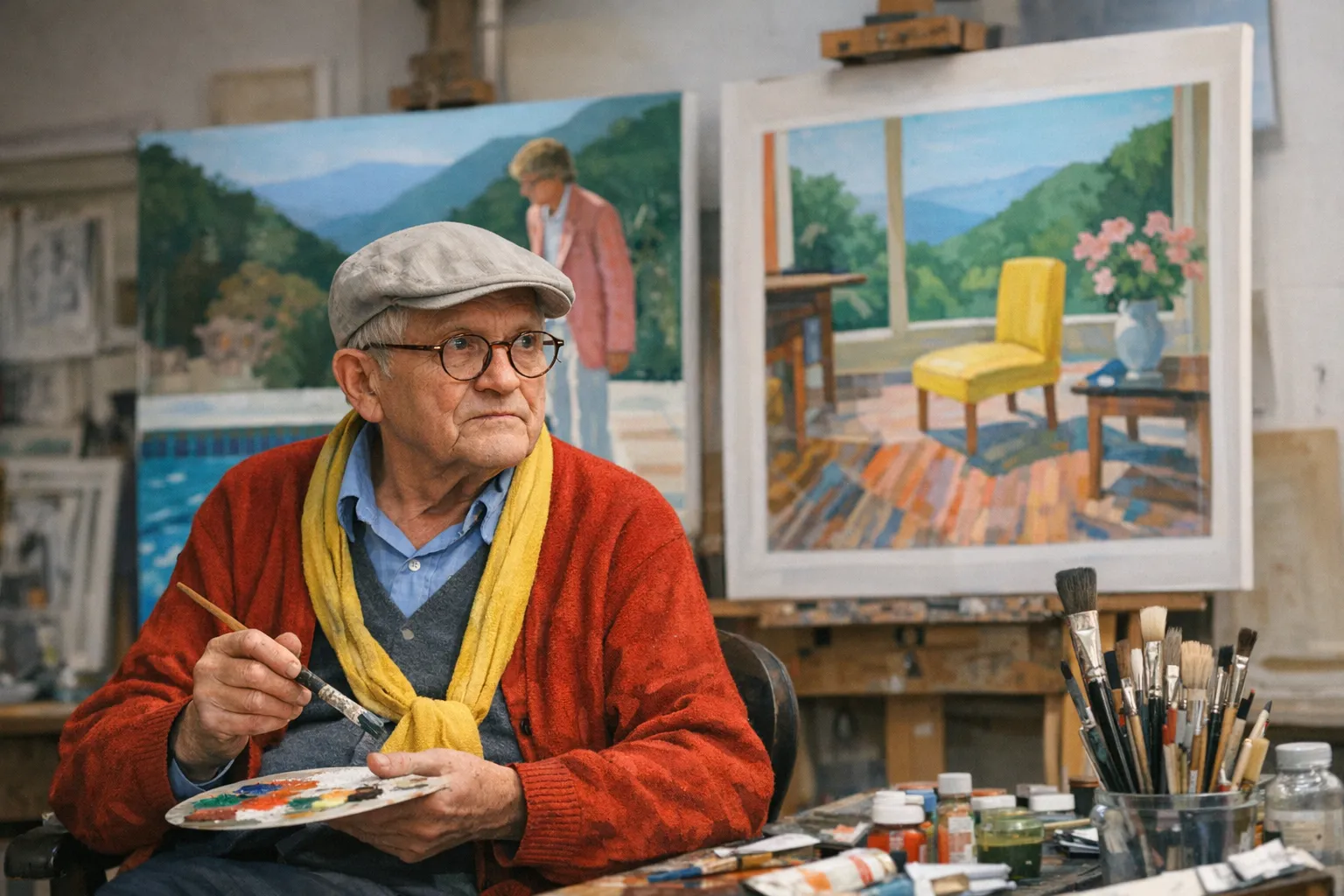
This article will delve into Hockney's remarkable journey as an artist, highlighting key milestones, his influence on contemporary art, and the upcoming exhibitions that continue to celebrate his legacy. By examining the breadth of his work—from paintings to digital art—we'll uncover how Hockney's visionary approach has shaped modern artistic expression.
The Early Years: Hockney's Artistic Foundations
David Hockney was born in 1937 in Bradford, England, where his artistic talent became evident early on. His passion for drawing and painting was nurtured by supportive parents, particularly his mother, who encouraged his creative pursuits. This early foundation set the stage for what would become a remarkable six-decade career.
Hockney's formal education began at the Royal College of Art in London, where he was deeply influenced by the burgeoning British pop art movement. This era was characterized by the incorporation of popular culture into fine art, and Hockney's work began to reflect these themes. He embraced vibrant colors and bold compositions, often exploring the intersection of identity and sexuality—a recurring motif in his early works.
As he delved into his artistic practice, Hockney developed a unique visual language. His early pieces often depicted intimate scenes that challenged societal norms and expectations. For example, his use of everyday objects and personal narratives allowed him to explore complex themes of love and longing.
"Art is like a mirror; it reflects not just the world, but also the artist's innermost thoughts."
Hockney's formative years were crucial in shaping his identity as an artist. They laid the groundwork for his later explorations of medium and subject matter, paving the way for his evolution into one of the most influential contemporary artists. His ability to continuously reinterpret his surroundings and experiences has kept his work relevant and engaging across generations.
A Master of Mediums: Hockney's Diverse Techniques
David Hockney's artistic journey is defined by a remarkable versatility in media, spanning six decades. His exploration includes painting, drawing, printmaking, photography, and digital art, each contributing to his evolving style and visual language.
One of Hockney's standout works, 'Bigger Trees Near Warter' from 2007, exemplifies his skill in large-scale painting. Measuring an impressive 15 by 40 feet, this piece captures the essence of a coppice in East Yorkshire and showcases Hockney's capacity to transform natural landscapes into expansive works of art.
Hockney's approach to traditional art forms has also been revolutionary, particularly with his innovative use of the iPad for drawing. This modern technology has allowed him to redefine the boundaries of drawing, merging the tactile with the digital. The iPad drawings bring a fresh perspective to his subjects, demonstrating that contemporary tools can coexist with classic techniques.
In addition to these prominent media, Hockney's exhibitions, such as the upcoming showcase at the Portland Art Museum, will feature over 200 works, including prints, collages, and video art. This exhibition marks the largest North American survey of his work to date, confirming his status as a master of mediums.
Hockney’s ability to blend various techniques not only enriches his oeuvre but also influences contemporary art practices, inspiring a new generation of artists to experiment with diverse forms. For a deeper dive into Hockney’s impact, check out David Hockney's Influence on Modern Art and Exploring Contemporary Art Movements.
Iconic Themes: California Pools and British Landscapes
David Hockney's work is deeply rooted in recurring themes that not only showcase his artistic evolution but also reflect broader cultural narratives. Two of the most iconic themes in his oeuvre are the vibrant depictions of California swimming pools and the nostalgic portrayal of British landscapes.
California Pools
Hockney's California swimming pools are more than mere representations of leisure; they symbolize a sense of escapism that resonates with viewers. The pools are often painted in bright, saturated colors, evoking feelings of warmth and relaxation. For instance, his famous work, "A Bigger Splash," captures the moment of a diver mid-air, surrounded by a serene yet lively pool. These images encapsulate the carefree lifestyle of California in the 1960s and 70s, serving as a visual retreat for the audience.
British Landscapes
In stark contrast, Hockney’s British landscapes convey a sense of nostalgia and connection to his roots. Paintings like "Bigger Trees Near Warter," which measures an impressive 15 by 40 feet, reflect his deep appreciation for the natural beauty of East Yorkshire. These works often showcase the changing seasons, the lush green of the countryside, and the intricate details of rural life. They invite viewers to engage with the familiar yet often overlooked beauty of the landscape.
Intimate Portraits
Another recurring theme is Hockney’s intimate portrayals of friends and family. These works reveal his personal relationships and the emotional depth behind his art. In paintings such as "Portrait of an Artist (Pool with Two Figures)," he captures the essence of human connection, merging the personal with the picturesque. This blend adds a layer of significance to his work, showing that art can be both an exploration of the self and a reflection of the world.
In summary, Hockney's iconic themes of California pools, British landscapes, and intimate portraits not only showcase his artistic talents but also invite viewers to explore themes of leisure, nostalgia, and personal relationships. They encapsulate his six-decade journey as an artist, making a lasting impact on contemporary art. For a deeper understanding, consider exploring David Hockney's Influence on Modern Art and Exploring Contemporary Art Movements.
Major Exhibitions: A Retrospective of Influence
David Hockney's career has been punctuated by significant exhibitions that not only showcase his evolving artistry but also reflect broader trends in contemporary art. One standout moment was the 2017 retrospective at Tate Britain, which drew over 4,000 visitors daily, marking it as the gallery's most-visited exhibition. This overwhelming attendance underscores Hockney's status as a beloved figure in the art world and highlights his ability to resonate with a diverse audience.
Looking ahead, the upcoming exhibition at the Portland Art Museum in 2026 promises to be another milestone. Set to run from February 14 to July 26, it will feature over 200 works, including prints, collages, video, and his innovative iPad drawings. Organized by Catherine Whitney, this exhibition is touted as the largest North American survey of Hockney’s work to date, offering a comprehensive look at his six-decade career.
Hockney's exhibitions often serve as a barometer for contemporary art trends. His vibrant depictions of California swimming pools, British landscapes, and intimate portrayals of friends and family are not just personal expressions but also reflections of the cultural zeitgeist. Through these showcases, Hockney continually reaffirms his influence on modern artistic movements, making each exhibition an event of significant cultural importance.
For those interested in exploring more about his impact, consider reading David Hockney's Influence on Modern Art or Exploring Contemporary Art Movements.
Record-Breaking Sales: Hockney's Market Impact
David Hockney's impact on the art market is underscored by his staggering sale of Portrait of an Artist (Pool with Two Figures) in 2018, which fetched an astounding $90.3 million. This sale not only set a record for his work but also positioned Hockney among the most valuable living artists in the world. Such high-profile transactions significantly influence market dynamics, as they signal to collectors and investors the potential value of contemporary art.
Hockney's works are now viewed through a dual lens: as cultural artifacts that reflect his innovative approach to art and as financial assets that can appreciate over time. Investors increasingly recognize the potential for significant returns, leading to a heightened interest in acquiring pieces from his extensive catalogue.
Key points illustrating Hockney's market impact include:
- Record Sales: The $90.3 million price tag for Portrait of an Artist highlights his financial clout within the art world.
- Valuable Assets: Hockney's works are consistently among the highest valued by living artists, drawing attention from both collectors and investors.
- Market Dynamics: His sales trends influence broader market perceptions of contemporary art, potentially driving prices up for similar works.
As Hockney continues to evolve as an artist, his financial success reinforces the significance of his contributions to contemporary art. This evolving market landscape reveals not just the value of his work, but also the shifting perceptions of art itself as a form of investment.
The Digital Revolution: Hockney's Technological Innovations
David Hockney has consistently been at the forefront of artistic innovation, particularly with his embrace of digital technology. One of his most notable contributions is his pioneering use of iPads for drawing. This shift allows Hockney to merge traditional artistic techniques with modern tools, creating a unique blend that resonates with both old-school and contemporary audiences.
-
Challenge to Authenticity: Hockney's digital works challenge conventional perceptions of authenticity and originality in art. By using a device commonly associated with casual use, he elevates it to a respected medium, prompting discussions about what constitutes "real" art in the digital age.
-
Adaptability to New Media: Hockney's willingness to explore new media reflects broader trends in contemporary art. His digital creations are not mere reproductions but rather explorations that expand the boundaries of visual expression. This adaptability has allowed him to remain relevant in an ever-evolving art landscape.
Hockney's journey through various media, including painting, photography, and now digital art, showcases his relentless reinvention. His works, like the vibrant depictions of California swimming pools and British landscapes, continue to captivate audiences. As we look forward to exhibitions like the upcoming retrospective at the Portland Art Museum, featuring prints, collages, and iPad drawings, it’s clear that Hockney’s legacy will continue to inspire future generations of artists.
For more insights into Hockney's impact, check out David Hockney's Influence on Modern Art and explore trends in Contemporary Art Movements.
Cultural Impact: Hockney's Influence on Contemporary Artists
David Hockney's vibrant use of color and innovative compositions have left an indelible mark on contemporary painting. His bold palettes and distinctive styles encourage modern artists to break away from traditional constraints. For instance, Hockney's portrayals of California swimming pools and British landscapes challenge artists to explore the interplay of color and form in their own works.
Hockney's exploration of identity is also pivotal. His ability to convey personal narratives through art resonates with today’s themes, influencing artists who delve into self-exploration and social commentary. This relevance to contemporary issues makes his work not just visually appealing but also intellectually engaging.
Many artists openly cite Hockney as a key influence. From emerging painters to established figures, his techniques and ideas serve as a foundation for new creative expressions. His 2007 piece, 'Bigger Trees Near Warter,' illustrates his commitment to exploring scale and perspective, inspiring others to think outside conventional boundaries.
Additionally, the overwhelming success of Hockney's 2017 retrospective at Tate Britain—drawing over 4,000 visitors daily—highlights the profound interest in his work and the impact he continues to have on the art community. As artists navigate their own paths, Hockney's legacy remains a powerful source of inspiration.
For a deeper dive into his influence, consider reading David Hockney's Influence on Modern Art and exploring Contemporary Art Movements.
Challenges and Critiques: Navigating the Art World
David Hockney's career has not been without its challenges and criticisms. His departure from traditional artistic techniques has elicited a spectrum of reactions from critics and audiences alike. While many celebrate his innovative approaches, others argue that his later works lack the emotional depth and resonance found in his earlier pieces, such as the iconic "A Bigger Splash."
-
Mixed Reactions: Hockney's embrace of new media, like iPad drawings and photography, has led to debates about authenticity and artistic integrity. Some critics feel that these methods dilute the emotional narrative that characterized his earlier works.
-
Emotional Depth: Critics often point to a perceived decline in the emotional intensity of Hockney's later pieces. They argue that while his technical prowess remains, the raw sentiment seen in earlier works like "Portrait of an Artist (Pool with Two Figures)" has faded.
Navigating commercial success is another recurring theme in Hockney's journey. The artist has achieved significant financial milestones, including a record-breaking sale of a painting for over $90 million. However, this success raises questions about the balance between artistic integrity and commercial viability.
- Artistic Integrity vs. Market Forces: Hockney's ability to remain relevant in a rapidly changing art market often puts him at odds with traditionalists who value conventional methods. His continuing exploration of diverse mediums, while commercially successful, sometimes invites skepticism regarding his commitment to artistic purity.
Despite these challenges, Hockney remains a pivotal figure in contemporary art, continually pushing boundaries while navigating the complexities of the art world. For a deeper understanding of his influence, see David Hockney's Influence on Modern Art.
Future Directions: What Lies Ahead for Hockney?
As David Hockney approaches the latter stages of his illustrious career, the anticipation surrounding his future contributions to the art world is palpable. Upcoming exhibitions, such as the one scheduled at the Portland Art Museum from February 14 to July 26, 2026, promise to showcase new themes and techniques. This exhibition, featuring over 200 works, marks the largest North American survey of Hockney’s art to date and includes a diverse range of media, from prints and collages to iPad drawings.
Hockney's ongoing exploration of technology indicates a commitment to innovating within the realm of digital art. His previous ventures into video and iPad creations suggest that he may continue to push the boundaries of how art is created and experienced. For instance, his digital drawings have not only expanded his artistic vocabulary but have also opened dialogues about the role of technology in contemporary art.
Moreover, Hockney's legacy is expected to significantly influence future generations of artists. His vibrant depictions of California swimming pools, British landscapes, and intimate portrayals of friends and family have set a benchmark for emotional connectivity in art. As emerging artists draw inspiration from his work, they may amalgamate traditional techniques with modern technologies, further evolving the narrative of contemporary art.
In summary, David Hockney's future directions appear to be characterized by a blend of traditional artistry and digital innovation, ensuring his impact on the art world endures for years to come.
Conclusion: Hockney's Enduring Legacy in Art
David Hockney's six-decade career stands as a testament to his continuous reinvention and exploration across various media. From his early vibrant depictions of California swimming pools to his innovative use of digital tools, Hockney has consistently challenged the boundaries of contemporary art. His adaptability and willingness to embrace new technologies, such as iPad drawings, reflect an artist unafraid to evolve.
Hockney's contributions have profoundly reshaped perceptions of contemporary art. His ability to combine traditional techniques with modern innovations has inspired a generation of artists to think outside conventional frameworks. Notably, his 2007 work, Bigger Trees Near Warter, showcased his mastery in blending scale and subject matter, while his record-setting sale of Portrait of an Artist (Pool with Two Figures) solidified his status among the most valuable artists today.
As we look to the future, Hockney's work will undoubtedly continue to inspire and challenge upcoming artists. His recent exhibitions, such as the expansive survey at the Portland Art Museum in 2026, further affirm his relevance within the global art dialogue. With over 400 pieces showcased, Hockney's legacy remains vibrant and influential, ensuring that his impact on contemporary art endures for years to come. For a deeper dive into his influence, explore David Hockney's Influence on Modern Art or check out Exploring Contemporary Art Movements.