
The Great Barrier Reef, a marvel of biodiversity, is facing unprecedented challenges. Climate change has ushered in a period of alarming coral loss, marking the largest annual decline in 39 years as of 2023. As the world grapples with rising temperatures and shifting ecosystems, efforts to conserve this vital marine habitat have never been more critical.
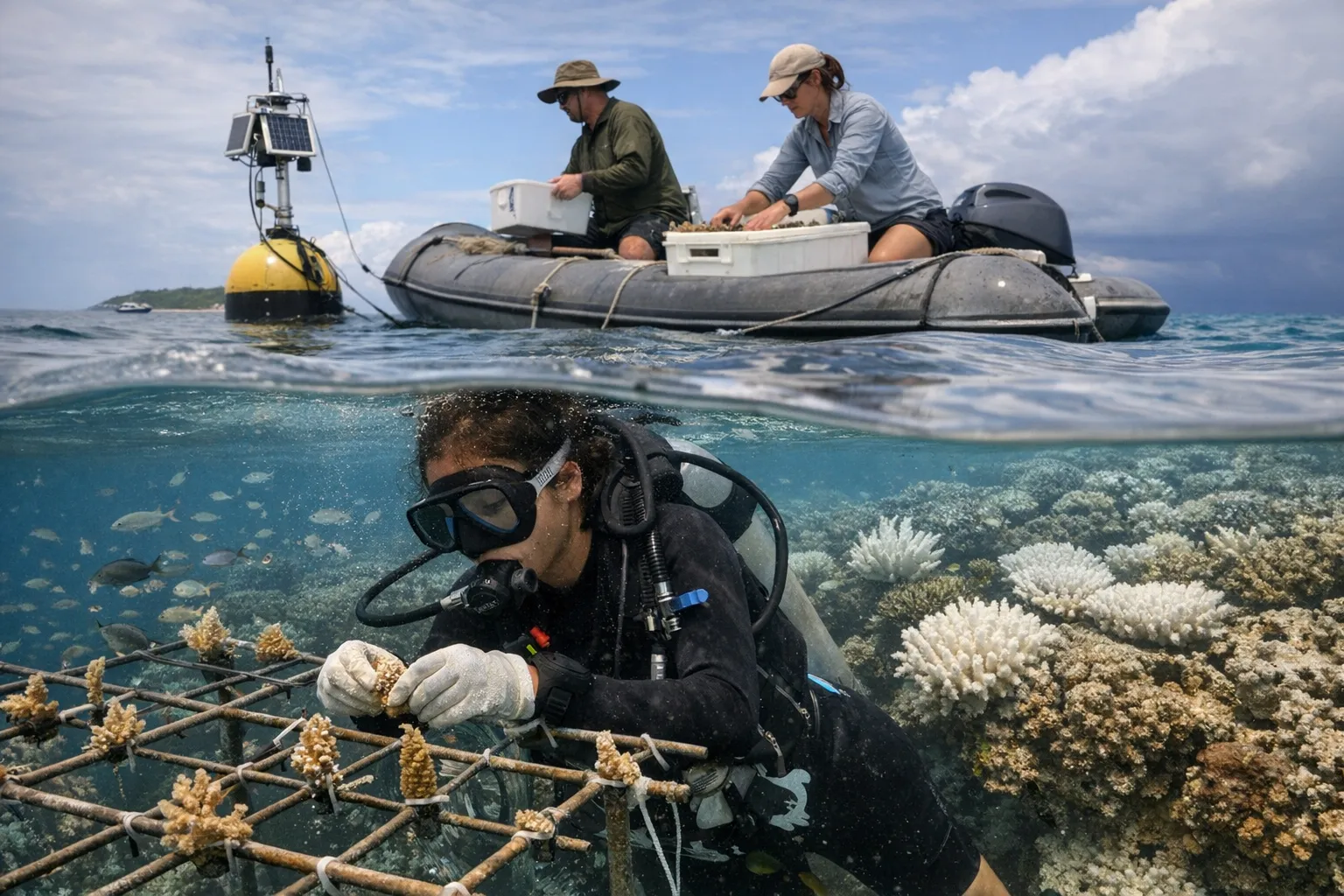
In this article, we’ll explore the multifaceted strategies and collaborations currently underway to protect the Great Barrier Reef. From community-led initiatives that enhance resilience against climate change to global partnerships like the Resilient Reefs Initiative, we’ll examine how these efforts aim to safeguard one of the planet's richest ecosystems. By understanding these conservation efforts, we can better appreciate the urgent need for action and the role we all play in preserving this natural wonder.
The Current State of the Great Barrier Reef
The Great Barrier Reef is facing unprecedented challenges due to climate change, which has led to significant coral bleaching events in 2023 and 2024. In April 2024, reports indicated that approximately 73% of the reef experienced severe coral bleaching, marking the fifth mass bleaching event since 2016. This alarming trend suggests that the reef's health is deteriorating rapidly.
The statistics associated with these bleaching events are stark. In 2023, the reef recorded its largest annual coral loss in 39 years, a direct consequence of rising sea temperatures. By August 2025, projections indicated an annual coral decline of about 1%, a critical metric for assessing the reef's resilience against ongoing environmental threats.
The implications of these changes extend beyond coral loss. Coral reefs are vital ecosystems that support a diverse range of marine life, providing habitat and food for countless species. As coral health declines, so too does the biodiversity that depends on it. This biodiversity is crucial for the ecological balance of the region, and its loss could trigger a cascade of negative effects throughout the marine environment.
To put it in perspective, one could liken the Great Barrier Reef to a living library; each coral and organism represents a book containing invaluable knowledge about marine ecosystems. As these "books" are lost, the stories they tell about resilience, adaptation, and ecological balance are forever erased.
Community-led conservation efforts have become increasingly important in this context. Local initiatives, such as those supported by the Great Barrier Reef Foundation, are vital for enhancing the reef's capacity to withstand climate change impacts. The Resilient Reefs Initiative exemplifies collaborative efforts to protect and adapt the reef amid these challenges. As the situation evolves, it is clear that innovative strategies and strong community involvement will be essential for the future of Great Barrier Reef conservation.
Understanding Coral Bleaching and Its Causes
Coral bleaching is a phenomenon where corals lose their vibrant colors and turn white, primarily due to stress factors. When corals are stressed, they expel the symbiotic algae, known as zooxanthellae, that live within their tissues. These algae provide corals with essential nutrients and their color. Without them, corals become more susceptible to disease and mortality.
Several factors contribute to this distressing process:
- Temperature Rise: Increased ocean temperatures, often driven by climate change, are the leading cause of coral bleaching. The Great Barrier Reef has faced unprecedented warming, with significant bleaching events occurring as temperatures exceed the corals' tolerance levels.
- Pollution: Runoff from agriculture, urban areas, and industrial activities introduces harmful pollutants into the ocean, further stressing coral ecosystems.
- Ocean Acidification: Elevated carbon dioxide levels lead to more acidic oceans, which can weaken coral structures and hinder their growth.
Climate change is the most pressing threat to the Great Barrier Reef, pushing ocean temperatures to levels that can trigger severe bleaching. A report in April 2024 indicated that approximately 73% of the Reef experienced severe coral bleaching, marking a significant decline in reef health.
As the Australian Academy of Science warned in August 2023, the impacts of climate change could become irreversible around mid-century, even if global emissions stabilize. To put it in perspective, one could compare coral bleaching to a canary in a coal mine—its decline signals a broader environmental crisis that affects everything in its ecosystem.
Efforts to combat these challenges are underway, including community-led conservation initiatives and research programs aimed at enhancing coral resilience. For more insights on ongoing efforts, the Great Barrier Reef Foundation and the Resilient Reefs Initiative provide valuable resources and information.
Governmental Actions and Commitments
The Australian government has made significant commitments to combat climate change, particularly in relation to the Great Barrier Reef conservation. In March 2023, the government set a target to reduce greenhouse gas emissions by 43% by 2030. This ambitious goal aims to mitigate the severe impacts of climate change that threaten the reef's delicate ecosystem.
To support these commitments, several policies have been introduced, focusing on reef protection. Key initiatives include:
- Research and Development: The Great Barrier Reef Foundation commenced a program in March 2022 to explore innovative solutions for coral adaptation to climate change.
- Community Engagement: Launched in March 2023, the Community Climate Action program empowers local communities to actively participate in reef conservation efforts.
- Regulatory Measures: Policies targeting pollution reduction and water quality improvement are underway to enhance the reef's resilience.
Despite these efforts, the effectiveness of such measures is under scrutiny. The 2023 report from the Australian Academy of Science warned that climate change impacts could become irreversible by mid-century, indicating that current actions may not be sufficient. Furthermore, the reef faced a staggering 73% of severe coral bleaching by April 2024, the fifth mass bleaching event since 2016, showcasing the urgent need for enhanced strategies.
As one expert aptly puts it, “We are like firefighters in a burning house, trying to put out flames while the structure continues to weaken.” This analogy highlights the critical challenge faced in balancing immediate conservation efforts with long-term sustainability.
In summary, while the Australian government has taken commendable steps towards Great Barrier Reef conservation, the scale of climate change impacts necessitates a more aggressive and comprehensive approach to ensure the survival of this vital ecosystem.
Community-Led Conservation Initiatives
Local communities play a pivotal role in the conservation of the Great Barrier Reef, driving initiatives that leverage their unique knowledge and engagement. These grassroots efforts are essential for enhancing the reef's resilience against climate change.
Examples of Community-Led Projects
- Caring for Coasts and Islands: This initiative emphasizes the integration of local indigenous knowledge with scientific research to address reef health and biodiversity.
- Community Climate Action Program: Launched by the Great Barrier Reef Foundation in March 2023, this program empowers residents to take direct action in protecting the reef from climate change impacts.
Importance of Local Knowledge and Engagement
Communities possess invaluable insights into their environments, often leading to more effective conservation strategies. Their involvement fosters a sense of ownership and responsibility, crucial for long-term sustainability. As one local leader aptly put it, “The reef is like a garden; it needs the hands of its caretakers to flourish.”
Case Studies of Successful Community Initiatives
- Resilient Reefs Initiative: This global partnership supports local communities in adapting to both climate change and local threats. Its success hinges on collaboration between scientists and community members who share a vested interest in the reef's future.
- Mangrove Restoration Projects: Many coastal communities have engaged in restoring mangroves, which serve as natural barriers against storm surges and provide nursery habitats for marine life. These efforts have shown notable improvements in coastal resilience.
By harnessing community knowledge and fostering active participation, these initiatives not only contribute to immediate conservation efforts but also build a robust framework for the future of the Great Barrier Reef.
Global Partnerships and Initiatives
Conservation of the Great Barrier Reef (GBR) relies heavily on global collaborations that integrate local and international efforts. One significant venture is the Resilient Reefs Initiative, which aims to support World Heritage Reefs and the communities dependent on them. This initiative focuses on developing adaptive strategies to tackle both climate change and local threats, allowing for a more robust response to ongoing challenges.
Partnerships with NGOs and research institutions are also vital. Organizations like the Great Barrier Reef Foundation work closely with local communities to foster sustainable practices that enhance the reef's resilience. These alliances enable the sharing of knowledge and resources, ultimately increasing the effectiveness of conservation efforts. For example, the foundation's Community Climate Action program empowers local populations to engage in protective measures tailored to their specific environments.
Global awareness campaigns have a profound impact as well. By raising consciousness around the threats facing the GBR, these initiatives mobilize public support and funding for conservation projects. "Saving the reef is like keeping a garden alive; it requires constant care and attention, not just during the drought," emphasizes the importance of sustained effort in conservation.
The urgency for such initiatives is underscored by alarming reports: as of April 2024, 73% of the GBR experienced severe coral bleaching, marking a critical moment for intervention. With climate change impacts potentially becoming irreversible by mid-century, the need for collaborative action is more pressing than ever. Through these partnerships and initiatives, there remains hope for preserving one of the planet's most complex ecosystems.
Innovative Research and Development Programs
The Great Barrier Reef Foundation is at the forefront of innovative research initiatives aimed at coral adaptation in the face of climate change. This is particularly crucial as the reef has experienced its largest annual coral loss in 39 years, with a staggering 73% affected by severe coral bleaching in April 2024.
Key Research Initiatives
- Coral Adaptation Solutions: Launched in March 2022, the Foundation's program focuses on developing and testing methods to enhance coral resilience. This includes selective breeding of heat-resistant coral species and exploring genetic interventions.
- Community Climate Action: Introduced in March 2023, this program empowers local communities to engage in reef protection efforts. Community involvement is essential, as these groups often have the best insights into local conditions and challenges.
Technological Advancements
Technological innovation plays a pivotal role in coral restoration. Techniques such as:
- Coral Gardening: Cultivating corals in nurseries before transplanting them back to degraded areas.
- Drones and Remote Sensing: Utilizing drones to monitor reef health and track changes in coral populations.
Future Directions
Looking ahead, the focus will likely shift towards more integrated approaches that combine technology and community action. The Resilient Reefs Initiative illustrates this commitment, fostering global partnerships to support the adaptation of World Heritage Reefs.
"Conserving the reef is like trying to patch a sail on a sinking ship; every effort counts, but we must also address the storm at sea."
The urgency of these efforts cannot be overstated, especially given that the Australian Academy of Science predicts that climate change impacts on the Great Barrier Reef could become irreversible around mid-century. With continued research and community engagement, there is hope for the future of this vital ecosystem.
Challenges and Threats to Conservation Efforts
The conservation of the Great Barrier Reef faces significant hurdles, primarily stemming from climate change and human activities. Understanding these challenges is crucial for effective intervention.
Impact of Climate Change on Conservation Strategies
Climate change is the foremost threat to the Great Barrier Reef. Recent reports indicate that 73% of the reef experienced severe coral bleaching in April 2024, highlighting the fragility of this ecosystem. As temperatures rise, the likelihood of coral bleaching events increases, with the Australian Academy of Science warning that impacts could become irreversible around mid-century, regardless of future emissions stabilization. Conservation strategies must adapt rapidly to these changing conditions, yet the pace of climate change often outstrips our ability to respond effectively.
Economic Pressures and Tourism
Tourism plays a dual role in conservation efforts. While it generates revenue for protective measures, it also places stress on the reef. The influx of visitors can lead to increased pollution and habitat degradation. Balancing economic benefits with sustainable practices is a complex challenge. The Australian government has committed to reducing greenhouse gas emissions by 43% by 2030 to tackle climate impacts, but the pressure to maintain tourism can hinder these efforts.
Pollution and Its Effects on Reef Health
Pollution from agricultural runoff, urban development, and maritime activities severely affects reef health. Nutrient-rich runoff can lead to algal blooms that outcompete corals for space and resources, further complicating conservation efforts. Community-led initiatives, like the Community Climate Action program launched by the Great Barrier Reef Foundation in March 2023, aim to empower local populations to mitigate these effects through on-the-ground actions, but widespread pollution remains a daunting challenge.
In summary, the intertwined threats of climate change, economic pressures, and pollution necessitate a multifaceted approach to Great Barrier Reef conservation. Collaborative efforts and innovative strategies will be vital in addressing these challenges effectively.
Success Stories and Positive Outcomes
Conservation efforts for the Great Barrier Reef have showcased several promising success stories, highlighting the effectiveness of community initiatives and governmental policies aimed at preserving this vital ecosystem.
Community Initiatives
Local communities play a pivotal role in enhancing the resilience of the Reef. For instance, the Great Barrier Reef Foundation launched a Community Climate Action program in March 2023, empowering residents to lead efforts in protecting the reef from climate change. These grassroots initiatives not only galvanize local involvement but also foster a sense of stewardship, with communities actively participating in restoration and monitoring projects.
- Caring for Coasts and Islands: This program, detailed on barrierreef.org, involves local stakeholders in hands-on conservation actions, ensuring that the reef has better chances of withstanding climate change impacts.
Governmental Policies
On a broader scale, governmental commitment is crucial. In March 2023, the Australian government pledged to reduce greenhouse gas emissions by 43% by 2030. This ambitious target aims to mitigate the effects of climate change on the Great Barrier Reef, aligning with global efforts to stabilize emissions and protect natural ecosystems.
Long-term Benefits
The impact of these concerted efforts is increasingly evident. While the Great Barrier Reef has faced severe challenges, such as experiencing 73% severe coral bleaching in April 2024, positive outcomes from these initiatives demonstrate that targeted actions can yield significant benefits. By fostering resilience, these strategies not only aim to reverse damage but also promote long-term ecological health, making the reef more adaptable to future climate scenarios.
By combining community-driven efforts with strong governmental policies, the Great Barrier Reef conservation initiatives are setting a precedent for successful environmental stewardship in the face of climate change. For more detailed insights into ongoing projects, visit the Great Barrier Reef Foundation or explore the Resilient Reefs Initiative.
Future Outlook: What Lies Ahead for the Great Barrier Reef
As we look toward the future of the Great Barrier Reef, the outlook is a complex tapestry woven with both challenges and hope. Current trends indicate a critical juncture: climate change impacts could become irreversible by mid-century, even with aggressive emissions stabilization efforts. This underscores the importance of immediate action.
Predictions Based on Current Trends
- Coral Bleaching: In April 2024, a staggering 73% of the Reef experienced severe coral bleaching. This alarming statistic marks the fifth mass bleaching event since 2016, signaling a dire need for effective interventions.
- Coral Decline: The Great Barrier Reef has faced its largest annual coral decline on record, with estimates suggesting a 1% drop in coral cover as of August 2025. Such declines not only threaten biodiversity but also the livelihoods dependent on this ecosystem.
Importance of Continued Funding and Support
Ongoing funding is vital for the sustainability of conservation efforts. The Australian government’s commitment to a 43% reduction in greenhouse gas emissions by 2030 is a promising step, but it must be supported by robust financial backing for research and community initiatives. For instance, the Great Barrier Reef Foundation's development programs aim to help corals adapt to climate change, highlighting the need for sustained investment.
Call to Action for Global Awareness
Raising global awareness is essential. Community-led efforts, such as the Great Barrier Reef Foundation's Community Climate Action program, empower locals to take protective measures. However, these initiatives require support from the global community to maximize their impact. By fostering international collaboration and encouraging individual action, we can collectively work toward preserving this vital ecosystem for future generations.
In conclusion, while the Great Barrier Reef faces significant challenges, proactive conservation strategies, robust funding, and global awareness can pave the way for a more resilient future.
FAQs About the Great Barrier Reef and Conservation Efforts
What is coral bleaching?
Coral bleaching occurs when corals expel the symbiotic algae living in their tissues, usually due to stress from elevated water temperatures or pollution. This process leaves the corals white and vulnerable to disease. In 2024, reports indicated that 73% of the Great Barrier Reef suffered severe bleaching, marking a significant environmental crisis.
How can individuals contribute to conservation?
Individuals can play a crucial role in protecting the Great Barrier Reef through various actions, including:
- Reducing carbon footprints: Opt for sustainable transportation and energy use to lower greenhouse gas emissions.
- Supporting local conservation initiatives: Get involved with organizations like the Great Barrier Reef Foundation or the Resilient Reefs Initiative to help fund and implement local projects.
- Educating others: Share knowledge about the reef's importance and the threats it faces, fostering a community of informed advocates.
What are the long-term effects of climate change on the reef?
The long-term impacts of climate change on the Great Barrier Reef could be severe. Experts warn that if emissions remain unchecked, the reef may face irreversible damage by mid-century. This includes:
- Loss of biodiversity: Many species depend on coral ecosystems, and their decline could disrupt marine food webs.
- Economic repercussions: The reef supports tourism and fishing industries, which could suffer as its health declines.
- Increased vulnerability: A weakened reef may struggle to recover from bleaching events and other stressors, diminishing its resilience against future climate challenges.