
Figure skating is a mesmerizing blend of art and athleticism, but behind the graceful spins and jumps lies a complex interplay of biomechanics and physics. Understanding these scientific principles not only enhances performances but also shapes the future of the sport, especially as we approach the 2026 World Figure Skating Championships in Prague.
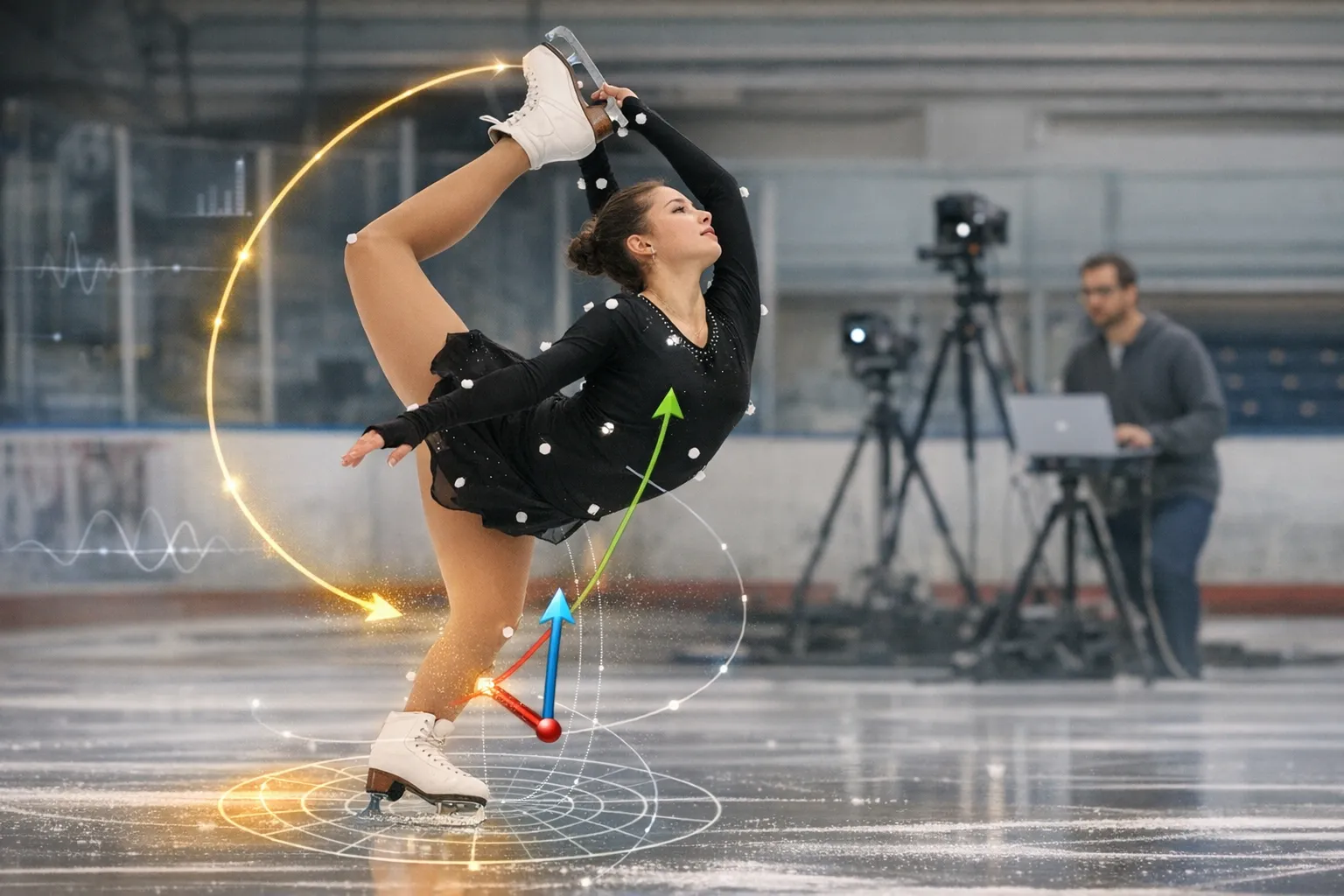
In this analysis, we'll delve into how biomechanics influences figure skating techniques and the physics that underlie the skaters' movements. With over 200 elite competitors from more than 50 countries set to showcase their skills at the O2 Arena from March 24 to 29, the championships promise to be a spectacle of both talent and scientific prowess. We'll explore key aspects such as the mechanics of jumps, the role of angular momentum, and how innovations like quadruple jumps are pushing the boundaries of what's possible on ice.
Understanding the Basics of Biomechanics in Figure Skating
Biomechanics is the study of the mechanical laws relating to the movement or structure of living organisms. In sports, it helps athletes enhance their performance by applying principles of physics to their movements. For figure skaters, understanding biomechanics is crucial for executing complex maneuvers with precision and grace.
Key biomechanical principles in figure skating include:
- Force: The application of force is essential in jumps and spins. Skaters must exert force against the ice to gain the necessary lift and momentum.
- Motion: Every movement, whether it's a glide or a spin, follows the laws of motion. Skaters transfer energy efficiently to maintain speed and control.
- Balance: Maintaining balance is fundamental. Skaters must center their weight over their blades to perform tricks without falling.
The importance of body mechanics cannot be overstated, especially in executing jumps and spins. For instance, when a skater prepares for a jump, they gather potential energy by bending their knees and lowering their center of gravity. As they leap, the transition to kinetic energy allows them to soar into the air.
As one famous coach put it, "Figure skating is like ballet on ice, but physics is the invisible partner that ensures every leap lands perfectly."
With the upcoming ISU World Figure Skating Championships 2026 in Prague, over 200 skaters will showcase their mastery of these biomechanical principles across various disciplines. Understanding these concepts not only enriches the viewer's experience but also highlights the synergy between science and sport.
The Role of Physics in Figure Skating
Physics plays a crucial role in the art and athleticism of figure skating. Understanding the principles of mechanics not only enhances performance but also deepens the appreciation of the sport. Here are some key physics concepts that skaters utilize:
-
Newton's Laws of Motion: These laws describe how forces affect movement. For instance, when a skater pushes off the ice, they exert a force that propels them forward. The equal and opposite reaction propels the ice in the opposite direction, allowing the skater to glide. This principle is vital for maintaining speed and control during routines.
-
Angular Momentum: This concept is particularly significant during spins and jumps. When a skater pulls their arms close to their body while spinning, they reduce their moment of inertia, allowing them to spin faster. The famous analogy of "a figure skater pulling in their arms to spin faster" perfectly illustrates how skaters can manipulate their body position to maximize performance.
-
Friction: While skaters rely on ice's low friction to glide effortlessly, they must also manage it to maintain control. The balance between having enough friction to push off and not too much that it slows them down is a delicate one. Speed and glide are influenced by the type of blades and their sharpness, which affects how well they interact with the ice.
As the 2026 World Figure Skating Championships approach, scheduled from March 24 to 29 at Prague's O2 Arena, we can expect to see these principles in action as over 200 skaters from more than 50 countries showcase their skills across various disciplines. Understanding the physics behind their performances not only enhances spectators' enjoyment but also highlights the intricate dance between science and sport.
Case Study: The Evolution of Jumps in Figure Skating
The evolution of jumps in figure skating reflects a fascinating blend of artistry and scientific principles. Historically, jumps began as simple single rotations but have transformed dramatically over the decades. In the early days, skaters like Sonja Henie showcased basic axels and loops, while the late 20th century brought about the introduction of double and triple jumps.
Fast forward to today, and we encounter the groundbreaking contributions of Ilia Malinin, affectionately dubbed 'The Quad God.' His ability to consistently land quadruple jumps has pushed the boundaries of what's possible on ice. The significance of these jumps lies not just in their difficulty but in how they elevate the competitive landscape of the sport.
From a biomechanical perspective, jumps require a precise interplay of angular momentum and gravitational forces. Skaters utilize techniques like the "corkscrew" to maximize rotation speed while minimizing the risk of injury. Each jump type—be it the toe loop, salchow, or axel—demands specific body mechanics, requiring skaters to adjust their center of mass and apply force effectively.
"Landing a quad is like trying to balance a pencil on its tip; it requires impeccable precision and control."
As we look ahead to the 2026 World Figure Skating Championships in Prague, the culmination of these advancements will be on full display. Over 200 skaters from more than 50 countries will compete, showcasing leaps that capture the essence of both athleticism and artistry. The O2 Arena, with its state-of-the-art facilities, promises to be the perfect backdrop for this evolution in motion.
The Importance of Training and Conditioning
Training and conditioning play a pivotal role in enhancing the biomechanics of figure skating performances. As skaters prepare for competitions like the upcoming 2026 World Figure Skating Championships in Prague, they focus on several key aspects:
-
Strength Training and Flexibility: Skaters engage in targeted strength training to develop the muscles necessary for jumps and spins. Flexibility exercises are equally important, allowing them to achieve the necessary range of motion for intricate movements. For example, the ability to execute a strong triple axel relies heavily on both leg strength and hip flexibility.
-
Use of Technology in Training: Advanced technologies such as motion capture systems are increasingly utilized in training environments. These systems analyze skaters’ movements frame-by-frame, helping coaches identify areas for improvement. By understanding how forces act on the body during a routine, athletes can adjust their techniques to maximize efficiency and performance.
-
Injury Prevention through Biomechanical Understanding: A thorough grasp of biomechanics helps skaters avoid injuries. For instance, understanding the impact forces generated during a jump can inform safer landing techniques. Skaters can adjust their body alignment and landing posture, significantly reducing the risk of ankle or knee injuries that can sideline them for crucial competitions.
The blend of strength, technology, and biomechanical knowledge not only enhances performance but also ensures that athletes like Ilia Malinin, known for his remarkable quadruple jumps, can continue to push the boundaries of the sport without compromising their health. As the 2026 championships approach, these training methodologies will be vital for the success of over 200 skaters competing across various disciplines.
Myth vs. Reality: Common Misconceptions in Figure Skating
In the realm of figure skating, many misconceptions cloud the understanding of this intricate sport. Here, we debunk some of the most prevalent myths and reveal the underlying realities grounded in the biomechanics of figure skating.
-
Myth: Skating is purely artistic, not scientific.
While figure skating is celebrated for its artistic expression, every movement is deeply influenced by the laws of physics. The mechanics of jumps, spins, and footwork all rely on principles such as momentum, gravity, and angular velocity. For instance, a skater's ability to execute a triple axel involves not just artistry but also the precise application of force and balance. -
Reality: Every movement is governed by physical laws.
Consider the rotational speed of a skater during a spin. When a skater pulls in their arms, they reduce their moment of inertia, causing them to spin faster. This principle is vital for achieving the dizzying speeds seen in competitive routines. Understanding these concepts can significantly enhance a skater's performance and training. -
Myth: Only natural talent matters in figure skating.
While innate ability can provide an advantage, rigorous training and understanding of biomechanics are crucial. Skaters like Ilia Malinin, known as 'The Quad God,' demonstrate that mastering the physics of jumps is just as important as raw talent. His success in landing multiple quadruple jumps showcases how skill development, backed by scientific principles, can lead to groundbreaking performances.
As the 2026 World Figure Skating Championships approach, scheduled from March 24 to 29 at Prague's O2 Arena, these insights into the biomechanics of figure skating will likely play a significant role in how performances are evaluated and executed. Understanding the science behind the art is essential for both skaters and fans alike. For more details on the event, visit ISU World Figure Skating Championships 2026 and Visit Czechia for Event Details.
The Upcoming 2026 World Figure Skating Championships: A Showcase of Science and Art
The 2026 World Figure Skating Championships, taking place from March 24 to 29 at Prague's O2 Arena, promise to be a significant event in the world of sports. This will mark the Czech Republic's fourth time hosting the championships, a testament to its rich history in figure skating.
With over 200 elite skaters from more than 50 countries participating, the event will feature four main disciplines: men's singles, women's singles, pairs, and ice dance. Each performance will not only be a display of artistry but also a fascinating exhibition of biomechanics in action.
Biomechanics on Display
During the competitions, viewers will witness how the science of biomechanics enhances athletic performance. For example:
- Jump Mechanics: Skaters like Ilia Malinin, known as "The Quad God," have revolutionized jumps by applying principles of physics to achieve multiple quadruple jumps. His technique showcases the crucial role of angular momentum and force.
- Body Position and Balance: The way skaters position their bodies during spins and landings demonstrates the application of center of mass principles, allowing for more controlled and graceful movements.
Expectations for Performances
Based on these scientific principles, we can anticipate remarkable performances that push the boundaries of what is possible on ice. The competition schedule includes various formats, such as short programs, free skates, rhythm dances, and culminates in an Exhibition Gala on March 29, featuring innovative routines that blend athleticism with artistry.
As the world tunes in, the 2026 Championships will be a showcase not just of talent, but of the scientific advancements that drive figure skating forward. This interplay between art and science will captivate audiences and elevate the sport to new heights.
Analyzing Performance: Metrics and Measurements
In figure skating, performance analysis hinges on several key metrics that help assess the effectiveness and artistry of routines. These indicators provide both skaters and judges with a framework to evaluate and enhance performances.
Key Performance Indicators
- Technical Elements: Jumps, spins, and footwork sequences are quantified and graded based on their execution. For instance, the number of revolutions in a jump or the quality of a spin can significantly influence scores.
- Artistic Impression: Judges consider choreography, musical interpretation, and overall presentation. This qualitative aspect is crucial for scoring, alongside technical elements.
Use of Technology for Performance Analysis
Advancements in technology have transformed how performances are analyzed. Tools such as motion capture and video analysis allow coaches and athletes to dissect every movement. For example, using high-speed cameras, skaters can review their jump techniques frame by frame, identifying areas for improvement.
- Data Analytics: Skaters can track metrics such as speed, rotation, and landing accuracy, allowing for targeted training sessions.
- Simulation Software: Some athletes utilize software that simulates various elements of their routine, enabling them to experiment with different techniques and styles without the physical toll.
How Judges Evaluate Based on Biomechanics
Judges incorporate biomechanics into their evaluations. Understanding the physics behind jumps and spins helps them assess the difficulty and execution quality. For instance, when a skater like Ilia Malinin, known as 'The Quad God,' successfully lands multiple quadruple jumps, judges consider not only the jump's difficulty but also the skater's body position and landing stability.
The upcoming 2026 World Figure Skating Championships, set for March 24-29 at Prague's O2 Arena, will undoubtedly highlight these metrics and analyses as over 200 elite skaters compete across various disciplines. As the competition unfolds, expect to see how these scientific principles enhance performances, ultimately raising the bar for excellence in figure skating.
The Future of Figure Skating: Innovations in Technique and Training
As we look toward the 2026 World Figure Skating Championships, it's clear that the biomechanics of figure skating will play a pivotal role in shaping the future of the sport. Emerging techniques grounded in scientific principles are set to enhance both performance and artistry.
Emerging Techniques and Their Scientific Basis
Skaters are increasingly employing techniques that leverage physics to maximize efficiency and execution. For example, the use of angular momentum during spins has been refined, allowing athletes to maintain balance while increasing rotation speed. This not only makes spins more visually appealing but also opens the door for more complex elements in routines.
- Quadruple Jumps: Skaters like Ilia Malinin, known as 'The Quad God,' are pushing the boundaries by incorporating multiple quadruple jumps. This requires precise body positioning and timing, showcasing a deep understanding of biomechanics.
The Role of Technology in Future Training
Advancements in technology are revolutionizing how skaters train. Motion capture systems and biomechanical analysis tools allow athletes to analyze their movements in real-time, providing immediate feedback on technique and form.
- Wearable Technology: Devices that monitor muscle exertion and joint angles are becoming commonplace, enabling tailored training regimens that focus on individual strengths and weaknesses.
Predictions for the Evolution of Figure Skating Performances
Looking ahead, we can expect figure skating to evolve dramatically. With over 200 skaters from more than 50 countries competing in the 2026 Championships, the level of competition will be fierce.
- Enhanced Choreography: As skaters master new techniques, choreographers will likely respond by creating routines that incorporate these innovations, blending athleticism with artistic expression.
- Increased Difficulty: With more athletes achieving complex maneuvers, we may see a shift in judging criteria that rewards both technical precision and the seamless integration of difficult elements.
As these innovations unfold, the 2026 Championships at the O2 Arena in Prague will serve as a showcase for the future of figure skating, merging science with artistry in unprecedented ways. For more details on the event, visit ISU World Figure Skating Championships 2026.
FAQs About Biomechanics in Figure Skating
What is the most important biomechanical principle in skating?
The most crucial biomechanical principle in figure skating is balance. Skaters must maintain a stable center of mass while performing complex movements. This involves precise body alignment and control over their center of gravity. For example, during a jump, a skater shifts their weight and uses rotational momentum to achieve height and stability.
How do skaters improve their jumps?
Skaters enhance their jumping ability through a combination of strength training, technique refinement, and biomechanical analysis. They focus on:
- Strengthening core muscles to improve stability.
- Practicing take-off techniques to maximize vertical lift.
- Analyzing jump mechanics using video feedback to fine-tune body positioning.
Ilia Malinin, often referred to as 'The Quad God,' exemplifies this by landing multiple quadruple jumps, showcasing how biomechanical principles can lead to groundbreaking performances.
What role does physics play in ice dance?
Physics is integral to ice dance, particularly in the concepts of momentum and friction. Dancers must harness momentum to execute smooth transitions and complex footwork while managing the friction between their blades and the ice. Techniques such as maintaining a low center of gravity and utilizing body lean help them achieve graceful movements without losing balance.
As we approach the ISU World Figure Skating Championships 2026, scheduled for March 24 to 29 in Prague, understanding these principles will be vital for both competitors and fans. Over 200 skaters from more than 50 countries will demonstrate these biomechanics in action across various disciplines, culminating in an Exhibition Gala on March 29.
Conclusion: The Intersection of Science and Art in Figure Skating
The biomechanics of figure skating is a fascinating blend of art and science, showcasing how physical principles enhance performance. Key points discussed include the importance of body mechanics in executing jumps, spins, and footwork, as well as how physics principles like angular momentum and force contribute to a skater's ability to create breathtaking routines.
This ongoing relationship between science and sport not only elevates the performances but also aids athletes in refining their techniques. Innovations in training methods, equipment, and injury prevention grounded in scientific research continue to push the boundaries of what is possible on ice.
As we look forward to the 2026 World Figure Skating Championships in Prague, where over 200 skaters from more than 50 countries will compete, we encourage viewers to watch with a newfound appreciation for the physics at play. The event, scheduled from March 24 to 29 at the O2 Arena, promises to showcase not just the artistry but the incredible scientific foundations behind these performances.
By understanding the biomechanics involved, fans can gain deeper insight into the skillful execution of routines, especially as skaters like Ilia Malinin, known as 'The Quad God,' continue to redefine the limits of the sport. Don’t miss the grand finale on March 29, featuring the Exhibition Gala, where the pinnacle of this intersection between science and art will be on full display.